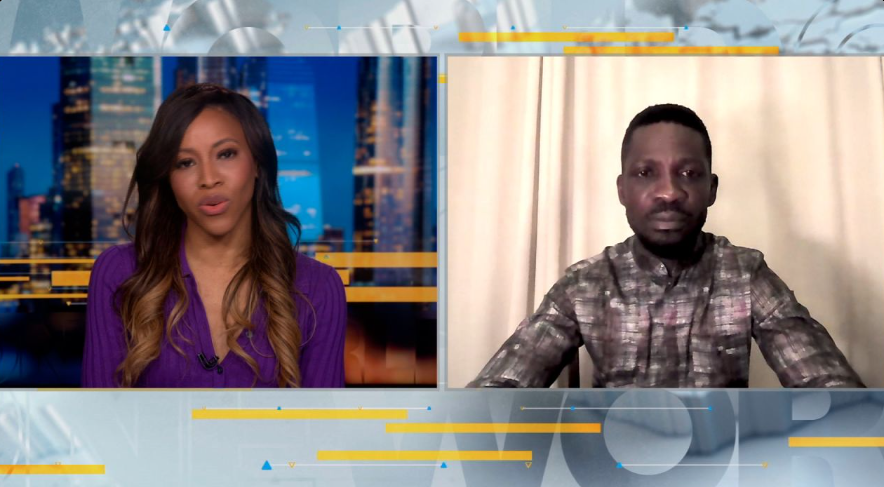




Ugandan opposition leader Bobi Wine has reaffirmed his determination to challenge President Yoweri Museveni in the upcoming elections, saying that confronting authoritarian rule is a necessary and continuous struggle for freedom. Speaking in an interview with CNN from Kampala, Bobi Wine said that failing to challenge dictatorship would amount to surrendering the future of Uganda.
He noted that nearly 75 percent of Ugandans are under the age of 40 and have known only one president throughout their lives. According to him, this reality underscores the urgency of political change in a country where elections have repeatedly been marred by voter intimidation, electoral manipulation, and the capture of state institutions by the ruling elite. Despite acknowledging that the military, police, and key institutions remain firmly under President Museveni’s control, Bobi Wine insisted that the people of Uganda are increasingly standing behind the forces of change.
Serivisi za Digital za Afrovera
Dufasha business n’imishinga kugaragara online bin yuze muri serivisi za digital zinoze kandi ku giciro gito cyane.
- ✔ Gukora Website za business & companies
- ✔ Posters & Graphic Design
- ✔ Website Hosting & Domain
- ✔ Gufungura YouTube Channels za business
Bobi Wine explained that his decision to run again is also aimed at removing what he described as “pseudo-legitimacy” that the current government continues to enjoy internationally. He argued that by consistently challenging flawed elections, the opposition exposes the truth to the global community and empowers Ugandans to demand their rights with international solidarity. He said that while the odds are heavily stacked against the opposition, persistence is the only path toward eventual freedom.
Reflecting on the disputed 2021 elections, Bobi Wine said the experience taught him that dictators rarely fall after a single challenge. Instead, he said, sustained pressure and resilience are required. He recalled being placed under house arrest immediately after voting in 2021 and said he expects similar treatment again. He revealed that more than 730 of his colleagues are currently detained, while others have been abducted, gone missing, or killed. Despite this, he said the movement remains resolute.
This time, Bobi Wine emphasized that the struggle is no longer centered on one individual. While he remains the presidential candidate and leader of the movement, he said responsibility has been deliberately shifted to the people. Ugandans, he explained, have been tasked with taking charge of campaigning, voting, and protecting the vote. He warned that if the election is rigged again, citizens must be prepared to peacefully rise up and demand their victory.
Addressing young Ugandans who feel disillusioned with politics, Bobi Wine said democracy only works when people are willing to defend it. He rejected violence as a means of change, arguing that it has never delivered lasting solutions for any nation. Instead, he called on citizens to vote in large numbers and firmly defend the outcome. He cited Uganda’s Constitution, particularly Article 29, which guarantees the right to peaceful and unarmed protest against injustice, and said this provision must be exercised if electoral fraud occurs.
Looking ahead to governance, Bobi Wine said leading Uganda is not a question of “if” but “when,” expressing confidence that the country is ready to entrust leadership to a new generation. He argued that while Uganda’s past challenges were centered on ignorance, disease, and poverty, the country’s current crisis can be traced to one root cause: entrenched corruption. He described corruption as institutionalized and normalized, serving as both a currency and a tool for maintaining power.
He pledged that tackling corruption would be a top priority if he assumes office, alongside restoring the independence of state institutions. According to Bobi Wine, empowering the judiciary and parliament to act independently is essential to ending state capture and dismantling one-man rule. He concluded by saying that only through strong, independent institutions and inclusive leadership can Uganda harness the talents of its people and move forward as a united and democratic nation.