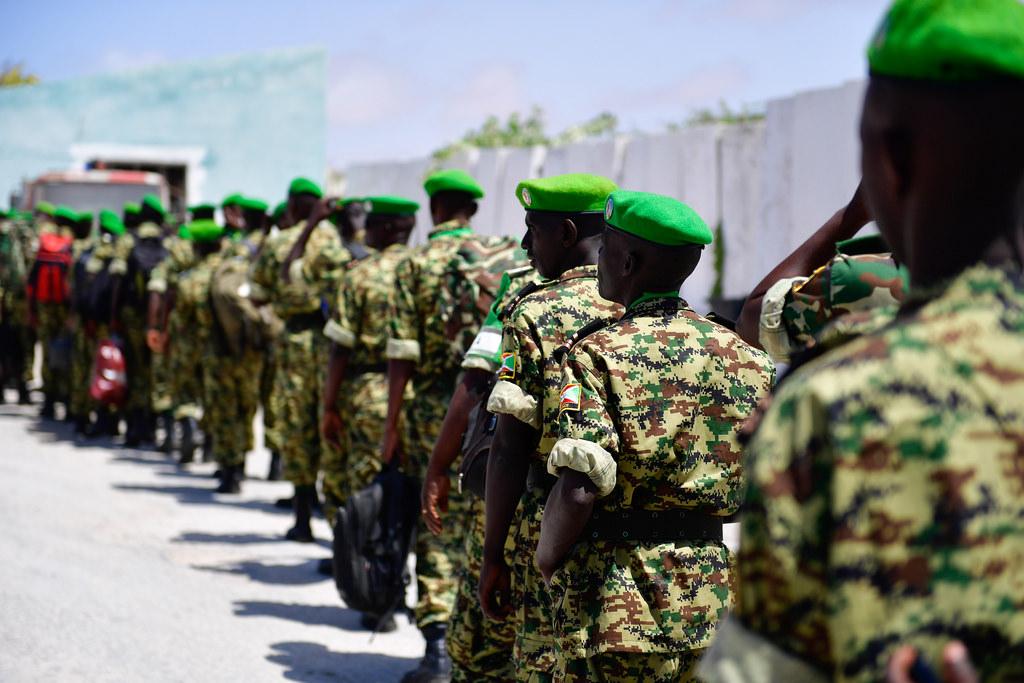




After intense fighting in the eastern Democratic Republic of Congo (DRC), Burundi has announced that it may enter an open war with Rwanda, following a series of incursions and alleged cross-border attacks reportedly carried out by Rwanda.
The Burundian government, through its representative at the United Nations in New York, stated that it is prepared to use all necessary force to defend the country’s sovereignty if these cross-border activities continue.
Ambassador Zéphyrin Maniratanga emphasized that his country’s sovereignty is being violated by heavy artillery attacks and unmanned aerial drones, which have been used to shoot at and intimidate civilians.
Burundi accused Rwanda of ignoring UN Resolution 2773, which calls for the withdrawal of Rwandan troops from eastern DRC and the cessation of military operations that threaten regional security.
Maniratanga said, “These actions violate our country’s sovereignty, endanger civilian lives, and undermine all efforts toward regional peace.”
There are concerns that the conflict in eastern DRC could spill over into neighboring countries, as the powerful AFC/M23 group continues to capture major cities, including Uvira, Bukavu, and Goma.
This has prompted Burundi to take stringent security measures, leaving residents near the Ruzizi border, Bujumbura Rural, and other areas bordering the DRC under significant pressure to protect themselves or flee.
Residents of Ruzizi and other areas report that in recent days, borders were closed—not because of their actions, but due to concerns over their ability to ensure security after M23 suddenly captured Uvira. Some say that within hours of the border closure, many residents wondered if a serious crisis had occurred.
In a statement on December 11, 2025, AFC/M23 confirmed that it has no plans to cross DRC’s borders into Rwanda or Burundi. The group’s spokesperson, Lawrence Kanyuka, stated that their goal is solely to ensure peace and security for DRC citizens, and they have no political or expansionist ambitions in neighboring countries.
However, after Burundian troops, FARDC, and FDLR forces sought refuge in Burundi, rumors about a potential attack on Burundi began circulating on social media and in the press. Some questioned whether an international war was being planned following Burundi’s defensive preparations.
Analysis shows that the main reason for these rumors is AFC/M23’s rapid capture of Uvira and control over three major cities in eastern DRC. This has raised fears that the group might attempt to cross the Ruzizi River. Moreover, Burundi had over 20,000 troops engaged in fighting in Sud-Kivu alongside FARDC, Wazalendo, and FDLR, increasing concerns over potential retaliation by M23.
Civilians in Bujumbura Rural, Ruzizi, and surrounding areas say they have been living in fear of reports about the conflict, looking for safe places to flee, and preparing for possible escalation. Their lives have been severely disrupted.
Diplomatically, Burundi has continued to pressure Rwanda, accusing it of cross-border activities that negatively affect the safety of Burundian citizens.
Ambassador Maniratanga urged the UN Security Council to pass measures, including military and political sanctions against Rwanda, to prevent the situation from escalating.
Security analysts note that an open war between the two countries could stem from two main factors: first, fear that Burundi’s troops remaining in the Kivu fighting could be targeted by M23; second, concern that AFC/M23 might retaliate against Burundian and FARDC forces and their allies.
Security experts say Burundi’s stance is preparatory, but it does not mean war is inevitable. They stress that spreading fear-inducing information could destabilize regional peace and endanger civilians.
In reality, AFC/M23 continues to maintain that its operations are aimed solely at maintaining peace and security in the DRC, with no intention of entering Burundi. The group’s leader said that Uvira is a Congolese issue, to be resolved by Congolese authorities, and that the sovereignty of neighboring countries is respected.
Residents of Uvira and nearby hills report noticing changes in security, with trade routes reopening, markets resuming, and city life gradually returning to normal, though fear remains high.
Civilians along the DRC-Burundi border remain at risk due to the potential disruptions caused by the conflict. Their livelihoods, property, and safety have been affected, with many fleeing to less secure areas or being caught in fear-driven panic.
Reports also indicate that Burundi has closed all borders adjacent to the DRC to prevent unauthorized entry.
Although Burundi appears to have declared open war against Rwanda, this does not mean immediate conflict is unavoidable. However, it highlights the growing insecurity in the Great Lakes region, signaling that both authorities and civilians need to prepare for long-term consequences, and that the international community must continue to monitor and resolve diplomatic tensions swiftly.