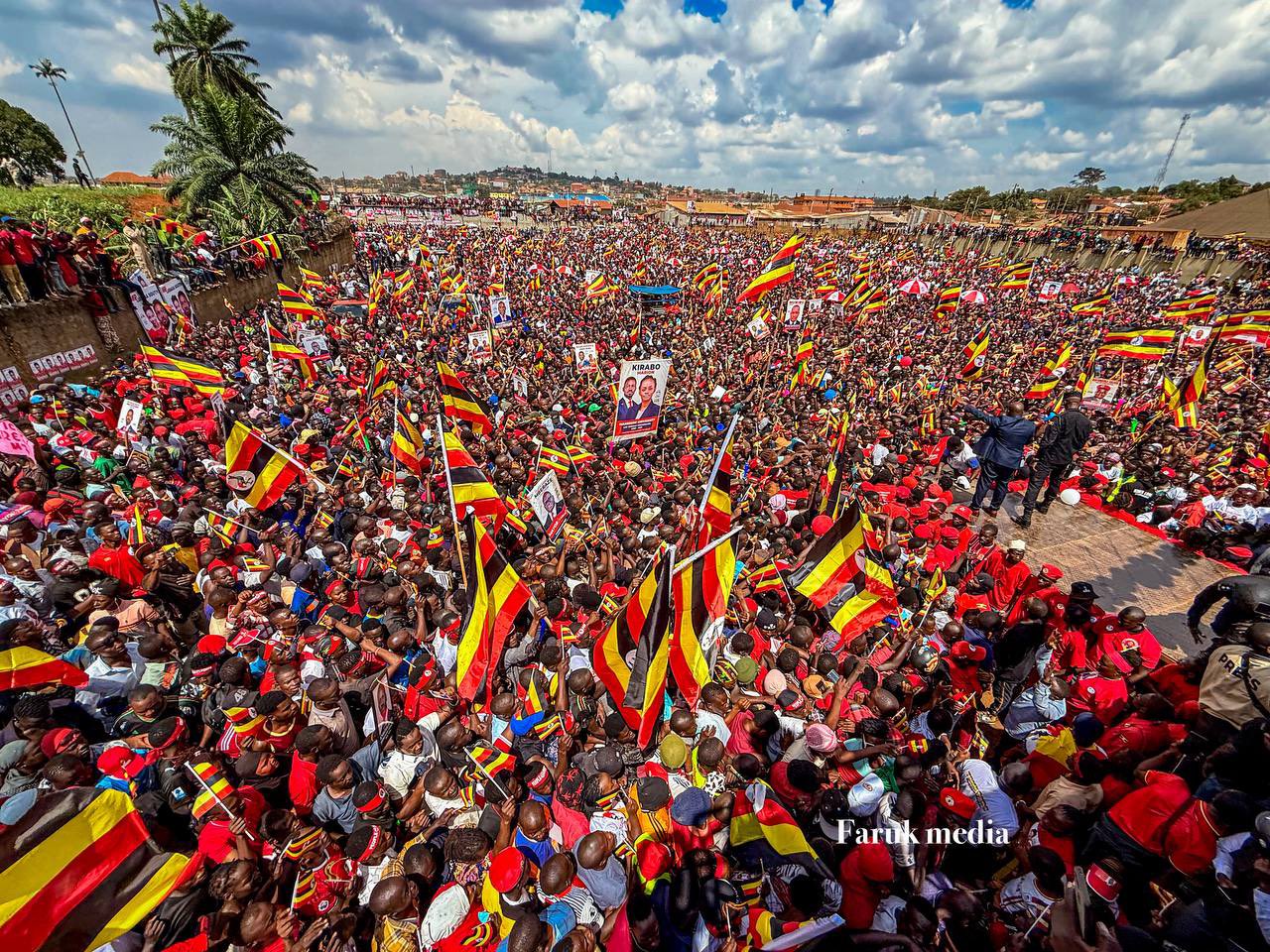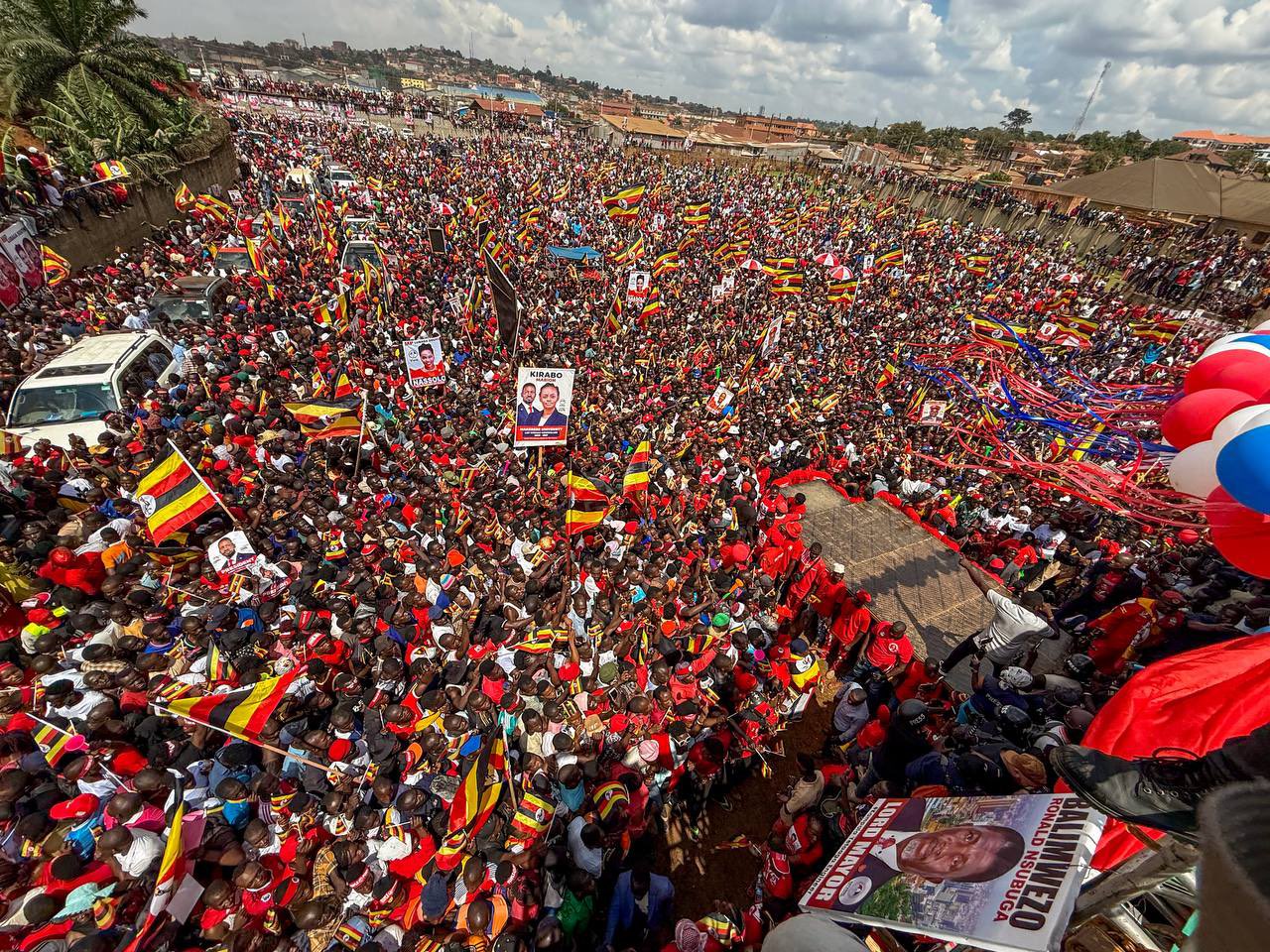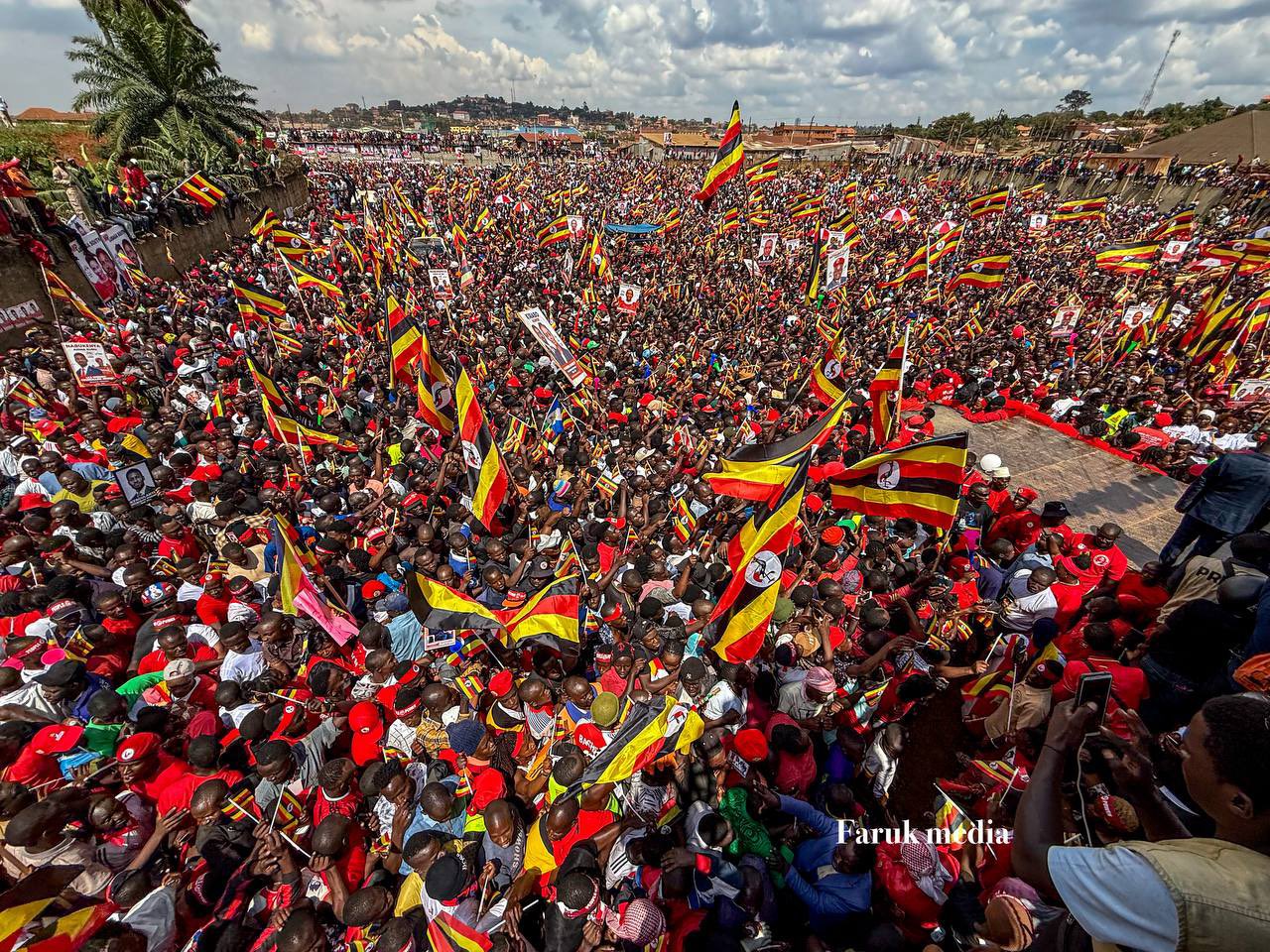




Robert Kyagulanyi, widely known as Bobi Wine, has once again shown his power to mobilize people. On Monday, the National Unity Platform leader launched his 2026 campaign in Lubaga South, Kampala. What was expected to be a normal rally quickly turned into a massive gathering that overflowed the venue and spilled into nearby streets.
From early morning, supporters arrived wearing red, waving flags, and chanting loudly. The slogans #ProtestVote2026 and #ANewUgandaNow echoed through the area, sending a clear message that many Ugandans are hungry for change. The crowd size alone became a statement, even before Bobi Wine spoke.
The rally was peaceful but heavily guarded. Security forces surrounded the venue, with police and military visibly present. Despite the strong security deployment, supporters remained calm, focused, and energetic throughout the event.
Bobi Wine addressed the crowd with a message centered on courage, unity, and resistance through the ballot. He told supporters that Uganda’s problems cannot be solved by fear or silence, but by citizens using their votes to demand accountability and justice.
Several senior figures from the National Unity Platform attended the rally. Among them was NUP spokesperson Joel Ssenyonyi, whose presence added political weight to the event. Other party leaders stood alongside Bobi Wine, reinforcing the image of a united opposition front.
Images and videos shared online showed large numbers of people filling the rally grounds and surrounding areas. These visuals directly challenged claims from critics who tried to downplay the turnout. In Kampala, where political energy is often high, the message was clear: Bobi Wine still commands strong support.
This rally marked the first major signal of how the 2026 election season may unfold. Uganda is heading toward polls scheduled for 15 January, and the political mood is already tense. Economic anxiety, rising living costs, unemployment, and frustration with stalled reforms dominate everyday conversations.
President Yoweri Museveni, in power for nearly four decades, continues to present himself as the only leader capable of guaranteeing stability and progress. His message is built on continuity, security, and experience. Supporters of the ruling government argue that change could bring uncertainty.
Bobi Wine offers a sharply different vision. His message is one of rupture rather than continuity. He speaks of breaking from the past, ending corruption, restoring term limits, and giving young people a real voice in national leadership.
The contrast between the two men could not be clearer. Museveni represents a disciplined reform narrative within an established system. Bobi Wine represents outright defiance of that system, driven by popular protest and civic action.
For many young Ugandans, Bobi Wine’s story mirrors their own struggles. Rising from music to politics, he presents himself as proof that ordinary citizens can challenge power. This personal story continues to fuel his appeal, especially in urban areas like Kampala.
The Lubaga South rally also showed how Kampala remains a key battleground. Control of the capital is not just symbolic; it reflects wider public opinion, media attention, and political momentum. A strong start in Kampala strengthens Bobi Wine’s national campaign image.
At the same time, the heavy security presence reminded supporters of the risks involved in opposition politics in Uganda. Past campaigns have been marked by arrests, violence, and restrictions. Many at the rally said their attendance itself was an act of bravery.
Despite these risks, the mood at the rally was hopeful. Supporters sang, waved flags, and raised their phones to record the moment. For them, the gathering was not just about politics, but about reclaiming dignity and voice.
As Uganda moves closer to the 2026 elections, the battle lines are becoming clearer. One side argues for stability through continuity. The other argues that stability without freedom and opportunity is not enough.
Bobi Wine’s first Kampala rally did more than launch a campaign. It tested the ground, measured public mood, and sent a signal to both supporters and opponents. The message was simple but powerful: the opposition is energized and ready.
Whether this momentum can be sustained across the country remains an open question. Rural areas, state institutions, and security forces will play major roles in shaping the final outcome.
For now, however, Kampala has spoken loudly. The overflowing crowd in Lubaga South has set the tone for a campaign that promises to be intense, emotional, and deeply contested.
As Uganda heads toward January 2026, one thing is certain. The race to State House will not be quiet, and the voices calling for change are growing harder to ignore.