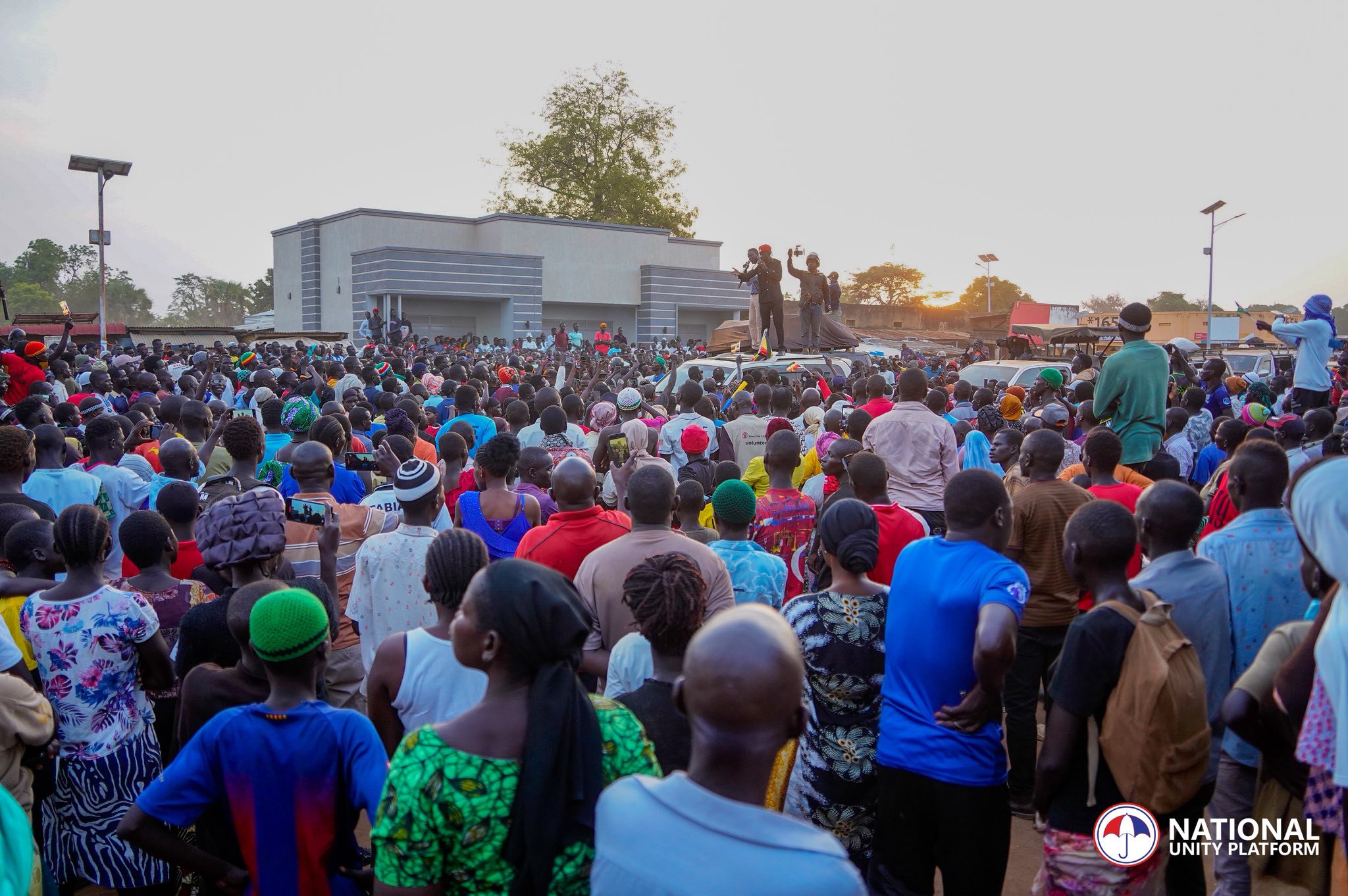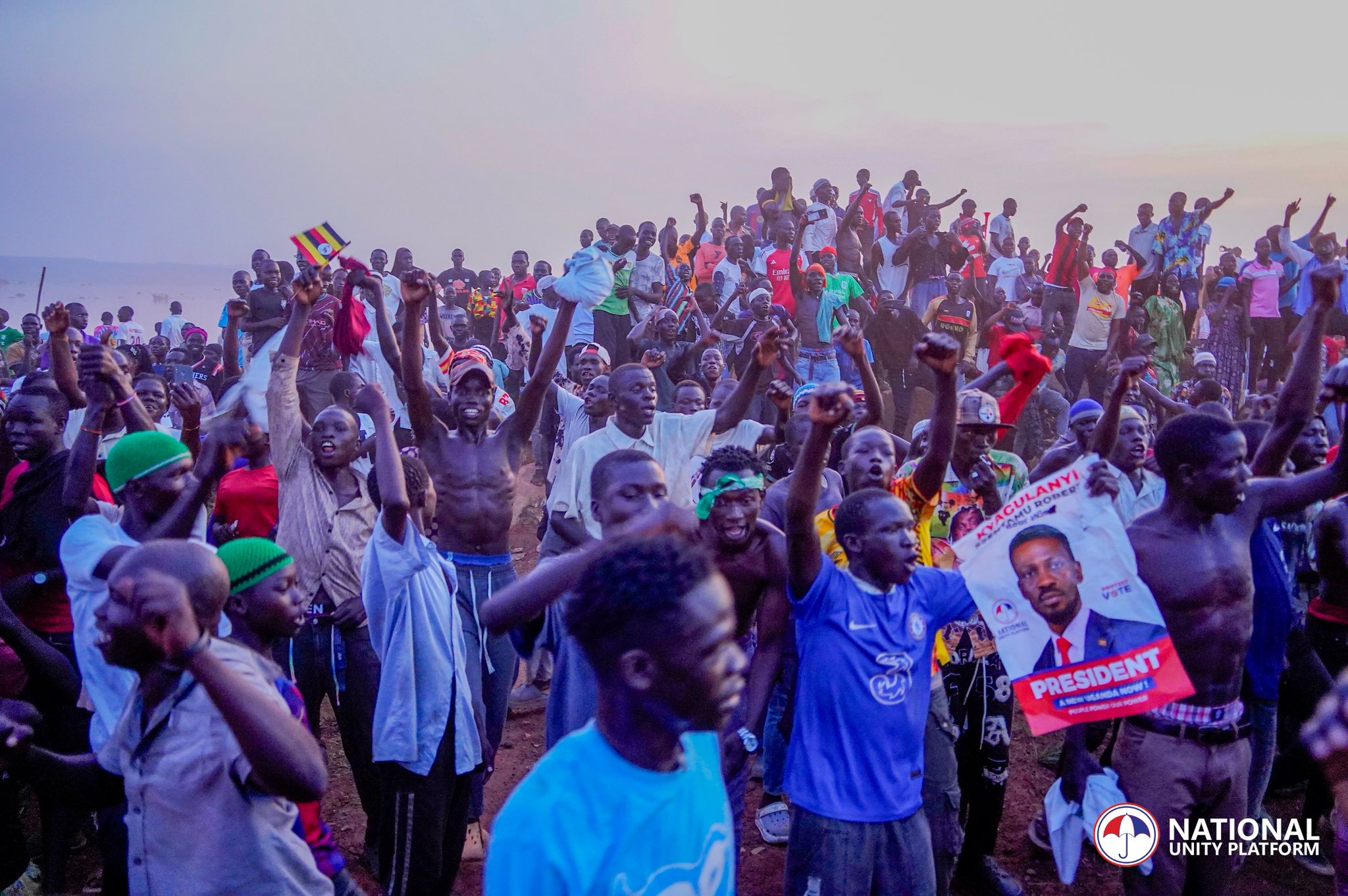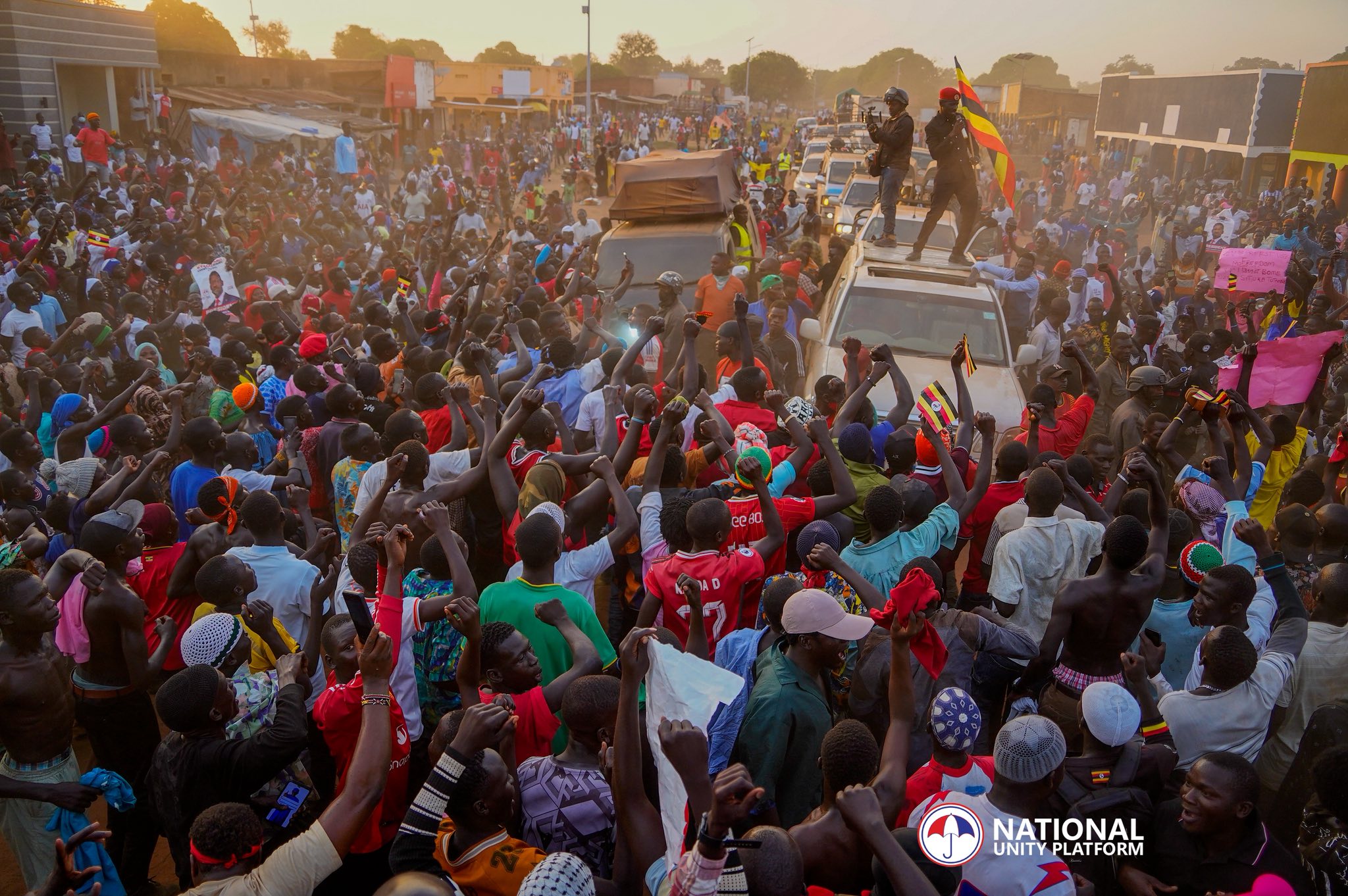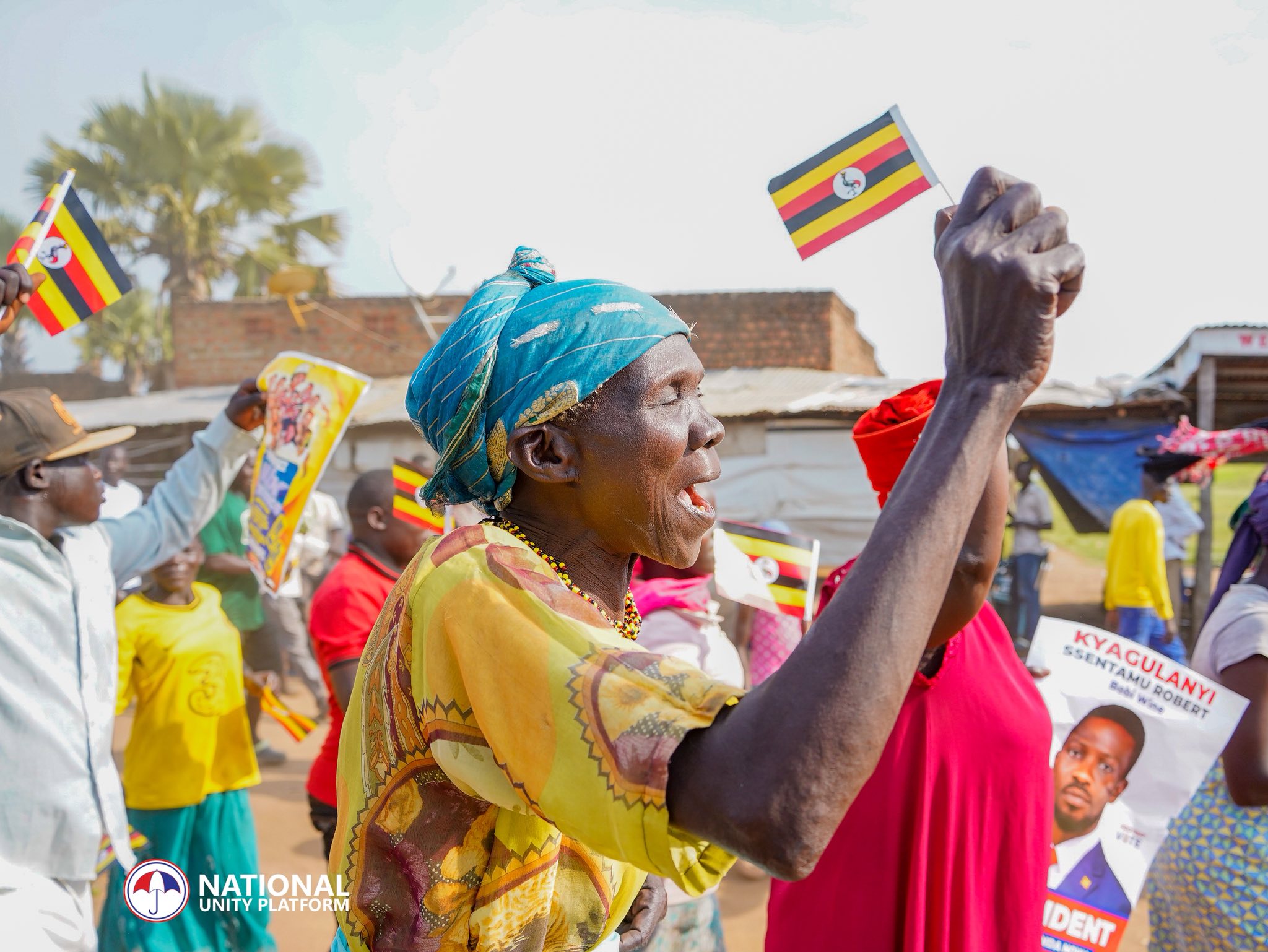




Crowds of Ugandans have been pouring into the streets, waving national flags, lifting handwritten placards, and chanting messages of hope as momentum around opposition figure Bobi Wine continues to grow. The scenes captured across rural districts and small trading centers reveal more than political excitement they expose a population hungry for change and searching for a leader who speaks their language, understands their daily struggles, and reflects their aspirations.
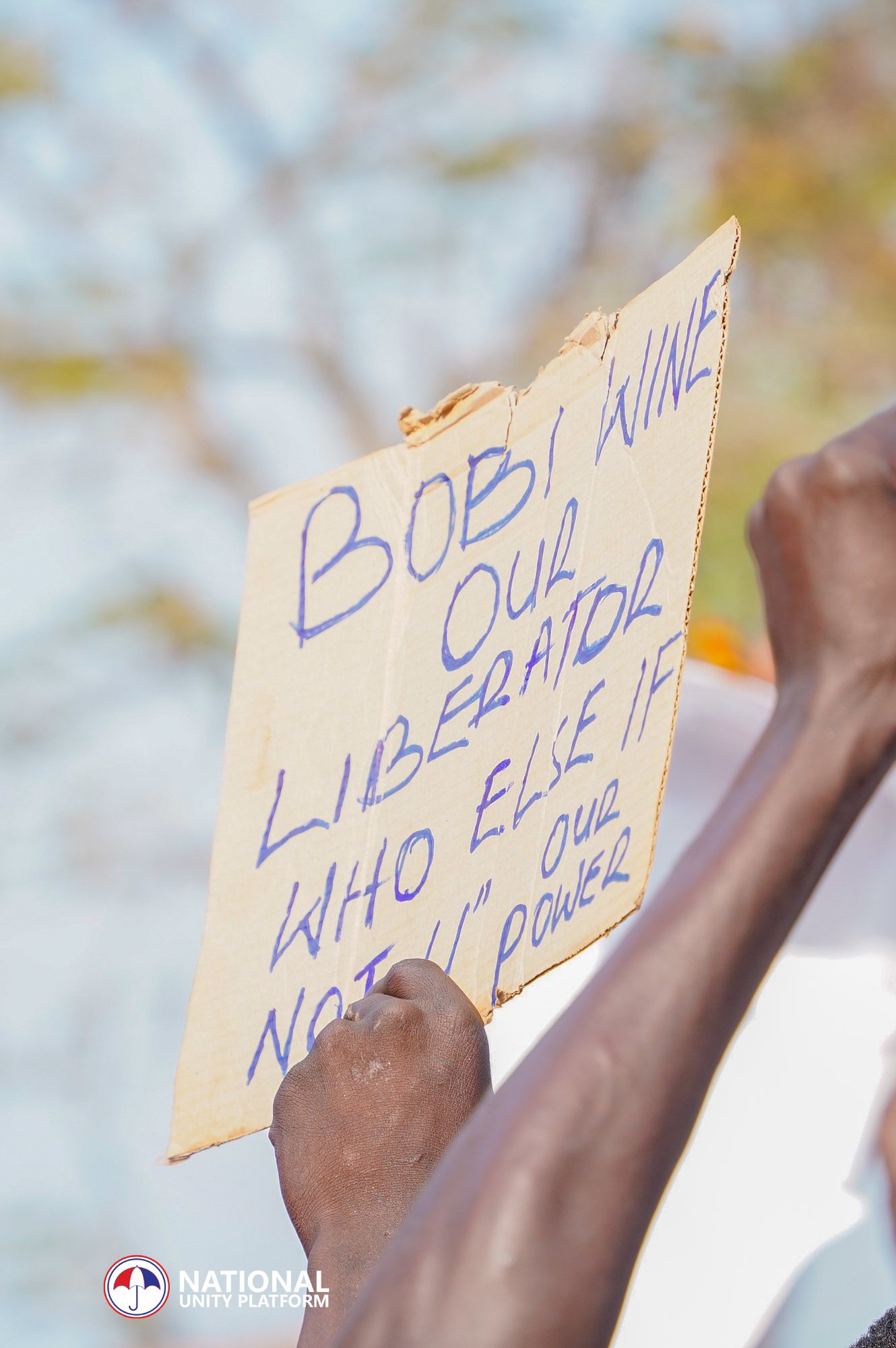
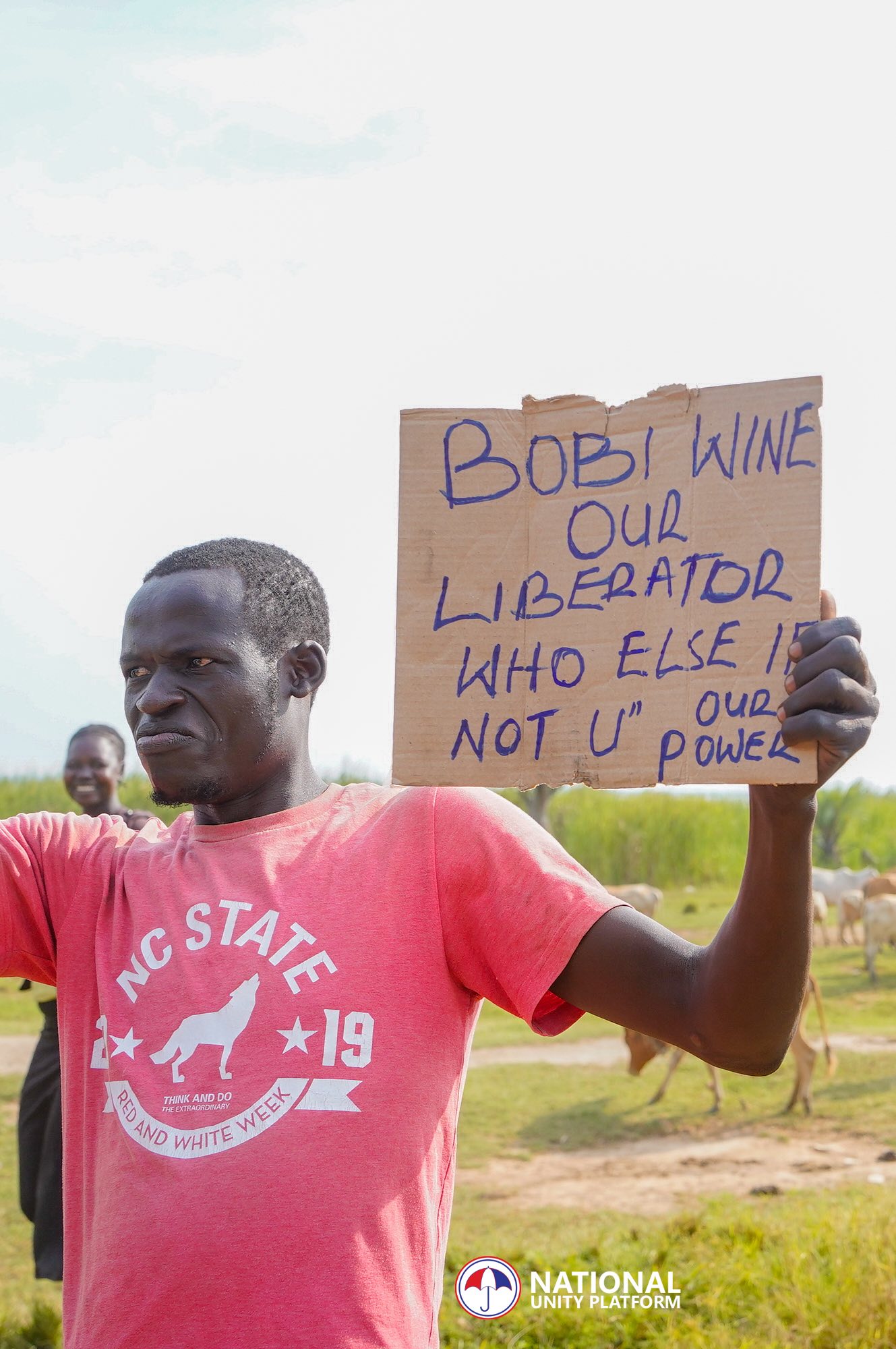
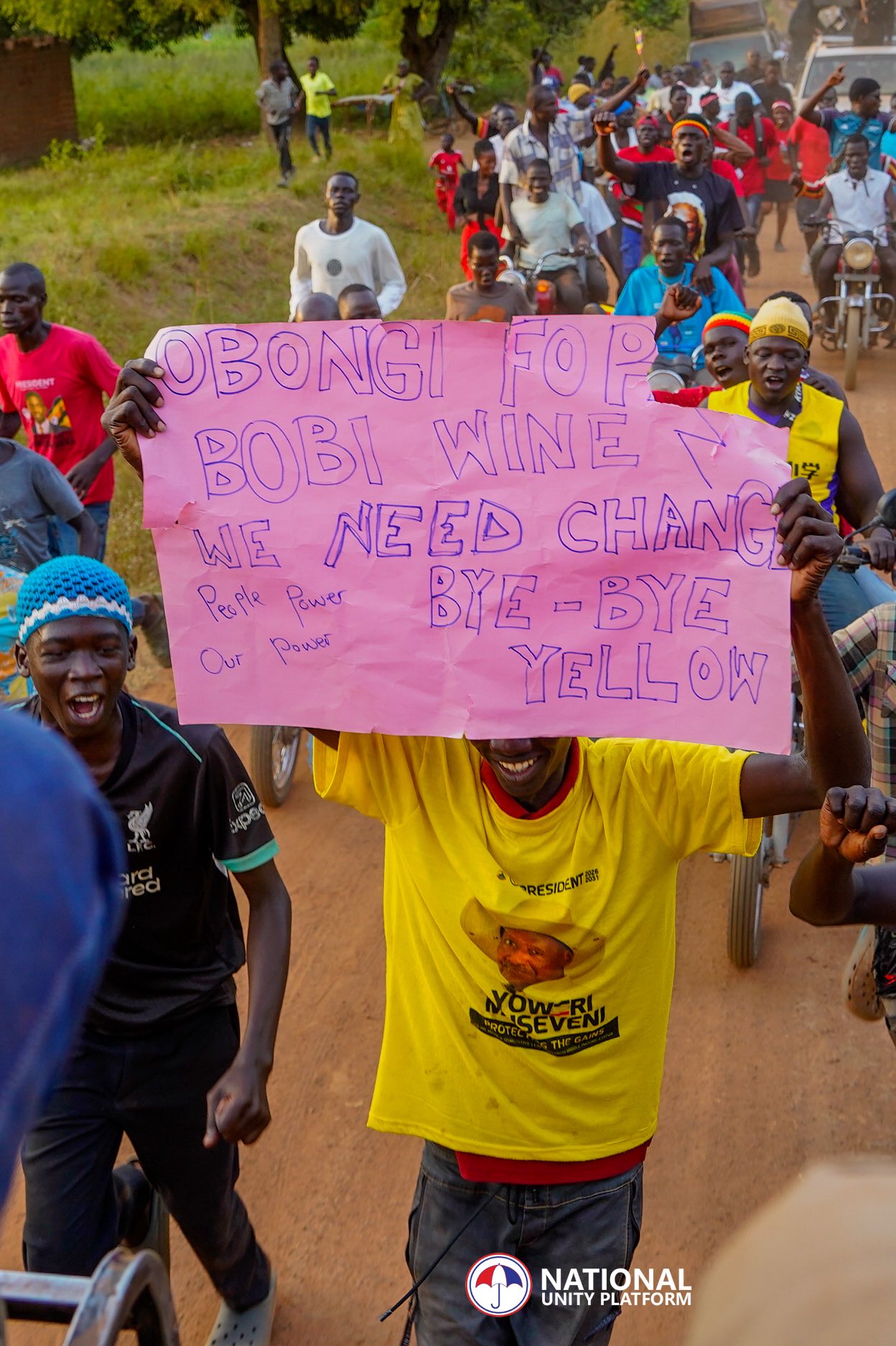
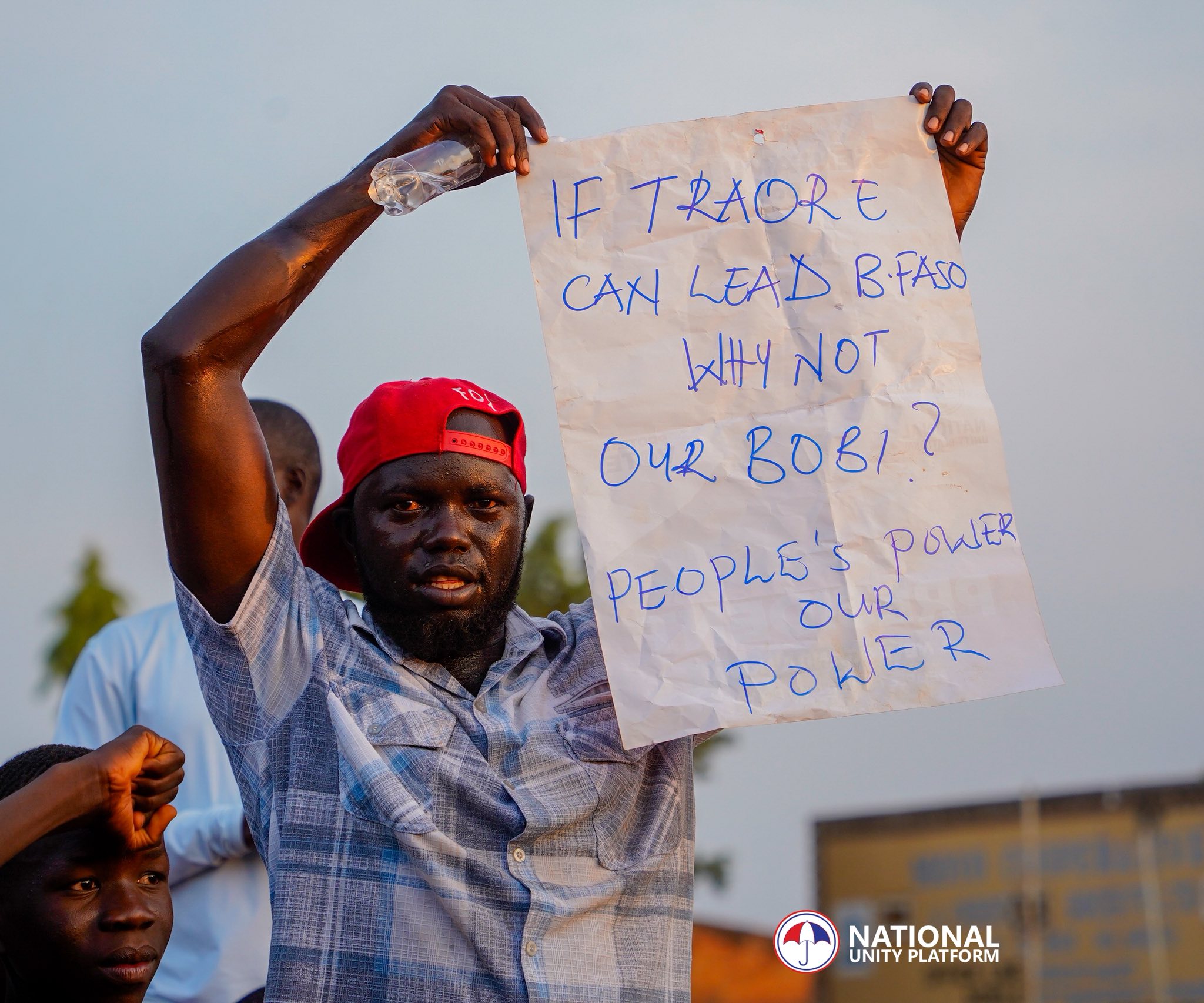
Many of those gathering are ordinary citizens: young men in dusty football jerseys, women carrying infants on their backs, elderly villagers wrapped in colorful gomesis, and teenagers running alongside pickup trucks with unrestrained enthusiasm. Their placards, written on torn cardboard and notebook sheets, tell a story that is raw and unfiltered. One man raises a sign reading, “If Traoré can lead Burkina Faso, why not our Bobi?” Another elderly woman waves the Ugandan flag as she shouts, “People Power, Our Power!” A young man on a dirt road holds a cardboard message: “Bobi Wine our liberator, who else if not you?”
These words, though simple in structure, reflect a political mood that has been building quietly but powerfully across the country. Many of those taking part in these gatherings say they are motivated not by political parties but by daily realities unemployment, poverty, the rising cost of living, and a sense of stagnation after decades under the same leadership. A youth leader in one of the rallies explains that what they want is “a chance to breathe, a chance to dream again.”
The visible presence of young people, who make up the largest demographic in Uganda, highlights a critical shift. Many of them say they see in Bobi Wine someone who understands their frustrations because he has lived them. He rose from the ghettos of Kampala, made a career in music speaking against inequality, and eventually stepped into politics on a platform that centers the struggles of ordinary citizens. To many, he represents an alternative they have not had before.
An elderly farmer who walked several kilometers to join a gathering says, “We are tired of promises. We want someone who knows our problems, not someone who talks from above.” Her voice echoes a sentiment increasingly heard across rural Uganda regions long considered secure political strongholds for the ruling establishment.
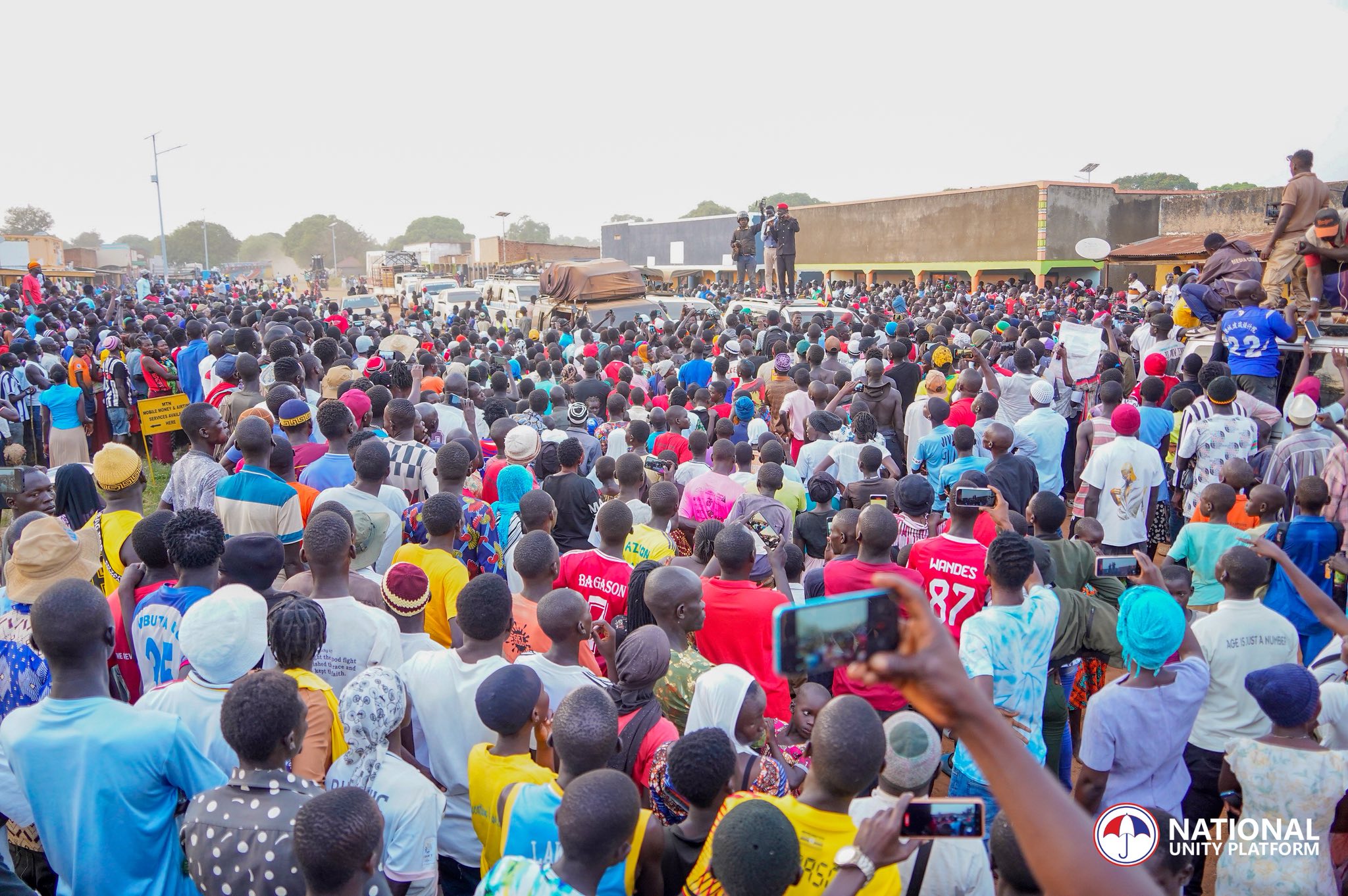
Even the improvised nature of the gatherings loudspeakers mounted on boda bodas, pickup trucks converted into mobile platforms, and crowds surging behind dusty convoys demonstrates a movement powered not by state machinery but by community effort. There is little sign of staged choreography or paid mobilizations. Instead, the images show spontaneity, authenticity, and a sense of urgency driven by lived experience.
To many of those who attend these rallies, Bobi Wine represents not just a candidate but a symbol. A symbol of generational frustration, a symbol of unfulfilled potential, and a symbol of hope for democratic renewal. One young man holding a plastic horn says, “We have been waiting too long. If change is coming, we want to be part of it.”
The gatherings also parallel shifts seen across parts of Africa, where younger leaders and people-powered movements have challenged long-standing governments. The reference to Burkina Faso’s Ibrahim Traoré on several signs is a reflection of how citizens interpret regional political winds winds of change that they believe could reach Uganda as well.
As the sun sets in one of the districts, thousands continue marching through clouds of red dust, chanting Bobi Wine’s name and hoisting posters with his portrait. There is a sense that these communities are not simply participating in a political rally they are expressing a collective longing for a different future.
A young mother holding a small Ugandan flag summarizes the mood simply: “We want a country that listens to us.”
For many in these crowds, Bobi Wine has become the vessel through which that longing is expressed. Whether that energy will translate into political change remains uncertain, but the message carried in rural roads, crowded markets, and village paths is unmistakable: a growing number of Ugandans believe it is time for something new, and they believe Bobi Wine may be the one to lead that journey.