



The East African Community (EAC) has finally broken its silence on the growing political storm in the Horn of Africa, sending a powerful message after Israel officially recognised Somaliland as an independent state. The regional bloc has openly reaffirmed its full support for Somalia, rejecting any move that threatens the country’s unity and territorial integrity.
This strong position by the EAC comes at a time of rising tension not only between Somalia and Somaliland, but across Africa and the wider international community. Israel’s decision has triggered diplomatic reactions, celebrations, condemnations, and warnings of future instability.
Serivisi za Digital za Afrovera
Dufasha business n’imishinga kugaragara online bin yuze muri serivisi za digital zinoze kandi ku giciro gito cyane.
- ✔ Gukora Website za business & companies
- ✔ Posters & Graphic Design
- ✔ Website Hosting & Domain
- ✔ Gufungura YouTube Channels za business
In a statement released on Sunday, December 28, the EAC Secretariat made it clear that it recognises the Federal Republic of Somalia as one single sovereign state. The statement emphasised that Somalia remains under the authority of the legally recognised government led by President Hassan Sheikh Mohamud.
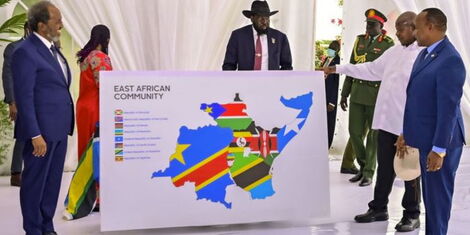
The EAC, which includes Kenya, Uganda, Tanzania, Rwanda, the Democratic Republic of Congo, South Sudan, and Somalia, said it fully aligns itself with the African Union’s long-standing position on Somalia’s sovereignty. The bloc referred to the Consultative Act of the African Union and previous decisions that uphold Somalia’s territorial unity.
According to the statement, the EAC also relied on its own founding treaty to justify its position. The community stressed that it only recognises borders inherited at independence and does not support any unilateral attempts to redraw African boundaries.
“In accordance with the treaty for the establishment of EAC, the community recognises the Federal Republic of Somalia with its borders inherited at independence,” the statement said, leaving no room for interpretation.
The regional body went further by directly calling on Israel to respect Somalia’s unity and territorial integrity. It urged Israel and all other stakeholders to act within established regional and international legal frameworks that protect state sovereignty.
By doing so, the EAC clearly rejected Israel’s recognition of Somaliland, describing the move as unacceptable and destabilising. The decision by Israel has already caused strong political and diplomatic tension across Eastern Africa and the entire continent.
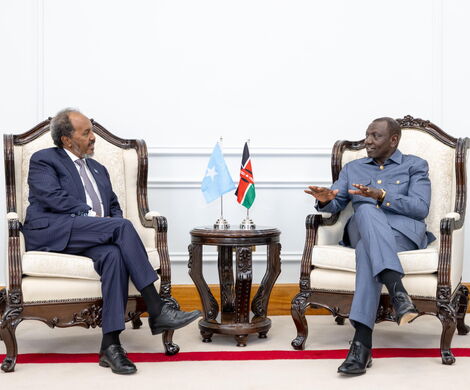
The EAC’s declaration came just hours after Somali President Hassan Sheikh Mohamud held a phone call meeting with several East African leaders. Among them were Kenya’s President William Ruto, Tanzania’s President Samia Suluhu Hassan, and Uganda’s President Yoweri Museveni.
During the phone conversations, the leaders reportedly assured President Mohamud of their support as tensions continue to rise. The discussions focused on bilateral relations, regional security, and broader global cooperation.
Although individual presidents have not yet released detailed public statements, the EAC’s collective voice now speaks loudly on behalf of the region. It signals that East Africa is not willing to remain silent on matters affecting Somalia’s sovereignty.
While Mogadishu and its allies expressed concern and condemnation, a very different scene unfolded in Hargeisa, the capital of Somaliland. Celebrations filled the streets on Sunday evening as residents welcomed Israel’s recognition with excitement and hope.
Many Somaliland citizens described the Israeli declaration as a major diplomatic victory. Some claimed it marked their final separation from what they described as a war-torn Somalia and a new chapter of international acceptance.
Israel’s Prime Minister, Benjamin Netanyahu, announced on Friday, December 26, that Israel had officially recognised Somaliland as an independent state. He also promised to establish diplomatic relations and offer support in key areas such as the economy, agriculture, and technology.
Netanyahu’s announcement immediately sparked backlash across Africa. The African Union swiftly dismissed Israel’s declaration, reiterating that it only recognises the Federal Republic of Somalia as a sovereign state.
The AU warned that any interference with Somalia’s borders could create serious security threats, not just for Eastern Africa, but for the entire continent. It stressed that Africa cannot afford new conflicts caused by external actors.
Arab and Islamic states also strongly condemned Israel’s move. Many described Netanyahu’s action as a serious violation of international law and a dangerous precedent that could destabilise fragile regions.
Despite the absence of individual statements from some East African presidents, the EAC’s position shows growing regional unity. The bloc appears determined to stand with Somalia as the country intensifies efforts to strengthen its borders, security institutions, and diplomatic ties.
This unfolding situation highlights deeper global power struggles and raises questions about foreign influence in African affairs. It also reminds the world that Africa remains sensitive to issues of sovereignty, borders, and historical agreements.
As reactions continue to pour in, the recognition of Somaliland by Israel may reshape diplomatic relations in the Horn of Africa. However, with the EAC and African Union firmly backing Somalia, the path ahead looks increasingly complex and tense.