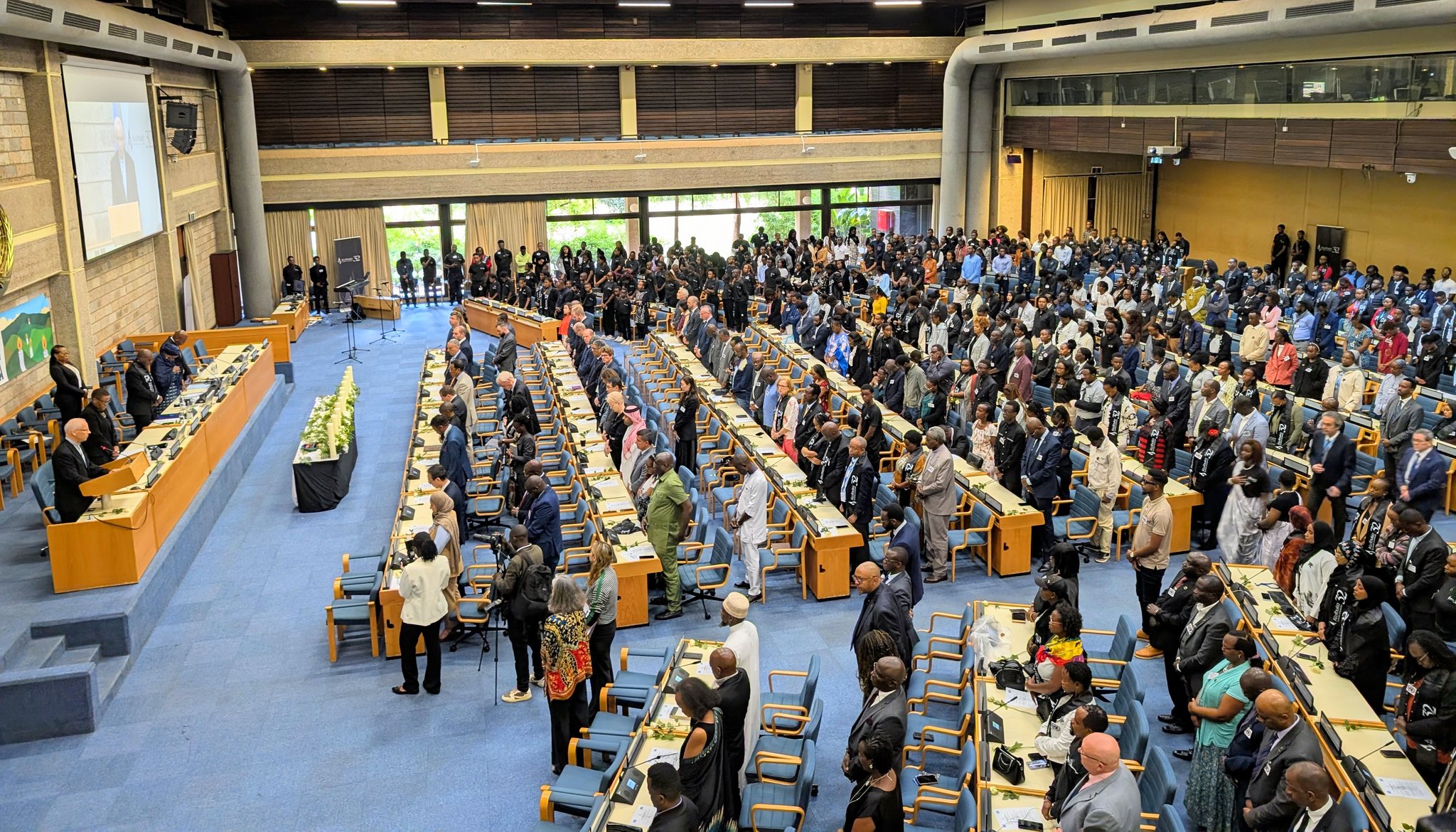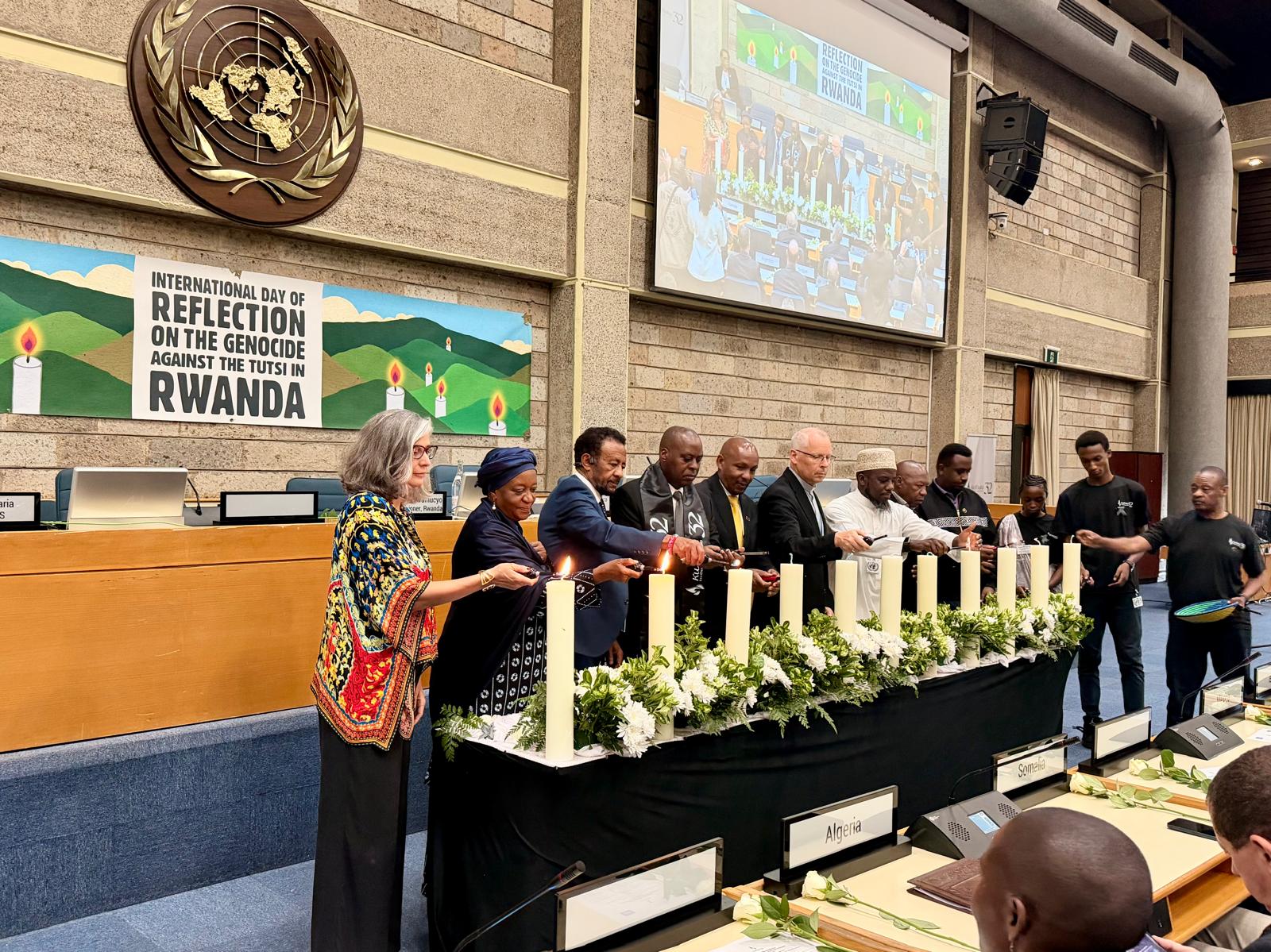




Nairobi, Kenya — More than 800 participants are gathering this Tuesday at the United Nations Office at Nairobi (UNON) to mark the 32nd commemoration of the 1994 Genocide against the Tutsi in Rwanda, bringing together diplomats, Kenyan officials, international organizations, and members of the Rwandan community in Kenya.
The commemoration, held under the theme “Remember, Unite, Renew,” forms part of the global Kwibuka32 remembrance, honoring more than one million victims killed during the 100-day genocide in 1994.
The ceremony, currently underway, is marked by solemn reflection, testimony, and renewed calls for global accountability in preventing genocide and mass atrocities.
Addressing the gathering, Rwanda’s High Commissioner to Kenya, Ambassador Ernest Rwamucyo, emphasized that the genocide against the Tutsi was not a spontaneous outbreak of violence, but a systematically planned campaign rooted in decades of division, discrimination, and dehumanization.
“We remember the men, women and children whose lives were cut short simply because of who they were,” he said, stressing that remembrance must go beyond mourning and translate into a commitment to ensure such atrocities never happen again.
Ambassador Rwamucyo warned of the continued spread of genocide ideology and denial, particularly in the Great Lakes region, noting that extremist narratives targeting Tutsi communities, including the Banyamulenge in eastern Democratic Republic of Congo, continue to fuel violence and displacement.
He called on the international community to act decisively against hate speech, denial, and impunity, cautioning, “Silence in the face of warning signs is complicity,” a lesson drawn from the failure to prevent the 1994 genocide.
The Rwandan envoy also highlighted the country’s post-genocide recovery, pointing to unity, reconciliation, and inclusive governance as pillars of Rwanda’s transformation. He credited the leadership of President Paul Kagame and the resilience of Rwandans for rebuilding a nation once devastated by genocide.
On behalf of the Government of Kenya, Ambassador Dennis Mburu, Deputy Director-General for African Affairs at the Ministry of Foreign and Diaspora Affairs, reaffirmed Kenya’s solidarity with Rwanda, describing the genocide as “not Rwanda’s tragedy alone, but a failure of humanity.”
“The world watched, the world hesitated and in that hesitation, a nation was nearly consumed,” he said, emphasizing that remembrance must serve as a commitment to a better future.
Ambassador Mburu praised Rwanda’s community-based justice system, particularly the Gacaca courts, describing them as a uniquely Rwandan approach that placed communities at the center of truth, accountability, and reconciliation.
Delivering remarks on behalf of the United Nations Secretary-General António Guterres, the UN Under-Secretary-General and Director-General of UNON, Zainab Hawa Bangura, underscored the global responsibility to prevent genocide.
“In just 100 days, more than a million people were murdered… Entire families were erased,” the Secretary-General’s message stated, describing the genocide as one of the darkest chapters in human history.
The statement acknowledged the failure of the international community to act in 1994 and called for urgent, collective action to prevent future atrocities.
“It is not enough to remember the dead. We must learn from past failures and protect the living,” the message emphasized, urging countries to fully implement the Genocide Convention and strengthen systems that counter hate speech and incitement to violence.
The United Nations reaffirmed its solidarity with Rwanda and with all nations working to uphold human dignity and prevent mass atrocities worldwide.
As the ceremony continues in Nairobi, the message from all speakers remains clear: remembrance must be matched with vigilance, education, and decisive global action to ensure that “Never Again” becomes a lived reality rather than a repeated promise.