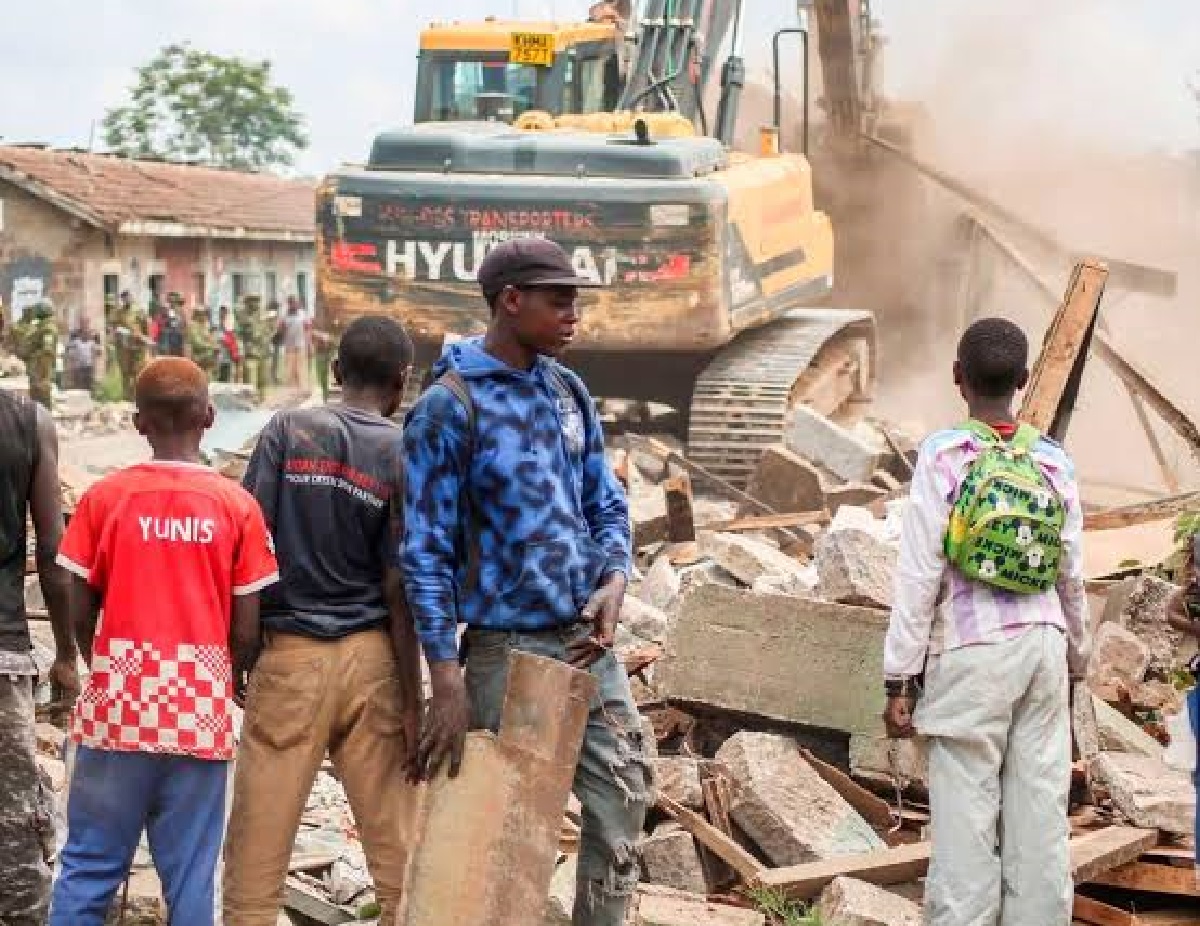




There was pain, disbelief and quiet prayer in Makongeni Estate after Makongeni Seventh-day Adventist (SDA) Church was caught up in the ongoing demolitions that have swept through the area, leaving congregants heartbroken and places of worship reduced to rubble.
The church, which has for years served as a spiritual refuge for hundreds of families, was demolished as part of the government-led Affordable Housing Project, a move that has also affected several other religious institutions within the estate. For many worshippers, the destruction was not just about a building, but the loss of a sacred space where lives were dedicated, marriages blessed, children baptised and the grieving comforted.
Eyewitnesses described emotional scenes as church members gathered nearby, some openly weeping, others kneeling in prayer as bulldozers moved in. “This was our second home,” one congregant said. “We prayed here in good times and bad times. Watching it come down feels like losing a part of our lives.”
Makongeni SDA Church joins other churches and a mosque that have been affected by the demolitions, raising serious concerns among religious leaders about the future of worship spaces and community support systems in the area. Clergy members say churches play a critical role beyond prayer, offering counselling, food aid, youth mentorship and hope to struggling families.
While authorities maintain that the demolitions are necessary to pave way for affordable housing, church leaders and residents have questioned the short notice, lack of clear relocation plans, and uncertainty around compensation. Some religious institutions claim they were in the middle of seeking legal redress when demolition crews arrived.
As dust settles over Makongeni, what remains is a deep sense of loss. For the faithful, the demolished walls once echoed with hymns and sermons of hope. Today, the silence left behind tells a painful story, that even places of worship were not spared.
Church leaders have called for dialogue, urging the government to consider humane alternatives that protect both development goals and the spiritual wellbeing of communities.
For now, congregants are left asking a haunting question: Where will we worship tomorrow?