Home Blog Page 135

Baraka’s Curse? Kenyan Teen Begins Mimicking Stolen Animals After Selling Them, Leaves Market Crowd Speechless

0

A cloud of confusion, fear, and disbelief has engulfed residents of Mombasa after a teenage boy began bleating like a goat and clucking like a chicken, just days after allegedly stealing the very animals in Nairobi.  

The incident has left many wondering whether the bizarre transformation is a case of psychological trauma, divine intervention, or a powerful spiritual curse. 

Sixteen-year-old Baraka Joseph, now at the center of the mystery, was taken to Majengo Police Post on June 28, 2025, by concerned residents who found him at the Sokoni market behaving erratically. Witnesses say the boy could not speak but communicated through notes while mimicking the exact sounds of goats and chickens.  

In a handwritten statement handed to officers at Makupa Police Station, Baraka confessed to stealing two goats and two chickens from a man in Nairobi’s Eastlands area in April. He reportedly sold the goats for KSh 3,000 and the chickens for KSh 1,000. 

Baraka claimed that until June 4, when he traveled to Mombasa, he was speaking normally. But shortly after arriving, his speech vanished, and the animal sounds took over.  

Through his notes, the teen pleaded for help to return to Nairobi, stating that his strange condition was likely caused by guilt and a higher power punishing him for his actions. He asked to be allowed to seek forgiveness from the owner of the stolen livestock. 

Police, unsure whether Baraka’s condition is psychological, medical, or spiritual, referred him to Coast General Hospital for evaluation. Meanwhile, authorities in Mombasa are working with their counterparts in Nairobi to trace the livestock owner and verify the boy’s account. 

The case has sparked intense debate across Kenya. Some citizens believe the teen’s condition is a result of “justice from above”a warning to others not to steal, while others are calling for compassion and professional care for the minor. As the story spreads across social media, reactions have ranged from spiritual awe to political satire. 

In a curious twist, the same week Baraka’s case made headlines, CCTV footage from a separate household captured a failed attempt by a man trying to steal chickens.  

The barefoot suspect, hoping to go unnoticed without a flashlight, entered a henhouse in the dead of night. But as he reached out for the birds, loud clucking triggered the camera, sending him fleeing into the darkness.  

The footage has added fuel to the fire, with many drawing parallels between the incidents and warning would-be thieves that “the chickens are watching.” 

While Baraka awaits further tests and possible return to Nairobi, many Kenyans are watching the story unfold like a real-life folklore drama, part horror, part comedy, and fully captivating. Whether it ends in healing, redemption, or spiritual revelation, one thing is clear: no one is laughing when the goat starts talking back. 
Watch the Video here

Rigathi Gachagua Makes Millions from TikTok Lions in Viral Livestream, Sparks National Debate

0

In a surprising twist to his political journey, former Deputy President Rigathi Gachagua is making headlines again, this time not for a government scandal or rally speech, but for cashing in on TikTok. 

Gachagua, once seen as a rigid, no-nonsense leader, has found new fame among Kenyan youth and government critics after his impeachment.  

With growing public frustration directed at President William Ruto’s administration, Gachagua has quickly positioned himself as a vocal opposition figure, launching scathing attacks that are now drawing both attention and cash, literally. 

On Friday, June 27, Gachagua hosted a fiery TikTok livestream where he didn’t hold back. With a sharp tongue and politically charged rhetoric, he tore into the government’s policies, corruption, and what he calls betrayal of the Kenyan people. But what stole the show wasn’t just the speech, it was the reaction. 

Supporters poured in digital gifts during the livestream, the most notable being 78 virtual “Lions,” TikTok’s top-tier gift. 

To put this into perspective, each Lion is worth $400. With the current exchange rate at approximately 129.50 Kenyan shillings per US dollar, each Lion equates to around KSh 51,800. Multiply that by 78, and the total jumps to over KSh 4 million.  

However, since TikTok typically retains a 50% commission, Gachagua likely pocketed close to KSh 2 million from the session. For a politician with no official title, this is a groundbreaking moment, he becomes the first major Kenyan political figure to monetize TikTok on such a scale. 

The event sparked an instant storm on social media. On X (formerly Twitter), many users expressed disbelief and skepticism. Some accused Gachagua of manipulating the system, suggesting he might be gifting himself through fake accounts to build hype. Others went further, calling it a clever scheme to launder money while creating a public spectacle.  

There were also concerns that this might draw the attention of the Kenya Revenue Authority, with speculation that Gachagua could be targeted for tax evasion if the government feels threatened by his growing popularity. 

While Gachagua’s online stunt amazed many, others saw it as a reflection of a deeper trend, Kenyans’ obsession with political drama and their willingness to financially support figures who challenge the status quo.  

Some users praised him for using the platform smartly, while others questioned why ordinary citizens would gift a former deputy president, someone they assume is already wealthy, with their hard-earned money. 

Interestingly, the moment also sparked reactions beyond Kenyan borders. Germany-based TikToker Roseline Ngolo, popularly known as Nyako, weighed in by cautioning content creators and users alike. She warned that TikTok gifts might appear lucrative but don’t equate to real, sustainable wealth. 

According to her, the platform’s reward system often leads creators into a false sense of financial security. Her take, however, was met with mixed reactions. Some agreed with her advice, while others accused her of being bitter due to mismanaging her own earnings. 

Gachagua’s sudden TikTok fame may be amusing to some, but it reveals a shifting dynamic in Kenyan politics. Digital platforms are no longer just tools for visibility, they’re emerging as new avenues for fundraising, influence, and political messaging.  

The lines between politician, content creator, and digital hustler are blurring, ushering in a new era where going live could be as powerful as holding a press conference. 

Whether this marks the beginning of a digital political revolution or just another internet sensation remains to be seen. One thing is clear: Rigathi Gachagua is no longer just a politician, he’s now a TikTok sensation, banking on both outrage and admiration. 

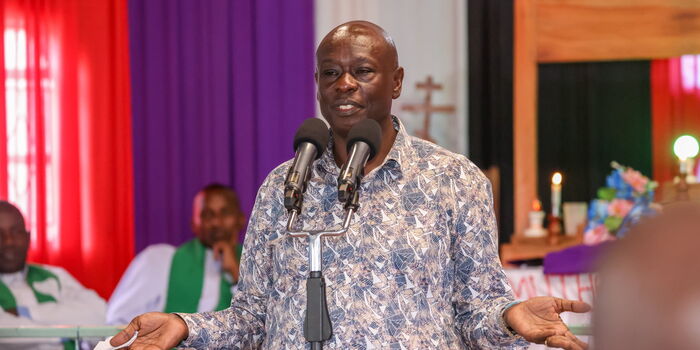
Rigathi Gachagua during a church service at AIPCA St. Mary’s Church in Ruiri/Rwarera Ward in Buuri Constituency, Meru County on June 22, 2025. Photo: Rigathi Gachagua

DCI Faces Backlash Over Arrest of Artists and Activists Linked to June 25 Protests

0

The Directorate of Criminal Investigations (DCI) is at the center of a growing controversy following the arrest of three individuals widely recognized as human rights activists and community organizers.  

The arrests, made on June 26, have sparked outrage among civil society groups, opposition politicians, and fellow activists who view the move as an attempt to suppress dissent. 

The DCI claims the trio played a central role in orchestrating chaos during the June 25 commemorative protests, accusing them of coordinating the infiltration of goons who allegedly looted property and incited violence.  

According to an official statement, the suspects were apprehended aboard a Mombasa-bound bus near Konza City after what the agency described as a “forensic investigation” informed by citizen testimonies. 

But rights groups and colleagues of the arrested have painted a very different picture. 

In a strongly worded statement issued on June 28, the Kenya Human Rights Commission (KHRC) dismissed the DCI’s report as “baseless” and “a blatant act of criminalising dissent.”  

The KHRC demanded the unconditional release of the three, highlighting their track record as regionally recognized activists who use music and art to promote justice and build movements rooted in nonviolence and solidarity. 

“These charges are not only fabricated, but they also amount to a deliberate distortion of facts,” read part of the KHRC’s statement. 

Further fueling the backlash, Ukweli Party, where one of the arrested individuals serves as Secretary General, condemned the arrests and accused President William Ruto’s administration of political repression.  

The party went as far as alleging that the government had sponsored violent elements to infiltrate the protests in order to discredit them. 

“The real goons were deployed by the state,” said the party’s statement, directly accusing President Ruto of using underhanded tactics to suppress legitimate dissent. 

The three are expected to be arraigned in court on Monday, with the DCI pushing for charges that include incitement to violence, arson, malicious damage to property, theft, and promoting disobedience to the law. 

As Kenya grapples with a resurgence of civil protests and youth-led movements, these arrests are fast becoming a flashpoint in the wider conversation about freedom of expression, assembly, and the role of security forces in a democratic society.  

Critics argue that targeting respected community voices only escalates public distrust and undermines the government’s stated commitment to constitutional rights. 

The coming days, and particularly the Monday court session, will be closely watched as the country assesses whether justice is being upheld or weaponized. 

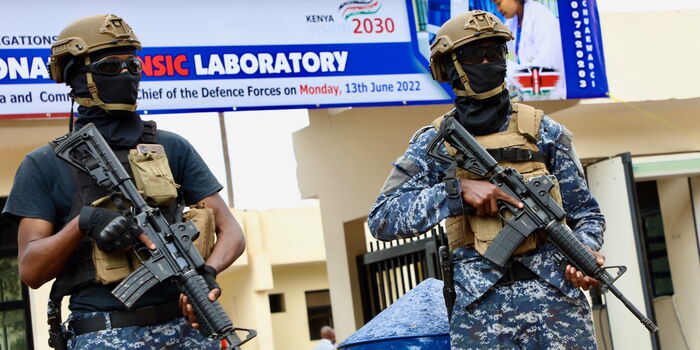
Officers from the Directorate of Criminal Investigations manning the agency’s main entrance in Nairobi. DCI
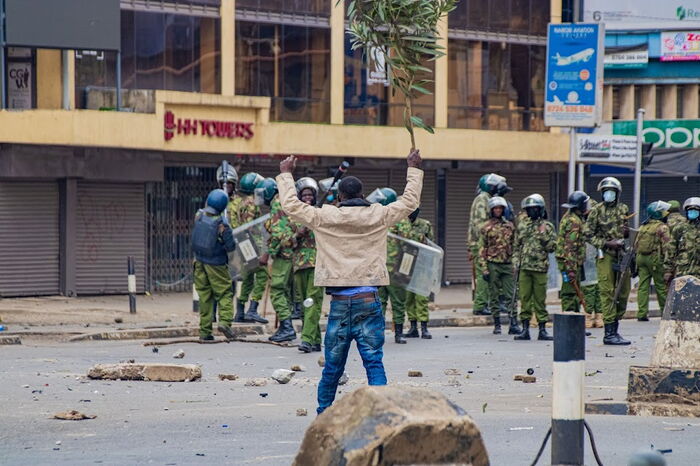
Police officers and a protester in Nairobi CBD during the June 25 protests, June 25, 2025. Kenyans.co.ke: Japheth Kaimenyi
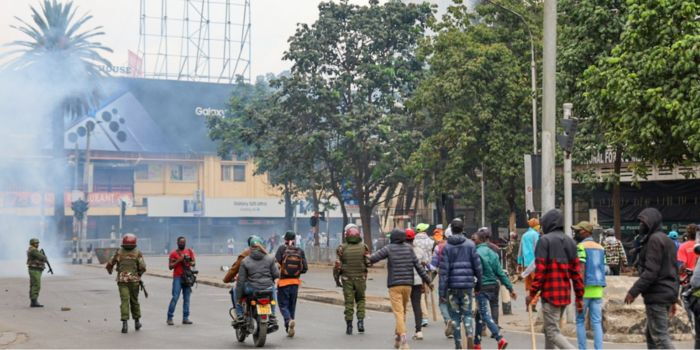
An image of goons who had infiltrated protests in the Nairobi Central Business District (CBD) in the company of police officers on Tuesday, June 17, 2025. Photo: Akbas

Next CDF? Meet Lt. Gen. Meet David Ketter, Kenya’s Rising Military Powerhouse

0

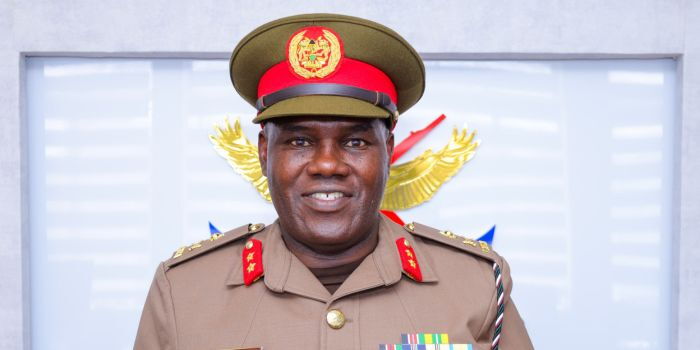
In a move signaling a possible future leadership shift at the top of Kenya’s military, President William Ruto on Friday, June 27, appointed Lieutenant General David Ketter as the new Kenya Army Commander. This powerful promotion positions Ketter just one step below the nation’s top military post, Chief of Defence Forces (CDF). 

Ketter’s elevation from Major General to Lieutenant General is no small feat. As a three-star general, he now occupies one of the highest ranks in the Kenya Defence Forces (KDF). His new role as Army Commander places him at the center of national security decisions and next in line, if the trend continues, to take over as CDF. 

The reason Ketter is viewed as a likely successor to General Charles Kahariri, the current CDF, lies in Kenya’s unofficial military succession framework: the Tonje Rules. 

Named after General Daudi Tonje, who led the military from 1996 to 2001, the Tonje Rules are an unwritten but respected rotational system for choosing Kenya’s Chief of Defence Forces. These rules ensure: 

Fair rotation between the Army, Navy, and Air Force, Balanced representation across Kenya’s defence branches, Professionalism and predictability in appointments 

Under this framework: General Kahariri (current CDF) is from the Navy, His predecessor, General Francis Ogolla (Air Force), passed away in April 2024. Before that, General Robert Kibochi (Army) held the position. 

Since the Navy currently holds the top post, and the Army is next in line by rotation, Ketter, now Army Commander, becomes the top contender for CDF when Kahariri retires in 2028. 

Who Is Lt. Gen. David Ketter? 

While personal details remain under wraps (as is common with top brass), what we do know is impressive: 

Former ACDF for Personnel & Logistics, managing all human resources and operational logistics for KDF 

Extensive military leadership background, including international roles in military sports diplomacy 

Career spanning 25–30+ years, with steady progression through every major rank 

Highly trained in military strategy, command, and operations 

Such a trajectory is only possible through a consistent track record of discipline, leadership, and tactical excellence. 

Ketter replaces Lt. Gen. David Kimaiyo Tarus, who has been redeployed to serve as Vice Chancellor at the National Defence University-Kenya (NDU-K). 

Ketter officially assumed his new role on Saturday, June 28, during a prestigious investiture ceremony at State House, Nairobi. 

With a solid military résumé, decades of service, and strategic timing aligned with Kenya’s succession traditions, Lieutenant General David Ketter is undoubtedly one of the most powerful figures to watch in Kenya’s military landscape. 

If the Tonje Rules hold firm, Ketter could soon rise to become Kenya’s 13th Chief of Defence Forces, a title that comes with massive influence, responsibility, and service to the nation. 

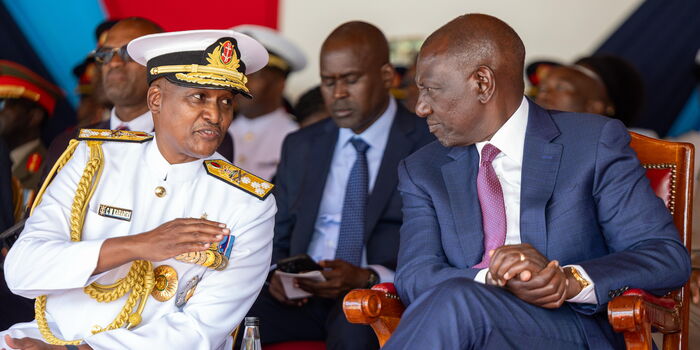
President William Ruto conversing with CDF Charles Kahariri during the Cadets Commissioning Parade at the Kenya Military Academy in Lanet, Nakuru on April 16, 2025. PCS
An undated photo of Lieutenant General David Ketter, the Commander of the Kenya Army. Photo: Kenya Defence Forces
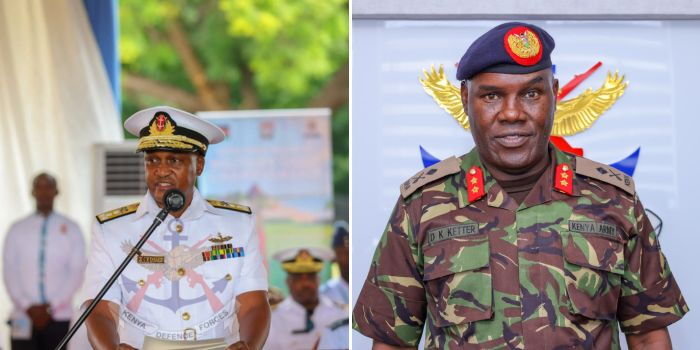
A photo collage of General Charles Kahariri, the Chief of Defence Forces (CDF) (left), and Lieutenant General David Ketter, the Kenya Army Commander (right) and man likely to succeed Gen Kahariri as CDF. Photo: Kenya Defence Forces

Tragedy Strikes Again: Deadly Night Crash Claims Lives as Lorry Ploughs Into Cars

0

Several Feared Dead in Horror Night Crash After Trailer’s Brakes Fail 

A devastating road crash on Saturday night has left several people feared dead and others nursing serious injuries after a trailer lost control and rammed into two private vehicles in the remote Maduro area. 

Eyewitnesses at the scene say the trailer’s brakes failed, causing it to plough into the unsuspecting cars. The late-night accident occurred far from emergency response units, triggering delays in medical attention. 

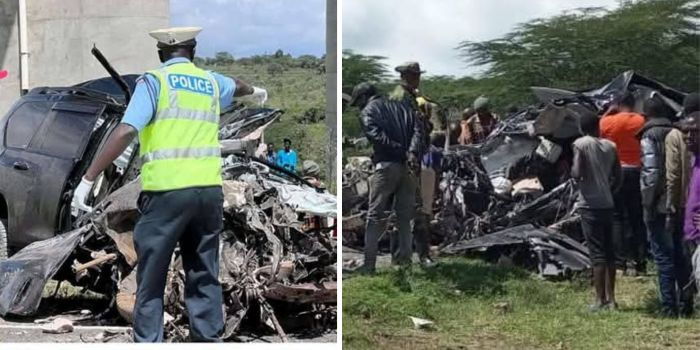
First responders, including road safety advocacy group Sikika Road Safety, were among the earliest to arrive and raise the alarm. Harrowing images showed a mangled Toyota Prado, its passenger side completely destroyed and thrown off the lane by the impact. 

The delay in emergency services caused frustration, but thanks to Sikika’s alert, Narok County Government eventually deployed rescue teams to the scene. 

This stretch of highway has gained notoriety for frequent fatal accidents. Just last December, eight people were killed in two back-to-back crashes in the same area near Duka Moja.  

In that incident, one trailer suffered a tyre burst and collided with a Toyota Premio, bus, and matatu killing three. A second trailer then crashed into a Prado and motorcycle, claiming five more lives. 

All victims of Saturday’s crash were rushed to nearby hospitals, with exact casualty figures yet to be confirmed by police. 

The recurring crashes on this highway highlight the urgent need for stricter vehicle inspections and quicker emergency response systems. Stay alert, stay alive. 

A collage of images from the accident that happened on December 23, 2024. Photo
An ambulance parked outside a hospital in Kenya. Photo: Diani Beach Hospital
An undated photo of a Kenyan police vehicle at a crime scene. Photo: HILARY KIMUYU

Over 1,800 Kenyan Teachers Demoted Without Explanation: Chaos and Outrage Follow TSC’s Decision

0

In a stunning move that has left Kenya’s education sector in turmoil, the Teachers Service Commission (TSC) has quietly revoked promotions for 1,864 teachers working in arid and semi-arid regions (ASAL), just months after the promotions were announced. 

The affected teachers, many of whom have worked in harsh and underserved environments for over a decade, were left shocked and demoralized, with no official communication from the TSC regarding the decision. 

“We were told some regions complained that we got more slots. But that was just political interference,” lamented one affected teacher during a media interview. 

Many of the impacted educators say they had been acting in promoted roles for years, such as acting principals, without any formal confirmation. The revocation has shattered hopes for long-awaited job security and career advancement. 

“I’ve served as an acting principal since 2021. After the interview, I was hopeful, now I feel stuck again,” said another disheartened teacher. 

Beyond the emotional toll, these teachers are stationed in areas plagued by insecurity, poor infrastructure, and lack of essential resources, compounding their frustrations. 

The mass demotions have triggered intense backlash from both Parliament and teachers’ unions. Legislators in the National Assembly’s Education Committee recently questioned the TSC’s promotion criteria, especially why teachers in marginalized regions remain stagnant despite meeting qualifications. 

In May, MPs issued a seven-day ultimatum to the Commission, demanding transparency and fairness in the promotion process. Some MPs also accused the TSC of regional bias and failing to consider disparities in teacher performance and staffing levels. 

Meanwhile, KUPPET (Kenya Union of Post-Primary Education Teachers) has threatened industrial and legal action, warning that such treatment of teachers risks damaging the already fragile state of education in marginalised areas. 

Outgoing TSC Chairperson Nancy Macharia has come under pressure to explain the opaque and allegedly unfair promotion system. Critics argue that the Commission has ignored principles of equity and failed to consider the realities on the ground for teachers in hardship areas. 

“Why should regions with fewer challenges get the same number of promotions as those in crisis zones?” one MP asked. 

As teachers await clarity, pressure is mounting on the Ministry of Education and Parliament to intervene. The teaching fraternity is calling for fair, transparent, and region-sensitive promotion practices, and swift restoration of justice for the affected professionals. 

If this issue remains unresolved, Kenya risks losing experienced teachers in some of its most vulnerable regions, putting learners at even greater disadvantage. 

The TSC’s decision to revoke nearly 2,000 promotions without explanation is more than just an administrative hiccup, it’s a crisis of trust and justice in Kenya’s education system. Unless decisive action is taken, the impact on teacher morale, student outcomes, and national education equity could be severe and long-lasting. 

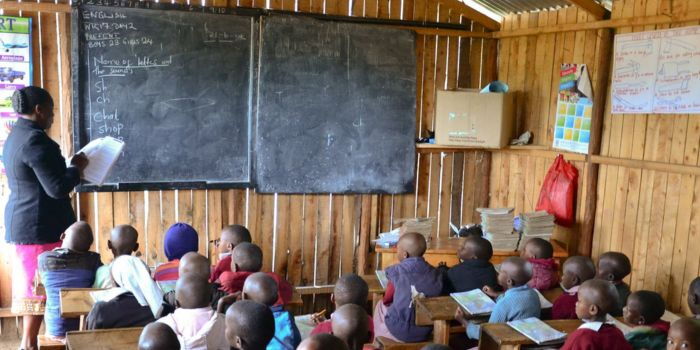
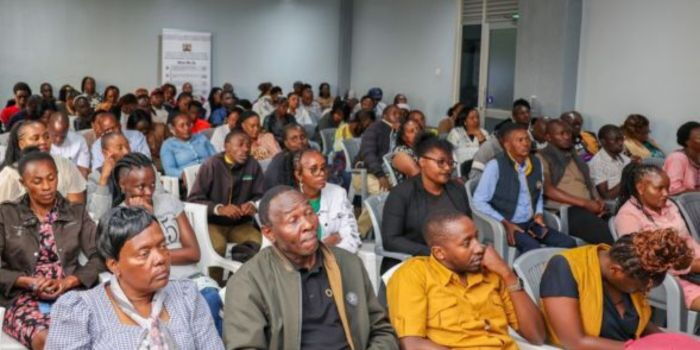
A photo of a Kenyan schoolteacher in a classroom. Photo: RTI International
Kenyan teachers departing for the United States on July 6, 2024. Photo: State Department of Foreign Affairs
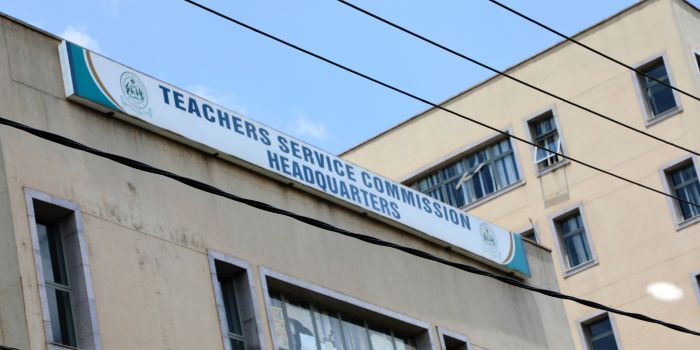
A section of Teachers Service Commission Headquarters (TSC) building in Upperhill, Nairobi. Wednesday, March 4, 2020. Kenyans.co.ke

Manchester United Transfer Boost: Gyokeres Opportunity Emerges as Garnacho Saga Takes a Twist

0

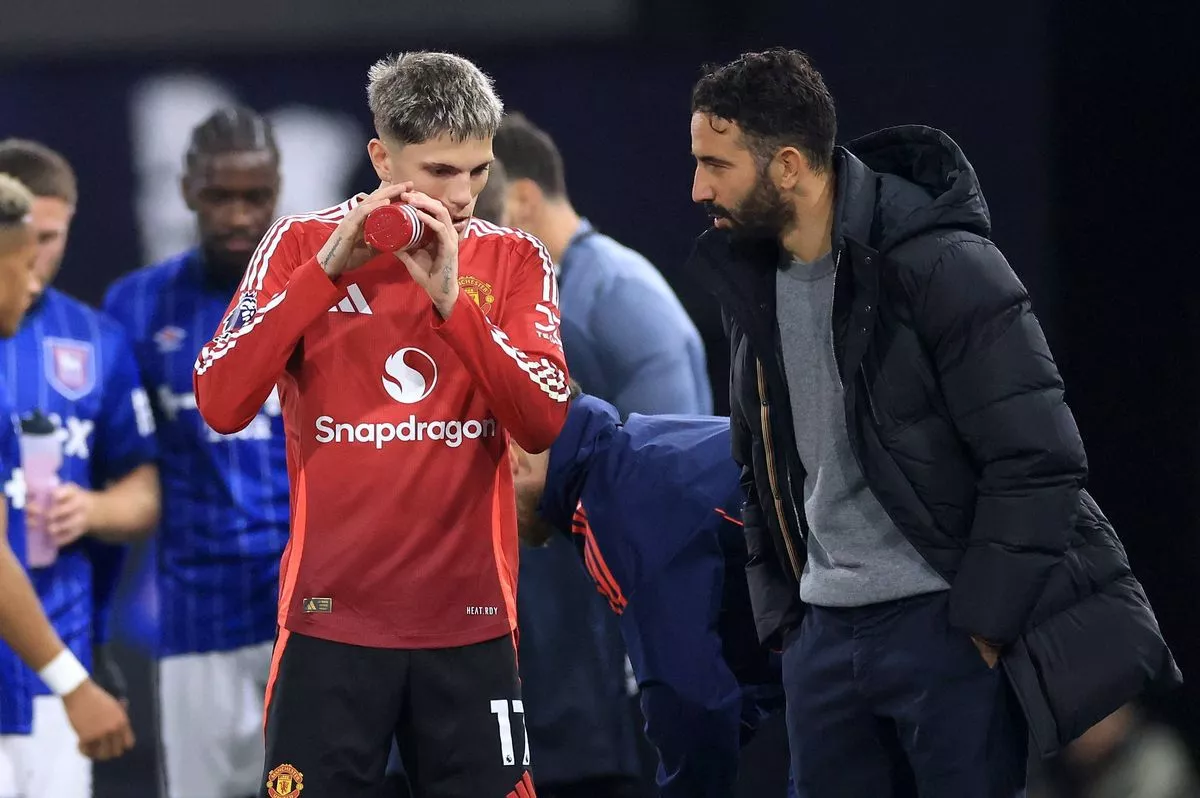
Manchester United’s summer rebuild is beginning to gather pace, and recent developments suggest a massive shake-up could be underway at Old Trafford. After finishing a dismal 15th in the 2024/25 Premier League season and losing the Europa League final, manager Ruben Amorim has been handed the reins to transform the squad in his own image. 

United’s £62.5 million capture of Matheus Cunha was the first major move of the window, but more could follow swiftly. Here are the three key developments likely to shape the Red Devils’ transfer business over the coming weeks. 

Garnacho Exit Edges Closer as Chelsea Shift Gears 

Alejandro Garnacho’s situation at United appears to be deteriorating fast. After publicly criticizing Amorim for benching him during the Europa League final, the 20-year-old Argentine winger may have played his last game in red. 

With interest from Chelsea and Napoli, a summer exit seemed inevitable. But Chelsea have now turned their attention to Borussia Dortmund’s Jamie Gittens, nearing a £55.5 million deal. That move all but ends their pursuit of Garnacho, leaving United searching for a new buyer. 

Garnacho still prefers to remain in the Premier League, but options are narrowing. Meanwhile, Chelsea may include young defender Josh Acheampong in a swap with Dortmund, highlighting how quickly deals can pivot in the market. 

Gyokeres Becomes a Realistic Target After Arsenal Twist 

In what could be the biggest development for United, Viktor Gyokeres has now emerged as a realistic transfer target. The Swedish striker, who flourished under Amorim at Sporting CP, was initially holding out for a move to Arsenal. 

However, the Gunners are now leaning toward RB Leipzig’s Benjamin Sesko after Leipzig slashed their asking price to around £59.7 million. This shift opens the door for United to make a move for Gyokeres, especially as the player’s camp is reportedly at odds with Sporting over his future. 

Juventus and other European giants are monitoring the situation, but Gyokeres may still prefer a Premier League return. If United act decisively, they could land a proven scorer familiar with Amorim’s style, a game-changer for next season. 

Bryan Mbeumo Chooses United Over Spurs 

Manchester United have received further good news in their pursuit of Brentford’s Bryan Mbeumo. The Cameroon international has made it clear he wants to join the Red Devils if he leaves the Bees this summer. 

Despite Brentford rejecting two offers from United, one of £55 million and another with £7.5 million in bonuses, negotiations remain ongoing. Tottenham, who recently appointed Mbeumo’s former boss Thomas Frank, were in the race but are now reportedly backing off. 

With Mbeumo committed to the move, the ball is in United’s court. Finalizing a deal could provide Amorim with a direct, versatile attacker to add firepower to a squad in desperate need of it. 

Viktor Gyokeres’ dream move to Arsenal could break down (Image: Getty)
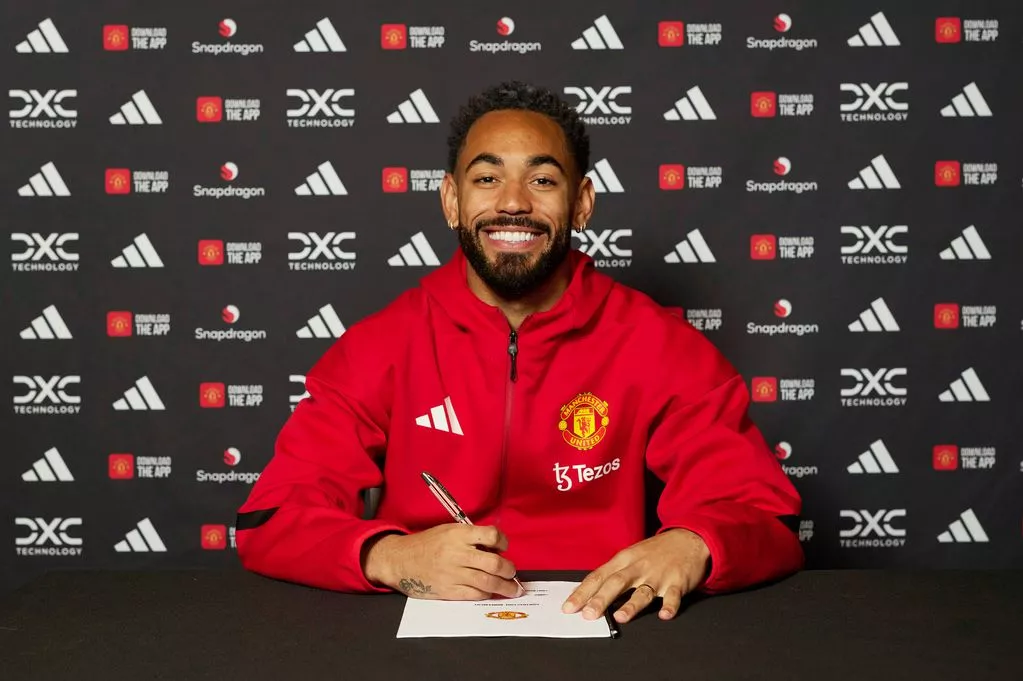
Matheus Cunha was Manchester United’s first signing of the transfer window (Image: Manchester United/Manchester United via Getty Images.)
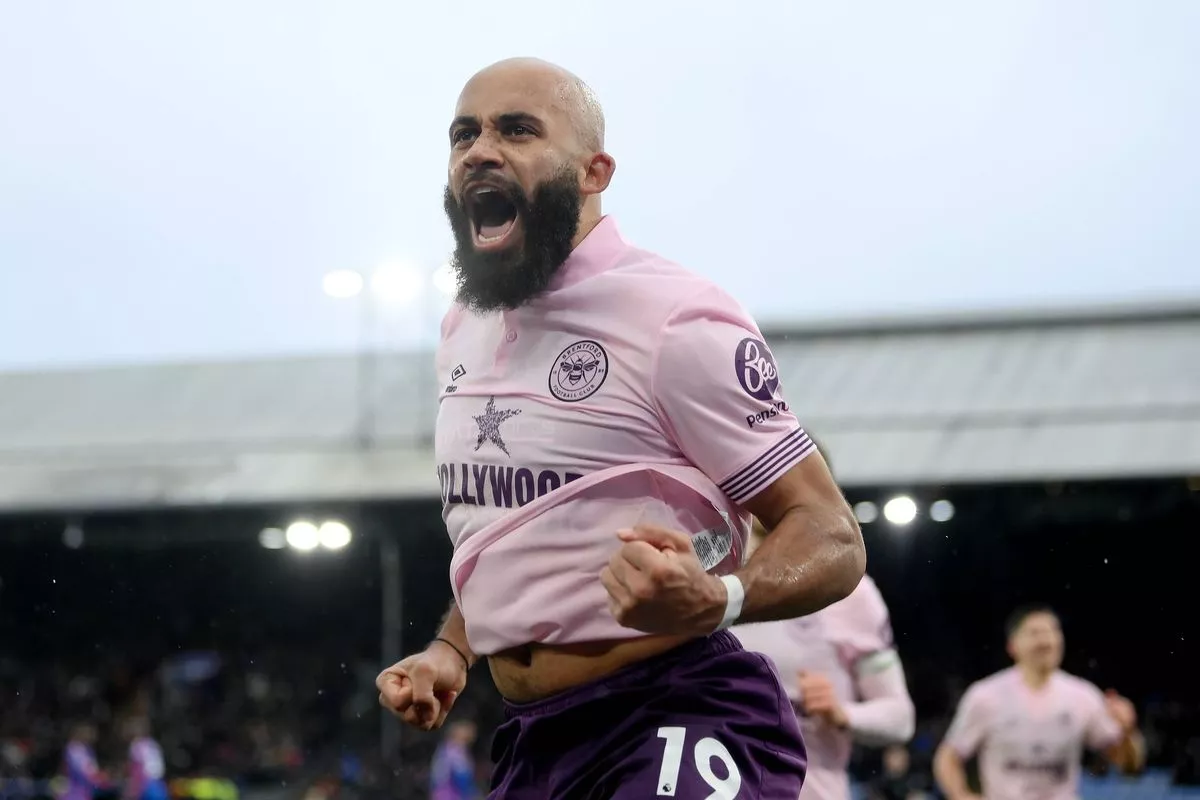
Bryan Mbeumo will either stay at Brentford or sign for Manchester United this summer (Image: Mike Hewitt/Getty Images.)
Manchester United need to find another suitor for Alejandro Garnacho (Image: Getty)

Ruto Orders Crackdown on Protesters Behind Police Attacks During June 25 Chaos

0

President William Ruto has ordered an aggressive nationwide crackdown on protesters who assaulted police officers during the violent June 25 demonstrations. 

Speaking from State House Nairobi during a high-level meeting with regional and county security leaders, Ruto condemned the attacks on law enforcement and issued a stern warning to what he called “criminal mobs.” 

“We cannot have a country where police officers are fleeing for their lives,” the President stated. “If a policeman’s life is in danger, then how can our families be safe?” 

Ruto said that protecting law enforcement was key to maintaining national order and development. He announced that anyone involved in the attacks on police or destruction of public property during the protests would be arrested and prosecuted without delay. 

“This trend must change,” he declared. “We will stand by every man and woman in uniform and protect them as they serve the country.” 

Interior Cabinet Secretary Kipchumba Murkomen had earlier echoed similar sentiments, labeling the protests a politically driven attempt to destabilize the country. He not only defended the police but also gave a controversial shoot-to-kill order aimed at those attacking police stations. 

“This gun you’ve been given here is not for decoration,” Murkomen told officers. “If someone comes to attack you or steal your weapon, defend yourself. Save your life first.” 

Murkomen’s directive has triggered national debate, with some viewing it as necessary for law and order, while others express concern about potential human rights violations. 

According to Interior Ministry data, the June 25 protests left 300 police officers and 100 civilians injured, with several police stations attacked or burned. Murkomen warned that these actions were part of a deeper plot to destabilize the nation. 

“There was a particular pattern where police stations were targeted,” he noted. “I suspect the burning of stations was meant to send a signal by coup plotters.” 

As the country reels from the aftermath of the protests, President Ruto’s administration is moving fast to reassert control. The crackdown signals a tougher stance on political unrest, but also raises important questions about freedom of assembly and police accountability. 

Observers now wait to see how the government balances security enforcement with civil rights protections in a politically charged climate. 

Ruto’s directive marks a critical moment in Kenya’s response to escalating protest violence. While the state insists on restoring order and protecting police, citizens and rights groups will be watching closely to ensure justice is not replaced by excessive force. 

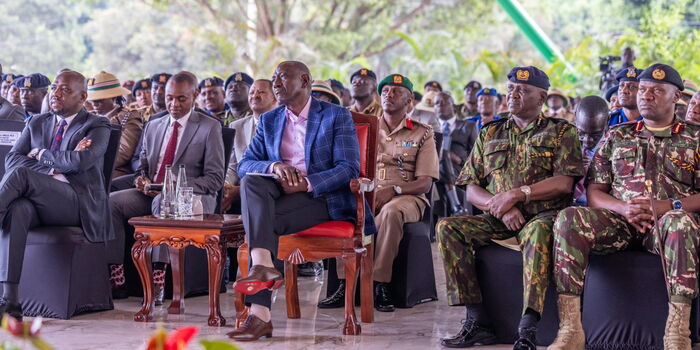
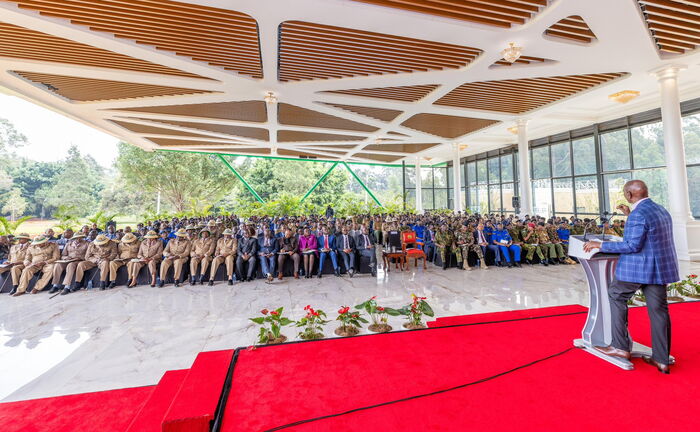
President William Ruto and CS Kipchumba Murkomen Hosted our regional and county security and National Government Administration officers at State House, Nairobi, June 28, 2025. Photo: William Ruto
President William Ruto meets police bosses at State House Nairobi, June 28, 2025. Photo: William Ruto
Interior Cabinet Secretary Kipchumba Murkomen, accompanied by the senior leadership of the National Police Service, while on a patrol of Nairobi’s downtown to assess the mayhem by the June 25 Protests on June 26, 2025. Photo: Kipchumba Murkomen

Rwanda and DRC Sign Historic U.S.-Brokered Peace Agreement to End Decades-Long Conflict in Eastern Congo

0

In a landmark development described as “historic,” Rwanda and the Democratic Republic of Congo (DRC) have signed a comprehensive peace agreement aimed at ending nearly three decades of conflict in mineral-rich eastern Congo.

Brokered by the United States, the accord was signed in Washington, D.C., on Friday by Rwanda’s Minister of Foreign Affairs Olivier Nduhungirehe and his DRC counterpart Thérèse Kayikwamba. The agreement comes amid renewed violence between DRC forces and the M23 rebel group, whose resurgence since late 2021 has destabilized the region and displaced thousands.

The deal takes effect immediately, as confirmed by the official document.

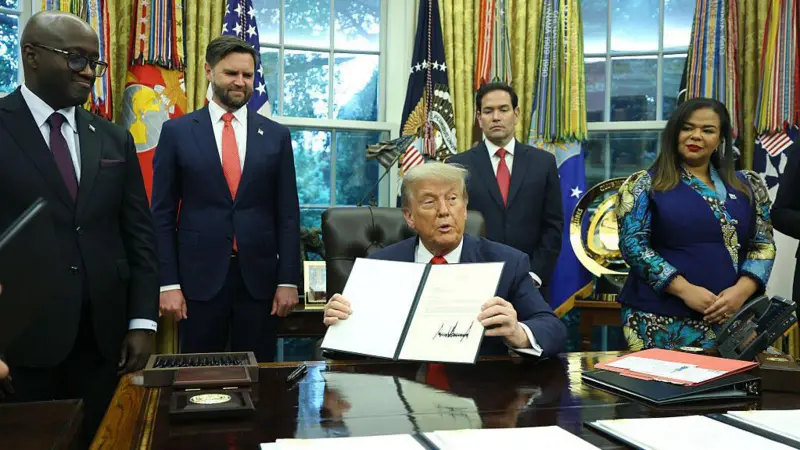
U.S. President Donald Trump, who played a pivotal role in facilitating the negotiations, hailed the agreement, stating, “Today marks the end of violence and destruction. The region now enters a new chapter of hope.”

U.S. Secretary of State Marco Rubio, who co-signed the agreement, called it a “historic and significant day,” praising America’s leadership in bringing the parties to the table.

Ministers Nduhungirehe and Kayikwamba acknowledged Trump’s “direct and decisive” involvement in ensuring the success of the peace process.

The African Union (AU), which was present at the signing, commended the agreement as “a major step” toward lasting peace, applauding efforts to foster stability, reconciliation, and regional cooperation.

However, not everyone welcomed the deal. Former DRC President Joseph Kabila who led the country for 18 years dismissed the agreement as “a diplomatic charade,” asserting that “DRC has never been at war with any of the parties represented in the agreement.” He characterized the accord as nothing more than a commercial arrangement.

The Congolese government accuses Kabila of colluding with M23 rebels and Rwanda, a claim supported by multiple Western countries and the United Nations. These bodies allege that Rwanda has provided M23 with military support, including arms and training. Rwanda denies the allegations.

Recently, the DRC Senate lifted Kabila’s immunity, paving the way for potential prosecution. His return last month to M23-controlled territory has raised political tensions and strategic questions.

In an earlier interview with BBC, Professor Jason Stearns of Simon Fraser University emphasized that the future of peace in eastern Congo hinges on sustained dialogue between Rwanda and DRC. He noted that if the peace process collapses, Kabila’s presence in rebel-held areas could complicate an already fragile situation.

Key Provisions of the Agreement

The peace deal comprises nine core pillars, including:

  1. Respect for Sovereignty: Mutual commitment to non-aggression and territorial integrity.
  2. Ceasefire and Disarmament: Immediate halt to military operations, withdrawal of armed groups, and structured disarmament.
  3. Joint Security Mechanism: Establishment of a unified security monitoring system to dismantle rebel groups like FDLR and halt external support to them.
  4. Return of Displaced Persons: Coordinated efforts to repatriate refugees and internally displaced persons (IDPs), under DRC government oversight.
  5. Support for MONUSCO: Full implementation of UN Security Council Resolution 2773, including Rwanda’s withdrawal from DRC and M23’s retreat from captured territories.
  6. Economic Transparency: Promotion of trade and transparent resource exploitation, especially in the mineral sector.
  7. Monitoring Committee: Formation of a tripartite monitoring panel involving the AU, Qatar, and the U.S. to track compliance and resolve disputes.
  8. Legal Provisions: The agreement is binding indefinitely, but either party may withdraw with six months’ notice.
  9. Immediate Implementation: All terms of the agreement come into effect upon signing.

Both sides have also agreed to continue negotiations with the M23/AFC rebel movement under the mediation of Qatar, with the aim of demobilizing non-state armed groups and reintegrating them into society.

Secretary Rubio emphasized that peace is not merely the absence of war. “Peace is about life, about hope, and opportunity. It’s about children going to school, families reconnecting, and economies flourishing,” he said.

Minister Nduhungirehe acknowledged lingering skepticism, citing the region’s history of unfulfilled agreements. “The path ahead is not easy,” he noted. “But with consistent support from the United States and other partners, real change is possible. Rwanda is committed to working with DRC to fulfill our shared goals.”

Minister Kayikwamba described the moment as a “new chapter” that demands not just commitment, but courage. She emphasized that the victims of the conflict are watching closely and expect results, saying: “This peace must not be for the powerful. It must be real, inclusive, and transformative.”

In a final symbolic gesture, President Trump signed official invitations to Presidents Paul Kagame of Rwanda and Félix Tshisekedi of DRC for a Washington summit next month to conclude and celebrate this historic accord.

From left: Rwanda’s Minister of Foreign Affairs Olivier Nduhungirehe, U.S. Vice President JD Vance, U.S. President Donald Trump (center front), U.S. Secretary of State Marco Rubio, and DRC’s Minister of Foreign Affairs Thérèse Kayikwamba.

The DCI has arrested three suspects accused of inciting violence and destruction during the June 25 protests

0

In a major breakthrough, the Directorate of Criminal Investigations (DCI) has arrested three suspects accused of inciting violence during the deadly June 25 protests. 

According to a statement released on Friday, June 27, the trio was apprehended after an intensive intelligence-led operation. They are believed to have mobilized gangs through coordinated social media channels, encouraging widespread looting and destruction of property. 

“Through strategic digital coordination, the suspects incited goons to commit acts that endangered public safety and undermined constitutional rights,” read part of the DCI’s statement. 

The suspects were intercepted aboard a Mombasa-bound bus at the Konza City stretch, following a forensic trail left by their online activities. Detectives say the group had intended to hide along the Coast but were caught before executing their escape plan. 

DCI condemned the trio for distorting the spirit of peaceful protests, noting their actions were subversive and injurious to both people and businesses. 

“Their intent was not peaceful assembly but deliberate chaos, looting, and destruction,” the agency said. 

The suspects are set to appear in court on Monday and could face charges including arson, malicious property damage, incitement to violence, theft, and subversion of public order. 

This latest crackdown follows the earlier arrest of 24 individuals linked to the burning of government buildings in Kikuyu during the same protests.
As the investigations deepen, authorities are signaling a firm stance against those exploiting civil unrest to spread chaos. The message is clear: incitement via social media won’t go unpunished. 

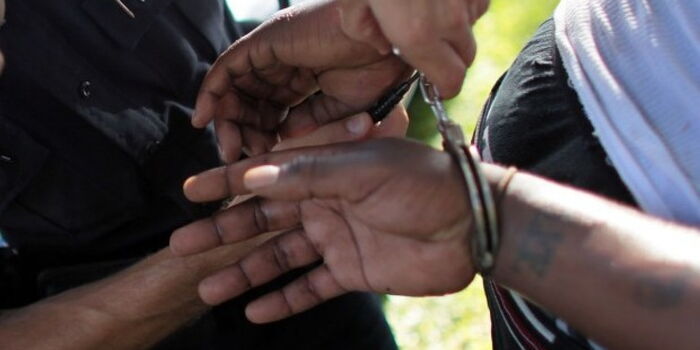
Police placing a suspect in handcuffs during an arrest. Photo: NPS
An image of a police vehicle spotted in Nairobi. Photo: kenyans.co.ke
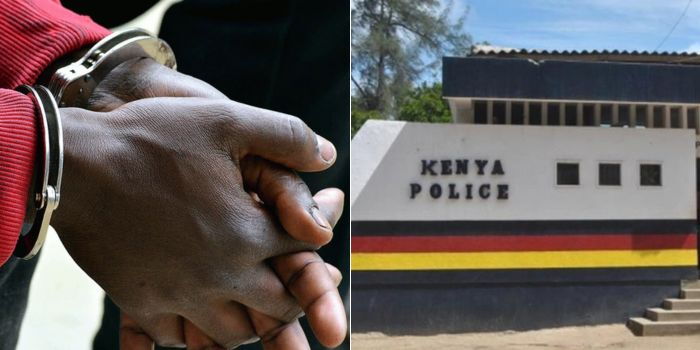
A collage of cuffed hands and a Kenyan Police Station. Photo: File