Home Blog Page 137

“I Won’t Be Silenced”: Babu Owino Reveals What Happened to Him After His Role in June 25 Protests

0

Embakasi East Member of Parliament Babu Owino has come out strongly against the government after his official security detail was withdrawn, a move he believes is direct retaliation for his participation in the June 25 anti-government protests. 

In a passionate statement released on Thursday, June 26, Owino accused the government of weaponizing intimidation tactics against elected leaders who choose to stand with the people. 

“Yesterday, I stood with the people, not against the nation, but for its future,” he said. “Today, in retaliation, the government has withdrawn my official security.” 

The vocal MP was among the key public figures who took part in the nationwide protests, which were largely organized in honour of Gen Z demonstrators who lost their lives in last year’s deadly anti-Finance Bill demonstrations. Owino was captured on video being lifted shoulder-high by enthusiastic crowds in Nairobi’s Central Business District, a scene that went viral online. 

By stripping him of his security, Owino argued, the government has shown its true colours. “Going after elected leaders who stood with their people is the hallmark of a government that fears accountability, not one that serves,” he said. 

Owino framed the move as not just a personal attack but a broader threat to Kenya’s democratic fabric. “I do not fear intimidation. I will not be silenced,” he declared. “My voice, and the voice of every citizen demanding justice, fairness, and freedom, will only grow louder. Kenyans are my security.” 

The June 25 demonstrations, which erupted across the country, were marked by running battles between police and protesters. Tragically, at least 11 people are reported to have died, with scores more injured. Protesters decried police efforts to block their access to Parliament buildings, leaving grieving families unable to formally present their petitions. 

Despite the government’s heavy-handed response, Owino remained resolute. “This is not the time for leaders to cower. This is the time to stand firm, to speak up, and to demand better governance for every Kenyan.” 

While Owino did not directly comment on his political ambitions, his recent actions and statements have continued to fuel speculation about his intent to seek higher office in the near future. He has also remained an outspoken critic of Nairobi Governor Johnson Sakaja, accusing the county administration of mismanagement. 

As the dust from the protests settles, the withdrawal of Owino’s security raises larger questions about political freedoms and the consequences of dissent in Kenya. 

“The truth cannot be suppressed. The justice movement cannot be stopped,” Owino said, leaving no doubt that his fight, and that of many Kenyans, has only just begun. 
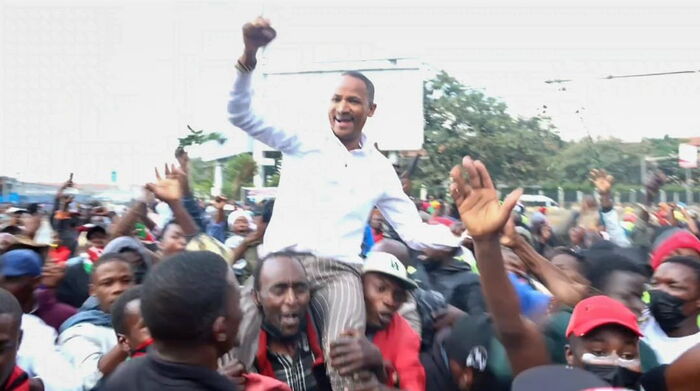
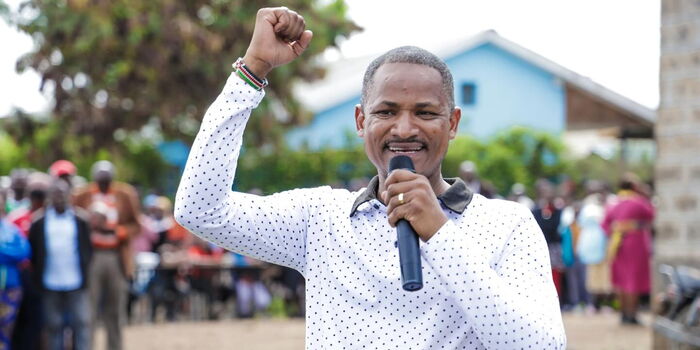
Embakasi East Member of Parliament Babu Owino during protests in the Nairobi CBD on Wednesday, June 25, 2025. Photo: Babu Owino
Embakasi East Member of Parliament Babu Owino during a past event on January 5, 2025. Photo: Babu Owino

Adela Kibasumba Raises Alarm Over Coordinated Attacks on Banyamulenge Civilians in Fizi and Itombwe

0

The MRDP-Twirwaneho, a Banyamulenge civil protection group, has issued an urgent alert warning of coordinated and premeditated attacks against Banyamulenge civilians in the territories of Fizi and Itombwe, in South Kivu province of the Democratic Republic of Congo (DRC).

According to the statement released from Minembwe, the attacks are allegedly being carried out by elements of the Burundian armed forces, in collaboration with Wazalendo militias and fighters from the FDLR, who have reportedly crossed illegally into Congolese territory from Rumonge, Burundi.

🚨 URGENT: Coordinated attacks targeting Banyamulenge civilians reported in Fizi & Itombwe (DRC). MRDP-Twirwaneho warns of Burundian troops & Wazalendo militias crossing illegally into Congo with 700+ ammo crates.

Massive threat to civilian lives. Adela Kibasumba, former President of Mahoro Peace Association (MPA), posted on Twitter.

The alert comes amidst growing concerns over regional instability and failed peace processes, including the Doha Process, which aimed to address armed conflicts in the eastern DRC.

Twirwaneho sources claim that Burundian troops crossed Lake Tanganyika, landing in Fizi, particularly at Kazimia. Once there, they allegedly joined other fighters already operating in the Hautes-Plateaux, with the stated aim of uprooting Banyamulenge communities. The movement of these foreign armed elements is seen as a grave violation of DRC’s sovereignty and international law.

Even more alarming, the alert notes that the Burundian troops have supplied over 700 crates of ammunition to the Wazalendo militias and are preparing to launch major offensives targeting Banyamulenge civilians.

Three-Pronged Attack Plan

The operation, as described by MRDP-Twirwaneho, is divided into three coordinated fronts:

  • Group I (Rugezi Axis): Deployed near Mukera, composed of FDLR and Wazalendo fighters under local commanders, reportedly preparing to attack Banyamulenge in Rugezi.
  • Group II (Mulima – Point Zero Axis): Operating near Mulima, with intentions to assault villages such as Gakenke, Mikenke, and the vast Ndondo area, locally known as Mucohagatyi.
  • Group III (Gahwera Axis): Based around Musika and led by a faction under Hamada, targeting Lukombe and specifically Nyabibuye, with orders to attack surrounding villages.

The MRDP-Twirwaneho condemned the attacks in the strongest terms, labeling them part of a “genocidal plan” orchestrated with support from elements in Kinshasa, accusing the central government of turning a blind eye or even actively supporting the attackers.

“This plan of extermination against Banyamulenge populations is unacceptable and must be treated with the urgency it deserves,” the statement reads.

The organization vowed to continue efforts to protect civilians and their property across Fizi, Mwenga, Tombwe, and Uvira.

Adela Kibasumba, former President of Mahoro Peace Association (MPA)

Police Under Fire: IPOA Launches Nationwide Probe Into Brutality During Gen Z-Led June 25 Protests

0

The Independent Policing Oversight Authority (IPOA) has ignited a firestorm after launching a nationwide investigation into the conduct of police officers during the explosive June 25 protests. The protests, held in memory of those killed during last year’s anti-Finance Bill demonstrations, saw massive turnouts across 24 counties and were marked by violent clashes between police and protesters, many of whom were from Kenya’s Gen Z generation. 

In a strongly worded statement released Thursday, IPOA confirmed it had deployed monitoring teams across the country to assess how the National Police Service handled public order during the protests. 

“As per Section 6(c) of the IPOA Act, the Authority this morning launched nationwide monitoring operations to observe police conduct during the demonstrations,” the report reads. “We also partnered with the Kenya National Commission on Human Rights (KNCHR) to strengthen real-time monitoring efforts.” 

Initial IPOA figures placed the protest death toll at 8, but the Kenya Human Rights Commission (KHRC) later updated the number to 11. Among the injured were at least 207 citizens, some suffering from gunshot wounds. Police officers were also wounded during confrontations with demonstrators, highlighting the intensity of the clashes. 

Authorities also confirmed the arrest of 61 suspected protesters across the country. However, IPOA raised concerns about the infiltration of the demonstrations by criminal elements, warning that looters and violent actors had mingled with peaceful demonstrators, increasing the risk of chaos. 

Perhaps most alarming was IPOA’s preliminary finding that law enforcement officers used excessive and varied force to disperse crowds, ranging from tear gas and water cannons to live bullets, whips, and batons. 

Multiple videos circulated online showing heavily armed police allegedly brutalizing unarmed civilians. In some instances, protesters retaliated, with one police officer reportedly hospitalized after being physically assaulted by a crowd. 

IPOA further criticized the concealment of police officers’ identities, calling it a direct violation of constitutional provisions requiring transparency and accountability in law enforcement. 

Nairobi’s Central Business District was ground zero for the protests, with protesters and police locked in hours-long running battles. Businesses shuttered, public transport was halted, and citizens were left scrambling for safety as tear gas and water cannons engulfed the streets. 

Commercial and public services were severely disrupted, and the air of fear gripped many parts of the city and beyond. 

With pressure mounting from both the public and human rights groups, IPOA’s investigation could mark a pivotal moment in Kenya’s long-standing struggle with police accountability. Whether the probe will lead to real change or fade into bureaucratic silence remains to be seen. 

For now, many Kenyans, especially the youth, are demanding justice, transparency, and a reformed police force that respects the rights of the people it is sworn to protect. 

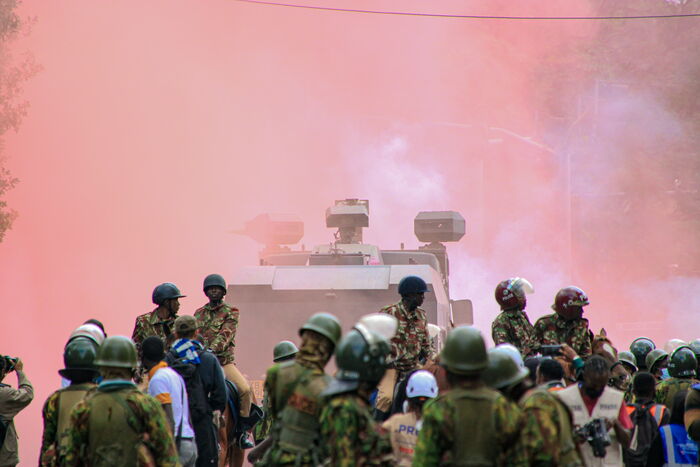
An image of a police water cannon charging at protesters in Nairobi’s CBD during the June 25, 2025 demos as police officers watch. Photo: Kenyans.co.ke
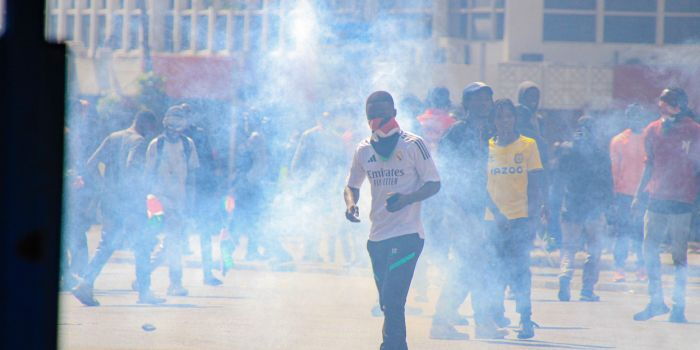
Protesters during demonstrations held in the Nairobi CBD on Wednesday, June 25, 2025. Kenyans.co.ke
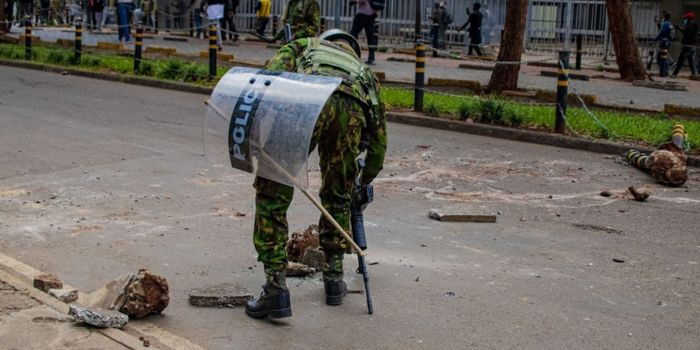
Police removing stone barricades on a major road in CBD, June 25, 2025. Kenyans.co.ke: Japheth Kaimenyi

Kenya’s President Ruto Signs Finance Bill 2025 Into Law Amid Rising Public Dissent

0

President William Ruto has signed into law the controversial Finance Bill 2025, alongside the Appropriations and Supplementary Bills, in a move that comes amid growing nationwide dissent and a reawakening of youth-led protests. 

The signing ceremony, held on Thursday at State House in Nairobi, marked the official enactment of a raft of fiscal and taxation reforms expected to reshape Kenya’s economic landscape over the coming year. Senior leaders from both sides of Parliament were present, underlining the political establishment’s broad support for the legislation. 

But outside the gates of power, dissenting voices are growing louder. 

In recent days, parts of Nairobi and other towns have been gripped by Gen Z-led demonstrations, echoing last year’s mass protests that forced President Ruto to withdraw the 2024 Finance Bill. This year’s renewed demonstrations, labelled as commemorative but increasingly political, signal a deepening public frustration over what many see as tone-deaf governance in the face of economic hardship. 

The Finance Bill 2025 introduces sweeping changes to Kenya’s tax regime, including amendments to six major statutes such as the Income Tax Act, VAT Act, and Excise Duty Act. One of the most notable provisions is the repeal of subsections related to the taxation of pensions and retirement benefits, effectively removing tax deductions on gratuity payments for retirees. 

In what the government hails as a pro-people measure, the bill also expands access to mortgage tax relief. Kenyans will now be eligible for relief whether they build homes through SACCOs or personal loans, a shift from the earlier requirement to purchase a house directly. 

Other highlights include: 

No new PAYE (Pay-As-You-Earn) tax bands introduced 

Enhanced protections for data privacy by limiting KRA’s access to personal information 

Zero-rated tax reforms on essential goods 

Corporate tax incentives for selected key sectors 

Yet despite these reforms, critics argue the bill does little to address systemic inequality or rising living costs, with some activists calling it a “band-aid on a bullet wound.” 

Budgetary Implications and Spending Priorities 

Alongside the Finance Bill, President Ruto also assented to the Appropriations Bill 2025, effectively unlocking Ksh1.88 trillion from the Consolidated Fund for government operations. An additional Ksh671.99 billion will be available to Ministries, Departments, and Agencies as internally generated revenue, known as Appropriation-in-Aid. 

According to the approved Estimates of Revenue and Expenditure for 2025/2026: 

Ksh1.8 trillion is allocated for recurrent spending 

Ksh744.5 billion will go toward development projects 

The administration insists the budget reflects its commitment to service delivery, job creation, and long-term economic resilience. However, civil society groups have questioned the sustainability of such large expenditures in a country grappling with rising debt and fiscal pressure. 

The timing of the bill’s signing has not gone unnoticed. Activists accuse the government of deliberately rushing the process while protests dominated headlines. Despite assurances from State House that public input was considered, critics claim that the legislation lacks the transparency and inclusivity demanded by ordinary citizens. 

“What we are witnessing is not just a protest against a finance bill, it’s a rejection of a governance model that sidelines its youth,” said a protester in Nairobi’s Central Business District. 

As Kenya inches closer to the 2027 general election, analysts say the Finance Bill saga could serve as an inflection point for Ruto’s presidency, a litmus test for his promise to lead a government that listens to the people. 

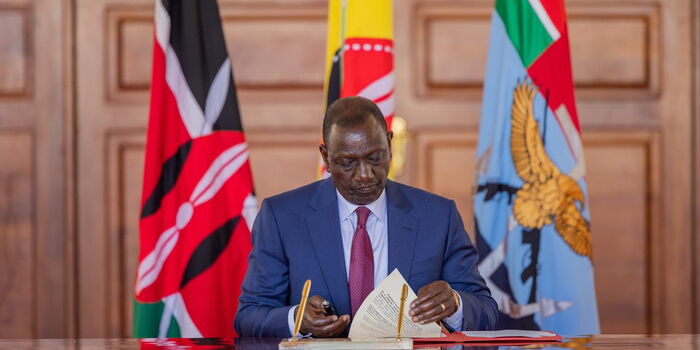
President William Ruto signs the Supplementary Appropriations Bill into Law at State House in Nairobi. Photo: John Michuki
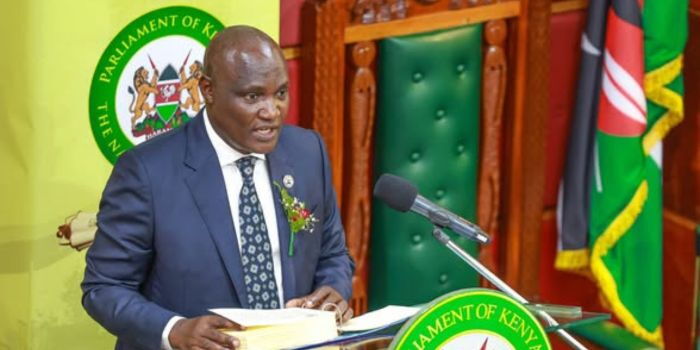
Treasury CS John Mbadi reading the 2025/2026 Budget before the National Assembly on June 12, 2025. Photo: National Assembly
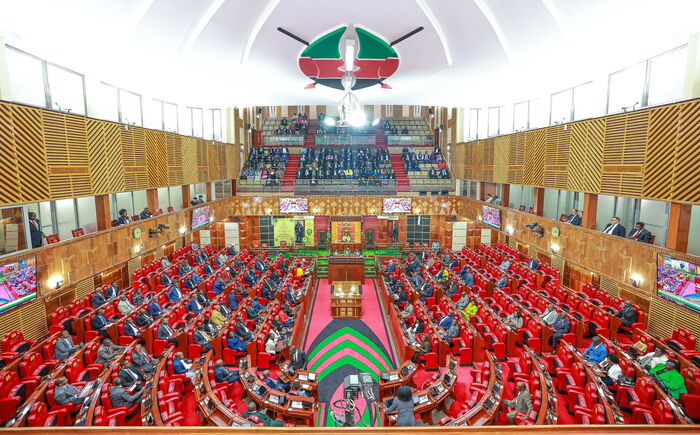
An aerial view of the National Assembly chambers during budget reading on June 12, 2025. Photo: National Assembly

Iran Responds To Reportings of Bombing Kenya as June 25 Protests Rock Nairobi

0

The Iranian Embassy in Nairobi has firmly denied recent allegations suggesting the Islamic Republic of Iran was linked to terror plots in Kenya, calling the reports baseless and politically driven. 

In a strongly worded statement released on Wednesday, June 25, the Embassy responded to local media reports referencing a purported alert from Kenya’s National Intelligence Service (NIS), which allegedly warned of potential terror threats during the anniversary of the June 25 protests. 

“Such delusional and fabricated scenarios are the product of hostile elements,” the Embassy declared, suggesting the allegations were part of a broader campaign by adversaries aimed at straining diplomatic relations. 

The statement further underlined that Iran has no operatives involved in any activities that threaten the security of Kenya, emphasizing instead the strong and peaceful diplomatic ties between the two nations. 

“As one of the primary victims of terrorism, the Islamic Republic of Iran has consistently fought against terrorist organizations such as Daesh (ISIS) and Al-Qaeda,” the Embassy added. 

Diplomatic Warning and Broader Geopolitical Tensions 

Iran’s diplomatic mission in Nairobi also issued a cautionary note to Kenyan authorities and media outlets, urging them to avoid publishing unverified intelligence reports. The Embassy warned that such publications could provoke unnecessary panic and endanger bilateral relations. 

This development comes at a time when Iran is grappling with rising tensions in the Middle East. Since June 13, Iran and Israel have been locked in an escalating conflict that has claimed hundreds of lives and displaced thousands. A fragile ceasefire, brokered by international mediators including Qatar, was reached on June 24. 

Despite the temporary halt in hostilities, rhetoric between the two countries remains charged. Iran has accused Israel of “Zionist aggression,” while Israel has defended its actions as necessary for national security and a response to Iranian-backed proxy threats. 

Back in Kenya, the June 25 protests unfolded amid heightened security concerns, with the capital Nairobi becoming the epicenter of violent clashes between demonstrators and police. Several injuries and significant property damage were reported as thousands took to the streets. 

While the protests were largely focused on domestic issues such as economic hardship and governance concerns, the added layer of international security allegations further complicated the day’s events. 

As investigations into the origins and veracity of the alleged NIS warning continue, the Iranian Embassy’s swift rebuttal appears aimed at preventing a diplomatic fallout and reiterating Tehran’s position as a long-standing opponent of terrorism, not a perpetrator. 

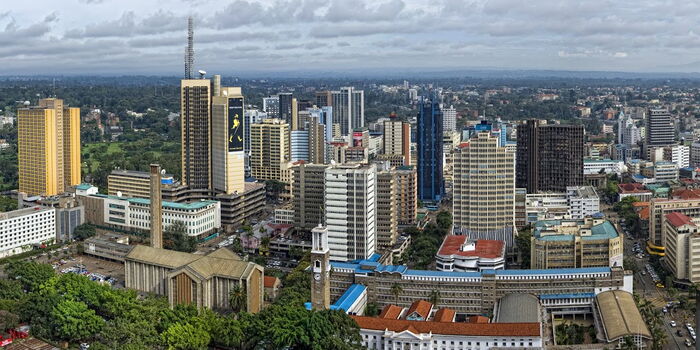
An aerial view of Nairobi City’s skyline in 2023. Photo: Eyeconic Media
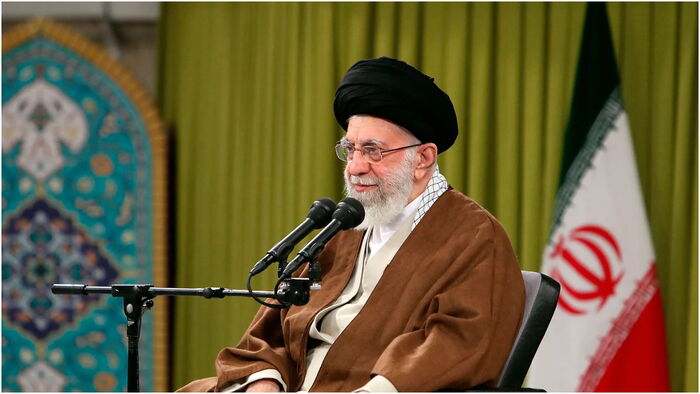
The supreme leader of Iran Ali Khamenei speaks during a meeting on November 6, 2022. Photo: The intercept
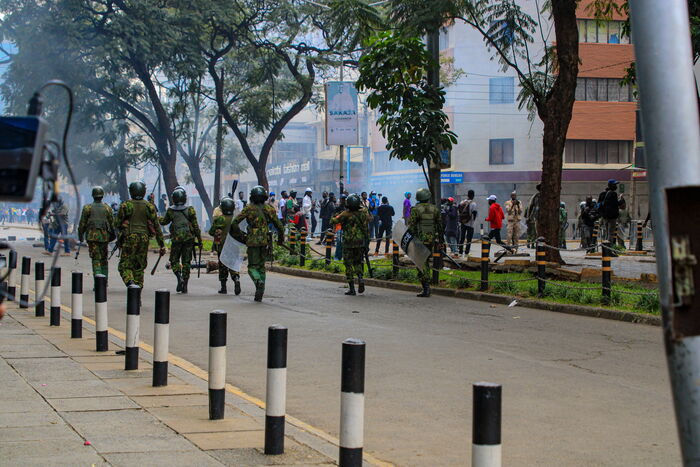
Police manning protesters in Nairobi CBD, June 25, 2025. Kenyans.co.ke: Japheth Kaimenyi

Ruto Urges Peaceful Protests, Warns Against Chaos and Destruction in Kenya

0

President William Ruto has called for peaceful and lawful demonstrations across the country, cautioning against any actions that may lead to violence, destruction of property, or destabilization of national peace.

Speaking during a solemn memorial ceremony for the late Gedeon, President Ruto addressed the ongoing tensions and protests in various parts of Kenya, emphasizing the importance of unity and responsible civic action, even among those who hold differing political or social views.

“Even for those with different opinions, even during demonstrations, let us ensure that those protests remain peaceful, do not destroy property, and do not disrupt the peace in our country,” President Ruto said.

He underscored that Kenya is the only home for its citizens and warned against actions that could jeopardize national stability.

“We have no other country to flee to if things fall apart here. Kenya is our nation  it is our responsibility and our opportunity to protect its peace and ensure everything we do is within the law,” he added.

President Ruto’s comments come amid heightened public demonstrations, largely driven by the country’s youth, including recent Gen Z-led protests over economic and governance concerns. His remarks are seen as an attempt to strike a balance between acknowledging the right to protest and maintaining national order.

He concluded by calling on all citizens to act as stewards of Kenya’s progress:

“Let us not destroy the peace of our nation. Let us not lose the chance for all of us to contribute toward moving Kenya forward.”

The president’s statement is expected to influence the tone of ongoing debates on the role of civic engagement and the boundaries of dissent in a democratic society.

Dark Day for Press Freedom: Two TV StationsTaken Off Air as Government Cracks Down on Protest Coverage

0

Kenya’s democracy faced one of its darkest moments today as the Communications Authority of Kenya (CA), backed by armed police, raided the Limuru transmission centre and switched off the free-to-air signals of two of the country’s leading broadcasters, KTN and NTV.  

The move came in retaliation for the media houses’ continued live coverage of the ongoing Gen Z-led protests, despite an earlier directive from the authority banning such broadcasts. 

In statements released shortly after the raid, both NTV and KTN confirmed that their signals had been disabled but that they would continue covering the protests via digital platforms.  

NTV stated that its Limuru station had been interfered with, leaving millions of free-to-air viewers in the dark. The station, however, remains live on YouTube and social media. KTN, similarly affected, also shifted to online streaming on YouTube, Facebook, and Twitter, in defiance of the government’s controversial order. 

As of the time of this publication, Citizen TV was still on air, but a video shared by the broadcaster showed CA officials arriving at its Limuru transmission site, signaling a possible takedown was imminent. 

If executed, this would mean a near-total blackout of live television coverage of the protests on all major free-to-air networks, affecting millions of Kenyans who rely on platforms like Signet and Pang. 

The CA’s decision to shut down live coverage was backed by a formal letter that referenced Article 33(2) and Article 34(1) of Kenya’s Constitution, as well as Section 46I of the Kenya Information and Communications Act.  

The Authority claims the broadcasts violated legal provisions and risked inciting violence. But legal experts and civil society actors say otherwise. They argue the directive is unconstitutional and clearly aimed at suppressing transparency and hiding the actions of police from public scrutiny. 

Across the country, images and footage continue to surface showing protesters being tear-gassed, water cannons used against unarmed crowds, and at least one police officer injured. Several protesters have reportedly been shot and rushed to Kenyatta National Hospital. The blackout, critics say, is designed to shield these brutal images from reaching the general public. 

Despite the pressure, broadcasters have not backed down. Standard Group PLC, which owns KTN, has affirmed it will not stop informing the public and is currently consulting with legal experts to explore constitutional remedies. Journalists have taken to social media, describing the blackout as an attempt to silence the press and “kill the story while it’s still unfolding.” 

With traditional TV signals cut, many Kenyans have turned to social media for real-time updates. Twitter, YouTube, and TikTok have exploded with citizen-recorded videos from Nairobi’s CBD, Thika Superhighway, Mombasa, and Nakuru. Hashtags like #LiveBullets, #MediaBlackoutKE, and #DefendPressFreedom are trending nationally and internationally. 

What makes this moment especially alarming is the broader context. Today’s protests mark the anniversary of the 2024 anti-Finance Bill demonstrations that left over 60 young Kenyans dead. Protesters are not only marching for justice for those lives lost but also against what they see as a system unwilling to change. And now, with the state turning off cameras and cutting live feeds, it has become painfully clear that the government would rather hide than confront the truth. 

Legal scholars warn that this blackout could trigger a serious constitutional crisis. Article 34(2) of the Constitution clearly prohibits any form of government control or interference with the media.  

Any action that prevents broadcasters from operating freely, especially during a public demonstration of national importance, could amount to a violation of both constitutional rights and international press freedom standards. 

In the eyes of many Kenyans, this isn’t just about switching off a signal, it’s about turning off the light on democracy. And yet, in this digital era, the truth is harder than ever to suppress.  

Even as free-to-air TV goes silent, Kenya’s youth continue to livestream, record, and report. The question now is no longer whether the government can block broadcasts. The question is whether it can stop the people from seeing, and sharing the truth. 

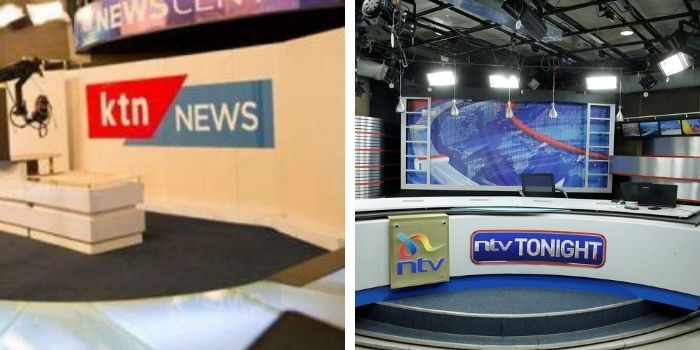
KTN and NTV Studios/File

  Kenya Restricts Telegram as Gen Z-Led Protests Erupt Nationwide

0

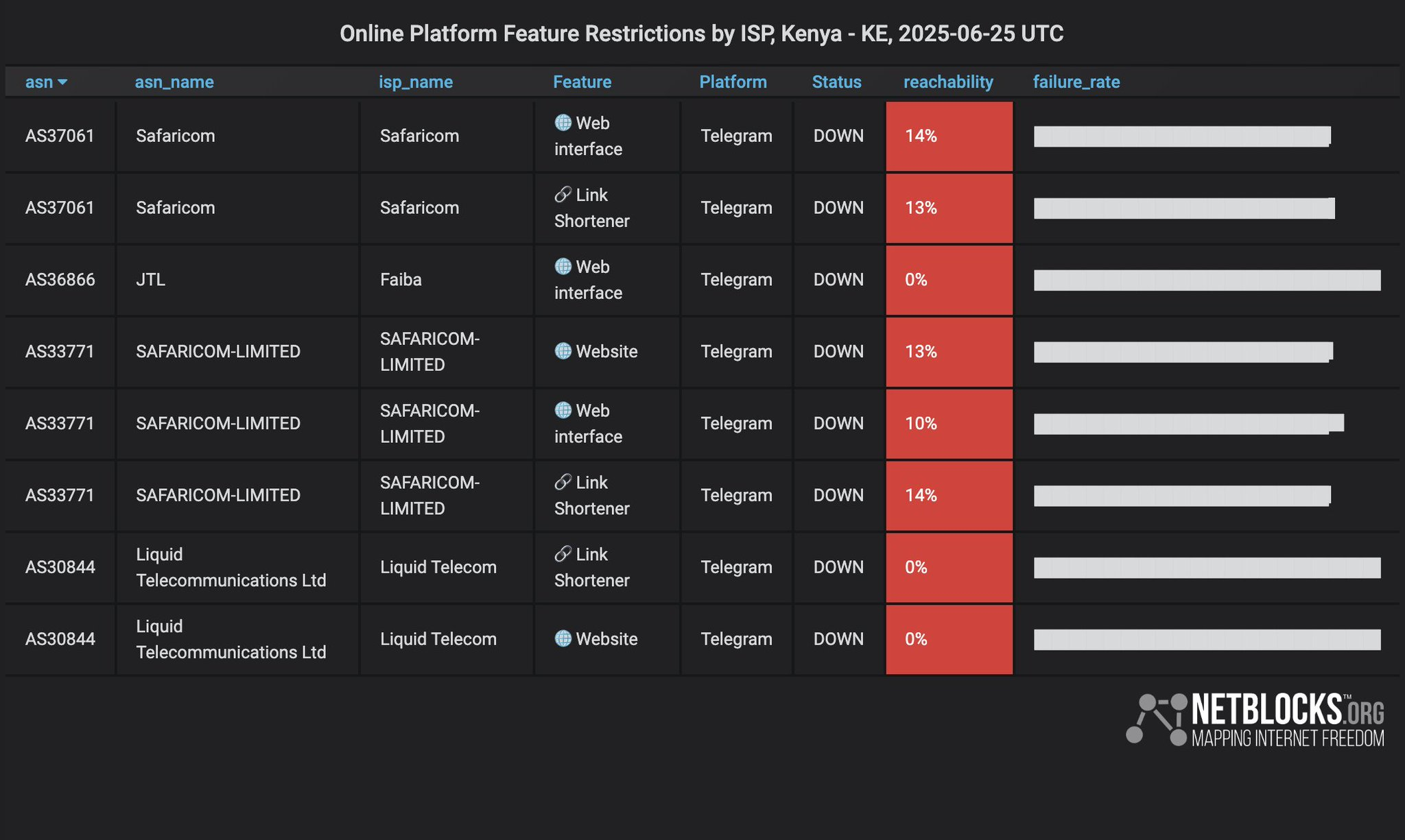
Telegram, one of Kenya’s most widely used messaging apps, has been restricted amid growing anti-government protests across the country. The development was confirmed by NetBlocks, a global watchdog that monitors internet disruptions in real time.

According to NetBlocks, the restriction on Telegram took effect on Wednesday, June 25, just as massive protests broke out in Nairobi and other major towns, including Mombasa and Kisii. The protests, largely driven by Gen Z youth, were organized to commemorate those who lost their lives during similar demonstrations against the Finance Bill last year.

“Live data shows that access to Telegram is currently limited across major Internet Service Providers in Kenya,” NetBlocks said in a statement, raising alarms about the possibility of a broader internet shutdown.

The move to limit Telegram access appears to be part of a broader effort by authorities to control the flow of information during the unrest. It came just shortly after the Communications Authority of Kenya (CAK) issued a directive banning all TV and radio stations from broadcasting the protests live.

The demonstrations, which have paralyzed parts of the Central Business District in Nairobi, have escalated into confrontations between police and protesters. On the ground, there are reports of injuries on both sides, and some eyewitnesses claim there have been fatalities among the protesters.

The restriction of Telegram  a critical tool for organizing and sharing updates  has sparked fears among activists and digital rights groups that the government could be preparing for a full internet blackout, a tactic increasingly used by regimes facing mass dissent.

  Kenya Restricts Telegram as Gen Z-Led Protests Erupt Nationwide

Ruto Issues Plea To Protesters As Nationwide Protests Escalate

0

As nationwide demonstrations continue to sweep through Kenya, President William Ruto has made a passionate appeal for calm, urging protestors to demonstrate peacefully and avoid destroying property. 

Speaking on Wednesday afternoon in Kilifi County during the funeral of Mzee Mung’aro Senior, the father of Kilifi Governor Gideon Mung’aro, President Ruto emphasized the importance of maintaining peace and unity, even amidst political disagreement. 

“We must make sure that the demonstrations we hold are peaceful,” he said. “The demonstrations should not lead to the destruction of property because we do not have any other country where we will go if things become tough here.” 

His remarks come amid mounting public unrest in several regions, where citizens are protesting over various social and economic grievances. 

President Ruto used the platform to reaffirm his government’s focus on transformative development, highlighting key sectors such as housing, healthcare, and agriculture. He expressed concern that unrest and violence could derail the progress his administration is trying to achieve. 

“I want to urge Kenyans to concentrate on plans that will change their lives. Let us build roads and stabilise our economy. We should also address employment, these are the main issues,” Ruto noted. 

The President extended an olive branch to opposition leaders, asking them to work with the government in promoting peace and national cohesion. 

“The most important thing is our unity as a nation,” he said. “We may be of different opinions and strategies, but we must have a nation first. We must be united as a nation.” 

As the country braces for more protests, Ruto’s speech serves as both a warning and a plea: political differences must not spiral into chaos. His message underscores the delicate balance between freedom of expression and preserving national peace. 

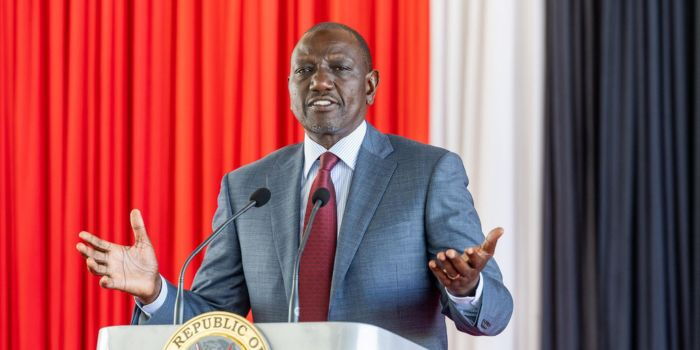
President William Ruto speaking at State House, Nairobi after a hosting a delegation from Kisumu on Wednesday, June 18, 2025. PCS

🔴 LIVE UPDATES: Nairobi Erupts in Protest to Honour Fallen Gen Zs : June 25, 2025. Video

As Live Bullets Rain And Tear Gas Chokes Nairobi’s Streets, Revealed: What Ruto Is Doing During June 25 Protests

0

As tear gas chokes Nairobi’s streets and live bullets are reportedly used on unarmed Gen Z protesters, many Kenyans have been asking a simple but urgent question: Where is President William Ruto? 

This afternoon, that question was answered. Rather than addressing the nation or meeting with security chiefs in the capital, President Ruto was spotted in Kilifi, attending the funeral of Governor Gideon Mung’aro’s father, alongside former Prime Minister Raila Odinga. 

At 2:29 PM, State House sources and media confirmed that Ruto and Raila were together in Kilifi, far from the crisis unfolding in Nairobi, Mombasa, Nakuru, Thika, and other cities where thousands of Kenyans, mostly youth, have poured into the streets in remembrance of those killed during the 2024 anti-Finance Bill protests. 

Their joint appearance at the funeral has sparked public outcry, not for unity, but for appearing tone-deaf and absent during a national emergency. 

As the President attended a coastal funeral, the following was unfolding across the country: 

Protesters shot in the CBD, with several rushed to Kenyatta National Hospital 

A police officer injured and also hospitalized 

Protesters and police clashing near Bank of India in the CBD 

Thika Superhighway flooded by demonstrators, police forced to retreat 

Water cannons and tear gas used against peaceful crowds 

Parliament adjourned early, with MPs fleeing precincts over security concerns 

And most explosively, a media blackout order from the Communications Authority of Kenya (CAK) 

The CAK cited constitutional clauses to justify a ban on live TV and radio coverage, sparking fears that the government is preparing for off-camera brutality, including the use of live ammunition. 

Despite the order, Standard Group PLC publicly vowed to continue live coverage and announced it is consulting lawyers to determine the legality of the CAK directive. 

This defiance has been hailed by activists and citizens alike as a stand for press freedom, even as others warn that the move may provoke regulatory retaliation. 

With traditional broadcasters under threat, Kenyans have taken to X (formerly Twitter), TikTok, and WhatsApp to share unfiltered footage and updates. Hashtags like #LiveBullets and #RejectMediaBlackout are trending nationally, with netizens accusing the state of using censorship to hide human rights violations. 

“As young people bleed in the streets, the President is at a funeral?” One user wrote, echoing a sentiment now shared by thousands. 

While some defend Ruto’s appearance in Kilifi as “prioritized duty,” critics say this was a moment that demanded national leadership, not ceremonial presence. 

By failing to address the protests, the shooting reports, or the controversial CAK order, Ruto risks further alienating a generation already disillusioned with politics. The symbolism of standing alongside Raila Odinga at a funeral while the youth protest deaths from the previous year’s movement is not lost on Kenyans, nor on the world. 

The June 25 anniversary protests were never going to be just symbolic. They represent pain, memory, resistance, and now, a call for democratic accountability. 

As live bullets rain, the absence of the President from the crisis, both physically and rhetorically, is being read as more than poor optics, it is being seen as a refusal to lead in a moment of national reckoning. 

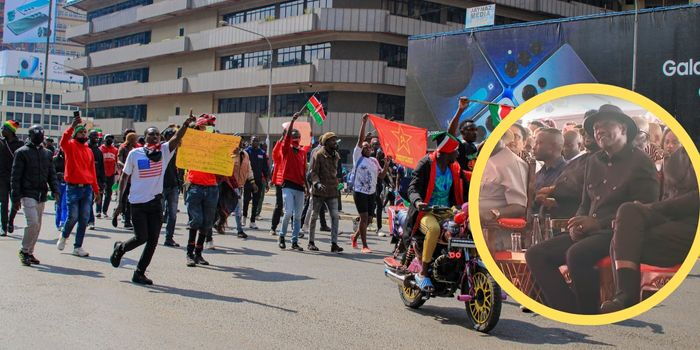
An insert of President William Ruto as protesters hold demonstrations in the Nairobi CBD on Wednesday, June 25, 2025. Kenyans.co.ke
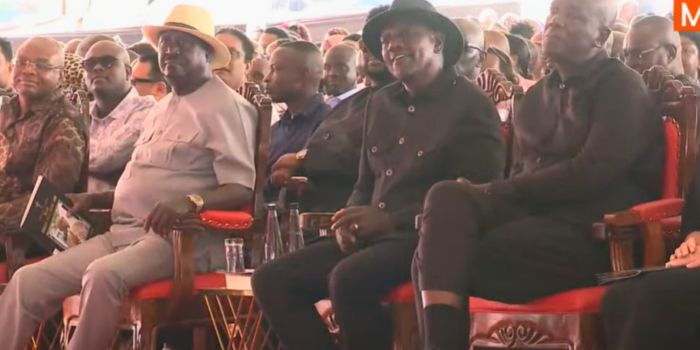
President William Ruto (centre), former Prime Minister Raila Odinga (left) and Kilifi Governor Gideon Mung’aro during the burial of Mung’aro’s father in Kilifi on Wednesday, June 25 ,2025. Kenyans.co.ke
An image of a police water cannon charging at protesters in Nairobi’s CBD during the June 25, 2025 demos as police officers watch. Photo: Kenyans.co.ke

🔴 LIVE UPDATES: Nairobi Erupts in Protest to Honour Fallen Gen Zs : June 25, 2025. Video

Live Bullets and Media Blackout: Why the Kenyan Government is Silencing Protest Coverage

Kenya Media Regulator Bans Live Coverage of June 25 Protests, Citing Constitutional Breach