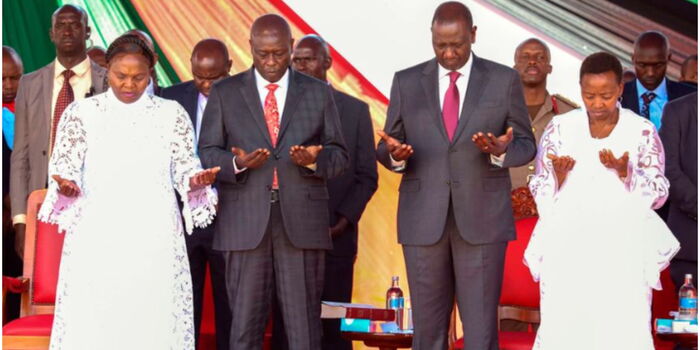
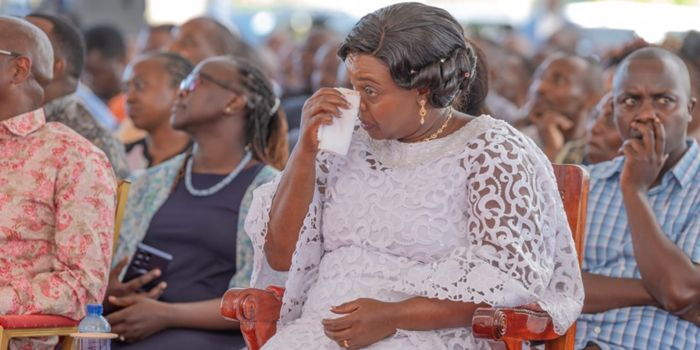
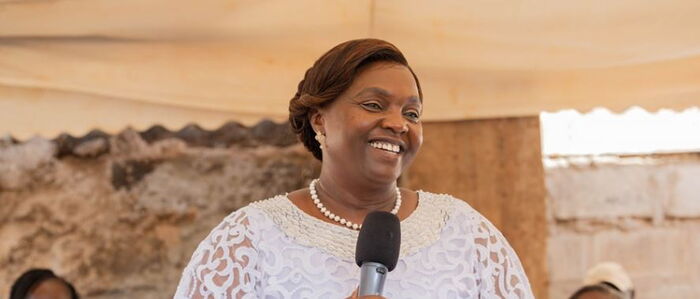
In a rare public admission, former Deputy President Rigathi Gachagua has revealed deep-seated tensions he experienced within President William Ruto’s administration, particularly concerning how his wife, Pastor Dorcas Rigathi, was treated during official events.
Speaking at a church service in Kirinyaga County on Sunday, June 15, Gachagua accused State House officials of imposing discriminatory protocol restrictions that barred his wife from accompanying him to public functions. He alleged the protocol was selectively enforced whenever the First Lady, Mama Rachel Ruto, was not present.
“These people persecuted me and my wife when I was in office,” Gachagua told the congregation. “Because the president did not want me to be with my wife when he was not with his, due to protocol.”
According to Gachagua, his wife was repeatedly asked to leave official functions despite receiving invitations. One notable instance, he recalled, took place during a high-profile event launching Raila Odinga’s bid for the African Union Commission top job. When Mama Rachel Ruto was a no-show, organizers allegedly insisted that Pastor Dorcas exit the event as well.
“I said no. Why did they call her then? I told them to tell the President that my wife is not leaving. If Mama Ida leaves, my wife will leave. And I told him if she goes, I will also go.”
Eventually, Pastor Dorcas remained, and even led a prayer for Raila Odinga.
Gachagua’s remarks came as a direct response to Kapseret MP Oscar Sudi, a key ally of President Ruto, who had recently criticized Gachagua’s frequent public appearances with his wife, suggesting they were politically motivated. The former Deputy President, however, rejected the claims.
“This is personal. I walk with my wife by choice. Not everything is about politics,” Gachagua said firmly, drawing applause from congregants.
His passionate defense of family values appears to be part of a broader rebranding effort following his absence from the political limelight in recent months. By portraying himself as a man committed to both faith and family, Gachagua seems intent on reclaiming political relevance while appealing to Kenya’s conservative base.
In the same address, he also dismissed attempts by Kenya Kwanza leaders to woo Wiper Party leader Kalonzo Musyoka into the fold, hinting at fractures within the ruling coalition and a leadership approach he views as increasingly dismissive and authoritarian.
As political temperatures continue to rise ahead of future electoral contests, Gachagua’s candid revelations offer a glimpse into the inner workings, and personal tensions, within Kenya’s corridors of power.
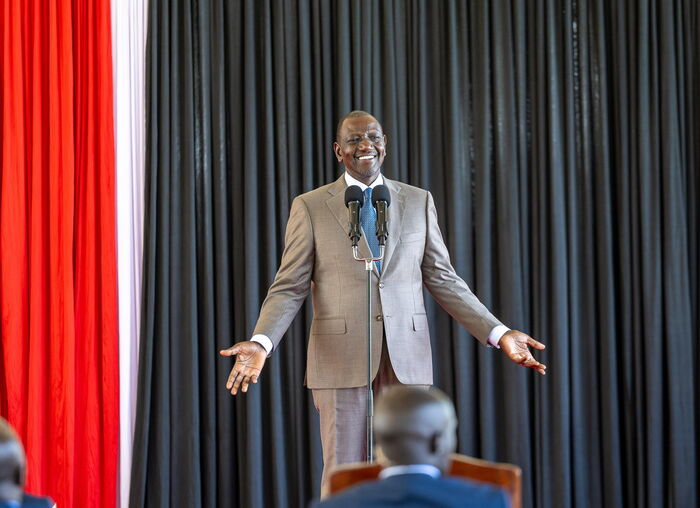
Pastor Dorcas Rigathi and former Deputy President Rigathi Gachagua, alongside President William Ruto and his wife Rachel Ruto, during a past function. Daily NationSecond Lady Dorcas Rigathi in Mombasa on June 12, 2024. DPPSSecond Lady Dorcas Rigathi addresses the public at St. Nicholas Rehabilitation Centre in Tigania West on March 24, 2024. Photo: Pastor Dorcas Rigathi
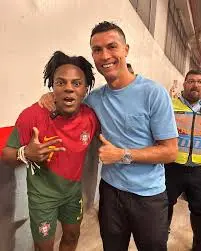
The newly expanded FIFA Club World Cup may have kicked off with fanfare, but Cristiano Ronaldo’s absence still looms large — especially in the eyes of his biggest fan, iShowSpeed. And former Argentine star Sergio Aguero didn’t miss the chance to poke fun at the Portuguese icon in a live stream that quickly went viral.
The 32-team competition began over the weekend with a goalless draw between Inter Miami and Al-Ahly. While many global stars are gearing up for the tournament, Ronaldo’s Al-Nassr didn’t make the cut, a fact Aguero was quick to remind everyone of.
During a live stream alongside popular American streamer and die-hard Ronaldo fan iShowSpeed, Aguero wasted no time stirring the pot.
“You’re a very big fan of Cristiano, no?” Aguero asked Speed with a smirk.
After Speed eagerly confirmed, the former Manchester City striker responded, “I respect it, it’s OK. He’s a good player. I prefer Messi, of course.”
Then came the first jab.
“Ronaldo is playing here now at the Club World Cup or no?” Aguero asked sarcastically. “Maybe he’ll have to watch on TV.”
Speed, ever the loyal supporter, tried to counter by expressing his belief that Ronaldo would lead Portugal to a triumphant World Cup in 2026. But Aguero wasn’t done.
“[Ronaldo] just won the [Euros] no?” he mocked. “Ah, the Nations League… congratulations.”
The cheeky exchange has since set social media abuzz, with fans divided between laughter and outrage. For some, it was harmless football banter between legends. For others, it was a slight too far at one of the game’s greatest icons.
Regardless, it’s clear that even from the sidelines, Aguero knows how to steal the show.
Cristiano Ronaldo guided Portugal to Nations League glory earlier this monthCredit: GettyIShowSpeed poses with his hero Cristiano RonaldoCredit: InstagramLionel Messi and Sergio Aguero are former Argentina team-mates and good palsCredit: Instagram @leomessi
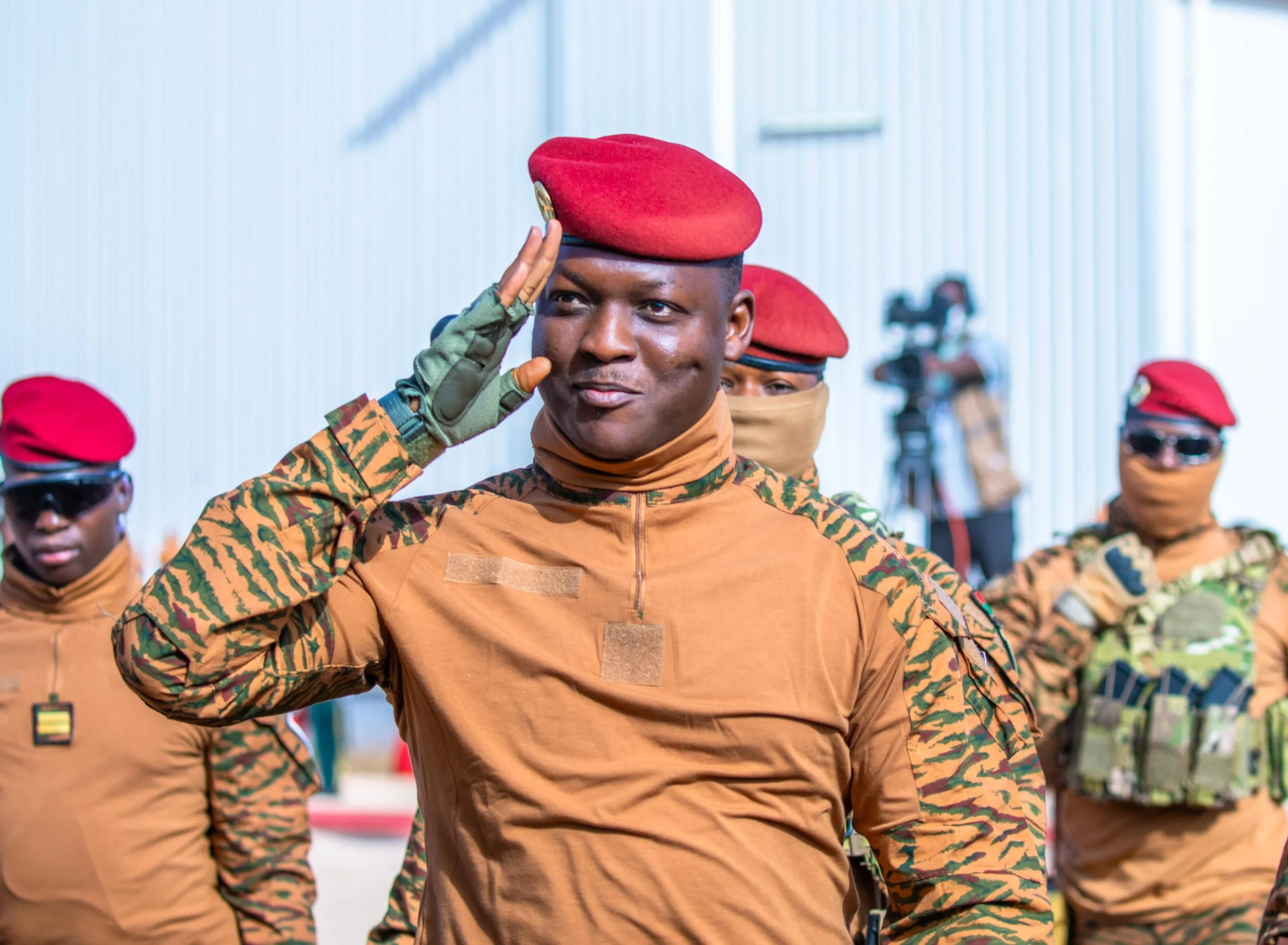
In a continent often marred by insecurity, weak governance, and disenchantment with democracy, a new leader has emerged with a style that is both disruptive and deeply symbolic. Ibrahim Traoré, a young military officer who seized power in Burkina Faso in 2022, is not just another coup leader. His bold rhetoric, austere personal lifestyle, and sweeping reforms have captured attention across Africa and beyond. Is he the new face of African leadership, or just another populist in military fatigues?
Afrovera.com investigates Traoré’s background, how he came to power, his impact so far, and what East Africa particularly Kenya and the broader EAC bloc can learn from this emerging figure.
Who Is Ibrahim Traoré? From Science Student to Military Commander
Born in 1988 in western Burkina Faso, Ibrahim Traoré studied geology at the University of Ouagadougou before joining the military. He quickly rose through the ranks due to his tactical brilliance and commitment on the battlefield, especially in operations against jihadist insurgencies that have plagued the Sahel region for over a decade.
By 2019, Traoré was deployed in some of the most dangerous zones in northern Burkina Faso. His hands-on leadership, bravery, and willingness to fight alongside ordinary soldiers set him apart from the traditional officer class. This reputation paved the way for his eventual political ascendancy.
A Bloodless Coup (Military takeover) But with Fierce Intentions
On September 30, 2022, Ibrahim Traoré led a coup (Military takeover) that deposed then-interim President Paul-Henri Damiba, who had himself come to power just eight months earlier after ousting the democratically elected Roch Kaboré.
The justification? Worsening security conditions, growing distrust in Damiba’s leadership, and rising frustration among frontline soldiers. The transition was relatively peaceful Traoré made it clear that his aim was to “save the country from collapse,” not to consolidate power for personal gain.
At just 34, Traoré became the youngest head of state in the world at the time.
From Uniform to Action: What Has Traoré Done So Far?
Traoré’s tenure has been marked by radical policies and strong anti-colonial rhetoric. Among his key actions:
Revamping Security Strategy: He empowered local militias through the creation of the Volunteers for the Defense of the Homeland (VDP), encouraging community participation in national defense against terror groups like Al-Qaeda and ISIS in the Sahel.
Diplomatic Independence: Traoré has sharply criticized Western particularly French influence in Burkina Faso. French troops were expelled from the country in early 2023, and military cooperation was suspended.
Economic Sovereignty: He is championing agricultural self-sufficiency and local industry, urging Burkinabé youth to engage in farming, innovation, and entrepreneurship rather than relying on foreign aid.
Minimalist Leadership: Unlike many African leaders, Traoré avoids pomp and protocol. He wears his military gear daily, visits soldiers on the frontlines, and is known for living a modest, disciplined lifestyle.
What Does Traoré Represent for Africa? A New Sankara or a Familiar Pattern?
Traoré has quickly become a polarizing figure. Admirers hail him as a “new Thomas Sankara,” Burkina Faso’s revolutionary hero from the 1980s who was assassinated in 1987 after trying to decolonize the country’s systems and mindset. Critics, however, point to concerns over freedom of the press, human rights, and the absence of a clear transition to civilian rule.
Yet, one thing is clear: he represents a break from the status quo. In a continent where many leaders cling to power through elaborate electoral façades, Traoré offers a no-nonsense approach that prioritizes sovereignty, order, and self-reliance.
Lessons for Kenya and the East African Community
Burkina Faso’s trajectory under Traoré poses important questions and lessons for East African nations, particularly Kenya and its neighbors in the EAC:
People-Centered Security: Traoré’s model of integrating civilians into national defense systems could inspire similar community-based security frameworks in East Africa.
Assertive Foreign Policy: His unapologetic pushback against Western influence urges EAC states to reconsider how foreign aid and partnerships affect national autonomy.
Youth Empowerment and Self-Reliance: Africa’s vast youth population needs visionary leadership and practical policies that promote agriculture, innovation, and industry Traoré’s message resonates deeply with this demographic.
Leadership by Example: His rejection of opulence and hands-on leadership approach presents a contrast to the elite-driven, insulated leadership styles seen in many African states.
The Verdict: A Revolutionary Path or an Illusion of Change?
Ibrahim Traoré’s rise to power raises both hope and caution. He appears determined to reset Burkina Faso’s trajectory, but will he deliver sustainable change or follow the tragic path of past strongmen who began with big promises but ended in repression or failure?
His presidency is a live experiment in African political redefinition. Whether it succeeds or fails, the continent is watching closely and perhaps, for the first time in a long time, doing so with a glimmer of genuine interest and cautious optimism.
The Soldier Who Dared to Defy the West: Can Ibrahim Traoré Redefine Africa’s Future?
A chilling case of abduction and torture involving a senior former county official has reignited national outrage over rising impunity and threats to democracy in Kenya’s devolved governments.
On Sunday, June 15, Vocal Africa CEO Hussein Khalid went public with claims implicating a sitting county governor in the recent kidnapping and brutalization of a former Chief Officer for Health. The county in question lies in Kenya’s northeastern region, bordering others like Meru, Laikipia, Samburu, Marsabit, Garissa, and Wajir.
“For legal reasons, we will not name the county governor at this time,” Khalid stated in a press release, but emphasized that the evidence provided to authorities, including CCTV footage, clearly points to the governor’s direct involvement.
“Despite multiple reports filed at various police stations, no arrests have been made. Yet the abductors are known, and all evidence, including surveillance footage, has been submitted. We are demanding immediate intervention by the Independent Police Oversight Authority (IPOA) and the Directorate of Criminal Investigations (DCI),” said Khalid.
Photos released alongside the statement show the victim, frail, bruised, and fresh out of hospital, still hooked to a drip. Vocal Africa believes the lack of action from law enforcement is not just negligence, but a deliberate shield of impunity around the powerful.
The climate in the county has turned tense, with Members of the County Assembly (MCAs) reportedly going underground. They had filed a motion to impeach the governor just days before the abduction occurred. According to sources close to the assembly, the MCAs have since switched off their phones and left their residences in fear for their lives.
“We are witnessing systematic intimidation of elected officials and civil servants. This is a war against transparency,” remarked one local human rights defender, who spoke on condition of anonymity.
The incident comes amid national uproar over another recent case, the death of 31-year-old teacher and blogger Albert Ojwang while in police custody.
Ojwang was arrested in Homa Bay and transported over 350 kilometers to Nairobi under murky circumstances. His death, reportedly due to police abuse, has sparked calls for accountability and resignations from top police brass, including DCI Director Mohammed Amin, Inspector General Douglas Kanja, and Deputy IG Eliud Lagat.
The parallels between Ojwang’s case and the county abduction are fueling fears that Kenya is witnessing a resurgence of forced disappearances, political intimidation, and extrajudicial abuse, crimes that many hoped had been left behind.
As pressure mounts, civil society is urging President William Ruto’s administration to act swiftly and decisively.
“Justice delayed is not just denied, it is a death sentence for democracy,” Khalid warned.
The question now hanging in the air: how many more voices must be silenced before justice speaks?
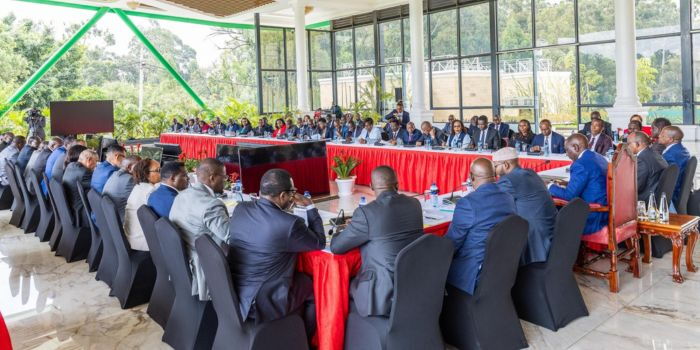
Governors meeting with President William Ruto at State House on June 4, 2025. Photo: Council of Governors
The Communications Authority of Kenya (CA) has issued a stern warning to 13 courier companies operating in Nairobi: comply or shut down.
In a gazette notice published on June 13, 2025, the CA revealed that it plans to revoke the operating licences of these firms within the next seven days. This crackdown affects a mix of both international and national courier service providers, sparking concerns about compliance within the fast-growing logistics sector.
The four international courier companies facing licence revocation are: Afrasia Courier Express, Courier Plus Logistics, Rioma Courier Services Limited and Delta Handling Services.
The nine national operators include: Crucible Investment, Ultimate North, Cilantro Solutions, Classic Luxury, Diamond Parcel Limited, EMD Solutions Company Limited, Four M Africa Limited, Eve on the Move Limited and Garvins Logistics
These companies specialize in the delivery of packages, documents, and goods both locally and across borders, a vital service for Kenya’s economy, especially in the era of booming e-commerce.
The CA, which is the national regulator for communications and courier services, stated that the revocations come as a result of failure to meet critical regulatory requirements. Common reasons for licence cancellations include:
Non-payment of annual licence renewal fees, Failure to meet minimum service standards, Breaches in customer privacy or data protection policies and Operational non-compliance with Kenya’s postal regulations
“Upon revocation of the licences listed hereabove, the service providers/operators shall not be authorised to operate and provide the service,” the notice read, making it clear that these companies will be legally barred from continuing operations.
This is not the first such enforcement move by the CA. In July 2024, the regulator also stripped 27 other courier companies of their licences. The repeated regulatory actions underline the authority’s commitment to cleaning up the sector and ensuring only compliant, reliable firms continue to serve the public.
For customers who regularly use these courier firms, the revocation could disrupt services. Businesses depending on time-sensitive deliveries may also face delays or be forced to shift to other providers.
Analysts warn that these actions, while necessary, highlight a broader issue of regulatory compliance within Kenya’s rapidly growing logistics industry. With the continued rise of e-commerce, ensuring transparency, service quality, and customer data protection is becoming more urgent than ever.
Companies affected by the gazette notice have a final window of seven days to respond or rectify any outstanding issues. After that, the CA will move forward with the revocations.
As the sector braces for another shakeup, the spotlight remains on how courier companies adapt to a tightening regulatory landscape in Kenya’s digital economy.
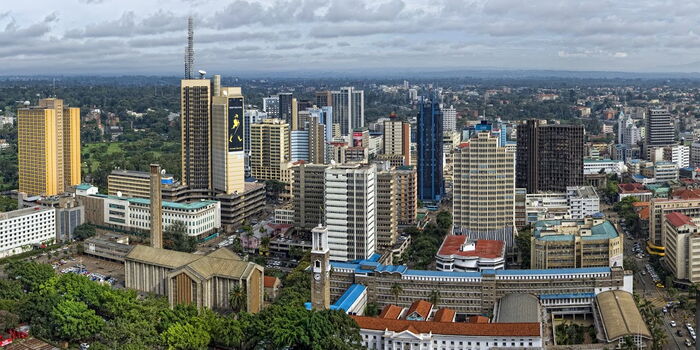
A photo of the aerial view of Nairobi City. Photo: Kenya Pics
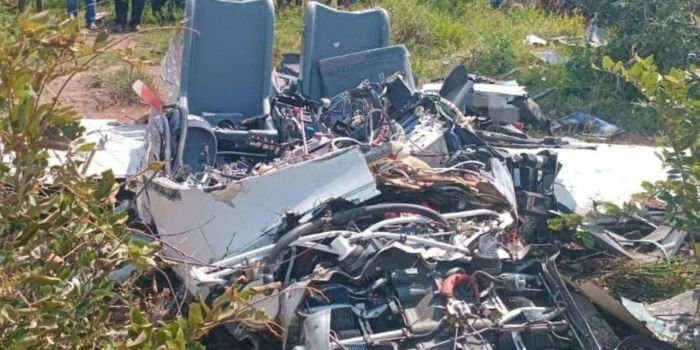
New revelations have shed light on the last missions and critical final minutes of the Kenya Air Force (KAF) aircraft that tragically crashed in Kwale County on Saturday, June 14, killing two military pilots. Flight tracking data now paints a more complete picture of the aircraft’s movements in the hours, and even weeks, leading up to the fatal crash.
The plane in question, a Grob 120A light military trainer aircraft bearing tail number KAF 718, was airborne for just 27 minutes before vanishing from radar over the Shimba Hills region. But its journey that day had begun far earlier, and much farther from the crash site.
At precisely 8:29 a.m., the aircraft departed Kigali International Airport in Rwanda, raising questions about the nature of its cross-border operation. By 10:38 a.m., it was spotted near Mombasa, hinting at a fast-paced transit or potentially covert mission involving logistical coordination between regional bases.
What followed was a short-range operation along Kenya’s coast. At 11:39 a.m., KAF 718 was first recorded near Mombasa flying at roughly 200 mph and an altitude of 2,314 feet. A minute later, it was seen maneuvering over the Likoni–Shika Adabu corridor—southwest of Mombasa town.
Just after 11:41 a.m., flight data shows the plane approaching Shimba Hills National Reserve. Its altitude had dipped to 2,000 feet, an unusually low level for a military trainer unless it was engaging in specific maneuvers or encountering mechanical trouble.
By 12:06 p.m, just before its final transmission, the aircraft had climbed dramatically to 12,100 feet but slowed to 162 mph. This sudden increase in altitude, paired with decreased speed, may indicate a last-ditch emergency effort by the pilots to regain control, or a technical malfunction in the aircraft’s data transmission systems.
That final ping placed the aircraft above Kinango, near the remote village of Ndavaya in Kwale County, about 40 km inland from Diani Beach. The Kenya Defence Forces (KDF) confirmed this as the crash site later that afternoon. Investigators have since been deployed to recover the plane’s black box and piece together what exactly happened in those crucial final moments.
Flight logs from FlightAware reveal that KAF 718 had been actively involved in numerous missions throughout April, May, and June. Many of these took place near Nanyuki, a strategic military hub that hosts the Laikipia Air Base.
The aircraft had conducted at least four separate short-haul flights near Nanyuki in April, and on May 15 alone, it made several trips between the air base and Eastleigh. On June 5, it was tracked again near Nanyuki, flying for 46 minutes.
Interestingly, on June 13, the day before the crash, it had flown near both Rwanda and Nanyuki in separate short trips, consistent with logistical support or advanced training operations.
While KDF has yet to release detailed insights into the plane’s assignments, sources within the military indicate that KAF 718 was likely on a standard training or reconnaissance mission. However, the addition of international flight legs, such as the Kigali stop, raises the possibility of deeper regional cooperation or joint exercises.
An official report is expected after aviation investigators analyze the recovered black box, which records both cockpit conversations and flight system data.
As the country mourns the loss of two brave pilots, the incident casts a spotlight on the rigorous, often risky operations Kenya’s airmen undertake, not just in defense, but in readiness, training, and regional coordination.
The wreckage of a Kenya Air Force plane that crashed at Ndavaya in Kinango, Kwale County, on Saturday, June 14, 2025. Photo: Joash Kemei
In a bold and unexpected move that stunned a church congregation in Kivaywa, President William Ruto publicly dismissed a road contractor for failing to deliver on a critical infrastructure project in Butere, Kakamega County.
Addressing the faithful during a Sunday service, Ruto didn’t mince words as he revealed his growing frustration with contractors who fail to meet deadlines despite receiving payment. “There is a road that has posed a challenge, but I will look for another contractor,” he declared. “I have told the one in place to go look for another job… go burn charcoal.”
The president’s blunt remarks drew laughter and applause from the crowd but carried a serious undertone, non-performing contractors will no longer be tolerated under his administration.
Ruto’s visit wasn’t just about rebuke—it marked the beginning of a new wave of infrastructure development in the region. He announced the launch of six new road projects in Kakamega County, vowing to ensure that all stalled roads are completed promptly.
“We have already paid the contractors for these roads. They must finish them. These roads are not just tarmac, they are arteries of our economy,” Ruto said.
The president emphasized that improved road networks will significantly boost trade, transport, and access to services across the Western region.
Beyond roadworks, President Ruto acknowledged the delays in rural electrification, promising that action was already underway. “I know that on power, we have lagged behind,” he admitted. “That is why I have taken affirmative action.”
With a Ksh3 billion allocation now in place, the government aims to connect 85,000 rural households to electricity, with 35,000 connections expected by December 2025. The rural electrification push is part of Ruto’s broader development agenda aimed at leveling the playing field for underserved regions.
As part of the larger infrastructure strategy, Ruto also revealed that he had dispatched Prime Cabinet Secretary Musalia Mudavadi to China to secure funding and strike deals that could unlock major projects for Kenya.
Among the top priorities is the Rironi–Mau Summit–Eldoret–Bungoma–Malaba highway, a key economic corridor that’s expected to be built in phases due to financial constraints. Construction is scheduled to begin in August 2025.
Meanwhile, the NSSF is gearing up to invest billions of shillings, drawn from Kenyans’ retirement savings—into the Nairobi–Rironi–Mau Summit Highway, in partnership with China Road and Bridge Corporation (CRBC), if their bid succeeds.
Ruto’s move mirrors a growing trend of public accountability among Kenyan leaders. Earlier this month, Nakuru Governor Susan Kihika dismissed her speechwriter on the spot during a Madaraka Day event after an embarrassing blunder referring to “Wamunyoro”—a humorous twist on a real location.
While the tone may vary, the message from both leaders is clear: there is no room for mediocrity in public service.
President William Ruto reacts during a meeting with leaders from the African Independent Pentecostal Church of Africa (AIPCA) at State House, Nairobi on June 10, 2025. PCS
Kenya is ramping up its global diplomacy, and all roads this week lead to Beijing. President William Ruto has dispatched Prime Cabinet Secretary Musalia Mudavadi to China on a critical diplomatic mission aimed at securing multi-billion shilling infrastructure funding and expanding Kenya’s trade reach into the Asian giant’s markets.
Speaking during a Sunday service in Kakamega County, Ruto revealed that Mudavadi is leading a high-powered delegation tasked with unlocking key deals, most notably, the financing of the Standard Gauge Railway (SGR) extension to Malaba, and the long-awaited upgrade of the Rironi–Mau Summit–Eldoret–Bungoma–Malaba highway.
“We must build our economy on solid infrastructure, and that’s why we are seeking strategic partnerships to move Kenya forward,” Ruto told the congregation.
At the top of the agenda is China’s potential investment in the SGR’s final western leg. If successful, it will complete a trade corridor linking Mombasa to Uganda and beyond, a critical move for regional integration.
The highway project, meanwhile, could begin construction as early as August, although Ruto admitted it may be implemented in phases due to funding constraints.
Notably, the National Social Security Fund (NSSF) is eyeing a bold role in the highway’s development. In partnership with China Road and Bridge Corporation (CRBC), the NSSF may invest billions from Kenyan pensioners—raising eyebrows among citizens who worry about the safety of public retirement funds being used in megaprojects.
While the infrastructure talks are central, trade is also high on Mudavadi’s priority list. With Kenya now exporting avocados, tea, macadamia, and coffee at scale, the government is keen to deepen access to Chinese consumers.
“We are working on finalizing a trade agreement with China within the next three or four months,” Ruto said. “This will open doors for our farmers and exporters.”
Kenya has already signed bilateral trade deals with the UK and the US. China, with its vast population and growing middle class, presents the next frontier.
This renewed China charm offensive is drawing international attention, particularly from Washington.
Following Ruto’s April visit to China, U.S. Senator Jim Risch, chairman of the Senate Foreign Relations Committee, publicly raised alarms over Kenya’s growing alignment with Beijing. During a Senate hearing, Risch cited Ruto’s statement declaring Kenya and China “co-architects of a new world order” as troubling.
“That’s not just alignment to China; it’s allegiance,” Risch warned, questioning Kenya’s reliability as a U.S. ally.
While the U.S. remains an important partner, especially with AGOA talks ongoing, Kenya’s balancing act between the two superpowers is becoming increasingly delicate.
In his defense, Ruto has repeatedly emphasized that Kenya’s foreign policy is rooted in multilateralism, a collaborative model that seeks cooperation from all corners of the globe, not dominance by any one power.
During an interview with China Global Television Network (CGTN), Ruto said Kenya’s relationship with China is about fair trade, mutual respect, and shared development goals.
“We want to be friends with all,” he said. “Our goal is to elevate Kenya’s economic standing, not choose sides.”
With Mudavadi in China negotiating high-stakes deals and global powers closely watching Kenya’s every diplomatic move, the coming months will be pivotal.
If successful, the outcome could mean smoother roads, faster railways, and booming exports. But Kenya’s tightrope walk between East and West is only getting thinner.
Will Ruto’s global gamble pay off?
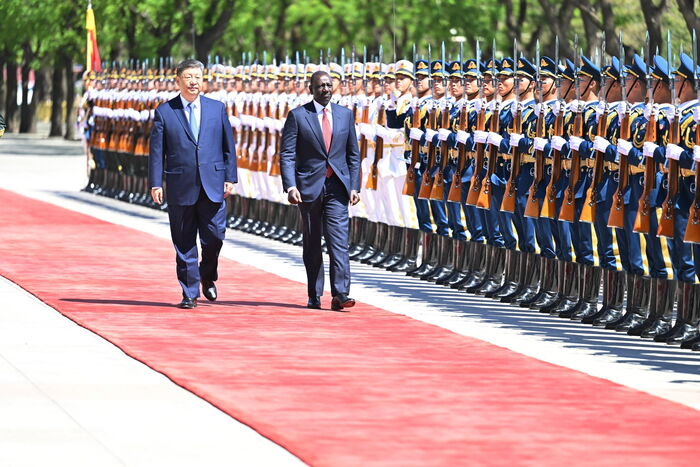
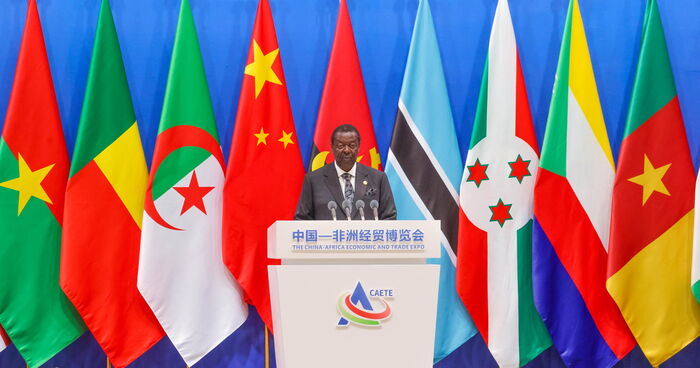
President William Ruto inspecting a guard of honor with his Chinese counterpart Xi Jinping during his State visit to China on April 24, 2025. PCSPrime Cabinet Secretary Musalia Mudavadi delivering an address during the opening of the Fourth Session of the China-Africa Economic and Trade Expo (CAETE) in Changsha, Hunan Province on June 12, 2025. Photo: Musalia Mudavadi
In a daring attempt that reads like a scene from a crime thriller, a 26-year-old Kenyan woman was arrested on Friday, June 13, 2025, at Jomo Kenyatta International Airport (JKIA) while allegedly trying to smuggle cocaine by ingesting drug pellets.
According to a report from the Directorate of Criminal Investigations (DCI), the suspect had just cleared a routine check when her anxious body language drew the attention of the ever-alert Anti-Narcotics Unit. Detectives intervened moments before she could board her outbound international flight.
“Her uneasy demeanor set off alarm bells,” DCI noted in their official update. A more thorough search soon followed, leading investigators to suspect the woman had internally concealed narcotics. She was quickly placed under medical supervision to monitor and facilitate the expulsion of the contraband.
Later that same day, the suspect passed two pellets while using a washroom. Over the next 24 hours, six more followed, bringing the total to eight cocaine-filled capsules. Lab analysis revealed the pellets contained approximately 626.65 grams of cocaine, with a street value of around Ksh4.39 million.
Authorities praised the swift coordination between security and medical teams at the airport, which ensured the suspect was safely monitored and the evidence collected in full.
She remains in custody and is expected to be arraigned in court on Monday, June 16, once investigations are finalized.
Interestingly, this isn’t the first instance of body-packing being thwarted this year. On February 19, a United States citizen was arrested in Nairobi after attempting to smuggle cocaine from Alabama to Saudi Arabia. The bust followed a doctor’s tip-off after the man sought emergency medical help. An endoscopy revealed three cocaine pellets lodged in his rectum, weighing nearly 58 grams.
Such cases highlight a disturbing trend of traffickers resorting to extreme methods, risking both arrest and their lives in a bid to outsmart law enforcement.
JKIA continues to be a high-alert zone for narcotics trafficking, thanks to its strategic location and traffic volume. Anti-narcotics teams have heightened surveillance and are leveraging intelligence sharing, medical checks, and behavioral profiling to intercept smugglers before they cross borders.
While traffickers may continue to evolve their methods, so do law enforcement agencies. As this latest case shows, no amount of confidence, or concealment, can outrun the long arm of justice.
In a major move set to transform transport logistics and ease chronic congestion in the coastal city of Mombasa, the Kenyan government has officially begun the land acquisition process for the ambitious Mombasa Port Area Road Development Project (MPARDP).
Spearheaded by the Kenya Ports Authority (KPA) and implemented by the Kenya National Highways Authority (KeNHA), this strategic infrastructure undertaking includes the Mombasa Southern Bypass and the Kipevu New Container Terminal (KNTC) Link Road—key arteries intended to streamline cargo movement in and out of the busy Port of Mombasa.
In a gazette notice published by the National Land Commission (NLC), the government announced it intends to acquire approximately 12.15 acres from seven landowners to pave the way for the project. This acquisition is being carried out in accordance with Part VIII of the Land Act, No. 6 of 2012.
The parcels earmarked are mostly located in Mombasa South/Block I, and a public inquiry session for affected landowners will be held on July 1, 2025, at the Likoni Chief’s Office, from 9 a.m. to 4 p.m.
Notably, some of the land to be acquired already belongs to KPA, reflecting the depth of planning and coordination involved in executing the infrastructure upgrade.
The Mombasa Bypass and the Kipevu Link Road are designed to significantly reduce traffic bottlenecks around the port and within the city’s CBD. These roadways will offer direct connectivity between the Kipevu New Container Terminal and major transport routes, including: The Standard Gauge Railway (SGR), The Northern Corridor and The Dongo Kundu Bypass
By bypassing the congested Likoni Ferry, the project will provide a faster, more reliable route to the South Coast, while also unlocking access to emerging industrial zones in Miritini and Dongo Kundu.
This road development is a key component of Kenya’s Vision 2030, the country’s long-term blueprint for transforming into a middle-income nation. The project is jointly funded by the Government of Kenya and the Japan International Cooperation Agency (JICA), reflecting its international importance.
The bypass expansion comes on the heels of other major developments in the region:
The Dongo Kundu Bypass, now fully operational, has already started easing traffic to and from the South Coast.
The Kipevu Oil Terminal II, constructed by China Communications Construction Company (CCCC), is helping expand Kenya’s fuel handling capacity and cutting vessel waiting times at the port.
The government’s commitment to public consultations and legal processes shows a shift toward more inclusive infrastructure planning. The July 1 land inquiry offers affected landowners a platform to raise concerns, seek clarity, and negotiate compensation.
As implementation gains pace, locals and businesses in Mombasa can expect long-term benefits including: Shorter travel times, Reduced transport costs and Increased investor interest in port-adjacent zones
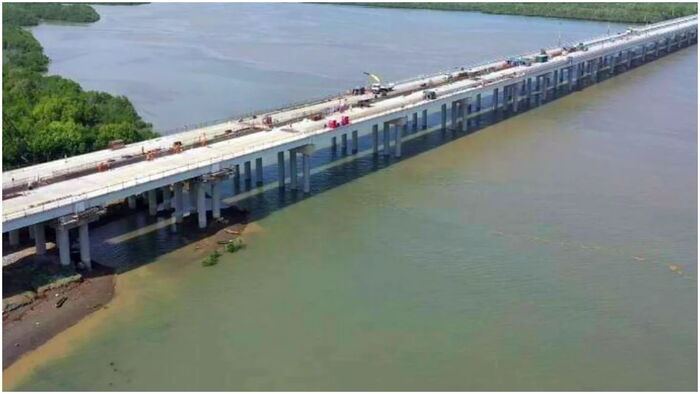
An image of the Dongo Kundu bypass. PHOTO/Kenya Geographic.