

Home Blog Page 19

Iranian strikes rattle Gulf states as Church calls for prayer and diplomacy, says Archbishop Eugene Nugent

0

As violence escalates across the Middle East, Eugene Nugent, the Apostolic Nuncio to Kuwait, Bahrain, and Qatar, has described a region shaken by fear yet united in prayer.

Speaking to Vatican News, Archbishop Nugent said the local Church is urging the faithful to pray and fast for peace as Iranian strikes hit parts of the Arabian Peninsula ย ย territories long considered bastions of stability and interreligious coexistence.

Since Saturday, February 28, five people ย ย all foreign nationals ย ย have been killed in the Gulf: one in Kuwait, three in the United Arab Emirates, and one in Bahrain. On Monday, March 2, fresh explosions were reported in Dubai, Abu Dhabi, Doha, and Manama. In Kuwait, thick smoke was seen rising from the US embassy compound following a drone attack.

ย โ€œThe situation is dramaticโ€

Based in Kuwait City, Archbishop Nugent described sleepless nights punctuated by explosions and sirens.

โ€œWe hardly slept at all,โ€ he said, recounting a series of blasts that began around 2:00 a.m. He confirmed that a drone struck the US embassy in Kuwait, causing damage and a fire inside the compound, though no fatalities were reported.

He also noted reports that two American military aircraft were shot down near the Ali Al Salem air base ย ย a facility he knows well, as he regularly celebrates Mass there. An Italian military contingent is stationed nearby.

While the nunciature in the Shaab district has not suffered damage, the archbishop acknowledged that the situation is deeply unsettling. Military bases, airports, and infrastructure sites ย ย including Terminal 1 of Kuwait International Airport ย ย have been primary targets.

Shock in a region known for dialogue

The warโ€™s outbreak on February 28 stunned many in the Gulf, particularly in states that have long promoted dialogue, coexistence, and religious tolerance.

โ€œWe had hoped that negotiations would bear fruit,โ€ Archbishop Nugent said, expressing surprise at the sudden escalation.

He highlighted the strong reception locally to Pope Francisโ€™ Sunday Angelus appeal for peace and renewed dialogue. A similar message from Bishop Aldo Berardi, Apostolic Vicar of Northern Arabia, calling for solidarity and prayer, was also widely shared and welcomed.

Despite the intensifying hostilities, the Church remains in close contact with civil authorities and diplomatic representatives, urging all sides to exhaust every possible avenue to bring the conflict to an end.

โ€œA long war benefits no one,โ€ the archbishop stressed, warning that the region has already endured more than its share of conflict.

Diplomacy as the only path forward

With missiles and drones dominating headlines, Archbishop Nugent insisted that diplomacy must not be abandoned.

He expressed cautious hope that statements by Donald Trump indicating possible talks with Iranโ€™s new leadership could reopen channels of negotiation.

However, he acknowledged the complexity of Iranโ€™s internal political dynamics, describing them as multifaceted and difficult to interpret from the outside. โ€œWe must try dialogue at every level,โ€ he said firmly. โ€œDiplomacy is the only way to put an end to this war.โ€

A prophetic warning

Reflecting on remarks made in Bahrain in 2022, Pope Francis once described war as โ€œa dramatically childish scenario,โ€ lamenting that in โ€œthe garden of humanity, instead of tending the whole, we play with fire with missiles and bombs.โ€

Today, those words resonate with renewed urgency.

โ€œThey seem prophetic,โ€ Archbishop Nugent observed. โ€œFor centuries, humanity has engaged in conflicts, but ultimately we must seek fraternity and rediscover what unites us.โ€

Just days before the current escalation, the Church in Kuwait marked the fourth anniversary of the war in Ukraine with a special Mass. Within days, war had reached their own region.

ย Prayer, fasting, and hope

The convergence of Lent and Ramadan has created a unique spiritual moment. Christians and Muslims alike are engaged in fasting and prayer ย ย a powerful sign of shared longing for peace.

At the nunciature in Kuwait, Mass is celebrated every morning at 7:30 a.m., while the Rosary for peace is prayed each evening at 5:00 p.m. Online prayer groups have also been established to sustain the faithful during the crisis.

Archbishop Nugent emphasized devotion to Our Lady of Arabia, venerated deeply by local Catholics and respected by Muslims as Maryam, who is mentioned repeatedly in the Qurโ€™an.

โ€œIn this dramatic moment, we pray very much to the Virgin, Queen of Peace,โ€ he said. โ€œIt is through her intercession that the war will come to an end.โ€

As missiles shake cities once known for calm and coexistence, the Churchโ€™s message remains consistent: dialogue over destruction, fraternity over fear, and prayer over despair.
BREAKING NEWS: U.S. sanctions Rwanda Defence Force over alleged support to M23 in eastern DRC

0

WASHINGTONโ€”The United States has imposed sweeping sanctions on the Rwanda Defence Force (RDF) and four of its top commanders, accusing the Rwandan military of actively supporting and fighting alongside the March 23 Movement (M23) in eastern Democratic Republic of the Congo (DRC).

The sanctions were announced today by the U.S. Department of the Treasuryโ€™s Office of Foreign Assets Control (OFAC), marking a major escalation in Washingtonโ€™s response to the ongoing conflict in eastern Congo.

According to the Treasury Department, the RDF has provided direct operational, logistical, and technological support to M23, including advanced military equipment such as GPS jamming systems, air defense systems, drones, and other materiel. Thousands of RDF troops are reportedly deployed across eastern DRC, where they are said to be engaged in combat operations and facilitating M23โ€™s territorial expansion.

Washington demands immediate withdrawal

U.S. Treasury Secretary Scott Bessent stated that the sanctions are aimed at safeguarding peace efforts under the recently signed Washington Accords.

โ€œPresident Trump is the Peace President, and Treasury will use all tools at its disposal to ensure that the parties to the Washington Accords uphold their obligations,โ€ Bessent said. โ€œWe expect the immediate withdrawal of Rwanda Defence Force troops, weapons, and equipment.โ€

The announcement comes just days after Donald J. Trump hosted Felix Tshisekedi and Paul Kagame for the signing of the Joint Declaration on the Washington Accords for Peace and Prosperity.

Despite the diplomatic breakthrough, M23 subsequently captured the strategic border city of Uvira, near Burundi, triggering civilian deaths and mass displacement. Though the group later withdrew from the city, U.S. officials warned that its continued presence near the border, coupled with RDF support, risks expanding the conflict into a broader regional war.

In a joint statement, the International Contact Group for the Great Lakes condemned M23 and RDF military operations and called for Rwandaโ€™s withdrawal from eastern DRC.

Senior RDF commanders targeted

The sanctions specifically designate four senior Rwandan military officials:

  • ย ย ย  Vincent Nyakarundiย  , RDF Army Chief of Staff
  • ย ย ย  Ruki Karusisiย  , Commander of the 5th Infantry Division
  • ย ย ย  Mubarakh Mugangaย  , Chief of Defence Staff
  • ย ย ย  Stanislas Gashugiย  , Special Operations Force Commander

U.S. authorities accuse the commanders of playing key roles in planning and executing operations supporting M23โ€™s offensives in eastern Congo.

Accusations of human rights abuses

The U.S. alleges that, with RDF backing, M23 has engaged in extrajudicial killings, arbitrary arrests, torture, and attacks against Congolese forces, regional peacekeepers, and UN positions.

In January 2025, RDF forces reportedly attacked the Congolese armed forces and defensive positions of the UN peacekeeping mission in the DRC.

Washington further claims that Rwanda has gained access to mineral-rich territories in eastern Congo as part of its support for M23โ€™s armed rebellion โ€” a long-standing accusation in the protracted conflict.

ย What the sanctions mean

Under the sanctions:

  • All property and interests belonging to the RDF and the designated individuals within U.S. jurisdiction are frozen.
  • ย ย U.S. persons are prohibited from engaging in transactions involving the sanctioned entities.
  • ย ย Entities owned 50 percent or more by the designated individuals are also blocked.
  • ย ย Violators risk civil or criminal penalties.

OFAC emphasized that sanctions are intended not as punishment but as leverage to compel behavioral change and restore stability.

The move places significant diplomatic pressure on Kigali and raises fresh questions about the fragile security situation in eastern DRC, where fighting has displaced hundreds of thousands and heightened fears of regional escalation.

More updates to follow.

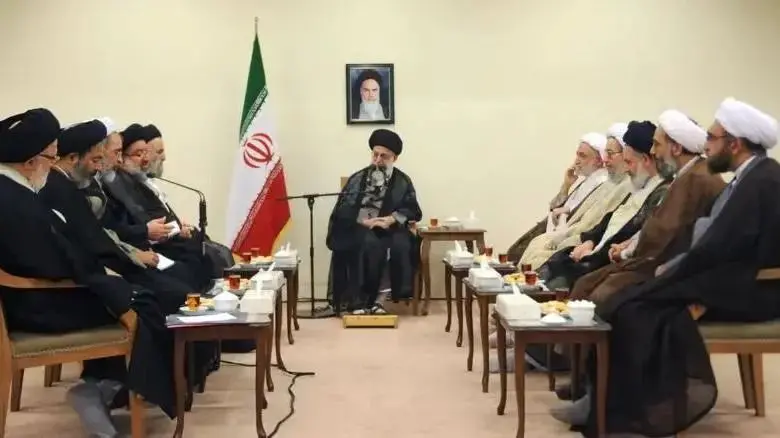
Iran leadership transition: Who is Alireza Aarafi, the powerful cleric now at the center of succession?

0

Alireza Aarafi has been elected by Iranโ€™s Assembly of Experts to serve on the interim leadership council of the Islamic Republic, following constitutional provisions governing succession at the highest level of authority. His appointment places him among the three clerical figures entrusted with temporarily assuming the responsibilities of national leadership until a new Supreme Leader is formally selected.

The announcement was made by the spokesperson of the Assembly of Experts, though official details regarding the internal deliberations of the meeting were not disclosed. Under Article 111 of Iranโ€™s Constitution, in the event of the death of the Supreme Leader, a provisional council assumes leadership duties until the Assembly of Experts appoints a successor. This council does not exercise full sovereign authority; its decisions require substantial approval within the Assembly to take effect.

The transition unfolds amid heightened political sensitivity and intense scrutiny over succession scenarios. International outlets, including The New York Times, have reported on possible frameworks for leadership continuity, while Iranian state-aligned media have dismissed such coverage as speculative. Senior military figures have publicly emphasized institutional stability, asserting that strategic command structures remain intact. In previous statements, Ali Khamenei had outlined clear chains of responsibility within the armed forces, reinforcing the perception that the system is designed to function even during periods of leadership transition.

Born in 1955 in Meybod, Yazd Province, Aarafi comes from a prominent clerical family. His father, Mohammad Ebrahim Aarafi, was known for opposing the Pahlavi monarchy and maintaining connections with influential religious figures. Aarafi began his religious education early, studying Qurโ€™anic sciences and Islamic jurisprudence before relocating to Qom, the countryโ€™s principal center of Shiite theological scholarship. There, he pursued advanced seminary training under several distinguished scholars and later expanded his academic engagement into philosophy and contemporary Islamic thought.

Over the decades, Aarafi has built a substantial institutional profile. He has served as a professor in both seminaries and major universities, supervised numerous scholarly projects, and contributed to shaping theological education nationwide. In 2002, he was appointed head of the International Center for Islamic Sciences by decree of Ali Khamenei, a move widely interpreted as a sign of growing confidence in his leadership capabilities. He later assumed the position of head of the Qom Seminary and became a member of Iranโ€™s Supreme Council of the Cultural Revolution, further consolidating his influence within the countryโ€™s religious and policy-making structures.

Aarafi has also played an active political role. He secured a seat in the Assembly of Experts representing Tehran Province and has been involved in shaping religious and cultural policy at the national level. His public statements over the years have aligned closely with the official ideological orientation of the Islamic Republic, particularly on issues of foreign policy and internal governance. His clerical title evolved from Hujjat al-Islam to Ayatollah, reflecting his ascent within the religious hierarchy.

Until recently, Aarafi maintained a relatively modest public profile compared to other senior clerics. However, his steady institutional advancement and proximity to the Supreme Leader have elevated his standing within Iranโ€™s power structure. As generational shifts continue within the Islamic Republicโ€™s leadership, his appointment to the interim council underscores both his accumulated authority and the trust placed in him by the countryโ€™s highest governing bodies. Observers now regard him as a consequential figure in Iranโ€™s transitional moment, with potential implications for the future configuration of political and religious leadership.

Magumu residents protest plan to establish private cemetery near Soko Mpya market

0

Residents of Magumu in Kinangop Constituency, Nyandarua County, staged protests on Monday over plans by a private developer to establish a cemetery near Soko Mpya Market.

The demonstrators blocked the busy Naivashaโ€“Nairobi Highway using barricades and lit bonfires, demanding the immediate suspension of the project.

According to the residents, the proposed cemetery is set to occupy a 69-acre parcel of land strategically located at what they describe as the gateway to Nyandarua County. They argued that such a development would project a negative image of the area, particularly given its proximity to the main highway.

Instead, they urged the investor to consider projects that would directly benefit the community, including a technical training institution or an expanded market facility.

Dispute over land ownership and intended use

Locals cited land records indicating that the parcel was originally allocated to the public on January 1, 1960, under a 99-year leasehold arrangement. However, the land was later acquired by private investors who now intend to convert it into a cemetery and reportedly construct a five-star hotel on part of the property.

Protesters further claimed that the cemetery would operate under a lease model, with reports suggesting that each burial unit would cost Sh130,000 and individual graves would be leased for a period of 50 years.

County officials oppose project

Nyandarua County Executive Committee Member (CECM) for Lands, Stephen Mburu Kinyanjui, joined residents during the protest, alongside Magumu Ward MCA Hassan Ndungu and Njabini-Kiburu Ward MCA Kiiru Gachomba.

The county leaders termed the project illegal, accusing the developer of advancing the plan without conducting mandatory public participation. They maintained that the original purpose of the land was tree planting and community benefit.

Kinyanjui revealed that discussions are ongoing to have the land reverted to the county government. He added that once repossessed, the county intends to establish an ultra-modern market and a potato processing plant on the site to spur economic growth in the region.

Investigations into the matter are ongoing.

Three U.S. Jets reportedly shot down as Israel and Hezbollah escalate deadly clashes in Lebanon

0

Confusion and heightened tensions have gripped parts of the Middle East after reports emerged that three United States military aircraft were accidentally shot down in separate incidents linked to ongoing regional operations. According to early defense sources, the aircraft were lost during active missions near sensitive military zones, including areas connected to Kuwait-based deployments and broader operations supporting allied forces. Investigations are underway to determine whether the aircraft were brought down by friendly fire, air defense misidentification, or technical failures amid intense military activity.

The reported losses come at a time when the region is already on edge due to escalating clashes between Israeli forces and Hezbollah fighters in southern Lebanon. Overnight, both sides exchanged heavy artillery fire, rockets, and airstrikes, marking one of the most intense confrontations in recent months. Residents along the border described continuous explosions and the sound of fighter jets overhead, while emergency responders worked to assist civilians caught in the crossfire.

Israeli military officials said their operations targeted what they described as Hezbollah positions and weapons infrastructure, claiming the strikes were a response to cross-border rocket launches. Hezbollah, in turn, announced that it had carried out retaliatory attacks against Israeli military sites, warning that it would continue to respond to any further incursions.

The simultaneous reports of U.S. aircraft losses and renewed Israel-Hezbollah fighting have raised fears of a wider regional escalation. Military analysts warn that miscalculations or accidental engagements could draw additional forces into direct confrontation, especially as multiple countries operate aircraft and air defense systems in close proximity.

Washington has not yet released a full public statement confirming the circumstances of the aircraft incidents, but defense officials have acknowledged that the situation remains fluid and under review. Meanwhile, international leaders are urging restraint, warning that continued escalation risks triggering a broader conflict that could destabilize the entire region.

Iranโ€“Israelโ€“US tensions escalate: what the reported missile strikes mean for Middle East security

0

In recent weeks, Iran has once again drawn significant international attention following reports of missile strikes, drone operations, and other military actions targeting its interests or facilities linked to it across the Middle East. These developments are part of a long-standing confrontation involving Iran, Israel, and the United States, raising renewed concerns about regional stability and the risk of broader conflict.

Tensions between Iran and the United States escalated sharply after the 1979 Iranian Revolution, which overthrew a Western-backed government and brought in a leadership openly critical of Washingtonโ€™s influence. Since then, the two countries have remained at odds, with the United States imposing extensive economic sanctions on Iran, aiming to pressure it to curb its military activities and regional influence. Iran, in turn, has viewed U.S. policies and military presence in the region as a direct threat to its sovereignty and security.

Israel also considers Iran one of its most serious security threats. Israeli officials have repeatedly warned that Iranโ€™s growing missile capabilities and military networks across the Middle East could endanger Israelโ€™s safety. Iranโ€™s support for armed groups opposed to Israel has further deepened hostility between the two sides. As a result, Israel has carried out multiple military operations targeting sites suspected of being linked to Iranian military infrastructure, particularly in neighbouring countries where Iranian-aligned forces operate.

Reports of missile launches and drone strikes are often interpreted by analysts as strategic moves aimed at weakening an opponentโ€™s military capacity or sending a political and military message. Some operations have targeted weapons depots, military installations, or allied armed groups, fuelling fears that continued escalation could lead to direct confrontation between major regional and global powers.

The United States plays a central role in these tensions due to its close alliance with Israel and its extensive military presence across the Middle East. U.S. forces maintain bases in several countries in the region, and Washington has previously carried out strikes against groups linked to Iran, citing the need to protect its troops and allies. In addition to military measures, the United States has relied heavily on economic sanctions as a tool to pressure Tehran. Iran, however, maintains that strengthening its military capabilities is essential for national defence and deterrence.

These tensions also carry significant global economic implications. Iran sits in a region that produces a large share of the worldโ€™s oil, and any escalation threatens to disrupt supply routes and drive up energy prices. Such instability can affect economies far beyond the Middle East, increasing costs for fuel, transportation, and industry worldwide.

Despite periodic strikes and military posturing, analysts note that all sides appear cautious about triggering a full-scale war, which could have devastating consequences across the region and beyond. Diplomatic efforts and international pressure continue to play a role in preventing wider escalation, though uncertainty remains high. As geopolitical rivalries intensify, Iranโ€™s position at the centre of regional tensions continues to shape the security landscape of the Middle East and influence global political and economic dynamics.

Pope Leo XIV warns priests against using AI for homilies, says artificial intelligence cannot share faith

0

Pope Leo XIV has cautioned priests against using artificial intelligence to prepare their homilies, emphasizing that AI โ€œwill never be able to share faith.โ€

Speaking during a question-and-answer session with clergy from the Diocese of Rome, the pope urged priests to exercise vigilance in their use of artificial intelligence and the internet. He warned them to resist what he described as โ€œthe temptation to prepare homilies with artificial intelligence.โ€

Drawing a comparison with the human body, Leo explained that just as muscles weaken when they are not used, the intellect also requires exercise. โ€œThe brain needs to be used,โ€ he said, stressing that intelligence must be cultivated and engaged to prevent it from deteriorating.

The pope underlined that delivering an authentic homily means sharing oneโ€™s personal faith. Artificial intelligence, he noted, cannot transmit lived belief or spiritual conviction. โ€œTo give a true homily is to share faith,โ€ he said, reiterating that AI will never be capable of doing so.

He further emphasized the importance of offering pastoral service that is rooted in the local culture and community. Parishioners, he explained, want to see the priestโ€™s own faith and experience of knowing and loving Jesus Christ.

Pope Leo XIV also highlighted the central role of prayer in priestly life. He clarified that this does not mean merely reciting the breviary quickly as a routine obligation, but rather dedicating genuine time to be with the Lord.

Addressing the influence of digital platforms, the pope warned about what he called the โ€œillusionโ€ of the internet, particularly on TikTok, where the pursuit of โ€œlikesโ€ and โ€œfollowersโ€ can become a distraction. He said that only a life authentically rooted in the Lord enables a person to offer something truly meaningful.

โ€œIf we are not transmitting the message of Jesus Christ,โ€ he said, โ€œperhaps we are mistaken, and we must reflect very carefully and humbly about who we are and what we are doing.โ€

During the same dialogue, the pope encouraged priests to cultivate friendship and fraternity among themselves. He cautioned against โ€œinvidia clericalis,โ€ or clerical envy, which can damage relationships within the clergy. He also stressed the importance of ongoing learning and personal development throughout priestly ministry.

Multimedia University student fighting for his life after alleged hot water attack in Nairobi

0

Nairobi, Kenya: A third-year student at Multimedia University is battling severe burn injuries at a Nairobi hospital after he was allegedly attacked by his girlfriend, who is accused of pouring hot water on him during a domestic dispute.

The victim, identified as Steve Godia, said the incident occurred on the night of February 13, 2026, at his rented residence in Umoja 1 Estate, a residential area in eastern Nairobi, just hours before Valentineโ€™s Day.

According to Godia, the confrontation began when his girlfriend allegedly accused him of maintaining contact with a former partner. What started as a verbal disagreement quickly escalated into violence.

He claims that during the argument, the suspect poured boiling water on him, causing extensive burns to parts of his body. Overwhelmed by pain and shock, he was unable to defend himself or escape immediately.

Neighbors reported hearing distress calls and commotion from the house before rushing to assist him. He was later taken to a city hospital, where doctors admitted him in critical condition and began emergency treatment.

Medical personnel familiar with the case said the student suffered severe burn injuries that posed a serious threat to his life. Although his condition has since stabilized, doctors say his recovery will likely be long and require specialized care.

The incident has shocked fellow students and friends at Multimedia University, many of whom described Godia as calm and focused on his academic and creative pursuits. Some have called on authorities to conduct a thorough investigation and ensure accountability.

Police had not released an official statement on the case at the time of publication, and it remains unclear whether any arrests have been made.

The case has also renewed concerns about domestic violence among young couples, with experts warning that unresolved conflicts can escalate into life-threatening situations if not addressed through peaceful and lawful means.

Godia remains hospitalized as his family, friends, and colleagues hope for his recovery and await further developments in the investigation.

Charlene Ruto mourns Sheldon Avedi, praises his creativity and dedication

0

Kenyaโ€™s First Daughter, Charlene Ruto, has announced the death of Sheldon Avedi, a young creative who worked closely with her initiatives, describing his passing as a profound personal and professional loss.

Charlene shared the news through her Instagram stories, posting a funeral announcement alongside a heartfelt tribute that highlighted Avediโ€™s contribution to her work, particularly through The Young Peopleโ€™s Network International. Her message reflected both grief and appreciation for his behind-the-scenes efforts.

โ€œWe are deeply saddened by the passing of Sheldon Avedi,โ€ she wrote. โ€œHe supported us behind the scenes, bringing many of our concepts to life through his creativity and skill. We will always remember you through the work, dedication, and quiet commitment you left behind.โ€

She described him as a talented and dependable young man whose work and dedication made a lasting impact on the projects he supported. Charlene also extended condolences to his family and loved ones, emphasizing that his legacy would live on through the creative contributions he made.

Alongside the tribute, she shared a video from a previous event in which Avedi spoke about his personal journey. In the clip, he reflected on humble beginnings, including working as a cleaner, while nurturing his creative ambitions, a story that resonated with many who followed his work.

The announcement prompted an outpouring of sympathy across social media, with many Kenyans expressing condolences and honouring Avediโ€™s life. Messages described him as a promising young talent whose dedication and spirit touched those around him.

Avediโ€™s death has left a noticeable void among those who collaborated with him, particularly within youth-focused initiatives where his creative input helped bring ideas to life. His colleagues and supporters say his work and quiet commitment will remain part of the legacy he helped build.

Champions League Race 2026: Manchester United, Chelsea or Liverpool who has the toughest run-in?

0

The race for Champions League qualification is entering its most decisive stretch, with Manchester United, Chelsea and Liverpool separated by fine margins in the Premier League standings.

With only a limited number of fixtures remaining, the equation is simple but unforgiving: consistency will determine who secures a return to Europeโ€™s elite competition and who is left recalibrating ambitions for next season.

Manchester United approach the run-in with a blend of opportunity and pressure. Their schedule features encounters against mid-table sides with little to play for, but also direct clashes against rivals chasing the same objective. Such fixtures often act as six-pointers, magnifying both the reward and the risk. Unitedโ€™s campaign has at times been marked by defensive vulnerability, and any lapse in concentration could prove decisive. Yet their experience in navigating high-stakes moments may offer a psychological edge.

Chelsea, meanwhile, face what many analysts consider the most demanding schedule of the three? A series of matches against top-half opposition will test both tactical discipline and mental resilience. The London sideโ€™s youthful squad has shown flashes of dynamism this season, but inconsistency has remained a recurring theme. For Chelsea, the equation may hinge on efficiency in front of goal and composure in tight contests where margins are narrow and patience is essential.

Liverpoolโ€™s run-in appears, on paper, slightly more forgiving. Several remaining fixtures are against teams battling relegation or sitting comfortably in mid-table. Historically, Liverpool have demonstrated an ability to mount strong late-season surges, turning pressure into momentum. However, the Premier League has repeatedly shown that perceived โ€œeasierโ€ matches can become traps, particularly against sides fighting for survival. Avoiding complacency will be crucial.

Beyond the fixture lists, other variables could influence the outcome: squad depth, injury management and the psychological weight of expectation. Fatigue may play a role as the campaign nears its conclusion, especially for teams balancing domestic and European commitments.

Ultimately, the Champions League race may not be decided solely by headline clashes but by discipline in routine encounters. A single defensive error, a missed opportunity in stoppage time or a moment of individual brilliance could reshape the standings.

As the season edges toward its finale, the margin for error has all but disappeared. For Manchester United, Chelsea and Liverpool, the coming weeks will determine whether their ambitions extend to Europeโ€™s grandest stage, or whether they must settle for a campaign defined by near misses.