

Home Blog Page 3

Study in the Netherlands: Wageningen University Offers Fully Funded Master’s Scholarships for African Students in 2027

0

WAGENINGEN, Netherlands — African graduates seeking to pursue postgraduate studies in Europe have an opportunity to secure fully funded scholarships at Wageningen University & Research (WUR) in the Netherlands, with applications for the September 2027 academic intake now being accepted.

The university’s Africa Scholarship Programme (ASP) provides financial support to academically outstanding students from across the African continent, covering tuition fees, living expenses, international travel, visa costs and health insurance for the duration of a two-year master’s degree.

Eligible applicants must submit a complete application for an approved master’s programme before December 1, 2026, according to the university’s official scholarship announcement.

The programme is open to citizens of African countries, including Kenya, Rwanda, Uganda, Tanzania, Burundi, the Democratic Republic of Congo and other nations across the continent.

The initiative aims to strengthen Africa’s academic and professional capacity by enabling highly qualified graduates to acquire advanced knowledge and research skills at one of Europe’s established institutions specialising in agriculture, environmental sciences, food systems and sustainable development.

Scholarships cover tuition, travel and living expenses

Under the Africa Scholarship Programme, selected students receive comprehensive financial assistance designed to support their studies in the Netherlands.

The funding package includes full tuition fee coverage for 24 months and a living allowance throughout the same period.

It also provides financial support for travel to and from the Netherlands, visa expenses and health insurance.

The university has not published a fixed monthly allowance amount on its current scholarship overview, meaning applicants should avoid relying on figures circulated by unofficial scholarship websites.

Unlike partial scholarships, which require recipients to secure additional funds to meet substantial educational costs, the Africa Scholarship Programme is designed to cover the principal expenses associated with postgraduate study.

However, candidates should still review the final scholarship agreement to determine whether any additional personal expenses will remain their responsibility.

Who qualifies for the Africa Scholarship Programme?

Wageningen University has established academic and nationality requirements for candidates seeking consideration under the programme.

Applicants must hold citizenship of an African country and apply for an eligible master’s degree beginning in September 2027.

The university requires candidates to demonstrate exceptional academic achievement, including a First Class Honours bachelor’s degree or equivalent qualification and a grade point average of at least 80%.

Applicants must also obtain unconditional admission to their chosen master’s programme.

Preference is given to candidates who have not previously completed a master’s degree.

Importantly, students must have completed their bachelor’s degrees before December 1, 2026, and uploaded their degree certificates as part of their applications.

This requirement means students who are still completing their undergraduate studies and cannot provide their final diplomas before the deadline will not qualify for consideration in the current scholarship round.

Candidates must also satisfy the university’s English-language proficiency requirements before submitting their applications.

Master’s programmes available at Wageningen University

Wageningen University offers a wide range of English-taught postgraduate programmes in agriculture, natural sciences, technology, environmental management and related disciplines.

Among the master’s programmes listed by the institution are:

Climate Studies: Focuses on climate change, its environmental and socioeconomic impacts, and approaches to climate adaptation and mitigation.

Environmental Sciences: Equips students with scientific and technical knowledge to address environmental degradation, pollution and sustainability challenges.

Food Technology: Covers food production, processing, product development and technologies aimed at improving food quality and safety.

Biotechnology: Explores biological technologies and their applications in industrial innovation, agriculture, health and environmental management.

Development and Rural Innovation: Examines the social, technological and institutional changes influencing agricultural and rural development.

Data Science for Food and Health: Combines data analysis with research into food systems, public health and related challenges.

Aquaculture and Marine Resource Management: Focuses on aquatic production systems, marine ecology and the sustainable use of aquatic resources.

Applicants must ensure that their preferred programme is eligible for the September 2027 scholarship intake and that they meet its specific admission requirements.

The university’s scholarship scheme is intended for prospective students beginning eligible on-campus master’s studies in September, rather than students already enrolled at the institution.

English-language requirements for applicants

Because Wageningen University’s master’s programmes are taught in English, prospective students must demonstrate sufficient proficiency in the language.

The university accepts several internationally recognised English-language qualifications.

For example, applicants taking the IELTS Academic examination generally need an overall score of at least 6.5, with a minimum speaking score of 6.0.

The university also accepts qualifying TOEFL iBT, Pearson PTE Academic and Cambridge English examination results.

Exemptions are available to certain applicants who have completed qualifying previous education under conditions specified by the institution.

However, studying in English in an African country does not automatically exempt an applicant from the language-testing requirement.

Candidates are strongly encouraged to verify the exact requirements associated with their qualifications and country of study.

For the Africa Scholarship Programme, acceptable English-language evidence must be available and uploaded before December 1, 2026.

How to apply for the Wageningen University Africa Scholarship

Students seeking consideration for the scholarship must first apply for admission to an eligible master’s programme.

The university does not operate a separate open application process through which students can directly request an Africa Scholarship Programme award.

Instead, the scholarship selection committee assesses eligible candidates who have completed the university’s master’s admission process.

The first step is to select an appropriate master’s programme through Wageningen University’s official website.

Applicants must then register through Studielink, the Netherlands’ national higher education application platform.

Following registration, Wageningen University provides instructions for accessing its Osiris application portal, where supporting academic documents must be uploaded.

Required documents generally include a bachelor’s degree certificate, academic transcripts, proof of English proficiency and a curriculum vitae.

Applicants whose academic records are not in English or Dutch may also need to provide certified translations.

The university allows candidates to apply for up to two master’s programmes per intake.

Once a complete application has been submitted, the university assesses whether the candidate meets the admission requirements.

Students who receive unconditional admission and satisfy the scholarship’s academic criteria may subsequently be considered for the Africa Scholarship Programme.

Scholarship selection takes place in 2027

Wageningen University has confirmed that eligible applicants will be evaluated by its scholarship selection committee.

A number of qualified candidates are expected to receive invitations in March or April 2027 to participate in the final stage of the selection process.

The university says a lottery will be conducted among candidates who reach this final stage to determine the scholarship recipients.

Selected applicants are scheduled to receive scholarship offers on April 7, 2027, while other finalists will be placed on a waiting list.

This means that meeting the eligibility requirements and receiving unconditional admission does not automatically guarantee a scholarship.

The number of available awards is limited, and final selection follows the university’s established procedures.

Application deadline: November 30, 2026

Prospective students must complete their master’s applications before December 1, 2026, making November 30 the final calendar day for submission.

All required academic documents, including bachelor’s degree certificates and English-language test results, must be uploaded by the deadline.

Candidates are advised to begin the application process early, as obtaining academic transcripts, certified translations and English-language examination results may take considerable time.

The university’s regular admission deadlines for international students may differ from the earlier deadline established for scholarship consideration.

Applicants seeking the Africa Scholarship Programme should therefore follow the scholarship-specific deadline rather than the general master’s admission calendar.

The selected scholars are expected to begin their studies in September 2027.

Opportunities for East African graduates

The Africa Scholarship Programme offers an opportunity for highly qualified graduates from East Africa to pursue postgraduate education in fields closely connected to the region’s development priorities.

Agriculture, climate resilience, food security, environmental management and technology are among the areas in which advanced research and professional expertise can contribute to economic growth and sustainable development.

For students from Rwanda, Kenya, Uganda, Tanzania, Burundi and neighbouring countries, the programme provides a route to internationally recognised postgraduate qualifications without bearing the principal financial costs of overseas study.

The scholarship also reflects Wageningen University’s stated objective of supporting capacity building across Africa through advanced education and research.

Nevertheless, the programme’s demanding academic requirements mean that it is primarily suited to graduates with exceptionally strong undergraduate results.

Where to apply

Interested candidates should submit their master’s applications through Wageningen University’s official admissions system and consult the university’s scholarship information page for the current conditions.

The scholarship selection process is managed by the university, and applicants should be cautious of individuals or unofficial platforms claiming to guarantee selection.

With the application deadline approaching, academically qualified African graduates are encouraged to review programme requirements, prepare the necessary documents and complete their submissions before the end of November.

Official scholarship information: https://www.wur.nl/en/education/master/study-expenses-masters/scholarships

Master’s application instructions: https://www.wur.nl/en/education/master/application-admission-masters/apply-masters-programme

Afrovera Media continues to provide verified information on international scholarships, university admissions, employment and educational opportunities for students across Africa.
Study in Europe: Erasmus Mundus Fully Funded Master’s Scholarships Open for African Students in 2027

0

BRUSSELS, Belgium — African graduates seeking postgraduate education in Europe can now apply for selected Erasmus Mundus Joint Master’s programmes beginning in 2027, with the European Union offering competitive fully funded scholarships that provide up to €1,400 per month throughout the duration of their studies.

The scholarships are available to qualified applicants worldwide, including students from Kenya, Rwanda, Uganda, Tanzania, Burundi and other African countries, as European universities begin accepting applications for the 2027–2028 academic year.

Unlike conventional postgraduate programmes offered by a single institution, Erasmus Mundus Joint Masters allow students to pursue an integrated degree across universities in different countries, gaining international academic experience while developing specialised professional and research skills.

The European Commission says most applications are submitted between October and January for courses beginning the following academic year, although each programme establishes its own admission requirements and deadlines.

The latest intake follows an announcement by the European Union on July 16, 2026, confirming the selection of 37 new Erasmus Mundus Joint Master’s programmes, alongside 50 projects designed to support the development of future joint degrees.

The newly selected master’s programmes are expected to open for student applications during autumn 2026, with courses scheduled to begin in September 2027.

Scholarships offer up to €33,600 in living allowances

Erasmus Mundus is among the European Union’s major international postgraduate scholarship initiatives, supporting students who demonstrate strong academic potential and meet the admission requirements of participating universities.

Under the EU’s scholarship funding framework, successful recipients can receive a monthly allowance of €1,400 for the approved duration of their master’s programme.

For a two-year degree, the allowance amounts to €33,600 over 24 months.

The programme also covers participation costs for scholarship recipients, while the monthly funding is intended to help students meet living expenses and costs associated with international mobility, including travel and visas.

The exact arrangements depend on the scholarship agreement and the participating university consortium.

Erasmus Mundus programmes generally last between one and two academic years, corresponding to 60, 90 or 120 European Credit Transfer and Accumulation System credits.

Successful graduates receive either a joint degree awarded by partner universities or multiple degrees issued by participating institutions.

However, admission to an Erasmus Mundus programme does not automatically guarantee a scholarship. Financial awards are competitive, and universities may also admit students who finance their studies independently.

New master’s programmes in artificial intelligence, medicine and engineering

The European Union’s latest selection of postgraduate programmes reflects increasing academic attention to emerging technologies, climate-related challenges, public health and advanced scientific research.

Among the new areas of study announced for the 2027 intake are medical image analysis, semiconductor technology, chemical nano-engineering, artificial intelligence-assisted structural design, and infectious diseases.

Other programmes focus on water vulnerability, environmental remediation, animation and the intersection of law, data and artificial intelligence.

These fields are particularly relevant to African graduates interested in pursuing careers in technology, healthcare, engineering, environmental management and scientific research.

The European Commission says the 37 newly selected joint master’s programmes involve international university partnerships designed to equip graduates with specialised expertise.

Students interested in these disciplines should consult the official Erasmus Mundus catalogue to identify programmes that have opened applications and confirm whether scholarships are available for the 2027 intake.

Erasmus Mundus programmes currently accepting applications

Several participating university consortia have already published application schedules for the 2027 academic year.

European Master in Migration and Intercultural Relations (EMMIR)

The EMMIR programme has opened applications for its 2027–2029 intake, with the deadline for scholarship and non-fee-paying places set for December 20, 2026.

The master’s degree focuses on migration, intercultural relations and the social and political dynamics associated with international mobility.

The programme may interest graduates in social sciences, international relations and related disciplines.

Applications and eligibility requirements are available at https://www.emmir.org/applications/applications.

Greening Energy Market and Finance (GrEnFIn)

Applications for the 2027–2029 GrEnFIn Erasmus Mundus programme opened on October 14, 2026, with a deadline of January 7, 2027.

The programme trains specialists in sustainable energy markets and finance, combining academic study with practical approaches to challenges facing the global energy sector.

Participating institutions include the University of Bologna in Italy, Ludwig Maximilian University of Munich in Germany and Paris Dauphine University in France.

Applicants can review the programme through https://sitiwebondemand.unibo.it/grenfin-emjm/en.

Erasmus Mundus Joint Master in Euroculture

The Euroculture programme began accepting applications for its 2027–2029 intake on October 15, 2026.

Students seeking an Erasmus Mundus scholarship must submit their applications by January 15, 2027.

The two-year master’s programme explores European society, culture, politics and international perspectives through studies at partner universities.

Selected scholarship recipients receive a €1,400 monthly allowance, a full tuition fee waiver and health insurance during the programme.

More information is available at https://www.euroculturemaster.eu/application-procedure.

Mundus MAPP — Public Policy

The Erasmus Mundus Master in Public Policy, known as Mundus MAPP, is also accepting applications for its 2027–2029 cohort.

The programme provides pathways in global public policy, European public policy, political economy and development, and governance.

Participating institutions include Central European University, the International Institute of Social Studies, the University of York and the Barcelona Institute of International Studies.

Applicants can indicate whether they wish to be considered for an Erasmus Mundus scholarship within the admission application.

The programme publishes its admission calendar and application requirements at https://www.mundusmapp.org/how-to-apply/.

Who is eligible for the Erasmus Mundus Scholarships?

The Erasmus Mundus Joint Masters initiative is open to students worldwide, regardless of nationality.

African applicants must meet the academic requirements of their preferred master’s programme and demonstrate that they possess the qualifications necessary for postgraduate study.

According to the European Commission, applicants generally need a recognised bachelor’s degree or an equivalent qualification.

Students in the final year of undergraduate studies may also be eligible, provided they complete their degree before the master’s programme begins.

Individual universities may impose additional requirements depending on the academic discipline.

These can include evidence of English-language proficiency, relevant professional experience, academic references or specialist qualifications.

Students from East African countries are eligible to compete for the scholarships, but selection depends on academic merit and the criteria established by each programme.

Applicants who have previously received an Erasmus Mundus Joint Masters scholarship are generally not eligible for another scholarship under the same funding scheme.

Documents required for applications

Although requirements differ between programmes, prospective applicants are commonly asked to submit academic and personal documentation as part of the selection process.

These documents may include:

  • A recognised bachelor’s degree certificate or proof of expected graduation.
  • Official university academic transcripts.
  • A curriculum vitae outlining academic and professional experience.
  • A motivation letter explaining the applicant’s academic interests and career objectives.
  • Academic or professional recommendation letters.
  • Evidence of English-language proficiency where required.
  • A valid passport or another accepted identification document.

Some specialised master’s programmes also require portfolios, research proposals or evidence of relevant work experience.

Applicants should consult the official admission instructions before preparing their documents, as incomplete applications may be rejected.

How African students can apply

Unlike some international scholarship schemes that operate through a central government application portal, Erasmus Mundus applications are submitted directly to the university consortium responsible for each master’s programme.

Prospective students should begin by visiting the official Erasmus Mundus catalogue, which lists participating programmes and provides links to their respective websites.

After identifying a suitable course, candidates should review its admission requirements, available scholarship places and application deadline.

The next stage involves preparing the required documents and submitting an application through the programme’s official online system.

Applicants should ensure that they select the scholarship option where the application process requires a separate indication of funding interest.

Following the application deadline, the participating universities assess candidates according to their academic qualifications and other published selection criteria.

Successful applicants are subsequently informed of their admission and scholarship decisions through the relevant programme’s official communication channels.

The European Commission advises prospective students to obtain programme-specific information directly from the universities responsible for administering the degrees.

Application deadlines vary between universities

There is no single closing date for all Erasmus Mundus scholarships offered for the 2027 academic year.

Some programmes are already accepting applications, while others will open their recruitment periods later.

For example, EMMIR has set December 20, 2026, as its deadline for scholarship applications, while GrEnFIn will accept applications until January 7, 2027.

Euroculture has established January 15, 2027, as its deadline for candidates seeking Erasmus Mundus scholarships.

Prospective students are therefore advised to select their preferred programme early and verify its specific submission deadline.

It is also important to distinguish between scholarship application deadlines and later deadlines for self-funded students.

Missing the scholarship deadline may mean that a candidate can still apply for academic admission but will no longer be considered for the relevant financial award.

Opportunities for students from East Africa

For graduates in Kenya, Rwanda, Uganda, Tanzania, Burundi and neighbouring countries, Erasmus Mundus offers a pathway to international postgraduate education without requiring successful scholarship recipients to finance the full cost of tuition and living expenses independently.

The programme’s multinational structure also allows students to develop professional networks across different academic and cultural environments.

In addition to classroom instruction, many joint master’s degrees include research projects, professional placements and practical experience.

The European Union says these integrated programmes aim to enhance international academic cooperation while preparing graduates for careers in specialised sectors.

Competition for scholarships remains significant, making careful preparation and compliance with application requirements particularly important.

Applicants should also be cautious of unofficial recruitment agents or individuals claiming to guarantee scholarship selection in exchange for payment.

The most reliable information on eligibility, deadlines and scholarship funding is available through the official Erasmus Mundus website and the participating university consortia.

As applications for the 2027 intake continue opening, qualified African graduates are encouraged to review available courses and submit complete applications before their respective deadlines.

Official Erasmus Mundus information and the programme catalogue are available at https://erasmus-plus.ec.europa.eu/opportunities/individuals/students/erasmus-mundus-joint-masters.

Afrovera Media will continue reporting on scholarship opportunities, international university admissions and education developments affecting students across Africa.

Rwanda Mastercard Foundation Scholarships 2027 – Apply Now

0

KIGALI, Rwanda — African students facing financial barriers to higher education have an opportunity to apply for fully funded scholarships at African Leadership University (ALU) in Rwanda, as the institution continues accepting applications for its January 2027 undergraduate intake.

The Mastercard Foundation Scholars Program at ALU provides financial assistance to academically talented young Africans who demonstrate leadership potential but lack the resources to pursue a university education.

Applications for the January 2027 intake are scheduled to close on November 30, 2026, according to the university’s official admissions information. The deadline has also been highlighted in scholarship announcements published by the United Nations Refugee Agency (UNHCR) in Rwanda.

The opportunity is open to eligible applicants from across the African continent, including Rwanda, Kenya, Uganda, Tanzania, Burundi and other countries.

The programme places particular emphasis on supporting young women, refugees, displaced students and young people with disabilities, groups that often face additional barriers to accessing higher education.

A scholarship programme supporting Africa’s future leaders

The initiative forms part of a partnership between African Leadership University and the Mastercard Foundation aimed at expanding educational opportunities and preparing young Africans for employment, entrepreneurship and leadership.

Unlike conventional scholarships that focus primarily on academic achievement, the Mastercard Foundation Scholars Program also considers applicants’ financial circumstances, leadership potential and commitment to improving their communities.

The university says its approach to education combines academic learning with practical experience, entrepreneurship and opportunities to address social and economic challenges.

Since the partnership began in 2020, ALU reports that 768 students from 32 African countries have enrolled as Mastercard Foundation Scholars.

According to figures published by the institution, approximately 68% of those scholars are young women, while 19% are refugees or displaced young people.

The figures illustrate the programme’s emphasis on making higher education accessible to students whose economic or personal circumstances might otherwise prevent them from attending university.

What does the Mastercard Foundation Scholarship cover?

The Mastercard Foundation Scholars Program at ALU offers full scholarships designed to reduce the financial burden of undergraduate education.

According to the university, the awards cover full tuition fees and provide additional financial assistance throughout a student’s academic journey.

The precise support package depends on the terms of the scholarship agreement and the conditions applicable to individual recipients.

This distinction is important because ALU also provides separate financial aid grants that cover tuition fees only.

Students who qualify for financial assistance are therefore not automatically guaranteed a fully funded Mastercard Foundation scholarship.

The university says scholarships are awarded competitively, with a limited number of places available for each admission intake.

Undergraduate degree programmes available

African Leadership University offers undergraduate programmes designed to develop skills in entrepreneurship, technology, business and leadership.

For the January 2027 intake, prospective students can apply for the following degree programmes:

Bachelor of Science (Honours) in Software Engineering

The programme is designed for students interested in software development, digital technologies and engineering solutions to real-world challenges.

It may appeal particularly to applicants who want to build careers in the technology sector or contribute to Africa’s growing digital economy.

Bachelor of Science (Honours) in Entrepreneurial Leadership

This programme focuses on leadership, entrepreneurship and practical problem-solving, preparing students to develop businesses, manage organisations and contribute to social and economic transformation.

ALU also offers a Bachelor of Science in International Business and Trade. However, the university’s admissions guidance indicates that this programme is not available for the January 2027 intake, with separate application schedules applying to other intakes.

Prospective applicants should confirm programme availability before completing their applications.

Who is eligible to apply?

The Mastercard Foundation Scholars Program at ALU targets academically promising young Africans who face substantial financial barriers to higher education.

According to the university’s current scholarship criteria, candidates must demonstrate genuine financial need and provide supporting documentation showing that they would otherwise struggle to afford university tuition.

Applicants must also meet ALU’s academic admission requirements and demonstrate strong potential to succeed in their chosen programmes.

The scholarship selection process considers leadership ability, involvement in community activities and a demonstrated commitment to using education to create positive change.

The university’s main financial aid page states an upper age limit of 26 for scholarship applicants, although an older admissions guidance page gives a different limit. Candidates near the age threshold should obtain confirmation directly from ALU before applying.

Women, refugees, displaced young people and applicants with physical or learning disabilities are particularly encouraged to apply.

Academic and English-language requirements

Applicants are generally expected to have completed secondary education and obtained recognised qualifications equivalent to the academic standards required for university admission in Rwanda.

Candidates who completed their education outside Rwanda may need to obtain an academic equivalence certificate through the country’s recognised qualification assessment procedures.

Because ALU teaches in English, students must also demonstrate sufficient proficiency in the language.

The university generally requires English proficiency equivalent to the B2 level under the Common European Framework of Reference for Languages.

Recognised evidence may include approved English-language examinations and qualifying national examination results.

Applicants interested in Software Engineering must also meet programme-specific requirements, including appropriate mathematics or related academic qualifications.

How to apply for the Mastercard Foundation Scholarship at ALU

Applications are submitted through African Leadership University’s official admissions platform.

The process begins with applicants providing basic personal information, selecting their preferred degree programme and completing the university’s academic application.

Candidates must then provide additional information and upload the supporting documents required for admission.

During the financial assessment stage, applicants are asked to disclose information about their financial circumstances.

Those who qualify may be invited to proceed with the financial aid application process, including consideration for the Mastercard Foundation Scholars Program.

Applicants should be prepared to provide accurate information about their household finances and any circumstances that demonstrate their need for financial assistance.

The university assesses scholarship eligibility separately from academic admission, meaning that an offer of admission does not guarantee financial support.

November 30 deadline approaching

Applications for ALU’s January 2027 intake must be submitted by November 30, 2026.

The university reviews applications on a rolling basis, meaning decisions may be made as applications are received rather than only after the final deadline.

Prospective students are therefore encouraged to begin the process early to allow sufficient time to prepare academic records, meet English-language requirements and complete financial aid documentation.

ALU also warns that it does not authorise individuals or agents to charge fees for helping applicants complete or submit their applications.

Students should use the university’s official admissions platform and avoid paying money to individuals claiming they can guarantee admission or scholarship selection.

Expanding access to education across Africa

For students in East Africa and elsewhere on the continent, the Mastercard Foundation Scholars Program represents an opportunity to pursue university studies while developing skills relevant to employment, innovation and entrepreneurship.

The scholarship initiative also reflects wider efforts to reduce inequalities in access to higher education, particularly for young Africans affected by poverty, displacement and other socioeconomic challenges.

As the November application deadline approaches, eligible students are encouraged to review the programme requirements carefully and submit complete applications through the university’s official channels.

Applications and further information are available through the official African Leadership University website at https://www.alueducation.com/apply-now/ and the Mastercard Foundation Scholars Program page at https://www.alueducation.com/mastercard-foundation-scholars-program-at-alu/.

Afrovera Media will continue covering scholarship opportunities, university admissions and education developments affecting students across Africa.

Jobs in Kenya Today: 10 Vacancies to Apply for as Government Agencies, Universities and Private Firms Recruit

0

Job seekers across Kenya have new employment opportunities to explore as government institutions, universities and private companies announce vacancies in administration, technology, communications, community development and customer service, with several application deadlines approaching in November.

Among the latest recruitment drives is a government programme seeking 299 mentors and supervisors across 10 counties, while the Independent Policing Oversight Authority (IPOA) and Karatina University are advertising positions for candidates with different academic backgrounds and professional experience.

Private-sector employers in Nairobi are also recruiting, including companies seeking technical support representatives, digital marketers and experienced product designers.

A review of official recruitment portals and job advertisements by Afrovera Media on October 28 identified 10 opportunities that prospective applicants can explore immediately.

Here is what job seekers need to know about the available positions, qualifications and application procedures.

1. Office Assistant II — Independent Policing Oversight Authority (IPOA)

The Independent Policing Oversight Authority is seeking to recruit eight Office Assistant II employees as part of its latest public-sector recruitment exercise.

IPOA, the independent institution responsible for civilian oversight of police conduct in Kenya, has advertised multiple positions across administrative, legal, technical and operational departments.

The Office Assistant II vacancies fall under Job Grade IPOA 13 and are open to candidates who meet the requirements outlined in the authority’s recruitment notice.

Available positions: 8

Job reference: IPOA/HR/32/2026

Application deadline: November 10, 2026

How to apply: Candidates must submit their applications electronically through the official IPOA careers portal. The authority does not accept applications submitted outside its designated online system.

2. Driver II — Independent Policing Oversight Authority

IPOA has also announced three Driver II vacancies under its ongoing recruitment programme.

The positions are intended to support the authority’s operational transport requirements.

Candidates are advised to review the full advertisement for the required driving qualifications, licensing conditions and professional experience before applying.

Available positions: 3

Job reference: IPOA/HR/30/2026

Application deadline: November 10, 2026

How to apply: Applications must be submitted through the IPOA recruitment website.

3. Communications Officer II — IPOA

Professionals with backgrounds in journalism, public relations, corporate communications and related disciplines can explore a Communications Officer II vacancy advertised by IPOA.

The authority is seeking one candidate for the position, classified under Job Grade IPOA 9.

Applicants should carefully assess the official academic and professional requirements before applying.

Available positions: 1

Job reference: IPOA/HR/24/2026

Application deadline: November 10, 2026

How to apply: Visit the IPOA official careers portal, locate the position and complete the online application process.

4. Assistant Database Administrator — Karatina University

Karatina University has advertised an Assistant Database Administrator (Developer) position as part of a wider recruitment exercise covering academic and administrative departments.

The position involves maintaining and developing database systems, integrating enterprise applications, troubleshooting technical problems and supporting Microsoft Dynamics solutions.

According to the recruitment requirements, candidates must possess a relevant bachelor’s degree in computer science, information technology, software engineering or a related field.

The detailed job listing also specifies extensive professional experience, including experience with Microsoft Dynamics NAV or Dynamics 365.

Available positions: 1

Job reference: KarU/HR/ADAD/2026

Application deadline: November 16, 2026, at 5:00 p.m.

How to apply: Submit an online application through Karatina University’s recruitment portal. Applicants must also email a scanned copy of their application documents to jobs@karu.ac.ke, indicating the position and reference number in the subject line.

5. Computer Technician — Karatina University

Karatina University is also recruiting two Computer Technicians to support its information and communication technology operations.

The successful applicants will be expected to perform technical duties including troubleshooting computer hardware and software, maintaining ICT equipment, installing applications and supporting university technology systems.

Candidates must hold a bachelor’s degree in a relevant field from a recognised institution and have at least three years of relevant professional experience.

Additional technical qualifications may provide an advantage during recruitment.

Available positions: 2

Job reference: KarU/HR/CT/2026

Application deadline: November 16, 2026, at 5:00 p.m.

How to apply: Apply through jobs.karu.ac.ke and follow the university’s additional document-submission instructions.

6. Community Mentors — State Department for Social Protection

Kenya’s State Department for Social Protection and Senior Citizen Affairs has announced a major recruitment exercise seeking 280 community mentors across 10 counties.

The recruitment forms part of the Kenya Social and Economic Inclusion Project, which supports vulnerable households in developing sustainable livelihoods and improving their economic circumstances.

Selected mentors will work directly with households and communities, providing guidance, practical support and assistance with activities designed to strengthen economic independence.

Applicants must have attained at least a KCSE mean grade of C− or an equivalent qualification.

A diploma in social work, education, psychology or a related field is considered an added advantage.

The recruitment covers selected sub-counties in Baringo, Turkana, Kisumu, Migori, Makueni, Murang’a, Taita Taveta, Marsabit, Wajir and Tana River.

Available positions: 280

Contract duration: 15 months, non-renewable

Application deadline: November 17, 2026

How to apply: Applicants should consult the current recruitment announcement on the State Department for Social Protection website and follow its specified online application procedure.

7. Mentor Supervisors — State Department for Social Protection

The same government recruitment programme is seeking 19 Mentor Supervisors to coordinate and oversee mentorship activities in participating communities.

The positions involve supervising mentors, monitoring programme implementation and helping ensure that participating households receive appropriate guidance and support.

Applicants must possess a bachelor’s degree in social sciences, education, psychology or a related discipline.

At least one year of relevant experience in mentorship, youth programmes, community development or related work is also required.

Candidates with knowledge of safeguarding, gender equality, social inclusion and monitoring and evaluation may be particularly suited to the responsibilities described in the recruitment notice.

Available positions: 19

Contract duration: 15 months, non-renewable

Application deadline: November 17, 2026

How to apply: Review the official recruitment instructions through the State Department for Social Protection.

8. Technical Support Representative — Teleperformance Kenya

Teleperformance Kenya is recruiting a Technical Support Representative for a full-time, on-site position in Nairobi.

The vacancy, advertised on October 27, involves assisting customers through telephone and digital communication channels, identifying technical problems and helping resolve issues involving connected devices and network connectivity.

The employer is seeking candidates with strong communication and problem-solving skills who can navigate customer support systems and adapt to technology-driven workflows.

Previous experience in customer service, contact centres or retail sales is preferred, while familiarity with technical troubleshooting and AI-assisted support tools is an advantage.

Applicants should also be prepared to work flexible schedules, potentially including evenings and weekends.

Location: Nairobi

Employment type: Full-time, on-site

Application deadline: Not specified in the advertisement.

How to apply: Review the Teleperformance Kenya Technical Support Representative vacancy and follow the application link provided.

9. Social Media and Digital Marketer — Fastest Cakes Logistics Limited

Fastest Cakes Logistics Limited is seeking a Social Media and Digital Marketer to join its marketing team in Lavington, Nairobi.

The role involves managing the company’s online presence, developing social media content, coordinating influencer relationships and implementing digital marketing campaigns.

Applicants are expected to demonstrate practical experience using digital marketing tools, producing engaging content and evaluating campaign performance.

The employer requires a bachelor’s degree and at least two years of relevant professional experience.

Candidates should be able to communicate effectively in English, work on-site and accommodate weekend or holiday schedules when required.

The listing advertises a monthly salary range of KSh 30,000 to KSh 50,000, although the detailed description specifies KSh 30,000. Applicants should confirm the remuneration directly with the employer.

Location: Lavington, Nairobi

Employment type: Full-time, on-site

Application deadline: Not specified.

How to apply: Send an updated CV to admin@fastestcakes.ke, using the job title as the email subject. Applicants can also consult the full vacancy advertisement.

10. UI/UX Designer — Vellmont Advisory Ltd

Vellmont Advisory Ltd has advertised a UI/UX and Product Designer position associated with NestVest, a Nairobi-based property technology platform.

The company is seeking an experienced professional capable of designing user-friendly digital products while contributing to visual branding and marketing materials.

Responsibilities include developing user interfaces for web and mobile platforms, creating wireframes and prototypes, improving user experiences and collaborating with software engineers.

The role requires proficiency in modern interface design tools, strong portfolio work and practical knowledge of front-end technologies, including HTML and CSS.

Applicants should have at least three years of relevant design experience and be able to commute to Kilimani, Nairobi.

The advertised salary range is KSh 100,000 to KSh 150,000 per month.

Location: Nairobi

Employment type: Full-time, on-site

Application deadline: Not specified.

How to apply: Send a CV and two portfolios — one covering UI/UX or product design and another covering graphic design — to Vellmont.HR@outlook.com.

Applicants should verify the employer’s contact details through the published vacancy announcement before submitting personal documents.

Government recruitment deadlines approaching in November

Job seekers interested in public-sector employment should pay particular attention to three important application dates.

IPOA will close applications for its advertised positions on November 10, while Karatina University has set November 16 as the deadline for its current recruitment exercise.

The State Department for Social Protection’s mentor and supervisor recruitment is scheduled to close on November 17.

The deadlines apply to different recruitment programmes, and applicants should not assume that the same requirements or submission procedures apply across employers.

For the private-sector vacancies reviewed by Afrovera Media, no closing dates were specified in the advertisements. Interested candidates should confirm that the positions remain available before applying.

How to improve your chances of securing employment

Employment specialists generally advise candidates to tailor their applications to the requirements of each advertised position rather than submitting identical documents to multiple employers.

Applicants should ensure that their CV clearly highlights relevant education, professional skills and work experience.

Candidates pursuing technical and creative positions may also benefit from preparing evidence of previous work, including portfolios, software projects or professional certifications.

For government recruitment, it is particularly important to follow the application instructions precisely and provide all required documentation before the deadline.

Job seekers should also remain alert to recruitment scams. Legitimate employment opportunities should not require applicants to pay money in exchange for guaranteed interviews or job offers.

Where to find more job opportunities in Kenya

Beyond the vacancies highlighted in this report, prospective applicants can monitor official government recruitment portals, university career pages and established employment platforms for additional advertisements.

Because recruitment notices can be updated, withdrawn or filled, applicants should confirm the latest status of each position directly with the recruiting institution.

With several recruitment deadlines approaching in the coming weeks, qualified candidates are encouraged to assess their eligibility and submit applications through the appropriate channels.

For more updates on employment, scholarships, education and career opportunities across East Africa, visit Afrovera.com.

This report is based on employer recruitment notices and job advertisements available as of October 28, 2026. Vacancies, eligibility requirements and application procedures are subject to changes by the recruiting organisations.

Brazil’s Defeated Presidential Candidate Flávio Bolsonaro Arrives in US After Passport Revocation

0

BRASÍLIA, Brazil — Flávio Bolsonaro, the defeated candidate in Brazil’s presidential election, has reportedly arrived in the United States after Brazilian authorities revoked his passports amid an investigation into alleged money laundering, raising fresh questions about his legal position and the political fallout from the country’s closely contested election.

Bolsonaro, a conservative senator and son of former President Jair Bolsonaro, travelled to the United States on Tuesday, October 27, according to reports citing people familiar with his moveents.

His departure followed a ruling by Brazil’s Supreme Federal Court requiring him to surrender his passports within 24 hours as part of an ongoing financial investigation.

Bolsonaro has denied wrongdoing and has not been formally charged in connection with the allegations.

The developments come just days after he lost Sunday’s presidential election to incumbent President Luiz Inácio Lula da Silva, a result he has refused to concede.

Brazilian authorities revoke passports after missed deadline

Brazil’s Federal Police confirmed on Tuesday that Bolsonaro’s passports had been cancelled after he failed to comply with the Supreme Court’s order.

The directive, issued on Monday by Supreme Court Justice Alexandre de Moraes, was intended to prevent the senator from leaving Brazil while investigators examined allegations of financial misconduct.

Authorities subsequently began examining reports that Bolsonaro had crossed into neighbouring Argentina before travelling to the United States.

At the time of the passport cancellation, Brazil’s Federal Police said it had no official record of his departure through the country’s regular immigration checkpoints.

The circumstances surrounding his exit remain unclear, including the route he took and whether he travelled before or after his passports were formally invalidated.

The uncertainty has intensified scrutiny of how a prominent political figure under judicial travel restrictions was able to leave the country.

Reports place Bolsonaro in Florida

According to reporting by the BBC and Reuters, Bolsonaro travelled to the United States following his election defeat, with sources indicating that he had reached Florida.

The BBC reported that the former presidential candidate met his younger brother, Eduardo Bolsonaro, in the state, although details of his journey have not been independently established.

Neither brother was immediately available to respond to requests for comment cited in the reports.

The development comes as Bolsonaro faces mounting legal and political pressure at home, where authorities are investigating allegations relating to financial transactions.

While the investigation remains ongoing, no criminal conviction has been established against him in the case.

United States signals willingness to grant visas

Bolsonaro’s reported arrival in the United States followed confirmation from a senior US State Department official that Washington would issue visas to him and members of his family.

The decision has attracted attention because of the ongoing investigation in Brazil and the travel restrictions imposed by the country’s highest court.

It also raises questions about how Washington and Brasília may handle any future legal requests relating to Bolsonaro’s presence on American territory.

Any potential extradition proceedings would depend on formal legal action, applicable treaties and decisions by the relevant authorities.

There has been no confirmed announcement of an extradition request in connection with his reported arrival.

Election defeat adds to political uncertainty

Bolsonaro’s departure follows a contentious presidential election in which Lula secured another term in office.

The defeated candidate has disputed the outcome and called for the results to be annulled, alleging irregularities in the electoral process.

Those allegations do not, by themselves, establish that the election was improperly conducted.

His refusal to accept the result has added another dimension to Brazil’s political tensions, particularly as the country continues to grapple with divisions between supporters of Lula and the Bolsonaro political movement.

Flávio Bolsonaro’s father, Jair Bolsonaro, served as Brazil’s president from 2019 to 2022 and remains a central figure in the country’s conservative political movement.

The younger Bolsonaro’s legal difficulties and departure from Brazil have brought renewed attention to the family’s political future.

 What happens next?

Several questions remain unresolved, including how Bolsonaro left Brazil despite the judicial restrictions, whether he intends to remain in the United States and what action Brazilian authorities may take as their investigation continues.

His presence in the United States does not automatically bring the Brazilian investigation to an end.

Investigators may continue examining the allegations, while any future proceedings involving his return would require separate legal and diplomatic decisions.

For now, the case represents a significant development in Brazil’s post-election political landscape, with potential implications for the relationship between Brasília and Washington.

Brazilian authorities have yet to publicly establish the full circumstances of Bolsonaro’s departure, and further developments are expected as investigators examine the matter.

Kenya: DAAD Opens 2027 Master’s Scholarship Applications for African Students Ahead of November 12 Deadline

0

NAIROBI, Kenya — African graduates seeking to pursue postgraduate studies have until November 12, 2026, to apply for selected scholarships under the German Academic Exchange Service (DAAD) In-Country/In-Region Scholarship Programme, which supports master’s degree studies at participating universities across sub-Saharan Africa.

The initiative, backed by the German government, aims to strengthen higher education and research capacity across the continent by providing financial assistance to academically qualified students pursuing advanced studies in development-related fields.

Kenya is among the countries hosting participating institutions, with opportunities available in education and agricultural sciences. The programme also includes universities in Rwanda, Uganda, Tanzania and several other African countries.

According to a call for applications published by Moi University on September 30, 2026, eligible candidates interested in its DAAD-supported Master of Education in Research programme must complete the required scholarship and university admission procedures before the November deadline.

The scholarships are intended to help address financial barriers to postgraduate education while supporting the development of skilled professionals and researchers who can contribute to their countries’ economic and social development.

Financial support for postgraduate students

The DAAD In-Country/In-Region programme provides funding designed to help selected students meet the costs of their studies.

Depending on the scholarship category and host institution, support may include tuition fees, monthly living allowances, study and research allowances, and contributions towards thesis-related expenses.

Students awarded scholarships to study outside their home countries may also qualify for additional assistance, including travel and insurance benefits, subject to the applicable funding conditions.

Scholarship duration generally corresponds to the approved period of study, with master’s programmes typically lasting up to two years.

However, the precise funding package varies by programme, and applicants are encouraged to review the official scholarship terms before submitting their applications.

Kenyan universities among participating institutions

Among the Kenyan institutions offering opportunities under the programme are Moi University and Chuka University.Moi University is offering a DAAD-supported Master of Education in Research programme, aimed at graduates seeking advanced training in educational research and related academic disciplines.Chuka University is associated with a Master of Science in Plant Breeding programme, an area of study that contributes to agricultural research, crop improvement and food security.Other participating institutions across Africa offer programmes in engineering, environmental sciences, agriculture and related fields.

The regional structure of the scholarship programme allows eligible students to pursue postgraduate qualifications either within their home countries or at approved institutions elsewhere in sub-Saharan Africa.

Who can apply?

The scholarships are primarily intended for qualified graduates from sub-Saharan African countries who meet the academic and admission requirements of their chosen master’s programmes.

Applicants are generally expected to hold a recognised undergraduate degree in a relevant discipline and demonstrate the academic qualifications required by the host university.

Additional requirements may include supporting academic documents, a curriculum vitae, a motivation letter and recommendations, depending on the institution.

DAAD also encourages applications from women, refugees and candidates from disadvantaged or underrepresented communities as part of its broader commitment to improving access to higher education.

Students from Kenya, Rwanda, Uganda, Tanzania, Burundi and other eligible African countries may apply for programmes for which they meet the specified nationality, residency and academic criteria.

Applications close in November

Prospective applicants are advised to identify an eligible programme, review its admission requirements and complete the relevant scholarship application through DAAD’s official application system.Some universities require candidates to submit separate applications for academic admission and scholarship consideration.

For the advertised 2027 scholarship round, the application deadline is November 12, 2026, although candidates should verify the conditions and closing times associated with their selected institutions.

With postgraduate education remaining financially challenging for many African students, programmes such as DAAD’s In-Country/In-Region scholarships continue to provide opportunities for advanced training and research within the continent.

Successful applicants will have the opportunity to develop specialised expertise in fields considered important to Africa’s long-term development, while participating universities benefit from strengthened academic and research capacity.

Applicants can obtain further information through the official DAAD scholarship database

Students in Kenya Can Apply for Aston University’s £10,000 Tuition Scholarship

0

Students in Kenya seeking postgraduate study in the United Kingdom can consider Aston University’s Sir Adrian Cadbury Chancellor’s Scholarship, which offers eligible international applicants a £10,000 reduction in tuition fees for the January 2027 intake.

Applications close on November 1, 2026, at 11:59 p.m. UK time. The university lists November 6 as the decision date. The award is partial tuition support, rather than a fully funded scholarship.

Aston, based in Birmingham, maintains a dedicated information page for prospective students from Kenya, linking them to undergraduate and postgraduate applications, scholarships and country-specific entry requirements. The scholarship itself is an international award, rather than funding reserved exclusively for Kenyans.

Applicants must be self-funded international students holding an offer for an eligible postgraduate taught course. Excluded programmes include MBA, MRes, PhD and other research degrees, alongside certain pharmacy and healthcare courses.

The application process begins with securing a course offer. The university then emails applicants a personal scholarship application link. Candidates must complete a form and submit a 500-word statement explaining the positive impact they intend to make and how their degree will help them support communities. Statements of 450 words or fewer, or 550 words or more, will not be assessed. Aston also states that its scholarships cannot be combined; students receive the highest-value award available to them.

For prospective applicants in Kenya, the practical first step is to identify a suitable course and check its admission requirements before preparing a scholarship statement. A tuition reduction should also be considered alongside the remaining cost of studying abroad, including accommodation, travel and everyday expenses.

Beyond funding information, Aston’s Kenya page outlines support available to international students. This includes English-language assistance during their course, academic learning support and access to specialist visa advisers. The university also describes career services, employer events and placement opportunities available through many courses. These services should be assessed alongside the content and cost of the chosen degree.

Applicants can consult Aston University’s official scholarships page for the full conditions and use its Kenya information page to access country-specific guidance.

Banyamulenge in Australia: Esron Rusangwa Raises Safety Concerns Involving Rutikanga Justin Sebatware

0

AUSTRALIA — Serious concerns have been raised over the safety and wellbeing of Esron Rusangwa, a member of the Banyamulenge community living in Australia, amid allegations of prolonged isolation, exclusion from community platforms and an escalating dispute that he says has left him fearing for his personal safety.

Information obtained by Afrovera.com indicates that people following the matter believe it has reached a point where relevant Australian authorities should be informed and asked to assess whether there is any credible threat to Rusangwa’s safety.

Those familiar with the dispute say the concerns are not limited to individuals living in Australia. They allege that some people currently based in Africa, including individuals said to have had disagreements with Rusangwa for more than a decade, have aligned themselves with Rutikanga Justin Sebatware in actions that Rusangwa and those advocating on his behalf believe have contributed to his isolation from parts of the community.

Those raising the concerns describe the alleged treatment as having gone far beyond an ordinary community disagreement and are calling for the matter to be examined through appropriate legal and institutional channels.

These allegations have not been independently verified by Afrovera.com, and the fact that an individual is named in connection with the dispute does not establish wrongdoing. Those accused should be given an opportunity to respond to the claims concerning them.

Rusangwa says the dispute has been ongoing for several years. According to his account, he has appealed to leadership structures within the Gasita community since 2023, seeking intervention and what he considers fair treatment, but says his complaints have not resulted in a satisfactory resolution.

The dispute is also said to have affected Rusangwa’s family.

According to information provided to Afrovera.com, Rusangwa’s children attempted to write letters appealing for their father to receive fair treatment and for his grievances to be considered by members of the community.

Rusangwa alleges that the letters were delivered to Sebatware but were never circulated to the people for whom they were intended. He alleges that Sebatware withheld or prevented the letters from reaching other community members.

Afrovera.com has not independently established whether Sebatware received the letters or whether he prevented their circulation.

Rusangwa further alleges that Sebatware removed him from Gasita community communication platforms in Australia. He says this contributed to a growing sense of exclusion and isolation from a community in which he previously participated.

The concerns have now moved beyond questions of access to community platforms. Rusangwa says he fears for his physical safety and wants Australian authorities to formally take note of his concerns.

“I have appealed to the Gasita leadership since 2023, but I feel that I have not received justice. It reached the point where Sebatware removed me from Gasita platforms in Australia. I now have serious concerns for my life and safety. That is why I am appealing to the Australian authorities and formally placing my safety concerns on record.”

Rusangwa has made a more serious allegation that he believes Sebatware ultimately wants him physically harmed or dead. Afrovera.com has not independently verified any evidence establishing that Sebatware has threatened Rusangwa’s life, planned to harm him, or committed any criminal offence. The allegation is therefore being reported strictly as Rusangwa’s stated concern and not as an established fact.

A document reviewed by Afrovera.com relating to a Banyamulenge community meeting in Queensland contains the names of several individuals, including Rutikanga Justin Sebatware, and records decisions concerning disagreements within the community.

The appearance of a person’s name in that document does not, by itself, demonstrate involvement in any alleged threat or wrongdoing against Rusangwa.

People advocating for Rusangwa are urging Australian authorities not to wait for the situation to deteriorate before assessing the concerns and any supporting evidence.

“Our appeal is for the relevant Australian authorities to take Esron Rusangwa’s safety concerns seriously. The matter should not have to reach a tragic stage before the information and evidence available are examined by the appropriate authorities.”

Those advocating on his behalf say their objective is not to intensify divisions within the Banyamulenge community or declare anyone guilty without due process. They say their immediate concern is that Rusangwa’s safety be protected, his complaints properly documented and any allegations capable of investigation referred to the competent Australian authorities.

Further information has also been raised concerning other individuals, including people outside Australia, who are alleged to have played a role in the wider dispute. Afrovera.com will only publish additional allegations after seeking corroborating information and providing those concerned with an opportunity to respond.

Afrovera.com will continue following the matter, seeking responses from the parties named and reporting further independently verifiable developments as they become available.

Rwanda-Austria Relations: High Commissioner Rwamucyo Receives Ambassador-Designate Simone Knapp in Nairobi

0

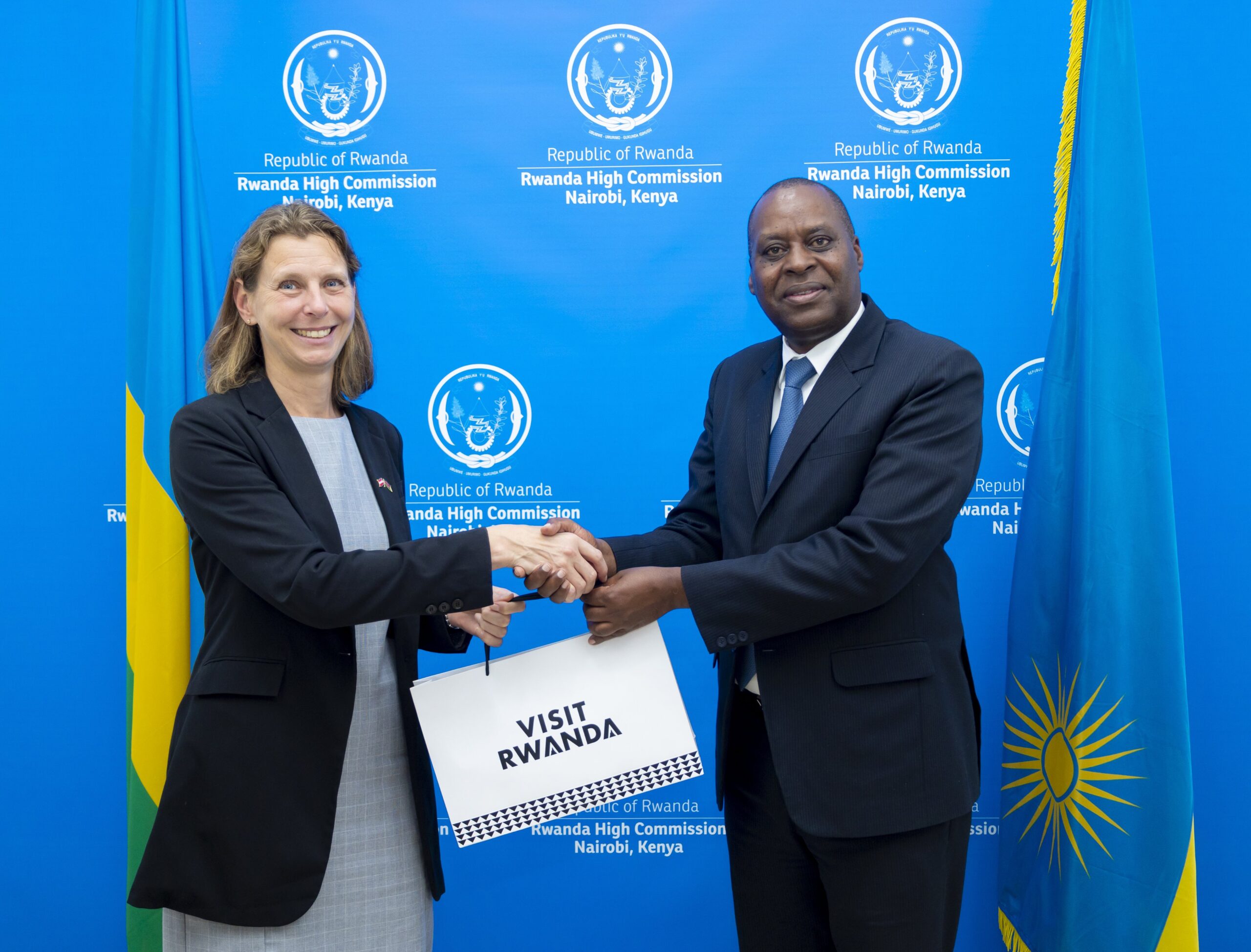
Rwanda and Austria have discussed strengthening bilateral relations following a meeting between Rwanda’s High Commissioner to Kenya, Ernest Rwamucyo, and Simone Knapp, Austria’s ambassador-designate to Rwanda, who is based in Kenya.

Rwamucyo received Knapp for a courtesy call in Nairobi on Tuesday, according to the Rwanda High Commission in Kenya. The two diplomats discussed opportunities to deepen cooperation between Rwanda and Austria in areas of mutual interest.

The meeting forms part of ongoing diplomatic engagement between the two countries, with discussions focused on identifying areas where bilateral relations can be further developed.

Knapp, who is based in Nairobi, is Austria’s ambassador-designate to Rwanda. Her engagement with Rwanda’s diplomatic representation in Kenya comes as both countries continue to maintain diplomatic contacts on matters of shared interest.

The Rwanda High Commission did not provide further details on specific agreements or initiatives resulting from the meeting, but said the discussions centred on strengthening Rwanda-Austria relations.

The encounter highlights Nairobi’s continuing role as a regional diplomatic hub, where foreign missions regularly engage with representatives of governments accredited to countries across East Africa.

Rwanda-Austria Relations: High Commissioner Rwamucyo Receives Ambassador-Designate Simone Knapp in Nairobi

L’épidémie d’Ebola continue de susciter des inquiétudes en RDC, avec plus de 3 600 décès

0

L’épidémie d’Ebola continue de susciter des inquiétudes en République démocratique du Congo (RDC), où le nombre de cas confirmés et de décès liés à la maladie continue d’augmenter, malgré certains signes indiquant une baisse de la transmission dans certaines régions du pays.

Selon les dernières données communiquées par les autorités sanitaires, au 19/09/2026, la RDC avait confirmé 7 541 cas d’Ebola, tandis que 3 639 personnes avaient déjà succombé à la maladie.

L’épidémie touche sept provinces de la RDC et s’est également étendue à la province du Sud-Ubangi, après la détection du premier cas dans la zone de santé de Bulu. Selon l’OMS, au 13/09/2026, le virus Ebola s’était déjà propagé dans plusieurs zones de ces sept provinces.

L’Ituri reste la province la plus touchée

L’Ituri demeure la province la plus durement touchée par cette épidémie. Selon l’OMS, cette province représentait près de 78 % de l’ensemble des cas au 13/09/2026.

Au cours de cette période, la dynamique de transmission variait toutefois selon les régions. Alors que l’Ituri montrait des signes de ralentissement de la transmission, le Nord-Kivu continuait de susciter des inquiétudes, avec un nombre de nouvelles infections ayant presque doublé sur une période de deux semaines.

Que fait la RDC pour lutter contre Ebola ?

Le gouvernement de la RDC, en collaboration avec l’OMS et d’autres partenaires, poursuit les mesures de lutte contre l’épidémie. Celles-ci comprennent notamment la recherche et le suivi des personnes susceptibles d’avoir été en contact avec des cas confirmés, le dépistage des personnes suspectées d’être infectées, la prise en charge des patients ainsi que le renforcement des capacités des structures de santé.

Ces efforts comprennent également le renforcement de la sensibilisation de la population aux mesures de prévention et au signalement des personnes présentant des symptômes susceptibles d’être liés à Ebola, ainsi que le maintien de la surveillance aux frontières en raison de l’importante mobilité des populations entre les différentes régions et les pays voisins.

Le 19/09/2026, une campagne de vaccination des agents de santé de première ligne a également été lancée à Bunia, dans la province de l’Ituri, avec l’utilisation du vaccin Ervebo de manière spécifique, tandis que des recherches se poursuivent sur son efficacité contre le virus Bundibugyo, responsable de l’épidémie actuelle.

L’épidémie reste préoccupante

Malgré certains signes d’amélioration dans certaines zones, l’OMS appelle à ne pas se précipiter pour déclarer l’épidémie totalement maîtrisée. La transmission se poursuit en effet dans d’autres régions, notamment au Nord-Kivu, tandis que les déplacements importants de populations et les problèmes sécuritaires compliquent les opérations de suivi des personnes ayant été en contact avec des cas infectés.

Selon l’OMS, cette épidémie est causée par le virus Ebola Bundibugyo et, à ce jour, aucun vaccin homologué ni traitement spécifique n’a été établi comme étant efficace contre ce virus. Les recherches sur les traitements et les vaccins se poursuivent toutefois.

La RDC est appelée à renforcer le dépistage des cas suspects, le suivi des contacts, la prise en charge rapide des patients, la sensibilisation de la population et la coopération avec les pays voisins, afin de limiter la propagation continue du virus Ebola.