Home Blog Page 36

Shock at Old Trafford: Ruben Amorim Sacked After 14 Months of Chaos. Inside the Fall of Manchester Unitedโ€™s Worst Manager in Decades

0

Manchester United fans woke up to shocking news on Thursday as the club confirmed the sacking of manager Ruben Amorim.

The Portuguese coach, 40, leaves Old Trafford after just 14 months in charge, following a dramatic attack on the clubโ€™s board.

Amorimโ€™s exit comes after a 1-1 draw against Leeds United, a result that plunged his already fragile position into deeper doubt.

In his post-match press conference, Amorim did not hold back. He demanded to be called a โ€œmanagerโ€ rather than a โ€œhead coachโ€ and criticized the clubโ€™s transfer policies, including a failed move for Bournemouth winger Antoine Semenyo.

โ€œI wonโ€™t quit,โ€ he said, โ€œbut I need more control over transfers if we are to succeed.โ€

Despite his protests, the decision was taken out of his hands. Club chiefs moved swiftly, informing Amorim of his immediate dismissal, with former midfielder Darren Fletcher expected to step in as interim manager.

Amorimโ€™s record at United is among the worst in club history. He won just 24 of 63 matches, a win percentage of 38.71%. No manager has fared worse since Frank Oโ€™Farrell, who managed only 30 wins in 81 matches in 1971.

His 14 months at the club have been filled with disappointment. Last season, he guided United to a 15th-place finish in the Premier League and lost the Europa League final to Tottenham Hotspur.

Defensive problems plagued his tenure. United went 15 games without a clean sheet on the road, the worst streak in the clubโ€™s history.

Amorim also struggled to make his preferred 3-4-3 system work, admitting recently that the formation could not succeed without โ€œa lot of money.โ€

Consistency was another issue. United only won consecutive games once under his tenure, during a five-game unbeaten streak in October.

The manager was often outspoken in his press conferences. In August, he revealed he sometimes โ€œhatesโ€ his players and at times felt like quitting, following a shock Carabao Cup exit to Grimsby Town.

His relationship with the clubโ€™s board, especially director of football Jason Wilcox, was also under strain. A failed transfer for Antoine Semenyo led to a thinly veiled public criticism.

Fans and pundits alike criticized his stubbornness over tactics and player selection. Despite flashes of improvement this season, the teamโ€™s defensive weaknesses and lack of cohesion remained glaring issues.

Amorimโ€™s demands for more power and control over transfers created tension at a club already grappling with high expectations.

โ€œThe head coach wants to be called manager. He wants more say in transfers,โ€ a club source told The Athletic. โ€œThe board decided itโ€™s time to act.โ€

Darren Fletcher, a former United midfielder and respected figure at Old Trafford, is expected to take temporary charge while the club searches for a permanent replacement.

Amorimโ€™s sacking is a warning that even high-profile managers at elite clubs are not immune to rapid fallouts if results and relationships falter.

The Portuguese coach leaves behind a turbulent legacy โ€“ flashes of tactical ambition but ultimately disappointment and disruption.

Manchester United now face the challenge of rebuilding morale, improving defensive weaknesses, and making crucial transfer decisions in the January window.

For fans, the shock news raises questions about the clubโ€™s long-term strategy and the stability of Old Traffordโ€™s leadership.

The full story is still developing, but one thing is clear: Ruben Amorimโ€™s tenure at Manchester United will be remembered as one of the most chaotic in the clubโ€™s modern history.

Gospel Singer Guardian Angel Celebrates Fourth Wedding Anniversary and 36th Birthday

0

Popular Kenyan gospel artist Guardian Angel marked a special personal milestone on Sunday, as he celebrated his fourth wedding anniversary alongside his 36th birthday.

The double celebration was highlighted by heartfelt tributes shared publicly between Guardian Angel and his wife, Esther Musila. Instead of focusing solely on his birthday, the singer chose to honor their marriage first, posting warm messages and photos reflecting on their journey together.

Esther took to social media to gush over her husband, describing him as her best friend, confidant and โ€œthe twinkle of my eye,โ€ and expressing profound gratitude for his love, support and companionship over their four years of marriage. She also extended heartfelt birthday wishes, praying for joy, good health and success in the year ahead.

Fans and fellow celebrities joined in the celebrations online, showering the couple with congratulatory messages and well-wishes as they marked both milestones.

Despite facing public scrutiny in the past,particularly over their age difference,the pair continue to display a united front, celebrating love and commitment that defy critics.

Guardian Angel and Esther first tied the knot four years ago, and their relationship has since been a topic of widespread public interest. However, their recent social media tributes underline a bond that remains strong and cherished as they enter another year of marriage and life together.

Doctors Face Probe Over Alleged HIV/AIDS Miracle Healing Claims at Prophet Owuor’s Crusade

0

The Ministry of Health has ordered investigations into medical practitioners who publicly endorsed claims of miraculous healing of serious illnesses, including HIV/AIDS, at a recent religious crusade in Nakuru, warning that those involved could face disciplinary action.

Health Cabinet Secretary Aden Duale said the government respects faith and spiritual beliefs but stressed that matters of health must be guided by science, ethics and evidence-based medicine. He directed the Kenya Medical Practitioners and Dentists Council (KMPDC) to summon the doctors involved and demand full clinical and scientific evidence to support their claims.

According to the Ministry, any practitioner who fails to provide credible medical proof risks suspension or revocation of their practising licence for violating professional and ethical standards.

The controversy followed a gathering led by self-proclaimed Prophet David Owuor, where claims were made that individuals suffering from life-threatening conditions had been healed through spiritual intervention, with some medical professionals reportedly validating the testimonies.

The KMPDC has warned that unverified healing claims could mislead patients, discourage them from continuing proven treatments such as antiretroviral therapy, and pose serious public health risks. Patients have been urged not to abandon prescribed medication based on unconfirmed testimonies.

No doctors have been publicly named so far, as investigations continue.

Tragedy at 2 a.m.: Why the Nairobiโ€“Nakuru Highway Is Turning Into a Road of Death

0

In the quiet hours of early Monday morning, tragedy struck along one of Kenyaโ€™s busiest roads. Scores of families woke up to heartbreaking news after a deadly road accident occurred at Karai, near Naivasha, along the Nairobiโ€“Nakuru Highway.

The crash happened at around 2:00 a.m. on Monday, January 5, a time when most passengers were asleep and traffic was expected to be light. Instead, the highway became the scene of death, pain, and confusion.

According to early reports, the accident involved a Greenline bus and a Nanyuki Cabs shuttle. The two vehicles collided head-on, leaving massive destruction and loss of life in their wake.

Images obtained from the scene showed the full scale of the disaster. The front section of the matatu was completely crushed, indicating a very strong impact. The understructure of the larger bus was also badly damaged, showing that neither vehicle escaped the violence of the collision.

Residents and motorists who arrived at the scene described a horrifying sight. Twisted metal, broken glass, and injured passengers lay scattered along the highway as cries for help filled the dark night air.

As dawn approached, traffic along the Nairobiโ€“Nakuru Highway slowed down. A mild snarl-up formed as motorists stopped to see what had happened, while others rushed to help rescue the victims before authorities arrived.

Police officers and emergency responders later took control of the situation. Rescue operations continued as survivors were pulled from the wreckage and rushed to hospital.

The Kenya Red Cross confirmed the incident and gave an official update on the response efforts. In a statement, the organization said, “A road traffic accident occurred at around 2:00 a.m. at Karai along the Nairobiโ€“Nakuru Highway, involving a bus and a matatu.”

The Red Cross further explained the scale of the emergency and the actions taken. “Several injured people were taken to Naivasha District Hospital as Kenya Red Cross and other emergency teams responded,” the statement added.

By the time this article was published, preliminary reports indicated that at least nine people had lost their lives in the crash. Among the deceased were two minors, making the tragedy even more painful for the affected families.

Doctors and nurses at Naivasha District Hospital worked through the night to treat survivors. Some victims were reported to have sustained serious injuries and remained under close medical observation.

This heartbreaking incident came just two days after another deadly accident occurred along the same highway. On Saturday, January 3, five people lost their lives in a separate crash at Kikopey, Gilgil.

That earlier accident involved a Great Rift 14-seater matatu and a trailer. Initial investigations suggested that brake failure on the truck may have caused the collision.

According to the matatu driver, Shadrack Almasi, the crash happened suddenly and without warning. He said he was caught off guard when the matatu was hit and crushed against another vehicle that was stationary.

The impact was so severe that five people died on the spot. The incident once again raised serious concerns about vehicle maintenance and road safety enforcement on Kenyan highways.

Nakuru County Police Commander Emmanuel Opuru also addressed the latest Karai accident. He confirmed that authorities had received the report and acted quickly.

โ€œWe have received the report of the incident, and we can confirm that we have dispatched teams and emergency units to respond to the incident,โ€ Opuru said.

The police commander also warned motorists to be extra careful, especially during this period when many people are returning to Nairobi after the festive season.

The Nairobiโ€“Nakuru Highway is known for heavy traffic, long-distance buses, and high-speed driving, particularly at night. These factors continue to make the road one of the most dangerous in the country.

Road safety experts have repeatedly warned that fatigue, speeding, and poor vehicle condition are silent killers on Kenyan roads. Night travel, while common, increases the risk of deadly mistakes.

As investigations into the Karai crash continue, families across the country are left mourning loved ones who never reached their destinations.

This tragedy has once again forced the nation to confront a painful question. How many more lives must be lost before lasting solutions are found on Kenyaโ€™s highways?

Uganda Elections: Bobi Wine Accuses Authorities of Internet Suppression as Starlink Confirms Regulatory Shutdown

0

As Uganda approaches a decisive electoral moment scheduled for January 15, tensions are rising over access to information and digital freedoms. Opposition leader ย ย Bobi Wine has publicly accused the Ugandan authorities of orchestrating an internet blackout by forcing Starlinkย  ย to disable its services in the country, a move he describes as a deliberate attempt to stifle democratic participation.

In a strongly worded message addressed to ย ย Elon Muskย  , Bobi Wine drew parallels between international reactions to political change elsewhere and what he termed Ugandaโ€™s persistent democratic suppression. He argued that the sudden loss of Starlink connectivityย  just days before national electionsย  was not coincidental but part of a broader strategy to silence citizens seeking to communicate, organise, and access independent information.

According to Bobi Wine, Uganda has endured decades of restricted civic space under President ย ย Yoweri Museveniย  , and digital shutdowns have become a recurring feature during politically sensitive periods. โ€œDemocracy dies in darkness,โ€ he warned, urging Starlink to restore access so Ugandans could exercise what he called their โ€œfair chance at shaping their destiny.โ€

However, Starlink has formally rejected claims that the shutdown was politically motivated. In an official letter dated 2 January 2026 and addressed to the Uganda Communications Commission (UCC), the company clarified that its services are not licensed to operate in Uganda. Starlink stated that any satellite internet usage detected in the country prior to January 1, 2026, was the result of terminals imported and activated illegally through neighbouring jurisdictions.

The company explained that, in response to a directive from the UCC, it implemented a new service restriction tool on January 1, effectively disabling all Starlink terminals operating within Ugandaโ€™s borders. Starlink further emphasized that it has never officially sold, imported, or distributed terminals in Uganda and that all prior usage violated its terms of service.

In its correspondence, Starlink underscored its commitment to regulatory compliance, noting that it is actively engaging with Ugandan authorities to complete the licensing process. The company expressed hope for a future return to Ugandaโ€™s market, contingent on regulatory approval.

The contrasting narrativesย  political suppression versus regulatory enforcementย  highlight a deeper dilemma facing Ugandaโ€™s electoral environment. While the government maintains that it is enforcing telecommunications law, opposition figures and civil society groups argue that the timing and impact of such measures disproportionately affect political freedoms.

As election day nears, the Starlink episode has become emblematic of a wider struggle over information control in Uganda. Whether framed as lawful regulation or political censorship, the outcome underscores a critical reality: in modern elections, access to the internet is no longer a luxury, but a central pillar of democratic participation.

For many Ugandans, the coming days will test not only political leadership but also the countryโ€™s commitment to transparency, accountability, and the fundamental right to communicate freely.

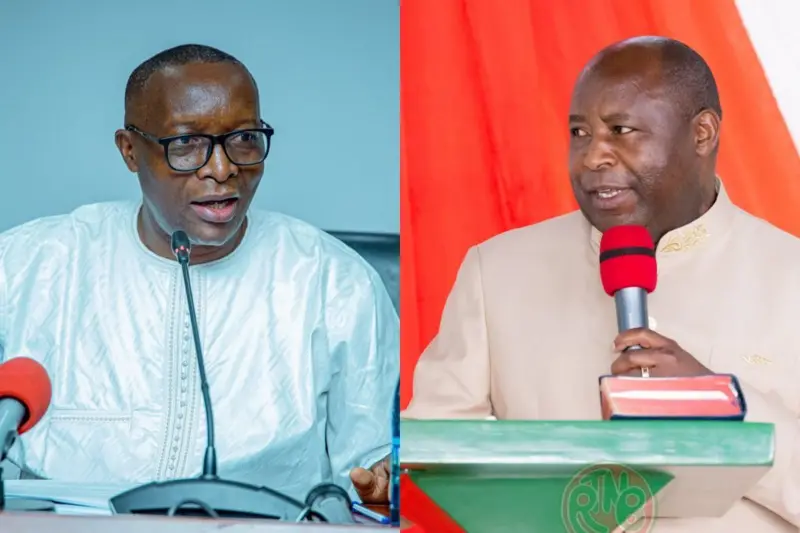
Burundiโ€™s President Ndayishimiye Distances Government From Ministerโ€™s Criticism of Qatar Over DR Congo Peace Efforts

0

Burundian President ย ย ร‰variste Ndayishimiyeย  ย has sought to reaffirm his countryโ€™s position on Qatarโ€™s role in regional diplomacy, following controversial remarks by his foreign minister that appeared to criticise Dohaโ€™s mediation efforts in the eastern Democratic Republic of the Congo.

In a post published on X on Sunday evening, President Ndayishimiye said Burundi had โ€œalways appreciated the important roleโ€ played by ย ย Qatarย  ย in promoting peace and development, stressing the need to clarify โ€œany misunderstanding or inaccurate languageโ€ concerning the Gulf stateโ€™s involvement.

The statement came a day after Burundiโ€™s Foreign Affairs Minister, ย ย Edouard Bizimanaย  , wrote on X that it was โ€œessential to highlight Qatarโ€™s negative roleโ€ in what he described as the use of its influence and financial leverage to prevent action by the United States. In the same message, Bizimana accused ย ย Rwandaย  ย of continuing to seize territory in eastern ย ย Democratic Republic of the Congoย  , alleging that Washington had failed to respond despite the Washington peace agreements.

The minister later deleted the post, but it had already sparked wide debate online and diplomatic unease. Qatar has not issued any official response to the remarks.

Bizimanaโ€™s comments were made as international attention was focused on reports of a US military operation in Venezuela, including the capture of President ย ย Nicolรกs Maduroย  . Although the Burundian president did not explicitly reference his ministerโ€™s deleted message, his subsequent intervention was widely interpreted as an attempt to contain diplomatic fallout.

Burundi maintains close military cooperation with the Congolese government, under which Burundian troops are deployed in eastern Congo to support operations against armed groups, including the ย ย M23ย  ย movement.

Several Western governments, the ย ย United Nationsย  , and officials in both Burundi and DR Congo have accused Rwanda of backing M23, allegations Kigali has consistently denied, saying its actions are strictly defensive. Last month, M23 briefly took control of Uvira, a strategic city near Burundiโ€™s border, before announcing its withdrawal claims disputed by Congolese authorities.

Qatar has played an increasingly visible role in efforts to de-escalate tensions in eastern Congo. In March last year, at a time of heightened hostility between Kigali and Kinshasa, Doha unexpectedly hosted a meeting between Congolese President ย ย Fรฉlix Tshisekediย  ย and Rwandan President ย ย Paul Kagameย  .

Despite Kinshasaโ€™s long-standing refusal to engage directly with M23, Qatar later facilitated talks between the Congolese government and the group. In April, the parties announced an intention to halt hostilities following what they described as frank and constructive discussions.

However, the ceasefire has not held. Fighting and mutual accusations of violations have continued, and the Doha process now appears stalled, with unconfirmed reports suggesting that Kinshasa may have withdrawn from the talks claims the Congolese authorities have not formally addressed.

Burundiโ€™s President Ndayishimiye Distances Government From Ministerโ€™s Criticism of Qatar Over DR Congo Peace Efforts


Moses Kuria Apologises to Odinga Family and Luo Community on Behalf of Mt Kenya

0

Former Cabinet Secretary and Chama Cha Kazi party leader Moses Kuria has issued a public apology to the Odinga family and the Luo community, saying it was long overdue and necessary for national healing. Kuria said the apology was made on behalf of the Kikuyu community and the wider Mount Kenya region, acknowledging decades of political hostility that unfairly targeted the Odingas.

In a statement shared on his official platforms, Kuria admitted that for more than six decades, political narratives had portrayed the Odinga family, starting with Kenyaโ€™s first Vice President Jaramogi Oginga Odinga and later his son, former Prime Minister Raila Odinga, as enemies of the Kikuyu community. He said this narrative was deliberately crafted for political mobilisation and had caused deep divisions between communities.

Kuria described the portrayal as wrong, harmful and misleading, noting that it entrenched ethnic mistrust and passed resentment from one generation to another. He offered what he termed an โ€œunqualified and profuse apologyโ€ to the Odinga family and the Luo nation, taking responsibility for the role political leaders and communities from Mt Kenya played in sustaining the hostility.

The outspoken politician emphasised that the Luo community and the Odingas are not enemies of the Kikuyu people and should never have been treated as such. He warned against the continued use of ethnic fear and hate as political tools, saying Kenya has paid a heavy price for divisive politics.

Kuria called for honest reflection, forgiveness and reconciliation, arguing that the country cannot move forward while trapped in historical political grudges. He urged leaders and citizens alike to reject narratives that pit communities against each other and instead focus on unity and shared national interests.

The apology has sparked widespread discussion across the political divide, with some Kenyans welcoming it as a bold step towards healing, while others debate whether any individual can apologise on behalf of an entire community. Nonetheless, Kuria insisted that acknowledging past wrongs is a critical step in building a more cohesive and peaceful nation.

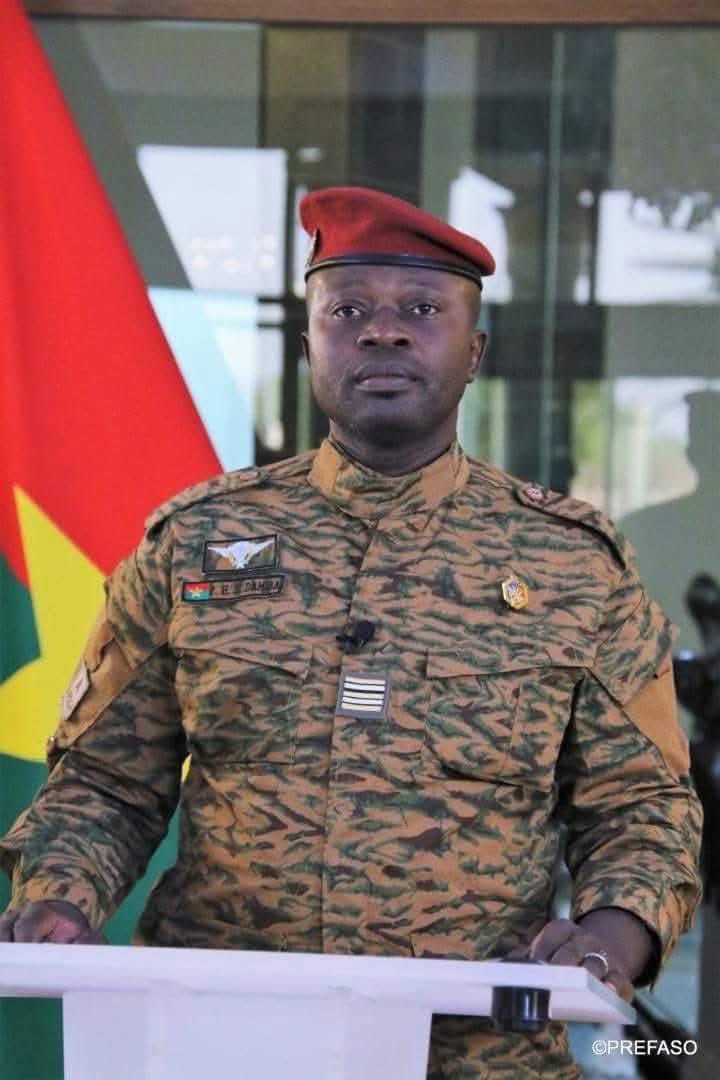
1:00 AM and the People Rose: How Burkina Faso Woke Up to Defend Captain Traorรฉ From a Midnight Coup

0

At exactly 1:00 a.m. in Burkina Faso, something unusual happened. People woke up from their sleep, not because of noise or fear, but because of a strong feeling that their country was in danger. Men and women left their homes and moved toward the Presidential Palace in Ouagadougou. They wanted to see with their own eyes what was happening. More than that, they wanted to protect Captain Ibrahim Traorรฉ.

The streets quickly filled with people. Some came alone, others in groups. Many did not even change clothes. It was not a planned protest. It was a spontaneous reaction from citizens who believe that their leader is under threat from what they call imperial agents trying to overthrow him.

By the time the night was almost over, thousands of Burkinabรจ were already gathered. Their message was simple and clear: Captain Traorรฉ is not alone. The people are watching, and they are ready to stand between him and anyone who wants to remove him by force.

As the crowd grew, alarming information began to circulate online. One of the strongest alerts came from AES Alerte, which published a message confirming that a coup attempt had been stopped. The post said: โ€œCoup attempt foiled in Burkina Faso: an associate of Damiba, who was preparing to seize power, was arrested on January 3, 2026.โ€ย This message immediately spread across social media.

According to the same source, the plan was detailed and dangerous. It was not a simple political move. The post explained that the coup plotters first planned to eliminate all drone operators and destroy the drones that are currently bombing terrorists. This detail shocked many people, as drones have become a key weapon in Burkina Fasoโ€™s fight against armed groups.

The information did not stop there. The alert also claimed that terrorist groups were already prepared to launch violent attacks against the positions of Burkinabรจ fighters in all regions of the country. This suggested a coordinated plan designed to weaken the army from inside and outside at the same time.

Even more alarming was the claim that white mercenaries were expected to enter Ouagadougou to support the execution of the coup. According to the alert, this final phase was planned for the same night, around 11:00 p.m. For many citizens, this confirmed their worst fears about foreign involvement in Burkina Fasoโ€™s internal affairs.

Another breaking message added fuel to the fire. It stated clearly: โ€œBreaking News: A coup attempt was foiled in Burkina Faso. Damiba aided by France ๐Ÿ‡ซ๐Ÿ‡ท and other foreigners were planning to assassinate a list of some of our defense and security forces.โ€ This message openly accused former leader Paul-Henri Damiba and foreign actors of backing the plot.

The same message went further and directly addressed regional leaders, saying: @FEGnassingbe we have an unfinished business with you: you canโ€™t continue to protect Damiba. Time is up! These words showed how deep and emotional the situation has become, not only inside Burkina Faso but also in the wider region.

For many Burkinabรจ, Paul-Henri Damiba is seen as a symbol of the old system, one that failed to protect the country and remained too close to foreign interests. His name appearing again in a coup plot revived anger and frustration among citizens who believed that chapter was closed.

France was also mentioned repeatedly in online reactions. For years, France has been accused by many Africans of interfering in political and military affairs in the Sahel. Whether proven or not, the perception alone has created strong anti-French feelings among sections of the population.

Captain Ibrahim Traorรฉ, on the other hand, has become a powerful symbol for many young Africans. They see him as a leader who speaks openly about sovereignty, dignity, and breaking away from neo-colonial control. This explains why people were ready to leave their beds at 1:00 a.m. to protect him.

At the Presidential Palace, the atmosphere was tense but determined. People did not come with violence in mind. They came with their bodies, their voices, and their presence. They wanted any potential plotter to know that removing Traorรฉ would not be easy or quiet.

Social media played a major role during the night. Videos, messages, and voice notes spread rapidly, keeping citizens informed in real time. This digital mobilization showed how modern coups face a new obstacle: an awake and connected population.

The foiling of the coup attempt was later confirmed by multiple pro-government sources. While official state communication was limited, the message was clear enough for the public. The immediate danger had passed, at least for now.

However, many people believe this is not the end. The events of that night have deepened the belief that Captain Traorรฉ remains a target. As a result, public vigilance has increased, and trust in the peopleโ€™s role as defenders of the revolution has grown stronger.

This night may become a historic moment for Burkina Faso. Not because shots were fired, but because ordinary citizens acted before it was too late. They showed that power does not only sit in palaces or barracks, but also in the collective will of the people.

For supporters of Captain Traorรฉ across Africa, the message is powerful. Burkina Faso is not just fighting terrorists. It is also fighting invisible political battles that involve influence, control, and the future direction of the continent.

As dawn broke, many people slowly returned home. They were tired, but proud. They had answered what they saw as a national call. In their minds, they did not just protect a man. They protected an idea of a free and sovereign Burkina Faso.

The coming days will be critical. Investigations, arrests, and official statements are expected. But one thing is already certain: the night Burkina Faso woke up at 1:00 a.m. will not be forgotten anytime soon.

Damiba: the past that refuses to disappear, as Burkina Faso chooses a different future.

The Woman at the Center of Venezuelaโ€™s Storm: Who Is Delcy Rodrรญguez, and Why Trump Says the U.S. May Work With Her After Maduroโ€™s Fall?

1

After the dramatic capture of Venezuelan President Nicolรกs Maduro, attention quickly shifted to one name: Delcy Rodrรญguez. As explosions shook Caracas and U.S. forces flew Maduro out of the country, Rodrรญguez emerged as one of the few senior officials to speak publicly. Now, she stands at the heart of a global debate about power, oil, law, and the future of Venezuela.

Delcy Rodrรญguez is Venezuelaโ€™s executive vice president and, under the countryโ€™s constitution, next in line to assume the presidency. Since June 2018, she has been one of the most powerful figures in Maduroโ€™s inner circle. When Maduro and his wife disappeared after the U.S. strikes, Rodrรญguez demanded proof of life, saying Venezuela did not know where they were. Her appearance signaled that the government had not completely collapsed, even as chaos spread.

U.S. President Donald Trump then made a surprising claim. Speaking from Mar-a-Lago, he hinted that Rodrรญguez was part of the โ€œgroup of peopleโ€ Washington was already talking to about running Venezuela after Maduroโ€™s capture. Trump even suggested that she had already been โ€œsworn in,โ€ though he added she was โ€œpicked by Maduro.โ€ Venezuelan authorities have not confirmed this, and the confusion only deepened the crisis.

Rodrรญguez is known as one of Maduroโ€™s fiercest defenders. He once called her a โ€œtigerโ€ because of her loyalty and aggressive style. She has worked closely with her brother, Jorge Rodrรญguez, who is now the president of the National Assembly. Together, they have been key faces of the regime at home and abroad, especially during moments of intense international pressure.

Her political roots run deep. Delcy Rodrรญguez is the daughter of Jorge Antonio Rodrรญguez, a founder of Venezuelaโ€™s Socialist League. He died in prison in 1976 after being arrested for his role in the kidnapping of an American executive. This history shaped her political identity and placed her firmly within Venezuelaโ€™s revolutionary elite.

Rodrรญguez entered government in 2003 and rose quickly. She served as communications minister, then foreign minister, and later became president of the National Constituent Assembly. Each role brought her closer to the center of power. In 2018, Maduro rewarded her loyalty by appointing her vice president.

Her influence grew even more after 2020, when she also became finance minister. In mid-2024, she took over the petroleum ministry portfolio. This made her one of the most important figures managing Venezuelaโ€™s broken economy and its most valuable resource: oil. For Washington, this detail matters deeply.

At his Mar-a-Lago press conference, Trump made clear that Venezuelan oil is a major interest for the United States. โ€œWeโ€™re going to be taking out a tremendous amount of wealth out of the ground,โ€ he said. He added that this wealth would go to the people of Venezuela, to people who used to be in Venezuela, and also to the United States โ€œin the form of reimbursement for the damages caused us by that country.โ€

Trump repeated that the U.S. would โ€œrunโ€ Venezuela for a period of time and bring it back professionally. Standing in front of Secretary of State Marco Rubio, Defense Secretary Pete Hegseth, and General Dan Caine, he said these figures would be central to the transition. โ€œWeโ€™re going to be running it. Weโ€™re going to be bringing it back,โ€ he said confidently.

When asked directly about Delcy Rodrรญguez, Trump said she told Marco Rubio she was prepared to work with the United States. โ€œI think sheโ€™s just been sworn in, right,โ€ he said, again stressing that she was chosen by Maduro. This claim clashed with earlier reports that Rodrรญguez had left the country for Moscow after the strikes, leaving her exact location unknown.

Trump also made it clear that military force was still on the table. He said he was โ€œnot afraid of boots on the groundโ€ and explained that the U.S. would have โ€œa presence in oil.โ€ He suggested that U.S. military power could play a role in protecting oil operations during the transition.

At the same time, Trump rejected working with Venezuelaโ€™s opposition leader Maria Corina Machado. He said it would be โ€œvery toughโ€ for her to run the country because she does not have the โ€œsupport or respectโ€ of Venezuelans. This statement shocked many observers who expected Washington to back the opposition rather than a figure from Maduroโ€™s own system.

Trump also clashed with regional leaders. Responding to concerns from Colombian President Gustavo Petro about regional safety, Trump accused Colombia of hosting drug production and distribution facilities. He told Petro to โ€œwatch his *ss,โ€ further raising tensions in Latin America.

Behind all this political drama are the serious criminal charges Maduro now faces in the United States. According to Secretary of State Marco Rubio, Maduro is charged under a March 2020 superseding indictment filed in New Yorkโ€™s Southern District. Federal prosecutors accuse him of leading a narco-terrorism conspiracy from 1999 to 2020.

The indictment alleges that Maduro ran the Cartel de los Soles, also known as the Cartel of the Sons, and used cocaine as a weapon to flood the United States with drugs. He was charged alongside other senior officials, including Interior Minister Diosdado Cabello and former intelligence chief Hugo Carvajal Barrios, known as โ€œEl Pollo.โ€

Prosecutors say the network worked closely with Colombiaโ€™s FARC rebels. According to the charges, they cultivated coca, moved cocaine through Caribbean and Central American routes, and used state resources to support trafficking. One cited case involves a DC-9 jet seized in Mexico in 2006 carrying 5.6 tonnes of cocaine.

Another key allegation involves 2008 agreements that used funds from Venezuelaโ€™s state oil company to support FARC drug operations. These accusations place oil, drugs, and politics tightly together, helping explain Washingtonโ€™s intense focus on Venezuelaโ€™s energy sector.

Maduro now faces charges of narco-terrorism conspiracy, cocaine importation conspiracy, and weapons offenses. If convicted, he could face life in prison. In early December, Hugo Carvajal Barrios publicly accused Maduro and his government of being a โ€œnarco-terrorist organisation,โ€ adding weight to U.S. claims.

As the dust settles, Delcy Rodrรญguez stands in a dangerous and powerful position. She is both a symbol of the old system and, possibly, a bridge to whatever comes next. Whether she is truly willing to work with Washington, or whether Trumpโ€™s claims are part of a pressure strategy, remains unclear.

What is clear is that Venezuelaโ€™s future may now depend on a woman shaped by revolution, loyalty, and oil. As the United States talks about running a foreign country and extracting its wealth, the world watches closely. The decisions made around Delcy Rodrรญguez could determine whether Venezuela moves toward stability or deeper chaos.

Maduro Taken, Venezuela Shaken: Trumpโ€™s Bold Move Sparks Global Fear, Fury, and a Fight Over Americaโ€™s Soul

0

The world woke up in shock after U.S. forces captured Venezuelan President Nicolรกs Maduro and his wife, Cilia Flores, in a dramatic overnight operation in Caracas. Explosions echoed across the city before dawn, military bases were hit, and within hours, Maduro was on a U.S. warship heading to New York to face criminal charges. What followed was not just an arrest, but a political earthquake that is still shaking Washington, Latin America, and the global order.

President Donald Trump quickly confirmed that Maduro and his wife had been โ€œcaptured and flown out of the country.โ€ A photo released later showed Maduro under guard aboard the USS Iwo Jima. Trump said the mission, planned for months and delayed four days due to bad weather, was carried out by Delta Force soldiers with FBI agents on the ground. The operation was reportedly named Absolute Resolve, and Trump claimed he had offered Maduro a chance to surrender a week earlier.

In Caracas, fear and confusion spread fast. Around 2 a.m. local time, residents reported at least seven explosions near La Carlota airfield and the Fuerte Tiuna military base. Low-flying aircraft swept over the capital as Venezuela activated all its defense systems. Vice President Delcy Rodrรญguez demanded proof that Maduro was alive, saying the government did not know where he was, and denying claims that she had been sworn in as his successor.

Hours later, Trump went further. From his Mar-a-Lago resort in Florida, he announced that the United States would now โ€œrun the countryโ€ until a โ€œsafe, proper and judicious transitionโ€ could be arranged. He said Washington would govern Venezuela โ€œwith a groupโ€ and pointed to Secretary of State Marco Rubio, Defense Secretary Pete Hegseth, and General Dan Caine standing behind him. Yet when reporters pressed for details, clear answers did not come.

Trump claimed that Delcy Rodrรญguez was โ€œwilling to do what we think is necessary to make Venezuela great again,โ€ even though Venezuelan authorities said no such swearing-in had happened. He openly said the U.S. was not afraid of โ€œboots on the groundโ€ and warned that a second, much larger attack was possible if needed. The message was blunt: America was prepared to stay and use force again.

A major part of Trumpโ€™s plan focused on oil. He said large U.S. oil companies would enter Venezuela, spend billions of dollars, rebuild the broken oil infrastructure, and start making money โ€œfor the country.โ€ To supporters, this sounded like recovery. To critics, it sounded like confirmation that the mission was never really about democracy.

Vice President Kamala Harris delivered one of the strongest reactions. In a sharp statement, she said, โ€œDonald Trumpโ€™s actions in Venezuela do not make America safer, stronger, or more affordable.โ€ While calling Maduro a โ€œbrutal, illegitimate dictator,โ€ Harris warned that this operation was โ€œboth unlawful and unwise.โ€ She added, โ€œWeโ€™ve seen this movie before. Wars for regime change or oil that are sold as strength but turn into chaos, and American families pay the price.โ€

Harris rejected the idea that the mission was about drugs or democracy. โ€œThis is not about drugs or democracy. It is about oil and Donald Trumpโ€™s desire to play the regional strongman,โ€ she said. She accused Trump of hypocrisy, pointing out that he pardoned a convicted drug trafficker while sidelining Venezuelaโ€™s legitimate opposition and pursuing deals with Maduroโ€™s allies. โ€œThe American people do not want this, and they are tired of being lied to,โ€ she added.

She also warned of the risks. According to Harris, the president is putting U.S. troops in danger, spending billions of dollars, destabilizing an entire region, and offering no legal authority, no exit plan, and no real benefit for Americans at home. She concluded that America needs leadership focused on lowering costs, enforcing the rule of law, strengthening alliances, and putting the American people first.

The legal question quickly became central. Secretary of State Marco Rubio insisted the operation did not need Congressional approval. He described it as a law enforcement action supported by the military. โ€œThis was not the kind of mission that you can do Congressional notification on,โ€ Rubio said. He reminded reporters that Maduro was indicted in the U.S. in 2020, calling him a fugitive with a $50 million reward. โ€œI guess weโ€™re saving $50 million now,โ€ he added.

Trump himself suggested Congress was not informed because the plan might have leaked. That explanation only fueled more anger in Washington. Democratic Senator Mark Warner warned that the U.S. was crossing a dangerous line. He asked what would stop China from using the same logic against Taiwan, or Russia from abducting Ukraineโ€™s president. โ€œOnce this line is crossed, the rules that restrain global chaos begin to collapse,โ€ Warner said, warning that authoritarian regimes would be the first to exploit it.

Warner also highlighted what he called glaring hypocrisy. He compared the Venezuela operation to Trumpโ€™s pardon of former Honduran President Juan Orlando Hernรกndez, who had been convicted in a U.S. court on serious drug trafficking charges. He argued that Washington cannot justify invading one country over drug allegations while forgiving another leader for similar crimes.

Republicans in Congress largely backed Trump. Senator Roger Wicker praised the mission and said it was the result of months of effort to weaken what he called narco-terrorist organizations overseen by Maduro. He urged Venezuelans to act quickly to put their country back on a path to peace and prosperity, saying this would benefit the entire region.

Outside government, experts urged caution. Daniel DePetris from the Defense Priorities think tank said the operation could bring massive change, but the outcome was uncertain. He warned of possible military splits, growth of criminal groups, civil war, or even the rise of a worse autocrat. None of these, he said, would be good for regional stability or U.S. interests.

DePetris also questioned the shifting reasons behind the intervention. Over recent months, the Trump administration moved from talking about drugs, to oil, to democracy, while calling Venezuela a major security threat. โ€œIn reality, Venezuela is a bankrupt state whose economy has declined precipitously over the last decade,โ€ he said, warning against exaggerating its threat.

As Maduro sits in U.S. custody facing narco-terrorism charges, Venezuelaโ€™s future is deeply uncertain. The U.S. promise to โ€œrun the countryโ€ has raised more questions than answers. For many Americans and people around the world, this moment is not just about Venezuela, but about the kind of power the United States chooses to be.

The arrest of a foreign president by U.S. forces is rare, dramatic, and dangerous. Supporters see strength and justice. Critics see lawlessness and the return of regime-change wars. What is clear is that this single night in Caracas has opened a new chapter of fear, debate, and global tension that will not close anytime soon.