Home Blog Page 41

Trumpโ€™s โ€˜Christmas Giftโ€™ Missiles Hit Nigeria, But Locals Say: โ€˜There Were No Terrorists Hereโ€™

0

One day after the United States launched missile strikes in Nigeria targeting the Islamic State group, residents living near the impact area say something shocking: there were no terrorists where the missiles landed.

People in Jabo village, located in north-western Nigeria, are still confused and frightened. They say their quiet farming community suddenly became a battlefield without warning.

Jabo is a small village in Sokoto State, mainly home to Muslim farmers. According to residents, life there has always been peaceful, with no known terrorist camps or fighters hiding among them.

Suleiman Kagara, a local resident, told CNN that he heard a very loud noise late at night on Thursday. He said the sound came around 10 p.m., followed by bright fire flashing across the sky.

Moments later, a missile hit the ground. Fear spread instantly. Families ran from their homes and hid wherever they could find safety.

โ€œNo one slept that night,โ€ Kagara said. โ€œWe have never seen anything like this before.โ€

At the time, Kagara did not know the missiles were fired by the United States. Later, U.S. President Donald Trump described the attack as a โ€œChristmas giftโ€ meant for terrorists.

U.S. Africa Command said the strike killed many Islamic State fighters. However, people living in Jabo strongly disagree with this claim.

Residents insist that the area hit by the missile has never been linked to terrorism. They say there were no Islamic State members, no training camps, and no armed groups in their village.

Sokoto State has faced serious security problems in recent years. These include armed robberies, kidnappings, and attacks by violent groups operating in the wider region.

One such group is known as Lakurawa. The Nigerian government considers Lakurawa a terrorist organization and suspects it has links to Islamic State.

Despite these concerns, locals say Jabo has remained calm and untouched by extremist violence. They stress that Christians and Muslims live together peacefully in the area.

Some residents say the missile strike has damaged trust and raised fear among innocent people who now feel unsafe in their own homes.

The Nigerian government confirmed that the U.S. attacks on Islamic State were carried out with Nigeriaโ€™s cooperation.

The strikes took place on Christmas Day 2025 and targeted two locations in Sokoto State.

President Trump warned Islamic State fighters that if they continue killing Christians, the United States will keep launching strong military attacks against them.

Nigeriaโ€™s government, however, emphasized that the operation was a joint military action and was not related to religious targeting.

Officials said the strikes were aimed only at terrorist threats and should not be seen as attacks based on religion.

Nigeriaโ€™s Minister of Foreign Affairs, Yusuf Tuggar, confirmed that talks between Nigeria and the United States are still ongoing.

He revealed that he spoke twice with U.S. Secretary of State Marco Rubio before the missiles were launched.

According to reports, one of the missiles was fired from a U.S. naval force positioned in international waters near Ghana.

This detail has raised further questions among Nigerians about how targets were selected and whether enough intelligence was used before the strike.

For the people of Jabo, the answers remain unclear. What they know is that their village changed forever in one terrifying night.

As investigations continue, residents hope their voices will be heard and that future military actions will protect civilians instead of placing them in danger.
Ndindi Nyoro Finally Explains His Silence During Gachaguaโ€™s Impeachment Under Rutoโ€™s Government

0

Ndindi Nyoro, the Kiharu Member of Parliament, has finally spoken out about one of the most controversial moments in recent Kenyan politics. For more than a year, many Kenyans have questioned why he stayed silent during the impeachment of former Deputy President Rigathi Gachagua. Now, Nyoro has broken that silence.

Speaking during an interview with NTV on Friday, December 26, Ndindi revealed that he was present during the impeachment process. However, he made a deliberate choice not to take part. According to him, his decision had nothing to do with political calculations or fear, but everything to do with personal conviction.

Nyoro explained that he strongly disagreed with the impeachment from the start. While many leaders were actively pushing the process, he held a different opinion and communicated it clearly. He said he informed those involved that he would not participate, no matter the consequences.

โ€œI had different views. I communicated and made it clear that I would not be participating. I also gave a rejoinder that any consequences that would come out of that, I would not blame it on anyone because, for me, it was more of a deeply personal reason,โ€ Ndindi stated during the interview.

The lawmaker revealed that he was fully aware his stance could cost him politically. Indeed, after the impeachment, he was removed from his powerful position as the Chairperson of the Budget and Appropriations Committee in the National Assembly. Still, he insists he has no regrets.

Nyoro went further to explain the moral reasoning behind his choice. He questioned why he should take part in removing someone he did not help put into office in the first place. For him, the matter went beyond party loyalty or political pressure.

โ€œI was not the one who made Gachagua the deputy president. So how was it my role to do the otherwise?โ€ Nyoro asked. He added that his decision was guided by faith, not politics. โ€œMy consideration goes beyond politics. What would God want me to do?โ€

He said that at the time, he strongly believed he was making the right decision by refusing to participate in the impeachment. Even as criticism grew and consequences followed, Nyoro stood firm in his belief.

During the same interview, Nyoro opened up about his relationships with key political figures, including former Deputy President Rigathi Gachagua and President William Ruto. Contrary to public perception, he revealed that there is no personal hostility between them.

โ€œIn politics, I decided not to be anyoneโ€™s enemy,โ€ Nyoro said. He explained that he has changed how he approaches politics, choosing dialogue and constructive criticism over insults and public attacks.

He confirmed that Rigathi Gachagua remains his friend, despite the political fallout. He also revealed that the last time he spoke directly with President William Ruto was when he was still serving as the Budget Committee chair.

Nyoro criticized the long-standing culture of name-calling, abuse, and hostility in Kenyan politics. He said such tactics have done more harm than good and that he has chosen a different path.

His comments come more than a year after the highly controversial impeachment of Rigathi Gachagua. At the time, Nyoro maintained a low profile, avoiding debates, media appearances, and parliamentary participation related to the process.

This silence was widely interpreted by President Rutoโ€™s allies as betrayal. As a result, Nyoro was removed from one of the most influential positions in Parliament, a move many saw as punishment for his non-participation.

Importantly, Nyoro neither signed the impeachment motion nor took part in the debate or voting. His absence stood out sharply in a process that was heavily supported by the Kenya Kwanza leadership.

The impeachment motion was tabled in October 2024 by Kibwezi West MP Mwengi Mutuse. It listed 11 charges against Gachagua, including abuse of office and undermining the president.

When the motion was put to a vote, the National Assembly overwhelmingly supported it. A total of 282 MPs voted in favour, paving the way for the Senate trial.

Later, the Senate found Rigathi Gachagua guilty on five of the charges. This decision officially removed him from office, marking one of the most dramatic political moments in Kenyaโ€™s recent history.

Since then, Ndindi Nyoro has openly described the impeachment as a costly mistake. He believes it deeply divided the Kenya Kwanza government and weakened President Rutoโ€™s political support.

According to Nyoro, the decision alienated many voters from the Mount Kenya region, Gachaguaโ€™s political base. He argues that the fallout significantly reduced Rutoโ€™s support in the area.

In recent months, Nyoro has emerged as one of the strongest critics of President Rutoโ€™s government. His criticism has focused mainly on economic policies, especially government borrowing and revenue projections.

Despite his growing national profile, Nyoro has not officially declared any intention to run for president. However, many political observers now see him as a serious potential challenger to William Ruto in the 2027 general elections.

For now, Nyoro says his focus remains on principled leadership, honest criticism, and staying true to his beliefs. His revelation has reignited debate across the country, with many Kenyans now seeing his silence during the impeachment in a very different light.

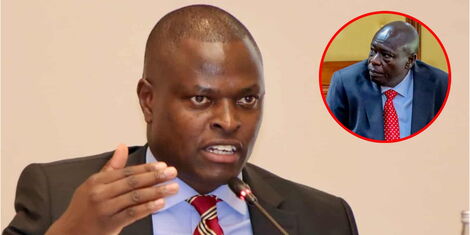
A photo of Kiharu MP Ndindi Nyoro and an insert of Rigathi Gachagua. Kenyans.co.ke
Kiharu Member of Parliament, Ndindi Nyoro, and Mathira Member of Parliament, Rigathi Gahagua. Facebook
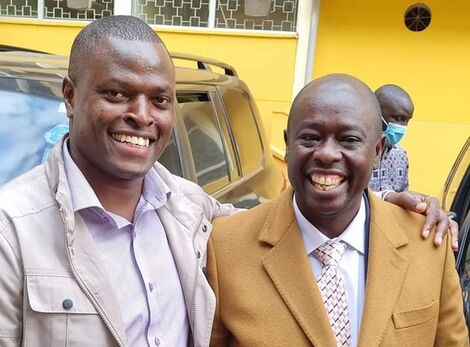
A file photo of President William Ruto with Kiharu MP Ndindi Nyoro at a past event in Muranga County. PCS

โ€œI Own 52 Big Churches and Make KSh 200,000 Every Sunday,โ€ Claims Pastor ManKush

0

Controversial preacher Pastor ManKush has sparked heated debate after publicly claiming that he owns 52 large churches across Kenya and earns at least KSh 200,000 in offerings every Sunday. The remarks, which have since circulated widely on social media, have ignited fresh conversations about wealth, faith, and the commercialization of religion in the country.

Speaking during an interview, Pastor ManKush allegedly boasted about the scale of his ministry, presenting it as evidence of divine favor and successful evangelism. According to him, the combined weekly offerings from his churches amount to a steady income that sustains his operations and lifestyle. The pastor also added that since he is already rich, he shares this income with the needy and the vulnerable in the community.

The statement has drawn mixed reactions from Kenyans. While some followers applauded him, saying the figures demonstrate Godโ€™s blessings and the power of faith, critics questioned the morality of such declarations at a time when many congregants are grappling with economic hardship.

Religious leaders and social commentators have also weighed in, warning that openly associating ministry success with financial gain risks shifting focus away from spiritual guidance to material wealth. Some have called for greater transparency within church leadership, while others argue that pastors should be cautious about how they discuss money publicly.

Pastor ManKush has not provided documentary proof to support his claims, and it remains unclear whether the churches he mentioned are personally owned by him or operate under a broader ministry network.

As the debate continues, the remarks have once again placed the spotlight on Kenyaโ€™s booming church industry and the fine line between faith, influence, and money, an issue that continues to divide opinion among believers and non-believers alike.

Meet Kenyan University Lecturer Set to Referee at AFCON

0

Kenya has once again earned continental recognition after a Kenyan university lecturer was appointed to officiate at the Africa Cup of Nations (AFCON), cementing the countryโ€™s growing profile in elite football refereeing.

Professor Peter Waweru Kamaku, a senior lecturer at Jomo Kenyatta University of Agriculture and Technology (JKUAT), has been selected by the Confederation of African Football (CAF) as a centre referee for the upcoming AFCON tournament. His appointment places him among Africaโ€™s most trusted match officials and marks another major milestone for Kenyan referees on the continental stage.

Prof Waweru, who holds a PhD in Pure Mathematics, has successfully balanced academia and professional refereeing for years. Away from lecture halls and research work, he has steadily risen through the refereeing ranks to become a FIFA-listed referee, a status reserved for officials deemed fit to handle high-pressure international matches.

At AFCON, Prof Waweru is expected to take charge of a Group stage fixture, with CAF also deploying Kenyan assistant referees Gilbert Cheruiyot and Stephen Yiembe to support him. The trioโ€™s selection underscores the confidence CAF has in Kenyan officiating standards.

This will not be Prof Waweruโ€™s first taste of top-tier continental football. He has previously officiated at past AFCON tournaments and handled high-profile matches in CAF club competitions, as well as international fixtures under FIFA assignments. His consistency, calm authority and deep understanding of the laws of the game have earned him respect across Africa.

Football stakeholders in Kenya have hailed the appointment as a source of national pride, noting that it highlights the countryโ€™s ability to produce officials who can compete at the highest level, even as Kenya prepares to play a bigger role in future AFCON tournaments, including the 2027 edition.

Prof Waweruโ€™s journey stands out as a powerful example of excellence beyond the pitch, proving that it is possible to excel simultaneously in academia and international sport. His presence at AFCON not only elevates Kenyaโ€™s profile but also inspires a new generation of referees aspiring to whistle on Africaโ€™s biggest football stage.

Kenyans in the Diaspora Push for MPs, Senators and Online Voting in 2027 Elections

0

Diaspora leaders and lobby groups say millions of Kenyans residing outside the country continue to be politically marginalized despite their growing economic influence, particularly through remittances that remain one of Kenyaโ€™s largest sources of foreign exchange. They argue that political inclusion must now match their economic contribution.

At the center of the push is a proposal for the creation of dedicated diaspora constituencies, which would allow Kenyans abroad to elect their own Members of the National Assembly and Senators. The proposal envisions up to 15 or 16 diaspora constituencies, organised along global regions such as Africa, Europe, the Americas, Asia and Oceania. Each constituency would elect representatives to both houses of Parliament, giving the diaspora a direct voice in lawmaking and national oversight.

Diaspora representatives argue that their unique challenges , including taxation, investment protection, citizenship documentation, and voting access, are often poorly understood by leaders elected locally. Having MPs and Senators drawn directly from the diaspora, they say, would ensure these issues are consistently raised at the national level.

Alongside parliamentary representation, Kenyans abroad are calling for the introduction of secure online voting by 2027. In previous elections, diaspora voting was limited to a small number of embassies and consulates, forcing voters to travel long distances or miss out entirely. In countries with vast territories such as the United States, Canada and Australia, this effectively locked out thousands of registered voters.

Diaspora groups are now urging the Independent Electoral and Boundaries Commission (IEBC) and Parliament to explore digital voting systems, including secure online platforms, to allow eligible voters to cast their ballots remotely. Proponents say technology has matured enough to support transparent and verifiable online voting, citing countries like Estonia that already conduct national elections digitally.

However, for these proposals to be implemented, significant legal and policy changes would be required. Kenyaโ€™s current electoral framework does not provide for diaspora constituencies or online voting. This means amendments to the Elections Act and related regulations would be necessary, and potentially broader constitutional discussions on representation.

IEBC officials have previously hinted at the possibility of expanding voting methods in the future, including early and digital voting, as part of efforts to make elections more inclusive. Still, no formal roadmap has been released, raising concerns that time may be running out ahead of 2027.

Diaspora leaders are now appealing directly to Parliament and the Executive to prioritize the reforms, warning that failure to act would once again disenfranchise millions of citizens. They insist that meaningful inclusion of Kenyans abroad is not a privilege, but a constitutional right tied to citizenship.

As preparations for the 2027 General Elections slowly begin, the diasporaโ€™s demands are shaping up to be a key test of Kenyaโ€™s commitment to inclusive democracy in an increasingly globalised society.

Oscar Sudi Gifts His Shamba Boy a Three-Bedroom House

0

Kapseret MP Oscar Sudi has once again sparked conversation online after he reportedly gifted his shamba boy a fully built three-bedroom house, a gesture that has drawn praise and debate in equal measure.

According to posts shared on social media, the legislator surprised the longtime worker with the new home in appreciation of years of loyalty, dedication and service. Images circulating online show a modern permanent house, complete with tiled floors and a spacious compound, said to be located within Uasin Gishu County.

Sudi, who is known for his flamboyant lifestyle and frequent public gestures, is said to have described the gift as a way of giving back to someone who stood by him long before politics and fame. Supporters hailed the move as a rare show of gratitude by a Kenyan politician toward domestic staff, calling it inspirational at a time when many workers feel undervalued.

However, the gesture also reignited debate on leadership and wealth, with some Kenyans questioning the source of such generosity, while others argued that how one chooses to help others should be celebrated rather than politicized.

The shamba boy, visibly emotional in the videos shared online, reportedly thanked the MP for transforming his life, saying the house was something he never imagined owning.

Whether viewed as genuine kindness or political optics, the act has undeniably captured public attention, adding another headline-grabbing chapter to Oscar Sudiโ€™s often controversial public persona.

Was There a Memo or Was It Coincidence? The โ€œTom and Jerryโ€ 3D T-Shirt That Dominated Christmas Celebrations

0

Was it a Christmas uniform, or was there any communication at all? That is the question many Kenyans are still in asking after a single T-shirt now commonly referred to as “Tom and Jerry” unexpectedly stole the show during the festive season, sparking laughter, confusion and endless debate both on the ground and online.

It happened at what was supposed to be an ordinary Christmas gathering, with families, friends and revellers dressed in the usual mix of red, green and white. Then suddenly, almost as if on cue, one T-shirt stood out. Bold, identical and worn with confidence, it immediately caught attention, making many pause and look around in disbelief.

Some people appeared to be wearing different outfits, while others seemed oddly coordinated, raising eyebrows and prompting whispers among attendees.

Within minutes, phones were out and photos were circulating on WhatsApp groups and social media timelines. Questions followed just as fast. Was this an official Christmas uniform? Was there a memo sent out that some people missed? Or was it simply a coincidence that turned into an unintended fashion statement? No one seemed to have a clear answer, yet everyone had an opinion.

Those wearing the T-shirt appeared unbothered by the attention. Some laughed it off, others embraced the moment, posing for photos as curious onlookers tried to decode the mystery. A few joked that perhaps Christmas now had a dress code, while others argued it was proof that Kenyans can turn even the simplest clothing into a trending topic.

By evening of 25th December, the T-shirt had become the unofficial symbol of that Christmas, dominating conversations more than the food, music or even the celebrations themselves. What started as a simple piece of clothing ended up stealing the spotlight, reminding many that in Kenya, it doesnโ€™t take much for a small moment to become a big story.

Whether it was planned or pure coincidence, one thing is certain: that T-shirt turned an ordinary Christmas into a memorable one, leaving behind a question that still lingers; was it a uniform, or was there simply no communication at all?

Ruth Odinga Declares Readiness to Face President William Ruto in 2027 Election

0

Kisumu County Woman Representative Ruth Odinga has declared that she is ready to face President William Ruto in the 2027 general elections should her party, the Orange Democratic Movement (ODM), settle on her as its presidential flag bearer. Her remarks have injected fresh momentum into early succession politics as parties begin positioning themselves ahead of the next polls.

Ruth Odinga made the declaration while speaking during a Christmas Day church service held at St Peterโ€™s Anglican Church of Kenya (ACK) in Nyamira County. Addressing congregants and ODM supporters who had gathered for the festive service, she said she was open and prepared to step forward if the party fails to identify another suitable candidate to challenge President Ruto.
She told the congregation that ODM remains a strong national party capable of producing leadership that can form the next government. Ruth added that leadership should not be restricted by fear or tradition, noting that she was willing to offer herself if called upon by the party and its supporters.

Her statement was met with applause from sections of the congregation, signaling growing curiosity about her political ambitions beyond parliamentary leadership.

Ruth Odinga is a veteran politician and a long-time member of ODM. She is currently serving her second term as the Woman Representative for Kisumu County in the National Assembly. She previously served as the Deputy Governor of Kisumu County and has been involved in grassroots mobilization and party organization for decades. She is also the sister of the late former Prime Minister Raila Odinga, who was ODMโ€™s longtime party leader and a dominant figure in Kenyaโ€™s opposition politics.

Her comments come at a time when ODM is undergoing internal reflection following Raila Odingaโ€™s death, with party members and supporters debating its future political direction. Some leaders have supported cooperation with President Rutoโ€™s government, while others argue that the party should fully reposition itself as an opposition force ahead of 2027. Ruth Odingaโ€™s statement appears to align with voices pushing for ODM to field its own presidential candidate rather than support an external alliance.

Reactions to her declaration have been mixed. Supporters view her move as a bold signal that ODM is ready to transition into a new era of leadership and offer Kenyans an alternative vision of governance. Critics, however, argue that it is too early to discuss presidential candidacies and caution that such statements could deepen divisions within the party if not carefully managed.

Political observers say Ruth Odingaโ€™s readiness to contest the presidency highlights shifting dynamics within ODM and reflects growing pressure on the party to define its identity in the post-Raila era. As the 2027 general election slowly comes into focus, her remarks are expected to fuel debate both within ODM and across the wider political landscape about who is best placed to challenge President William Rutoโ€™s re-election bid

A Life Lost Over KSh60: Inside the Shocking Christmas Day Killing That Has Kirinyaga on Edge

0

Christmas Day is usually a time of joy, family, and peace. But inย Muragara, Kirinyaga County, the holiday ended in tragedy after a man lost his life over a debt of just KSh60.ย 

Police are now hunting for a woman suspected of stabbing and killing the man during a heated dispute that turned deadly. The incident has shocked residents andย raisedย serious concerns about how small arguments are escalating into fatal violence.ย 

According to police reports, the incident happened on Thursday, December 25, in a local drinking joint withinย Muragara. What began as a simple disagreement over a small bill quickly spiraled out of control.ย 

Witnesses said the victim and the suspect were known to each other and were believed to be lovers. They had been drinking at the establishment when a disagreement arose over payment of a bill amounting to KSh60.ย 

When the womanย reportedly askedย the man to clear the bill, he allegedly refused. The situation then became tense, drawing attention from people around them.ย 

One witness told police that the victim became aggressive after refusing to pay. According to his account, the man confronted and assaulted the woman, causing alarm among those present.ย 

โ€œThe victim refused to pay and started confronting the woman. I intervened and told him to stop assaulting her. Shortly after, I heard him complain that he had been stabbed,โ€ one witness recounted.ย 

Moments later, the situation took a tragic turn. The woman allegedly pulled out a knife and stabbed the man, inflicting deep wounds.ย 

The victim collapsed at the scene and died instantly due to the severity of the injuries. Efforts to save him were unsuccessful.ย 

Another witness, who is also the victimโ€™s cousin, said they were celebrating Christmas nearby when they heard loud commotion from the neighborhood.ย 

He rushed to the scene only to find his cousin lying on the ground,ย badly injuredย and already dead. The shock of losing a loved one on Christmas Day left the family devastated.ย 

After the stabbing, the suspect fled the scene and disappeared. Her whereaboutsย remainย unknown, and police have since launched an intensiveย manhunt.ย 

Authorities have appealed to members of the public to share any information that could help trace and arrest the suspect. They say cooperation from residents is crucial for justice to be served.ย 

The victimโ€™s body was taken to a nearby mortuary, where it is being preserved as investigations continue. A post-mortem examination is expected toย determineย the exact cause of death.ย 

This tragic case is not an isolated incident in Kirinyaga County. In recent years, the region has recorded several violent deaths linked to minor debts and domestic disputes.ย 

In November 2025, a man was stabbed to death over a KSh50ย debt inย Kiawaruguruย village, Kirinyaga Central. The suspect in that case wasย reportedly theย victimโ€™s close friend.ย 

During that altercation, police said the suspect used a kitchen knife to stab his inseparable friend, killing him on the spot over the small amount of money.ย 

Earlier, in 2023, another tragic incident shocked the county when a woman stabbed her boyfriend to death following a domestic dispute. She later surrendered to the police.ย 

These repeated cases have sparked concern among community leaders, elders, and security officials, who say violence is becoming an alarming response to simple disagreements.ย 

Local leaders have urged residents to exercise restraint, especially during emotional moments, and to avoid resolving disputes through violence.ย 

They are encouraging people to seek help from chiefs, elders, or the police when conflicts arise, instead of taking matters into their own hands.ย 

As police continue investigations into theย Muragaraย killing, the communityย remainsย tense, mourning a life lost over a debt that could have been resolved peacefully.ย 

The tragic Christmas Day incident now stands as a painful reminder of how quickly anger can turn deadly, and how important peaceful conflict resolution has become in Kenyan communities.ย 

AFCON 2027 Hosts Unveil Stadiums Set to Stage Historic East African Tournament

0

The three countries set to host the 2027 Africa Cup of Nations have announced the stadiums earmarked to host the continental showpiece, marking a major milestone in preparations for the first-ever AFCON to be jointly staged by Kenya, Tanzania and Uganda.

Sports authorities from the three nations confirmed that a mix of newly built and upgraded stadiums across East Africa will be used for the tournament, which is expected to run between June and July 2027 and feature 24 of Africaโ€™s best national teams.

In Kenya, Nairobi will be at the heart of the tournament, with the upcoming Talanta Sports City Stadium expected to host the opening ceremony and key matches once completed. The refurbished Moi International Sports Centre, Kasarani, and Nyayo National Stadium have also been earmarked, alongside regional venues such as Bukhungu Stadium in Kakamega and Kipchoge Keino Stadium in Eldoret, as the country spreads the games beyond the capital.

Tanzania will rely on its flagship Benjamin Mkapa Stadium in Dar es Salaam, which has previously hosted major international fixtures. The country has also lined up the under-construction Samia Suluhu Hassan Stadium in Arusha, the new Dodoma Stadium in the political capital, and Amaan Stadium in Zanzibar, giving the island a rare opportunity to host AFCON matches.

Ugandaโ€™s preparations will be anchored by Mandela National Stadium in Kampala, which is undergoing upgrades to meet CAF standards. New facilities, including Akii Bua Stadium in Lira and the planned Hoima Sports Stadium, are also part of Ugandaโ€™s AFCON 2027 blueprint, signaling a push to modernize sports infrastructure beyond the capital.

While the Confederation of African Football is yet to issue a final, official list and confirm match allocations, the announced venues reflect the commitments made during the successful joint bid by the three countries. Governments insist construction and renovations are on track and will be completed well ahead of CAF inspections.

AFCON 2027 is widely seen as a landmark event for East Africa, not only for football but also for tourism, infrastructure development and regional cooperation. With stadium plans now in the open, attention is expected to shift to transport, accommodation and security as the countdown to Africaโ€™s biggest football festival continues.