Home Blog Page 46

IEBC Announces New By-Election Dates

0

The Independent Electoral and Boundaries Commission (IEBC )has announced that by-elections for vacant Member of County Assembly (MCA) seats in Mbeere North Constituency, Embu County, and West Kabras Ward in Kakamega County will be held on Thursday, 26 February 2026. The announcement was made through a gazette notice issued in mid-December 2025 and signed by IEBC Chairperson Erastus Ethekon.

In Mbeere North, the by-elections will take place in Muminji Ward and Evurore Ward following the resignation of the sitting MCAs, Newton Karish and Duncan Mbui, who vacated their seats in 2025 to contest the Mbeere North parliamentary by-election. Both lost the parliamentary race, leaving the two wards without representation at the Embu County Assembly.

In Kakamega County, the West Kabras Ward seat fell vacant after the former MCA David Ndakwa resigned to contest the Malava parliamentary by-election, which he won.

Although the IEBC has not yet published the final list of candidates, several political figures are expected to contest the MCA seats once party nominations are concluded in January 2026. In Mbeere North, former MCAs Newton Karish and Duncan Mbui are widely expected to attempt political comebacks, while major parties including UDA, Jubilee, DP, and other smaller parties are preparing to field candidates.

Political observers say the influence of the current Mbeere North Member of Parliament, Leonard โ€œLeo wa Muthendeโ€ Muthende, is likely to shape the contests, particularly in party-aligned strongholds.

In West Kabras Ward, parties that performed strongly in the recent Malava parliamentary by-election are also expected to mount competitive campaigns, with local leaders and former ward-level aspirants expressing interest.

The IEBC has already appointed Returning Officers and issued a detailed electoral timetable, with independent candidates required to submit their nomination papers early January, followed by party nominations and clearance later in the month. Campaigns will officially begin after nominations and end 48 hours before polling day.

The February 2026 by-elections are expected to be closely watched, as they come barely a year after intense parliamentary by-elections and are viewed as an early political test ahead of the 2027 General Election. Voters in the affected wards will head to the polls to elect leaders who will serve the remainder of the current county assembly term.

BETTY KYALO BABY BOMBSHELL! TV Queen Confirms Pregnancy on Live TV

0

Drama, shock and celebration rocked the airwaves after media darling Betty Kyalo sensationally confirmed her pregnancy during a live TV appearance,only hours after her young lover, Charlie Jones, set social media ablaze by flaunting ultrasound photos of their unborn baby.

The daring reveal left viewers glued to their screens as a glowing yet composed Betty finally broke her silence, turning what many thought was a social media โ€œoops momentโ€ into a full-blown national headline. By morning, Kenyans were already speculating. By live TV, Betty made it official.
Earlier in the day, Charlie Jones had stunned fans after posting the never-seen-before ultrasound images, sparking wild reactions online. Within minutes, congratulations mixed with shock flooded timelines, forcing Betty into the spotlight faster than expected.

This marks Betty Kyaloโ€™s first pregnancy and a major milestone for the outspoken media personality who has never shied away from living life on her own terms. The couple, who have been romantically linked for about two years, now appear ready to welcome a new chapter,parenthood.
Betty, one of Kenyaโ€™s most recognisable TV faces, has graced major media houses including KTN, K24 and TV47, where she built her reputation as a bold, glamorous and unapologetic presenter.

As congratulatory messages pour in from celebrities and fans alike, one thing is clear: Betty Kyalo has once again stolen the spotlight,this time with a baby on the way and the entire nation watching.

ODM Party Sends Warning to President Ruto as Wanga Says ODMโ€“UDA Pact Exists Only on Paper

0

The Orange Democratic Movement (ODM) has issued a warning to President William Ruto, raising fresh doubts over the strength of its working arrangement with the ruling United Democratic Alliance (UDA).
Speaking today, ODM party chairlady and Homa Bay Governor Gladys Wanga said the much-talked-about ODMโ€“UDA pact remains largely โ€œon paper,โ€ arguing that its spirit has not been reflected in actions on the ground.

Wanga noted that while ODM agreed to engage the government in the interest of national stability and inclusive governance, key concerns raised by the party have not been adequately addressed. She warned that continued sidelining of agreed positions and lack of consultation could strain the fragile cooperation between the two sides.
โ€œThe understanding was meant to foster dialogue, mutual respect and delivery for Kenyans. However, what we are seeing does not match what was agreed,โ€ Wanga said, adding that ODM expects tangible commitment rather than symbolic agreements.

Her remarks signal growing unease within ODM ranks over the direction of the engagement with President Rutoโ€™s administration. The party insists that any cooperation must translate into real policy actions that benefit citizens and respect the terms discussed.

The statement is likely to reignite political debate over the future of the ODMโ€“UDA engagement, with analysts warning that failure to align words with action could reopen political tensions at a time when Kenyans are grappling with economic pressures and governance challenges.

Grade 9 Senior School Placements Cut Short Private Schoolsโ€™ Results Celebrations, Parents Angered

0

Grade 9 senior school placement results have abruptly cut short celebrations in several private schools across the country, triggering anger and frustration among parents who had expected top placements for their children following strong KJSEA performance.

Many private schools had already rolled out banners, congratulatory messages and social media posts celebrating learners who had โ€œExceeded Expectationsโ€ in the Kenya Junior Secondary Education Assessment (KJSEA). However, the celebratory mood quickly turned sour after the official senior school placements were released, with a significant number of high-performing learners missing out on national and extra-county schools that parents had anticipated.

Parents expressed shock and disappointment, arguing that the results had been heavily marketed by schools in a manner that suggested automatic admission to prestigious senior schools, similar to the former KCPE-based system. Several parents accused schools of failing to adequately explain how the Competency-Based Curriculum (CBC) placement system works, saying they were misled into believing that strong performance labels would guarantee top-tier placements.

Under the CBC system, senior school placement is not determined solely by academic performance. The Ministry of Education considers a combination of factors including learnersโ€™ chosen pathways;STEM, Arts and Sports Science, or Social Sciences, school capacity, regional balance, and available infrastructure. As a result, some learners who performed well were placed in schools that parents considered less competitive.

The situation has exposed widespread misunderstanding of the new system, particularly among parents transitioning from the 8-4-4 education model. Education officials have repeatedly emphasized that KJSEA results are descriptive rather than competitive and are not meant to rank learners nationally.

The unexpected placements have sparked emotional reactions among learners and families, with some students reportedly questioning their abilities after failing to secure placements they believed they deserved. Parents have since flooded education offices and online platforms seeking explanations and calling for revisions.
The Ministry of Education has assured parents that all Grade 9 learners have been guaranteed placement in senior schools and that a formal window for revisions and complaints has been provided to address genuine concerns. Officials have also urged schools to exercise caution in how they communicate assessment outcomes to avoid raising unrealistic expectations.

As Kenya continues to implement the CBC system, the incident has highlighted the need for clearer communication and public education to help parents and learners better understand how assessments and placements work under the new curriculum.

Government Waives Affordable Housing Deposit for Kenyans Earning Sh20,000 or Less

0

The Government of Kenya has announced a major policy shift aimed at improving access to affordable housing for low-income earners, waiving the deposit requirement for applicants earning Sh20,000 or less per month.

In a local interview on Citizen TV, Professor Charles Hinga, the Principal Secretary for Housing and Urban Development, explained that the move is designed to remove a key financial barrier that has long hindered low-income households from participating in the Affordable Housing Programme.

Under the revised arrangement, applicants with monthly earnings of Sh20,000 or below, whether in formal employment or the informal sector, will not be required to pay any upfront deposit when applying for housing units. Previously, applicants were required to pay a deposit as part of the qualification process.

โ€œThe deposit has been a big barrier, especially for people in the lower income brackets,โ€ PS Hinga said, noting that the five percent deposit requirement still applies to other applicants earning above the Sh20,000 threshold.

To support this initiative, the state will cover the deposit on behalf of qualifying beneficiaries through a structured assistance scheme managed by the Affordable Housing Board, allowing beneficiaries to repay the amount gradually. This is expected to make it easier for workers such as casual labourers, artisans and small-scale traders who often struggle to accumulate lump-sum payments โ€” to secure a home.

The waiver builds on earlier reforms that reduced the housing deposit requirement from 10 percent to 5 percent in an effort to boost participation in the programme and enhance homeownership opportunities for ordinary Kenyans.

The policy is part of wider efforts by the government to ensure decent and affordable housing is within reach for a broader segment of the population.

What Rwanda Discussed with Russia Calmed Burundiโ€™s Alarm Over Potential Open War

0

As the Great Lakes region continues to face insecurity stemming from the ongoing conflict in eastern the Democratic Republic of Congo (DRC), Rwanda has consistently emphasized that diplomacy, international cooperation, and peace talks remain the most crucial tools for addressing the serious challenges affecting the region.

This was evident in discussions between Rwandaโ€™s Minister of Foreign Affairs and International Cooperation, Ambassador Olivier Nduhungirehe, and his Russian counterpart, Sergey Lavrov.

The two officials met in Cairo, Egypt, during the Russia-Africa Foreign Ministersโ€™ meeting held from December 19 to 20, 2025. This meeting was regarded as an important platform to explore ways in which Africa and Russia can continue to expand cooperation across multiple sectors, including security, the economy, energy, and sustainable development.

Minister Sergey Lavrov highlighted that the relationship between Russia and Rwanda is built on trust and mutual respect, stressing that Rwanda is one of Moscowโ€™s key partners in Africa. He said such meetings provide opportunities to discuss global challenges while also serving as a forum to continue bilateral dialogues for specific mutual interests.

He stated: โ€œWe value the strong relationship between our countries. I am confident that broader discussions will take place regarding our cooperation, both at the regional and international levels.โ€ These remarks underscored Russiaโ€™s commitment to remaining a key political and development partner for Rwanda.

On Rwandaโ€™s side, Minister Olivier Nduhungirehe indicated that Kigali is eager to expand its cooperation with Russia, particularly in sectors with tangible impacts on citizensโ€™ lives and national development.

Their discussions focused on energy, trade, the economy, and humanitarian cooperation, with both parties expressing a willingness to implement concrete projects.

One major highlight was Rwandaโ€™s plan to establish a small nuclear power plant by 2030. The facility is expected to be built in a remote location on between 15 and 30 hectares of land and will employ approximately 230 people. The nuclear energy generated is anticipated to provide sufficient, stable, and environmentally friendly electricity, in line with Rwandaโ€™s sustainable development goals.

This cooperation also builds on the expertise of Rwandans who have studied nuclear energy in Russia, as well as others still pursuing studies there. These students and specialists are expected to play a major role in implementing the project, demonstrating Rwandaโ€™s investment in advanced knowledge and technology.

During the Cairo talks, the security situation in eastern DRC received significant attention. Minister Nduhungirehe affirmed Rwandaโ€™s support for peaceful dialogue and commended Russiaโ€™s ongoing role in supporting initiatives aimed at finding a long-term solution to the decades-long conflict in the region.

He stated: โ€œWe discussed the situation in eastern DRC, and I took the opportunity to show my counterpart our appreciation for Russiaโ€™s continued support of ongoing peace initiatives.โ€ His remarks reflected Kigaliโ€™s insistence that the DRC issue should be resolved through political dialogue rather than by continuing the path of war.

These diplomatic discussions occurred shortly after Burundi issued sharp warnings through its UN envoy in New York, Ambassador Zรฉphyrin Maniratanga, stating that it could enter into open war with Rwanda.

Ambassador Maniratanga accused Rwanda of failing to comply with UN Security Council Resolution 2773, which calls for the withdrawal of Rwandan forces from the DRC. He also reminded that the resolution requires the DRC government to dismantle armed groups operating in its eastern territories, including the FDLR, which Rwanda has long identified as a destabilizing force allied with DRC forces in fighting AFC/M23.

His comments followed recent developments in which the AFC/M23 captured new territories in South Kivu, including the city of Uvira, the provinceโ€™s second-largest city. These clashes left Burundian forces, previously deployed to confront the group, defeated, further escalating tensions between Bujumbura and Kigali.

Following these clashes, Burundi accused Rwanda of firing across its borders and attempting to control Uvira itself, denying that the city was under AFC/M23 control.

Ambassador Maniratanga expressed concern over cross-border attacks using heavy artillery, drones, and other lethal weapons, some of which reached Burundian territory. He said: โ€œThese actions violate our territorial integrity, endanger civilians, and undermine efforts toward achieving regional peace.โ€

He called on the UN Security Council to convene an emergency meeting and take strong measures, including arms and economic sanctions against Rwanda.

He further warned that if these alleged attacks continued, Burundi is prepared to enter open warfare, adding: โ€œLet me be clear. Borders have limits. If these attacks continue, it will be extremely difficult to avoid open conflict between our countries.โ€

These statements come as Burundi continues to pressure Rwanda, even as reports indicate that Burundian forces were defeated in battles in Kamanyola, Lubarika, and Luvungi.

There are also ongoing allegations that some Burundian soldiers have killed civilians using heavy weaponry, particularly targeting the Banyamulenge in the Minembwe area.

While Burundi continues with threats, Rwanda has maintained its focus on diplomacy, international cooperation, and peaceful dialogue.

The discussions between Nduhungirehe and Lavrov have given Kigali confidence that it has strong international partners, reducing the impact of Burundiโ€™s warlike rhetoric.

For Rwanda, continuing cooperation with Russia in energy, economic, and security sectors signals that the country seeks sustainable solutions, relying not on returning to war but on strategic intelligence, partnerships, and long-term vision.

All Graduates Get Jobs: Inside Rwandaโ€™s Fast-Track Pilot Training

0

At a time when becoming a pilot had long been considered a career for only a few people, one that required advanced education and many years of study, the management of Akagera Aviation School in Rwanda says that this profession can be studied in a period of no more than two years. This has enabled many young people to start aiming higher and daring to dream bigger.

Akagera Aviation is the only school in Rwanda officially accredited to train pilots. It is based at Kigali International Airport in Kanombe. The schoolโ€™s management says that every year it receives applications from people who wish to enroll, but only a very small number are admitted due to strict requirements and limited capacity to train many students at the same time.

The Acting Director General of Akagera Aviation School, Ndayishimiye Joseph, says that each year no more than 20 students are selected from among the applicants after passing various exams, including language tests, general knowledge, and medical examinations. He explains that selection requires having completed at least secondary education, especially in subjects related to mathematics and fields that support technical and technological understanding.

Those who are admitted are required to suspend any university studies they may have been pursuing and begin a new two-year journey dedicated to pilot training. Currently, most of the students study on scholarships provided by the Government of Rwanda as part of efforts to develop the aviation sector, although a few pay their own tuition.

The Government of Rwanda plans that within the next three years, the number of pilot trainees will triple, reaching nearly 80 students per year. This aligns with the countryโ€™s vision to expand the aviation sector, particularly through the national airline, RwandAir, which continues to increase its routes and fleet.

The courses offered at Akagera Aviation award graduates various licenses, including the Commercial Pilot License (CPL), which allows holders to fly civil aircraft; the Airline Transport Pilot License (ATPL), which qualifies pilots to fly large passenger aircraft; as well as licenses for flying private aircraft. Apart from drone pilot courses, which take a shorter time, all other programs require intensive study, practical flight training, and rigorous evaluation.

Most classes are conducted in Kanombe during the day, but some practical training sessions take place abroad in order to align pilotsโ€™ skills with international standards. To be awarded a license, a student must pass all required courses at the specified level. Those who do not meet the required standards are given opportunities to work in other aviation-related fields rather than as pilots.

Over the past 12 years since pilot training began in Rwanda, 106 Rwandans have completed these programs. Remarkably, almost all graduates are immediately employed, mainly by RwandAir, with only a few working for foreign airlines.

On December 18, 2025, Akagera Aviation School awarded pilot licenses to 18 young Rwandans who had completed their training. The schoolโ€™s management announced that all of them would immediately begin work as pilots at RwandAir, a move seen as a major step in strengthening the countryโ€™s aviation capacity.

Some of the graduates spoke to the media, expressing their joy and pride at achieving their dreams, while also sharing messages of encouragement with young people who aspire to become pilots.

Muhorakeye Alice, one of the graduates, is set to become the seventh female pilot at RwandAir. This year, two women were among the graduates, joining five others already working for the airline. She says that flying an aircraft requires much more than simply passing pilot courses.

โ€œFlying an aircraft is not an easy job. It requires good decision-making, serious study, and strong discipline. Being a woman means you have to put in extra effort, but I encourage girls who want to pursue this career to focus especially on mathematics and not give up,โ€ she said.

She added that the first time she boarded an aircraft was to fly it herself, and she realized she had the ability, which made her feel that her dreams had gone even further than she had imagined.

Niyonkuru Dominique, 27, was recognized as the top-performing student in the Commercial Pilot License program. He says he had dreamed of becoming a pilot from a young age and put that dream into action after completing secondary school.

โ€œThe first time I flew an aircraft, it was only a 15-minute flight, but I felt the huge responsibility on my shoulders. It was happiness mixed with fear. I believe in my abilities and I want to be a role model for younger people,โ€ he said.

Semigabo Arnaud Bertin said he studied Mathematics, Physics, and Geography in secondary school and later started university, but stopped his studies after being admitted to pilot training. He explained that aviation courses require exceptional dedication because everything must be clearly understood before an aircraft can take off.

All of this shows that in Rwanda, becoming a pilot is no longer a dream reserved for a few people or for those from outside the country. Instead, it is an opportunity open to young people with determination, commitment, and discipline. As the country continues to invest in aviation, Akagera Aviation remains a key pillar in building the future of Rwandaโ€™s air transport sector.

United States Praises AFC/M23, Strongly Criticizes the Coalition of Armed Forces of the Democratic Republic of the Congo

0

As peace talks aimed at finding a lasting solution to the long-running conflict in eastern Democratic Republic of the Congo continue in Doha, Qatar, the United States has begun to openly express its position regarding the conduct of the warring parties.

This followed in particular the decision by the AFC/M23 coalition to withdraw its fighters from the city of Uvira, a move welcomed by international mediators but followed by continued attacks against the group.

On December 17 and 18, 2025, AFC/M23 fighters began withdrawing from the city of Uvira, which they had taken on December 9. This step was taken in response to a request from the United States, a key partner in the peace talks aimed at ending the conflict and insecurity that continue to claim civilian lives in the Kivu provinces.

AFC/M23 stated that the decision was intended to build confidence and demonstrate its willingness to pursue a political dialogue. However, before implementing the withdrawal from Uvira, the coalition raised serious concerns, calling on the Congolese government forces not to immediately return to the city. Instead, it urged the establishment of reliable mechanisms to protect civilians and prevent a potential security vacuum.

International mediators, including the United States, Qatar, and the African Union (AU), were called upon to play an active role in safeguarding civilian security, particularly during the transition period following AFC/M23โ€™s withdrawal from Uvira.

AFC/M23โ€™s Deputy President in charge of political affairs, Bertrand Bisimwa, explained that although the step was significant, it should not be considered sufficient unless civilian protection is prioritized.

He stated: โ€œIt is a positive step to see M23 forces leave Uvira, but what is even more important is to see the city and its residents protected by forces that do not carry a harmful ideology or engage in criminal activities.โ€

Despite AFC/M23โ€™s declaration of readiness to contribute to peace efforts in the region, various reports confirmed that its positions in North Kivu province, particularly in Masisi territory, continued to be attacked by Wazalendo armed groups backed by the Congolese government.

These attacks have further exposed deep mistrust and a lack of genuine commitment to the peace process, developments that have increasingly drawn public criticism from senior U.S. officials.

On the night of December 18, 2025, U.S. Senator Lindsey Graham, who represents South Carolina in the United States Senate, issued strong remarks reflecting Washingtonโ€™s view of the situation.

He said he was pleased with AFC/M23โ€™s decision to withdraw from Uvira but expressed deep concern over reports that the group continued to face attacks while complying with peace-related commitments.

โ€œI am pleased to hear reports that M23 forces are withdrawing from Uvira in the DRC. However, it is deeply troubling to learn that these forces are being attacked as they withdraw. It is essential for the United States to assert its leadership role and bring all parties back to the negotiating table,โ€ he said.

Senator Grahamโ€™s remarks underscored that the United States does not want constructive steps taken by one side to be undermined by continued military actions. He reiterated that peace talks remain the foundation for a lasting solution to the conflict, rather than continued warfare that claims the lives of innocent civilians.

On the other hand, the Congolese government stated that it was not satisfied with AFC/M23โ€™s withdrawal from Uvira alone, insisting that the coalition must withdraw its fighters from all areas under its control. These remarks came as Kinshasa continues to assert that it cannot accept a political solution that does not involve the complete dismantling of AFC/M23.

All of this unfolded as, on the morning of December 19, 2025, AFC/M23 announced that the Armed Forces of the Democratic Republic of the Congo (FARDC) had launched an attack on its positions in the Makabola area of South Kivu province.

AFC/M23 spokesperson Lawrence Kanyuka stated that the Congolese military coalition used combat drones and naval forces originating from the city of Baraka in Fizi territory. He said the attacks were not limited to AFC/M23 positions but also targeted civilians.

Kanyuka explained that residents of Makabola and parts of Minembwe were attacked using combat drones and heavy weapons, causing widespread fear and severe trauma among the population.

โ€œAFC/M23 calls on Congolese citizens and international partners to bear witness to this deliberate and repeated violation of the ceasefire, aimed at continuing to kill our people,โ€ he said.

AFC/M23 stated that these attacks further demonstrate that the Congolese government is not committed to peace and does not prioritize civilian protection, as abuses against civilians continue without accountability.

The coalition also recalled that prior to withdrawing from Uvira, it had publicly requested that Congolese, Burundian, Wazalendo, and FDLR forces not return to the city, citing past allegations of serious abuses against civilians during periods when those forces controlled the area.

Overall, these developments illustrate the complexity of the peace process in eastern DRC, marked by limited hope but continually undermined by ongoing military actions.

Nevertheless, statements from the United States, particularly those of Senator Lindsey Graham, suggest that international pressure may continue to intensify in an effort to bring all parties back to the negotiating table and protect civilian lives.

Patients Left Crying as Goons Take Over a Major Hospital: The Shocking Battle for St Maryโ€™s That Stopped Care

0

Chaos broke out at St Maryโ€™s Hospital in Langโ€™ata on Friday, December 19, after a group of alleged goons stormed the facility and brought all services to a sudden halt. What was meant to be a place of healing turned into a scene of fear, confusion, and unanswered questions.

Early that day, patients, staff, and caregivers watched in disbelief as the group forcefully took control of the hospital compound. Normal medical operations stopped almost immediately, leaving many patients stranded without help.

Videos shared from inside the hospital showed the alleged goons welding metal doors shut, breaking into residential quarters used by hospital employees, and forcefully closing the central administration offices. Access points to the hospital were also blocked, making it difficult for staff and patients to move freely.

The group was reportedly accompanied by Dr William Charles Fryder, who claims he is the founder and rightful owner of St Maryโ€™s Hospital. According to Fryder, the hospital was taken away from him by people he says acted under questionable circumstances.

Fryder stated that he helped build the hospital with support from donors and partners, and that he never gave up his ownership rights. As the takeover unfolded, he and members of the current hospital leadership were involved in a heated altercation inside the facility.

โ€œWe had created this hospital. Another group, unfortunately, grabbed it under questionable circumstances,โ€ Fryder said as the situation escalated.

The current management of St Maryโ€™s Hospital strongly rejected the move, saying it was illegal and unsupported by any court order. They insisted that no lawful process had been followed before the forced entry.

Wanja Wambugu, the advocate representing St Maryโ€™s Hospital, said the management was shocked by what they found upon arriving at work. She explained that offices were being broken into and doors welded shut while staff who had been running the hospital were locked out.

โ€œWe have not been served with any order. Upon arriving, we discovered that they were breaking into offices and welding doors, preventing the people who had been running the hospital from accessing the facility,โ€ Wambugu stated.

Documents presented by Fryder show that he left Nazareth Mission Hospital in 1995 before starting plans to establish St Maryโ€™s Hospitals. In 1997, he acquired 10 acres of land together with the Assumption Sisters of Nairobi to develop the medical facility.

The hospital was officially licensed in the year 2000 under the name St Maryโ€™s Mission Hospital, Nairobi Limited. Over the years, it grew into one of the most important healthcare facilities in Langโ€™ata and its surrounding areas.

However, the ownership dispute deepened in 2010 when a new company was registered without Fryderโ€™s name. This move, according to him, intensified the conflict and laid the ground for the current crisis.

St Maryโ€™s Hospital plays a critical role in the community. On a normal day, it serves between 800 and 1,000 outpatients. It also handles an average of more than 900 deliveries every month, making it a lifeline for mothers, children, and vulnerable patients.

The sudden disruption had immediate and painful consequences. Patients were left lying helpless in beds with no doctors or nurses available to attend to them.

One caregiver broke down in tears as she explained that her patient urgently needed to be admitted to the Intensive Care Unit. Because of the chaos, the patient remained untreated in a normal ward.

โ€œThe senior doctor said he should be in the ICU right now; why should the patient stay in bed without treatment?โ€ she cried, capturing the anger and fear felt by many families.

Other patients wandered the corridors confused, while some were forced to leave the hospital without receiving care. For many, St Maryโ€™s is the only affordable and trusted medical option.

As the standoff continued, fear grew that the dispute could cost lives if not resolved quickly. Healthcare workers were unable to perform their duties, and emergency cases faced dangerous delays.

For now, the future of St Maryโ€™s Hospital remains uncertain. Two groups continue to fight for control, while patients and the wider community wait anxiously for answers.

What happened at Langโ€™ata is more than a legal battle. It is a human tragedy that shows how power struggles can put innocent lives at risk.

As authorities are urged to intervene, many are asking a painful question: how could a hospital that saves lives become a battlefield overnight?

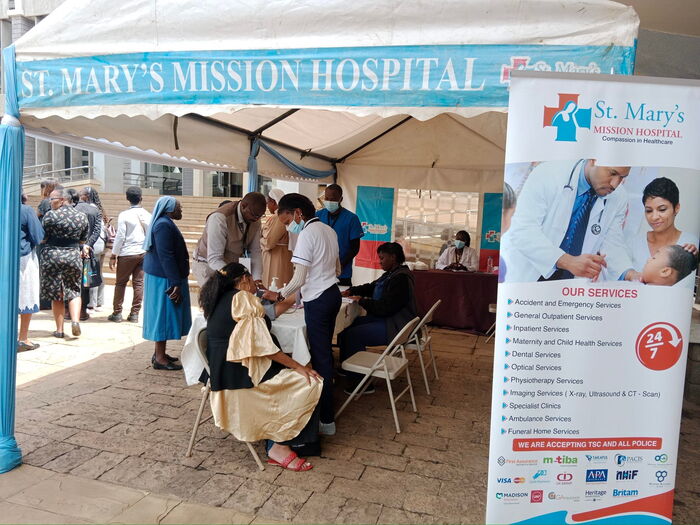
St Marys Hospital Nairobi main entrance Photo: St Mary’s Hospital Nairobi
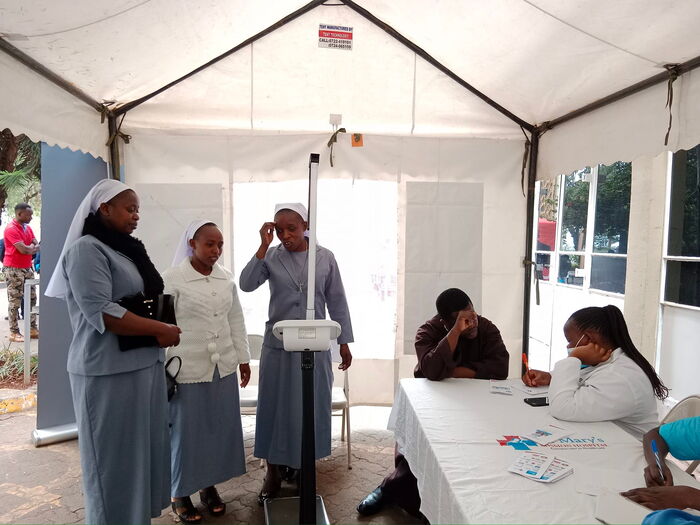
St Mary’s Hospital Nairobi offering free medical camp on September 7, 2023 at the Catholic University of East Africa (CUEA). Photo: St Mary’s Hospital Nairobi
Medical officers from St Mary’s Hospital at a medical camp at Holy Family Basilica on December 18, 2022. Photo: St Mary’s Hospital Nairobi

โ€œWe will not tolerate it being rolled backโ€: The United States reveals what it will do to ensure Rwanda and the DRC comply with the peace agreement

0

As the Great Lakes region continues to be destabilized by conflicts that have lasted for many years, recent statements by the United States Secretary of State, Marco Rubio, have once again sparked debate about the future of peace between Rwanda and the Democratic Republic of the Congo (DRC).

Despite signs that the peace agreement is not being implemented as expected, the United States says it still has confidence that the agreement can produce lasting results.

On June 27, 2025, Rwanda and the DRC signed a long-awaited peace agreement, particularly welcomed by the people of eastern DRC, who have endured years of killings, displacement, and extreme poverty.

The agreement aimed to permanently address the root causes of insecurity, including a key provision to dismantle the terrorist group FDLR, which has for years been responsible for serious crimes, and to lift the defensive security measures Rwanda had put in place along its borders.

This was followed by a high-level ceremony held on December 4, attended by President Paul Kagame, President Fรฉlix Tshisekedi, and President Donald Trump.

That ceremony was not only meant to reaffirm the peace agreement, but also marked the beginning of new regional economic cooperation and development agreements, reflecting hope that peace could translate into new opportunities for growth.

As part of efforts to sustain the peace process, Rwanda, the DRC, and the United States agreed to support the implementation of the ceasefire agreement signed in Doha, Qatar, between AFC/M23 and the DRC government. This ceasefire was intended to halt fighting, protect civilians, and pave the way for deeper political dialogue.

However, despite the signing of these agreements, the situation on the ground has continued to present a very different reality from what was expected. Before and after December 4, Congolese government forces, in cooperation with Burundian troops, Wazalendo groups, and the FDLR, launched heavy attacks on areas controlled by AFC/M23 in South Kivu Province, including Kamanyola and Kaziba.

These attacks had devastating consequences for civilians, with many killed, others injured, homes destroyed, and entire families shattered. Large numbers of civilians were once again forced to flee, some toward areas near Rwanda and Burundi, others into forests and other unsafe locations.

In response and in self-defense, AFC/M23 fighters moved down from the highlands into the Ruzizi Plain to confront this coalition of forces. This shift quickly changed the dynamics of the conflict, as AFC/M23 seized key locations including Katogota, Luvungi, Sange, Kiliba, and the city of Uvira, one of the major towns in South Kivu.

This move by AFC/M23 was received in different ways. Some viewed it as a response to continued attacks on civilians and on areas under their control, while others saw it as a sign that the ceasefire and peace agreements were no longer being respected by the DRC government and its allies.

Speaking to journalists on December 19, Secretary Marco Rubio acknowledged that parts of the peace agreement had not been implemented as planned. However, he emphasized that the most important achievement was that Rwanda and the DRC had reached the point of signing a peace agreement, providing a framework that the United States and other partners can rely on.

Rubio explained that the U.S. government had asked members of Congress, both Republicans and Democrats, to engage with leaders of both countries. The goal, he said, is to help them understand the importance of the peace agreement and encourage them to comply with it as the only viable path toward regional security and development.

He added that the United States will not tolerate any backtracking on the agreement, explaining that whenever violations occur, Washington will rely on the signed deal to remind both parties of their obligations. According to him, having a signed agreement provides a diplomatic tool to bring those who stray back into line.

He said: โ€œThe good thing for both sides is that we signed an agreement. At least we have something we can hold them to. Often, peace agreements are not fully respected at the beginning, but instead of starting something new, you try to push people back toward what they already agreed to.โ€

Despite these statements reflecting U.S. confidence, serious concerns remain on the ground in the DRC. Nearly six months after the peace agreement was signed, the DRC government has not yet begun implementing the key provision to dismantle the FDLR, a group long accused of cooperating with state forces and participating in violence against civilians.

Recent reports by United Nations experts have confirmed that cooperation between the FDLR and certain elements within the DRC security forces continues, further eroding confidence in the peace process. This situation has led Rwanda to maintain that its security concerns remain unresolved, while civilians in eastern DRC continue to pay the heavy price of ongoing political and security disputes.