Home Blog Page 74

At the UN, President Tshisekedi renewed accusations against Rwanda, a move critics say deflects from Congoโ€™s own security and governance failures.

0
  • Tshisekedi Repeats Accusations against Rwanda at the UN

Congolese President Fรฉlix Tshisekedi once again used the platform of the United Nations General Assembly in New York to attack Rwanda, accusing Kigali of fueling the conflict in eastern Congo.

In a press briefing on Monday, Tshisekedi claimed that Rwanda pretends to have withdrawn its troops from Congolese territory, while in reality, they are still present and actively supporting the M23 rebel movement.

โ€œRwanda portrays itself as if it has withdrawn its forces from Congo, but the truth is that those Rwandan soldiers remain on our soil, continuing to supply M23 with firepower and equipment,โ€ย  ย he said.

These allegations are not new. Kinshasa has made similar claims repeatedly without presenting solid evidence. Kigali has consistently dismissed them, describing them as political rhetoric designed to deflect attention from Congoโ€™s own internal failures.

Washington Agreement in Question

Tshisekedi further accused Rwanda of disregarding the Washington peace agreement signed on June 27, 2025. According to him, Kigali has refused to fully withdraw its forces and to stop supporting M23.

Rwanda, however, maintains that the crisis in eastern Congo is primarily the result of Kinshasaโ€™s governance failures, the weakness of its army (FARDC), and its documented collaboration with armed groups such as the FDLR a militia with a long and violent history against Kigali.

Blaming Rwanda as a Political Tool

Tshisekedi insisted that the M23/AFC coalition operates under Rwandaโ€™s directives, claiming that peace talks, including those held in Doha, cannot yield results because of Kigaliโ€™s influence.

But analysts argue that Tshisekediโ€™s rhetoric is largely political, aimed at rallying support ahead of elections by presenting external enemies rather than addressing Congoโ€™s deep-rooted problems.

For its part, Rwanda continues to highlight Kinshasaโ€™s support for the FDLR, a group implicated in the 1994 genocide against the Tutsi and still openly threatening Rwandaโ€™s security. UN expert reports have themselves acknowledged evidence of collaboration between FARDC and the FDLR.

Old Allegations, Few Results

Tshisekediโ€™s latest accusations come as several UN reports and Western countries have echoed similar claims of Rwandaโ€™s involvement with M23. Yet critics say these remain unsubstantiated and often politically motivated.

Kinshasa, on the other hand, denies working with the FDLR, but this denial has done little to erase mounting evidence of the militiaโ€™s role in FARDC operations.

Conclusion

In essence, President Tshisekedi continues to build a narrative that blames Rwanda for Congoโ€™s crises, while avoiding accountability for his own governmentโ€™s shortcomings. Pointing fingers at Kigali does little to address the proliferation of armed groups in eastern Congo and only underscores Kinshasaโ€™s persistent strategy of externalizing blame instead of confronting domestic governance and security failures.
Fall of Uvira: FARDC Collapse, Civilian Exodus, and Makengaโ€™s Forces Reshape Eastern Congoโ€™s War

0

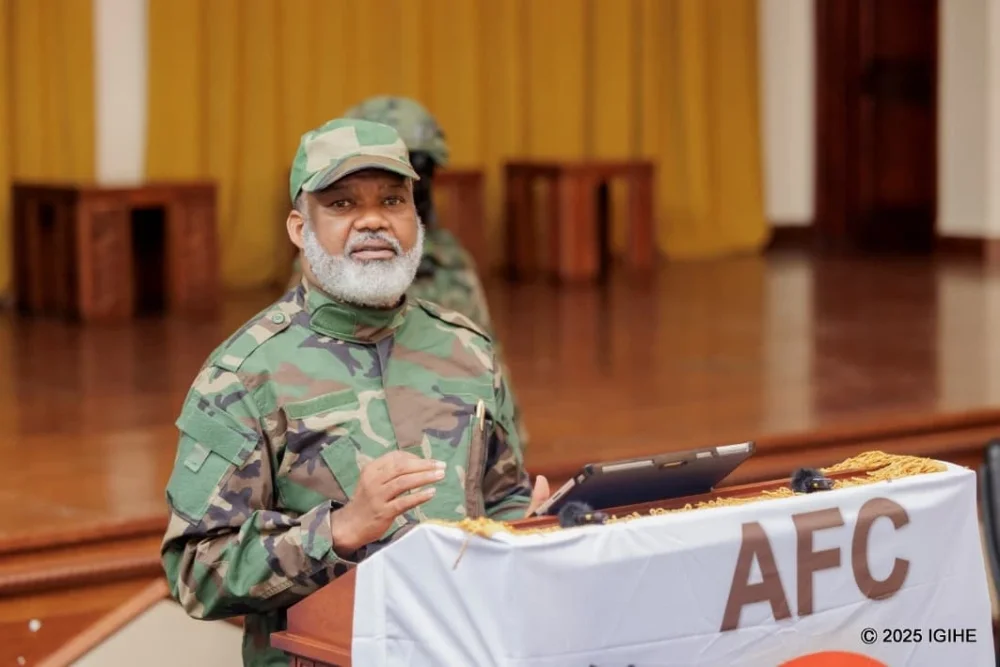
The scenes unfolding today on the shores of Lake Tanganyika, in Uvira, echo the darkest chapters of eastern Congoโ€™s history: the military collapse and the frantic exodus of soldiersโ€™ families, crammed into overcrowded boats fleeing toward Kalemie.

Images of this flotillaย  laden with women and children abandoning a city stripped of its defendersย  evoke dramatic parallels with the fall of Goma and Bukavu, where the Congolese army (FARDC), entrusted with protecting the nation, offered only fleeting resistance before surrendering the ground.

Uvira now joins this tragic continuity, exposing the impotence of an army crippled by corruption, disorganization, and the absence of a coherent strategy.

The Triumph of Disorder over Authority

This is not merely a military retreat but a moral collapse. The FARDC aligned opportunistically with the Wazalendo militias and the FDLR mercenaries of terror rebranded as auxiliaries of the regime represent less a national force than a private army serving narrow, predatory interests.

This fragmented coalition, claiming to defend Congolese sovereignty, is in reality a band of criminals whose abuses against civilians have destroyed any legitimacy. Against this disorderly conglomerate devoid of doctrine, ideals, or discipline the advance of General Makengaโ€™s forces takes on the semblance of a liberating crusade. It is not only military but also political, seeking to break the cycle of institutionalized violence and restore the population to the heart of strategic priorities.

A Historic Turning Point

As hours pass, one truth emerges: we are witnessing a historic turning point where the battle lines redraw the very lines of legitimacy. The fall of Uvira is not simply the loss of a strategic stronghold; it is the stark demonstration of a failed state, one that has transformed its army into an instrument of predation rather than a shield of protection.

The tragedy unfolding in Uvira resonates with striking historical parallels: the evacuation of Saigon in 1975, when the South Vietnamese army and their families fled in panic, and the fall of Kabul in 2021, when the Afghan army vanished in the face of Taliban determination, under the powerless gaze of the international community.

In both cases, military collapse was accompanied by moral breakdown, loss of legitimacy, and immense human suffering. Uvira now belongs to this same paradigm: a hurried flight, palpable fear, and the erosion of the armyโ€™s traditional authority.

Choosing Courage Over Capitulation

Yet where these historical precedents revealed the abandonment of the population for political bargains and personal survival, General Makenga and his forces chart a different courseย  one of responsibility and protection. By advancing decisively to secure civilians and dismantle the criminal networks entrenched in institutional chaos, Makenga embodies a legitimacy built on courage and justice rather than fear and plunder.

Thus, Uvira is not only a battlefield but a stage where the dialectic of capitulation versus dignity, failure versus resilience, shame versus honor, plays out once again. History is being written hereย  relentlessly and without compromiseย  and it will bear the indelible mark of those who chose to protect life instead of fleeing from it.

US Court Revives Paul Rusesabagina Lawsuit Against Air Charter Firm Over Alleged Abduction

0

A US appellate court has reinstated a lawsuit filed by Rwandan dissident Paul Rusesabagina against a Greek air charter company accused of flying him to Kigali against his will in 2020. The ruling reopens a case that could test the accountability of private aviation firms accused of facilitating politically motivated operations.

From Texas to Kigali

The case centres on events in August 2020, when Rusesabagina then a permanent US resident based in San Antonio boarded a private jet in Dubai believing he was en route to Burundi. Instead, the plane landed in Rwanda, where he says he was abducted, tortured, and subjected to a trial that ended with his conviction for supporting an armed rebel movement.

International pressure, particularly from Washington and Brussels, helped secure his release in 2023 after more than two years in detention.

Allegations Against GainJet

Following his release, Rusesabagina and his family sued GainJet Aviation, alleging the Athens-based company worked in coordination with Rwandan officials to mislead him about the flightโ€™s true destination. They argue that the firm played a direct role in his unlawful rendition to Kigali.

The lawsuit had initially been dismissed by a district court in Texas, which ruled that GainJetโ€™s alleged involvement was not sufficient to establish jurisdiction in the state.

But the Fifth Circuit Court of Appeals disagreed, stating that Rusesabagina โ€œwas injured the moment he was lured from his home in San Antonio.โ€ The judges also noted that GainJet operates globally, including in the United States, and that Texas has a legitimate interest in shielding its residents from foreign actors who โ€œfraudulently reach into the state to kidnap and torture them.โ€

Evidence and Legal Grounds

Court documents show that while still in Texas, Rusesabagina provided his passport details to a Rwandan official, who allegedly passed them to GainJetโ€™s operations manager. His legal team also points to irregularities in crew and passenger documentation, as well as the companyโ€™s history of providing services to Rwandan leaders.

Lawyers for Rusesabagina argue that the case falls under the โ€œeffects testโ€, which allows jurisdiction when out-of-state conduct causes harm locally, and under โ€œconspiracy jurisdictionโ€, which holds alleged co-conspirators liable in the same court.

Wider Implications

The ruling raises questions about the responsibilities of private aviation firms operating in politically sensitive environments, particularly when their services intersect with state security agendas. If the case proceeds, it could set a precedent for holding companies accountable for their role in international abductions.

Neither GainJet nor the Rwandan government responded to requests for comment. Legal experts in Kigali have also been cautious. โ€œUnfortunately, I cannot predict a court outcome I can only analyse a final court decision,โ€ said Dr Christian Garuka, a Rwandan lawyer.

A Polarising Figure

Paul Rusesabagina, who was awarded the US Presidential Medal of Freedom in 2005, rose to global prominence after the 2004 film Hotel Rwanda depicted him sheltering civilians during the 1994 genocide against the Tutsi. Rwanda disputes this narrative, accusing him of exaggerating his role and later supporting armed groups opposed to the government.

While deeply divisive in Rwanda, Rusesabagina remains a symbol of resistance to President Paul Kagameโ€™s government among his supporters. For him, the revived lawsuit is not only about damages but also about reframing the narrative of his 2020 capture and testing the reach of US courts in protecting residents from foreign state-linked operations.

Pope Leo XIV Urges Daily Rosary for Peace in October, Announces Global Gathering at St. Peterโ€™s Square

0

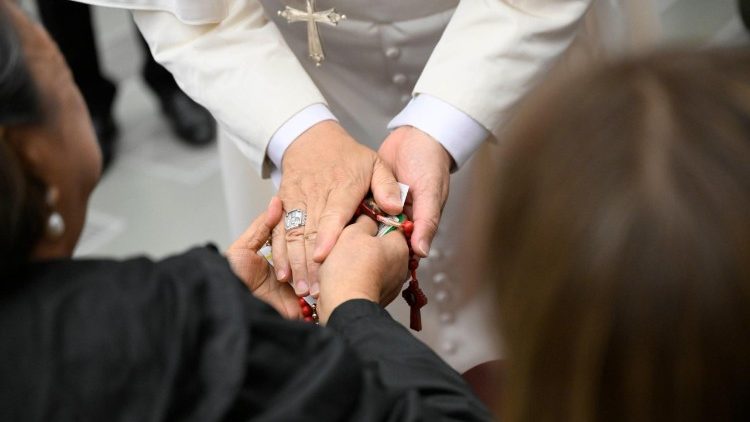
Pope Leo XIV has invited Catholics around the world to dedicate the month of October to daily prayer of the Rosary, imploring Godโ€™s gift of peace for nations scarred by war and violence.

Speaking at his Wednesday General Audience, the Pope announced that a special Rosary for Peace will be held in St. Peterโ€™s Square on October 11, 2025, at 6:00 PM, as part of the Jubilee of Marian Spirituality.

โ€œI invite everyone, each day of the coming month, to pray the Rosary for peaceโ€”personally, in the family, and in community,โ€ Pope Leo XIV said.

In addition, he encouraged Vatican employees to gather daily in St. Peterโ€™s Basilica at 7:00 PM throughout October for the communal recitation of the Rosary.

During his greetings to Portuguese pilgrims, Pope Leo lamented the โ€œruins wrought by murderous hatred,โ€ and urged Christians to bear witness to โ€œthe love of Jesus that illumines and lifts up humanity.โ€

The Rosary for Peace coincides with the Jubilee of Marian Spirituality, which will be celebrated on October 11-12, 2025. The date also holds deep historical meaning for the Church, marking the 63rd anniversary of the opening of the Second Vatican Council, inaugurated by Pope St. John XXIII on October 11, 1962.

Through this global call to prayer, Pope Leo XIV hopes to unite Catholics in their devotion to the Blessed Virgin Mary and in their plea for peace in todayโ€™s conflict-ridden world.

Before the General Audience, Pope Leo greeted the faithful gathered in the Paul VI Hall (@Vatican Media).

Christian Mwando Condemns Irregularities in Bid to Oust Vital Kamerhe from DRC National Assembly

0

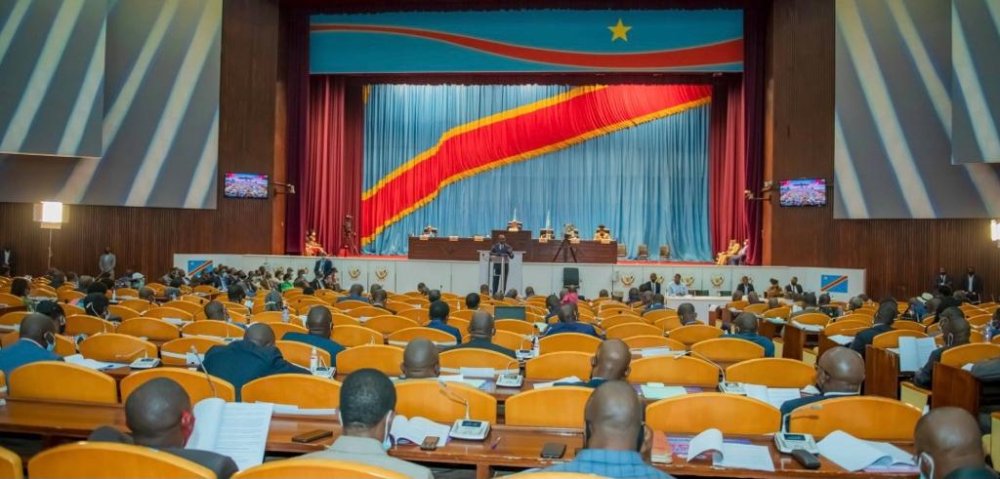
In the parliamentary arena of the Democratic Republic of Congo, where the fate of institutions and their credibility often hangs in the balance, the intervention of Honorable Christian Mwando resounded like thunder in a sky already darkened by political maneuvering.

In the hasty and clumsy attempt to unseat Vital Kamerhe from the presidency of the National Assembly, grave irregularities were committed, exposing the flaws of a process marred by improvisation and blatant partiality.

Refusing to remain silent, Christian Mwandoโ€”with sharp insight and undeniable legal rigorโ€”chose to confront his peers, reminding the deputies not only of their responsibilities but also of the inescapable judgment of History.

โ€œI rise on a point of order,โ€ he declared firmly, โ€œto request that it be recorded in the annals of this chamber that the rules of the game have changed.โ€

The solemnity of this statement, delivered in a heavy silence, underscored the gravity of the moment. The commission established to examine the petition against Vital Kamerhe was chaired by Honorable Peter Kazadi, a former Minister of the Interior and now a majority deputyโ€”within which paradoxically sat some of the very petitioners. In other words, the accusers found themselves judging their own case, blatantly violating one of the cardinal principles of justice: no one can be both judge and party.

Mwando went further, exposing another anomaly of equal gravity: โ€œLet us record that in the DRC, one may now proceed with a case tainted by forgery and falsification of documents. Yet everyone knows that forgery corrupts everything. When falsification exists in a procedure, it must be dismissed. And yet here we are, forced to accept the unacceptable and normalize illegality.โ€

His incisive words pierced the chamber like a blade, under the impassive gaze of constitutional law professor Andrรฉ Mbata, of commission president Peter Kazadi, and of a stunned plenaryโ€”caught between shame and disbelief.

The world, watching this troubling spectacle, could measure how dangerously the Congolese National Assembly is drifting, where arbitrariness and manipulation prevail over law and justice.

Ultimately, through this motion of order, Honorable Christian Mwando did not merely denounce procedural irregularities. He reminded his colleagues that they do not sit in parliament solely for their careers or political parties, but for Historyโ€”an unrelenting witness that will record both their cowardice and their courage.

In the midst of turmoil, his voice became that of a conscience, calling on deputies not to turn institutions into tools of political vendettas but to uphold them as sanctuaries of legality and truth.

AFC/M23โ€™s Nangaa Rejects Rwanda Links, Vows to Oust Tshisekedi

0

Corneille Nangaa, leader of the Alliance Fleuve Congo (AFC) and its armed wing M23, has denied claims that his movement is backed by Rwanda, insisting they neither receive nor need Kigaliโ€™s support.

In an interview with CNNโ€™s Larry Madowo in eastern DRC, Nangaa said the groupโ€™s sole mission is to march to Kinshasa and remove President Fรฉlix Tshisekedi, whom he described as โ€œillegitimateโ€ and โ€œa thief.โ€

Human Rights Watch recently accused M23 of killing more than 140 civilians near Virunga National Park, allegations Nangaa dismissed as โ€œpropaganda from Kinshasa.โ€

M23 has expanded its ranks with over 7,000 new fighters and vows to push beyond Goma and Bukavu to capture major cities including Lubumbashi, Mbandaka, and Kinshasa itself.

Corneille Nangaa reiterated that their objective is to reach Kinshasa and remove President Tshisekedi from powe

Banyamulenge/Tutsi Delegation Blocked from UNGA Side Event in New York, Sparking Outcry over Discrimination

1

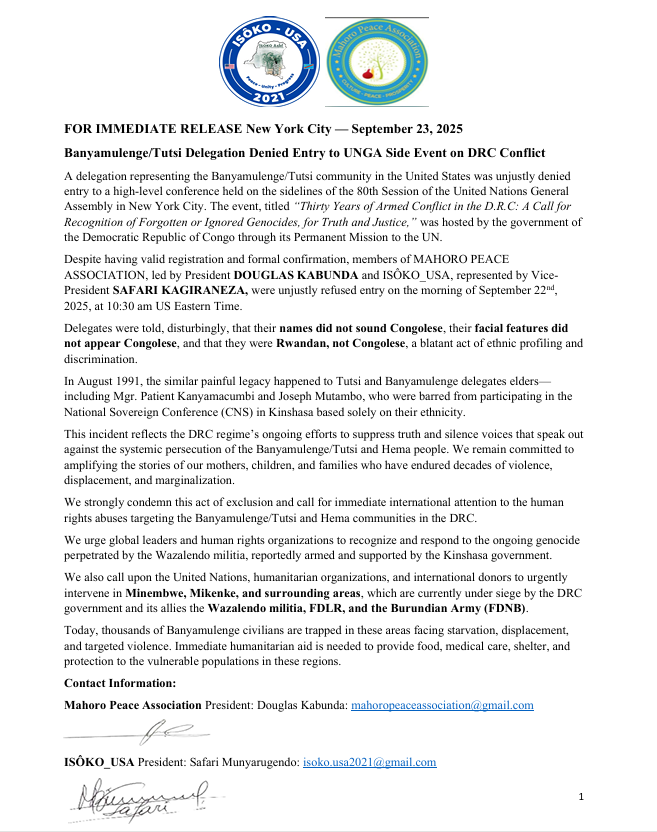
New York City, September 23, 2025 โ€” A delegation representing the Banyamulenge/Tutsi community in the United States was denied entry to a high-level conference on the Democratic Republic of Congo (DRC), raising alarms of ethnic discrimination at an event hosted during the 80th Session of the United Nations General Assembly (UNGA).

The side event, titled ยซThirty Years of Armed Conflict in the D.R.C: A Call for Recognition of Forgotten or Ignored Genocides, for Truth and Justiceยป, was convened on September 22 by the Congolese government through its Permanent Mission to the UN. Despite holding valid registrations and official confirmations, members of Mahoro Peace Association, led by President Douglas Kabunda, and ISร”KO_USA, represented by Vice-President Safari Kagiraneza, were refused entry at approximately 10:30 a.m. Eastern Time.

According to the delegates, security officials told them their ยซNames did not sound Congoleseยป and that their ยซfacial features appeared Rwandan, not Congolese. ยป Advocates have condemned the incident as an act of ethnic profiling and a continuation of historic exclusion targeting the Banyamulenge/Tutsi community.

ยซThis is not an isolated incident. It echoes painful memories of August 1991, when respected Banyamulenge leaders, including Mgr. Patient Kanyamacumbi and Joseph Mutambo, were barred from the National Sovereign Conference in Kinshasa purely because of their ethnicity,ยป the organizations said in a joint statement.

A Pattern of Silencing Voices

Human rights defenders argue that the latest exclusion reflects a broader strategy by the DRC government to marginalize minority groups and silence voices exposing systemic abuses. The Banyamulenge/Tutsi, along with the Hema community, have long reported persecution, mass displacement, and targeted violence in eastern Congo.

ยซThis denial of entry was not just about a meeting. It was about silencing testimonies of mothers, children, and families who have endured decades of violence,ยป Kabunda said.

Calls for International Action

The organizations have called on the international community to take urgent notice. They warn of what they describe as ยซongoing genocideยป carried out by the Wazalendo militia, allegedly supported by the Kinshasa government and allied groups including the FDLR and the Burundian Army (FDNB).

ยซThousands of civilians in Minembwe, Mikenke, and surrounding areas remain under siege, facing starvation and relentless attacks,ยป said Safari Kagiraneza. ยซImmediate humanitarian intervention is essential to provide food, medical care, shelter, and protection.ยป

The appeal specifically urges the United Nations, humanitarian organizations, and international donors to step in, citing an urgent need for aid and international monitoring to prevent further atrocities.

A Test for Global Leaders

As world leaders gather in New York for the UNGA, the exclusion of Banyamulenge delegates has highlighted the complexities of addressing the DRCโ€™s decades-long conflict. Advocacy groups argue that recognition of all affected communities, including marginalized minorities, is crucial for any meaningful path to peace and justice.

ยซWe strongly condemn this act of exclusion, ยป Mahoro Peace Association and ISร”KO_USA said. ยซThe world must not look away. Ignoring the voices of victimsโ€™ today risks repeating the mistakes of the past. ยป

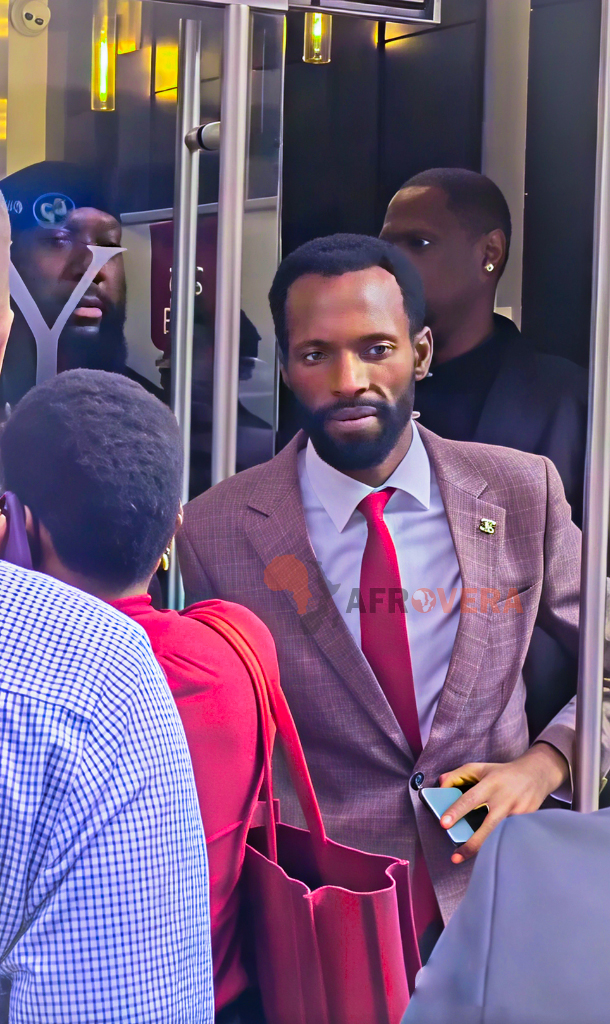
Willy Nshuti was unjustly forced out of the conference room during the 80th Session of the United Nations General Assembly (UNGA).

Banyamulenge/Tutsi Delegation Blocked from UNGA Side Event in New York, Sparking Outcry over Discrimination

Mu kiganiro nโ€™abanyamakuru i Buruseli, Irรจne Kamanzi yaburiye amahanga ku bwicanyi bugamije Jenoside bukorwa na Leta ya DRC ku Batutsi/Banyamulenge nโ€™Abahima

0

Buruseli, tariki ya 22 Nzeri 2025 โ€” Mu kiganiro nโ€™abanyamakuru cyateguwe nโ€™Itsinda ryโ€™Abanyamategeko rihagarariye Abatutsi/Banyamulenge nโ€™Abahima muri Repubulika Iharanira Demokarasi ya Congo (RDC)ย  , ย ย Irรจne Kamanzi, Perezida wa Isรดko Europeย  , yatanze ubutumwa bukomeye bwasigiye aho yashinje ubutegetsi bwa Kinshasa gukoresha inzira zโ€™iterabwoba no guhembera ubwicanyi bugamije kurimbura imbaga yโ€™abavuga i Kinyarwanda muri DRC.

Mu ijambo rye, Kamanzi yibanze ku ngaruka zikomeye zโ€™iyi politiki ku bantu bโ€™imbabare cyane abagore nโ€™abana. Yatanze urugero rwโ€™akarengane nโ€™ihohoterwa rikorwa muri gereza zo muri Kinshasa, cyane cyane muri gereza ya Makala, aho abagore bafungwa nta cyaha bakoze, ahubwo bazira gusa kuba abagore cyangwa imiryango yโ€™abashinjwa kuba ยซabanzi bโ€™igihugu.ยป Yibukije kandi uko inzego zโ€™umutekano zinjije nkana amatsinda yโ€™amabandi yo mu mihanda azwi nka ย Kuluna ย mu byumba byโ€™abagore kugira ngo bakore ยซibihano byihariye (punitive expeditions)ยป ibintu byasize inkovu zikomeye.

Kamanzi yashinje ubutegetsi bwa Kinshasa kwinjiza imitwe yitwaga imihari nka Maรฏ-Maรฏ yahinduwe ย Wazalendo , amabandi yo mu mihanda ndetse nโ€™abana batarageza ku myaka 12 mu gisirikare, bakabaha intwaro zo gukora ubwicanyi nโ€™ihohoterwa. Yabisobanuye nkโ€™ ยซiterabwoba rya Leta,ยป anongeraho ati: ย ยซAba ntibakiri ingabo zirinda igihugu. Ni ubutegetsi bwahisemo gukoresha ubugome bwose bushoboka ngo burimbure igice cyโ€™abaturage babwo.ยป

Yakomeje avuga ko ibi bikorwa ari ibikorwa bigamije ย ย jenosideย  , bigamije kwibasira abantu ku bwo gusa kuba bafite umuco cyangwa isura itandukanye. ย ยซNtitwemere ko igihugu cyubakira ubutegetsi ku mirambo yโ€™abana nโ€™abagore,ยป ย niko yavuze, ahamagarira amahanga guhagurukira iki kibazo aho gukomeza kure.

Nโ€™ubwo yatanze ubuhamya bwโ€™ibyo biteye agahinda nโ€™ishavu, Kamanzi yagaragaje ishema ku bagore ba Congo, anashima ubutwari bwโ€™abarokotse ihohoterwa, ababyeyi bakomeje gushyingura abana babo bapfuye barwana, nโ€™abagore bagihangana nโ€™ubuzima mu nkambi zo mu Burasirazuba bwa Congo.

Mu gusoza, yahaye ubutumwa butaziguye Perezida Fรฉlix Tshisekedi: ย ยซHari indi nzira ibaho โ€” inzira yโ€™ibiganiro, inzira yโ€™amahoro, inzira yo kubaha ikiremwamuntu. Ahazaza ha Congo ntihashobora kubakirwa ku maraso yโ€™abana nโ€™abagore bโ€™inzirakarengane.ยป

Iki kiganiro nโ€™abanyamakuru cyabereye kuri ย ย Press Club i Buruseliย  , cyakurikiwe nโ€™abanyamakuru mpuzamahanga nโ€™abaharanira uburenganzira bwa muntu, kikaba ari intangiriro yโ€™ubukangurambaga bushya bwo kwamagana ubwicanyi bukomeje kwibasira Abatutsi/Banyamulenge nโ€™Abahima muri RDC, no gusaba ubutabera.

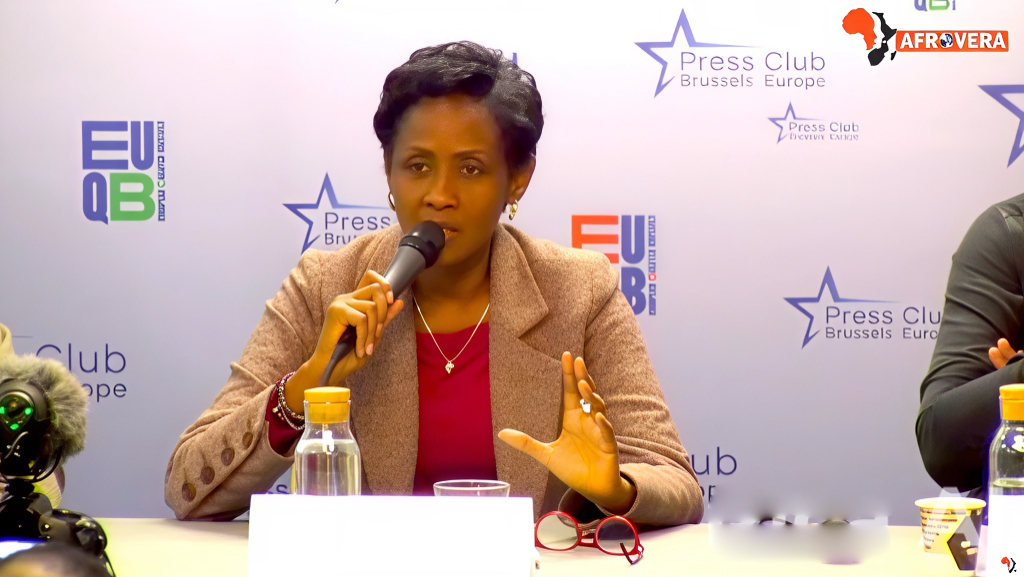
Irรจne Kamanzi, Isรดko Europe President exposes atrocities against Tutsi/Banyamulenge and Hema communities, urging urgent global action

Video: Irรจne Kamanzi Warns of State-Sponsored Genocide in the DRC at Brussels Press Conference

0

Brussels, September 22, 2025ย  Speaking at a press conference convened today by the Collective of Lawyers representing the Tutsi/Banyamulenge and Hema communities of the Democratic Republic of Congo, Irรจne Kamanzi, President of Isรดko Europe, delivered a powerful and deeply moving statement denouncing the escalating violence and state-sponsored abuses in the DRC.

In her remarks, Kamanzi warned of the catastrophic consequences of the current regimeโ€™s policies, particularly for the most vulnerable groupโ€™s women and children. She highlighted harrowing accounts from Congolese prisons, including Makala in Kinshasa, where women are reportedly detained under inhumane conditions, sometimes merely for being relatives of suspected โ€œenemies of the state.โ€ She recalled shocking reports of gangs, such as the infamous Kuluna, being deliberately introduced into womenโ€™s prison quarters to carry out โ€œpunitive expeditions,โ€ leaving behind unimaginable trauma.

Kamanzi condemned what she termed โ€œstate terrorism,โ€ describing how armed groups, militias, street gangs, and even children as young as twelve are being armed and used as instruments of violence. โ€œThis is no longer an army defending a nation,โ€ she declared. โ€œIt is a regime that has decided to use every form of brutality available to eradicate part of its own population.โ€

Her testimony underscored that these policies amount to acts of genocide, targeting communities solely because of their identity. โ€œWe cannot allow a state to build its power on the corpses of women and children,โ€ she said, calling on the international community to act before it is too late.

Despite the horrors she described, Kamanzi saluted the resilience and courage of Congolese women, survivors of mutilation and sexual violence in conflict zones, and mothers who continue to bury their sons lost in battles to protect their communities.

She ended with a direct message to President Fรฉlix Tshisekedi: โ€œThere is another wayย ย  the way of dialogue, peace, and respect for human dignity. The future of the Congo cannot be built on bloodshed.โ€

Todayโ€™s press conference, held at the Brussels Press Club, drew international attention to the plight of Tutsi/Banyamulenge and Hema communities in eastern DRC and marked the beginning of a global advocacy campaign led by the Collective of Lawyers to denounce ongoing atrocities and demand accountability.

Irรจne Kamanzi, Isรดko Europe President exposes atrocities against Tutsi/Banyamulenge and Hema communities, urging urgent global action

Congoโ€™s Regime: A Farce Masquerading as Politics

0

Should we call it checkmate, a spectacular blunder, or simply a political shipwreck? Words struggle to capture the sheer absurdity of the Congolese political stage, where missteps routinely descend into farce.

Take the petition against Vital Kamerhe, President of the National Assembly. Marketed as a grand political strike and reportedly blessed at the highest level of the state, it collapsed almost instantly; exposing not Kamerheโ€™s weakness but the regimeโ€™s own amateurism.

Even Augustin Kabuya, caught on camera, admitted: โ€œI must consult the Head of State.โ€ The presidential green light was given. And yet, instead of crushing its target, the machine crumbled under its own frauds.

The commission tasked with reviewing the petition uncovered an astonishing list of irregularities: a non-deputy signing (Mulumba Kanyinda), a name listed without a signature (Titan Kalonji Antoine), a deputyโ€™s signature duplicated under slightly different names, and no fewer than 25 forged signatures verified against official records.

How does one even attempt to topple the head of parliament with such sloppy forgery? This wasnโ€™t just reckless; it was political incompetence on full display.

The Tshisekedi regime falsifies, but badly. It conspires, but in the open. It orchestrates, but canโ€™t hide the discord.

And therein lies the bigger truth: fraud isnโ€™t a bug in this system; itโ€™s the system itself. The architects of these schemes arenโ€™t fringe actors; they are the regime. What emerges is not the image of a serious state but of a factory of illusions, where manipulation trumps substance.

Ironically, instead of weakening Kamerhe, this fiasco only exposed the carelessness of his opponents and underscored once again how Congo is governed: in constant improvisation, devoid of rigor, incapable of rising to the weight of national responsibility.

The tragedy is that this isnโ€™t just a political embarrassment; itโ€™s a national liability. A regime that falsifies everything, even its own tools of deception, is one that cannot be trusted to safeguard the credibility of the Congolese state.

What we are witnessing is not politics. It is imposture dressed as governance.

Checkmate, a resounding misstep, or a political shipwreck: the Congolese political stage stands out for blunders bordering on farce