




NAIROBI, Kenya Members of the Banyamulenge community gathered in Kenya on February 19, 2026, to mark the first anniversary of the death of General Michel Rukunda, widely known as Makanika, alongside others who were killed with him. The commemoration brought together community leaders, activists and members of the diaspora in an event defined by prayer, remembrance and renewed calls for unity.
Among the speakers was Rosa Mapendo, a Banyamulenge human rights activist based in Phoenix, Arizona, who traveled to Kenya to attend the ceremony. Introducing herself as a survivor of the 1998 violence in the Democratic Republic of Congo, Mapendo said she was speaking on behalf of members of the community living in the United States and others in the diaspora.
Standing before the audience, she described her appearance as both painful and necessary. “We have spoken for many years,” she said, “but action has not followed.” She emphasized that her message was not only for her own community, but also for those outside it who may not fully understand the scale of suffering endured in eastern Congo.
Mapendo recounted her personal experience of surviving what she described as a death camp, where she said she spent 16 months under armed guard with her seven children after her husband was killed alongside dozens of other men. She was pregnant at the time, with her youngest child just ten months old. “I am who I am today because God saved me,” she said. “But I know what injustice looks like.”
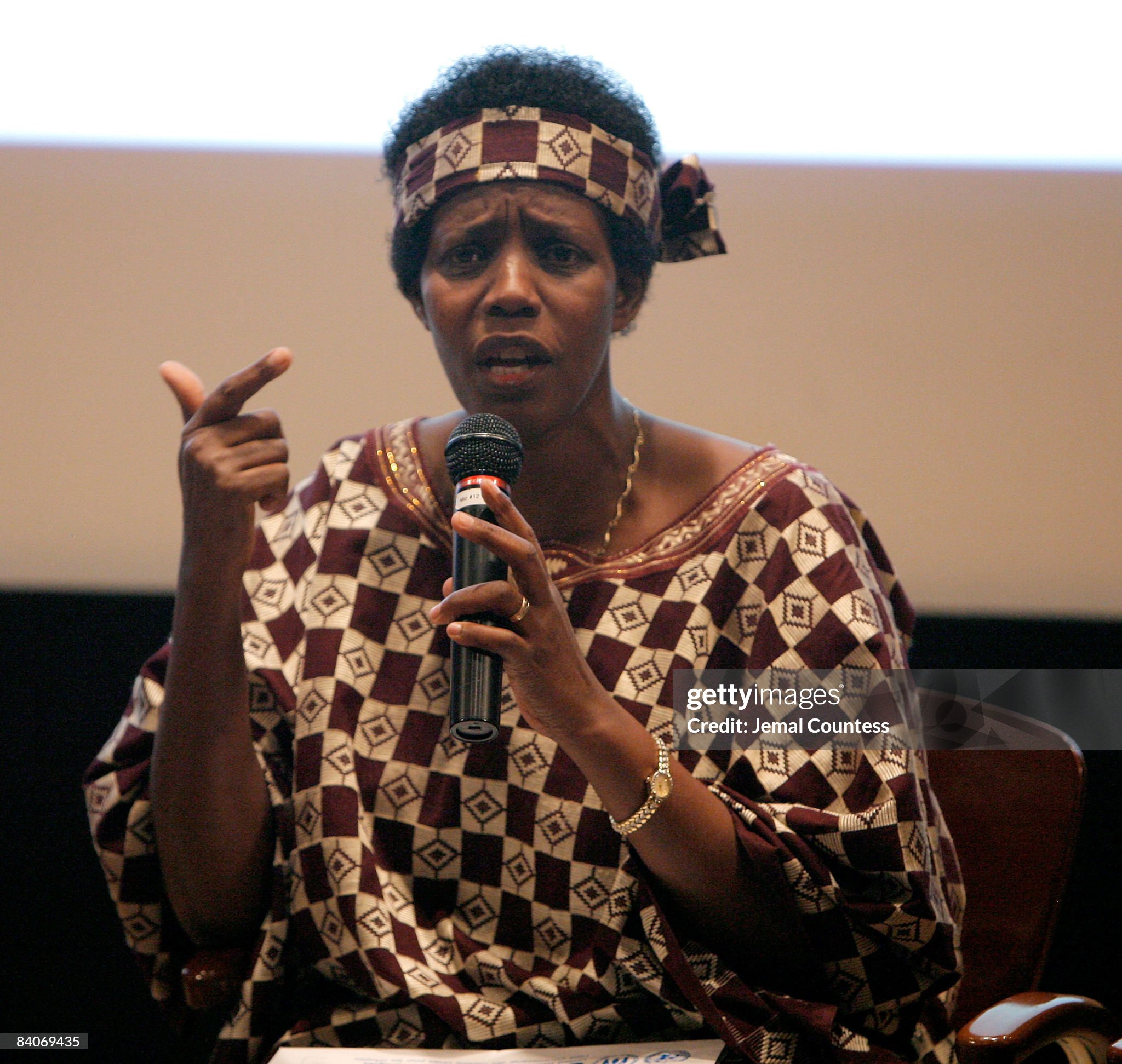
In her remarks, Mapendo reflected on an earlier visit to the United Nations, where she had been invited to speak. She described visiting a Jewish museum and hearing repeated declarations of “Never again” in reference to the Holocaust. She said she questioned why similar urgency did not appear to apply to ongoing violence in Congo.
“Is this a business?” she recalled asking, referring to war and mass atrocities. She recounted a conversation with a senior politician who allegedly told her that conflict is often driven by economic interests, pointing to the global demand for minerals sourced from Congo. “War is business,” she quoted him as saying, adding that many of the materials used in everyday electronic devices originate in the region.
Her remarks underscored a broader argument: that geopolitical and economic interests often outweigh humanitarian concerns. “No one will shed blood on your behalf without an interest,” she told the audience. “If we want to live in dignity, we must stand for our own rights.”
Addressing Kenyan authorities, Mapendo expressed gratitude for the country’s hosting of refugees, while urging leaders to use their diplomatic influence to advocate for peace and protection of civilians in the Great Lakes region. “A president has the power to speak to another president,” she said. “Action speaks louder than a million words.”
She also criticized what she described as repeated rounds of international negotiations in countries such as Angola, Qatar and the United States, arguing that for affected communities, these diplomatic processes can appear disconnected from realities on the ground.
Throughout her speech, Mapendo returned to themes of resilience and unity. She offered condolences to widows and families who have lost loved ones, saying she understood the burden of raising children alone. At the same time, she encouraged women and young people not to give up. “Unity is power,” she said. “A divided people cannot stand.”
General Michel Rukunda, known by his supporters as Makanika, remains a controversial figure in the conflict dynamics of eastern Congo. For those gathered in Kenya, however, the focus was less on military strategy and more on what they described as his legacy of resistance and self-defense.
As the ceremony concluded, speakers framed the commemoration not only as a memorial, but as a call to continued advocacy. While acknowledging that those killed will not return, participants emphasized that remembrance, in their view, carries an obligation: to seek justice, to demand accountability and to protect the next generation.
For many in attendance, the anniversary was both a moment of grief and a reaffirmation of identity an assertion that, despite displacement and loss, their community endures.