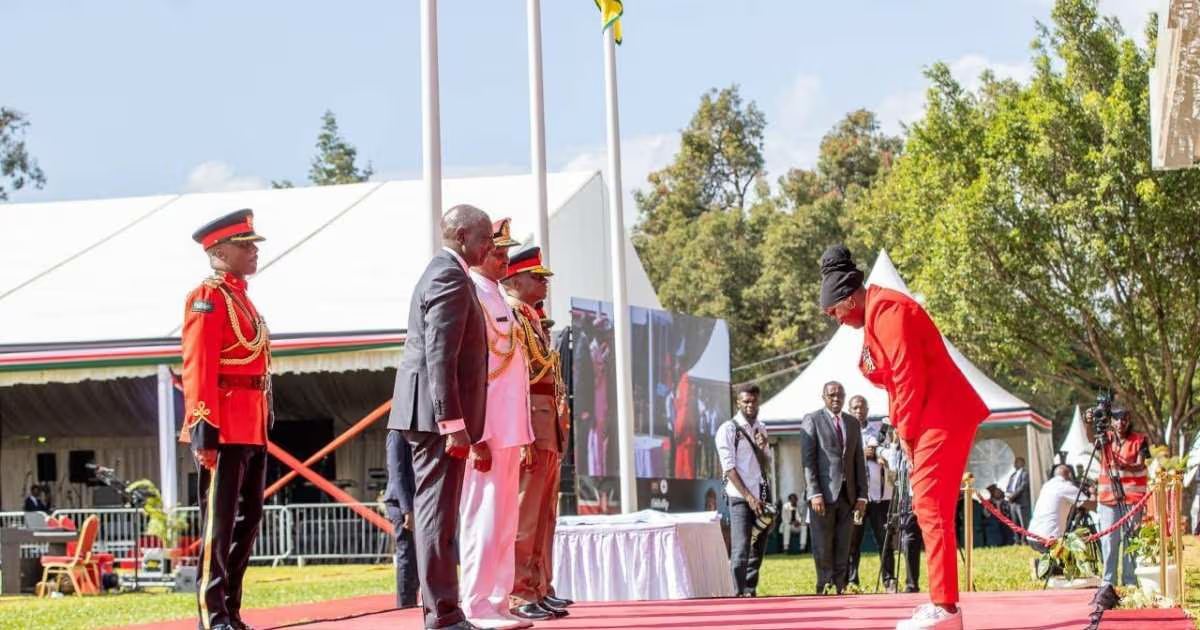




A Deep Look Into Strategy, Power, and Quiet Messages Behind Kenya’s 881 Awards.
Kenya marked Jamhuri Day on December 12, 2025, with colour, pride, and powerful national symbols. But this year, something else stood out. President William Ruto honoured 881 Kenyans, from top government officials to community heroes. On the surface, it looked like a simple celebration. But many people saw deeper meaning behind it.
The awards ranged from the respected Order of the Golden Heart to many other service medals. Every honour had a name, a face, and a long story. But together, they also carried a soft political message that many Kenyans are now talking about.
These awards included people linked to past governments, people who once worked close to former presidents, and leaders from independent state institutions. Their presence signalled more than national pride. It showed a slow softening of old political tensions.
Many Kenyans saw this as Ruto’s way of bringing old enemies and old networks closer, not through speeches, but through respect. By honouring these figures, he appeared to say that Kenya’s progress belongs to everyone, past and present.
This strategy helped send a message of continuity. Instead of creating sharp differences with old regimes, the honours painted a picture of unity. It looked like a deliberate decision to bring together different parts of Kenya’s political history.
A large part of the honours list included senior officials inside the government system. These were security chiefs, long-serving bureaucrats, and key people working behind the scenes. Their recognition suggested that the administration wants stronger teamwork and loyalty inside government.
In today’s Kenya, where people question leadership and institutions more than ever, these awards became a way to reassure the public. They reminded the nation that unity inside government is still important for stability.
But the significance was not only political. The honours also included voices from different regions, different careers, and different communities. This diversity helped send a message that Kenya belongs to everyone.
By lifting people from many backgrounds, the ceremony shaped a powerful story of national inclusiveness. It showed that talent, service, and contribution can come from anywhere. On a day celebrating independence, that message felt especially important.
Jamhuri Day has always been a moment of national pride. But this year, the honours changed the tone of the day. The list became more than a traditional award ceremony. It became a political signal, wrapped in celebration and patriotism.
President Ruto appeared to position himself not only as head of state but also as a guardian of Kenya’s shared journey. He placed himself in the centre of a story about unity, healing, and continuity.
Some experts believe this year’s awards were also timed for the future. Kenya’s political space is slowly moving toward the next election. In that context, giving honours to such a wide range of people helps strengthen alliances and build goodwill.
The awards might also build bridges with groups that once felt ignored or pushed aside. If political temperatures rise in the future, relationships inside the state will matter even more. These honours could help strengthen those relationships early.
Even though the event looked peaceful and simple, its deeper meaning was clear. It showed careful political planning. It showed the use of symbolism to send quiet messages.
This year’s Jamhuri Day honours were not just about medals, applause, and flashing cameras. They were also about strategy. About unity. About stability.
Through this long list of 881 honourees, the government made a quiet but powerful statement. Kenya needs cohesion, loyalty, and a shared sense of national purpose.
As the country looks toward its next political chapter, these messages will remain important. The awards may be over, but the story they told will continue to shape Kenya’s political conversation.
In the end, the celebration was not only about who received the medals. It was about what those medals said about the direction of the country.
And many Kenyans are still talking about it.
President William Ruto’s Jamhuri Day honours list featured some of the most influential names in Kenya’s public life, beginning with recipients of the prestigious Order of the Golden Heart of Kenya (E.G.H.). Among them was Dr. Pratt Kristina Kenyatta, recognized for her contribution to public welfare, alongside Attorney General Dorcas Oduor, celebrated for her work in strengthening Kenya’s legal framework. Environment Cabinet Secretary Dr. Deborah Barasa Mulongo was also honoured for her leadership on environmental reforms. Other high-profile names awarded in this category included Trade CS Lee Kinyanjui, ICT CS William Kabogo, Narok Governor Patrick Ole Ntutu, and Dr. Jaffer Mohamed Husein, each recognized for their national service across government and development sectors.
At the military leadership level, the Moran of the Order of the Golden Heart (M.G.H.) was awarded to two senior officers who have shaped Kenya’s defence strategy. Lieutenant General David Kipkemboi Ketter and Major General Bernard Waliaula received the honour for their long and distinguished service. Their recognition highlighted the administration’s continued emphasis on security, discipline, and leadership within the Kenya Defence Forces.
A significant group of leaders also received the Order of the Burning Spear (C.B.S.), one of Kenya’s most respected honours for public service. This category included Chief Mary Wanyonyi Chebukati, noted for her administrative leadership, Nominated Senator Veronica Maina, and MP Didmus Barasa, each celebrated for their contributions to governance. In addition to these named figures, 79 more individuals received the honour, representing a broad range of professional backgrounds.
The recognition extended further with the Elder of the Order of the Burning Spear (E.B.S.), awarded to individuals who have demonstrated commitment to justice, administration, and national duty. Mwai Daniel, Justice Kanyi Kimondo, and Brigadier Adan Hassan were among those honoured, reflecting a balance between civilian leadership and military excellence in the national recognition process.
In the cultural sector, the Head of State Commendation (H.S.C.), Civilian Division went to popular musician Ian Oure, widely known by his stage name Iyanii, marking a celebration of Kenya’s dynamic creative industry. His inclusion underscored the government’s acknowledgment of artists as important contributors to national identity and social influence.
The honours list also paid tribute to acts of bravery and sacrifice within the military. Three officers who died during the MSS mission in Haiti were awarded Silver Star Medals posthumously, recognizing their courage in international duty. Two officers, Jairus Okoyo and Njeru Gilbert, received Distinguished Silver Medals for exceptional service. Additionally, 189 officers were honoured with the Head of State’s Commendation (H.S.C.), Military Division, highlighting commitment, resilience, and outstanding performance across Kenya’s defence forces.