Home Blog Page 17

Middle East conflict: Iran fires missiles at Israel as air strikes intensify for sixth consecutive day

0

Iran fired missiles toward Israel overnight as aerial attacks across the Middle East continued for a sixth consecutive day, further escalating tensions between Tehran and the alliance of the United States and Israel.

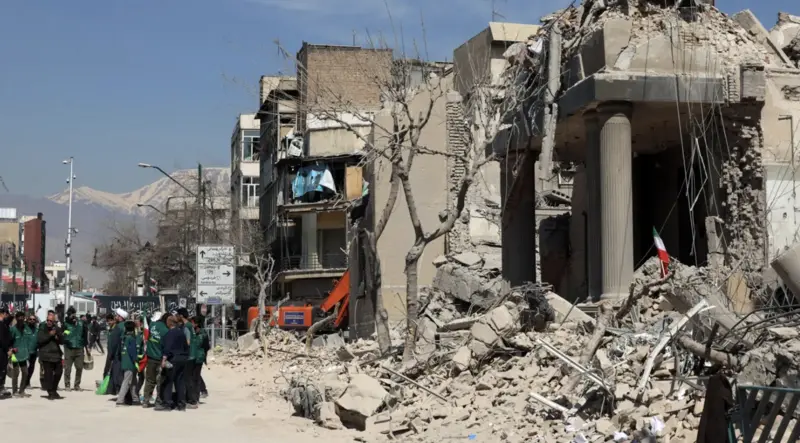
On Thursday, the United States and Israel intensified their air strikes against Iranian targets, signaling a new phase in the ongoing confrontation. The strikes are part of a broader military campaign that has increasingly expanded beyond direct exchanges between Iran and Israel.

Israeli forces also carried out air strikes in the southern suburbs of Beirut, an area widely known as a stronghold of the Hezbollah movement. Residents had earlier been warned by the Israeli military to evacuate certain areas before the attacks were launched.

Air raid sirens sounded in both Tel Aviv and Jerusalem, warning residents of incoming missiles shortly after a brief period of calm. Explosions were heard as Israelโ€™s air defense systems intercepted several of the incoming projectiles.

There were no immediate reports of casualties following the missile strikes.

Israeli authorities have begun easing some of the emergency restrictions imposed on civilians, citing a decline in the number of missiles being launched by Iran in recent hours.

Meanwhile, Israelโ€™s main international gateway, Ben Gurion Airport, reopened on Friday after remaining closed for five days since the beginning of the escalation.

An Israeli military spokesperson said the operations targeting Iranโ€™s missile stockpiles and launch sites had achieved โ€œsignificant results,โ€ suggesting that the strikes may have reduced Iranโ€™s operational capacity.

In Iran, new explosions were reported in the capital Tehran as Israeli strikes continued to target strategic positions.

The conflict has also spread into Lebanon, where Israeli air strikes against Hezbollah positions have reportedly caused numerous casualties.

Lebanese officials say more than 80,000 people have fled their homes due to the renewed hostilities between Israel and Hezbollah, raising growing concerns over a widening regional humanitarian crisis.

Middle East conflict: Iran fires missiles at Israel as air strikes intensify for sixth consecutive day

Middle East conflict escalates as Iran clashes with U.S.โ€“Israel alliance

0

The war pitting Iran against the alliance of the United States and Israel has entered a more dangerous phase, with both sides continuing heavy military exchanges for a fifth consecutive day. The fighting involves advanced weaponry including high-speed missiles, modern fighter jets, suicide drones, and naval weapons launched from warships.

The confrontation has intensified since February 28, 2026, raising serious concerns about security across the Middle East and the potential impact on the global economy. According to reports from human rights organizations, more than 1,000 people have been killed in Iran since the conflict began, while thousands of civilians have been forced to flee their homes.

On the fifth day of hostilities, U.S. and Israeli forces continued launching major strikes inside Iran, primarily targeting military bases, government facilities, and infrastructure linked to Iranโ€™s nuclear development program.

Iran has responded with missile attacks and unmanned aerial vehicles (drones), aiming at American infrastructure and allied facilities across several countries in the region. Nations that have reportedly come under Iranian fire include the United Arab Emirates, Saudi Arabia, Qatar, Iraq, Bahrain, and Kuwait, all of which host American military installations.

On March 3, 2026, Iranian attacks intensified significantly, prompting the United States to temporarily close several embassies in the region, including those in Saudi Arabia, Lebanon, and Kuwait. American citizens in those countries were urged to leave immediately using available commercial flights.

The following day, March 4, Iran attempted to launch a missile toward Turkey, making it the first NATO member to be directly targeted in the conflict.

Turkeyโ€™s presidential communications director Fahrettin Altun stated that the missile originated from Iran and passed through the airspace of Iraq and Syria before approaching Turkish territory. Turkish air defense systems intercepted and destroyed the missile near Hatay province in the south of the country.

A NATO spokesperson, Allison Hart, condemned the incident, describing it as a provocation that could expand the war to a broader international scale. She confirmed that NATO members stand firmly behind Turkey and that the alliance has strengthened its air and missile defenses to deter further attacks.

Meanwhile, figures released by Iranโ€™s Ministry of Education indicate that 168 students from a primary school in the city of Minab were among those killed in the conflict. The deaths of the children have sparked international outrage, with Iran accusing the United States and Israel of targeting civilians.

U.S. Defense Secretary Pete Hegseth stated that American forces do not intentionally target civilians but acknowledged that an investigation is underway to determine what caused the deaths.

โ€œWe do not target civilians. A thorough investigation is underway to determine exactly what happened,โ€ Hegseth said.

Chairman of the Joint Chiefs of Staff Gen. Dan Caine said Iranโ€™s offensive capabilities have significantly weakened since the conflict began. According to him, Iranian missile launches in the region have dropped by 86 percent, while drone attacks have declined by 73 percent.

Gen. Caine added that U.S. forces have struck more than 2,000 Iranian military positions and destroyed over 20 Iranian warships in the Indian Ocean.

Hegseth also announced that an American submarine had sunk an Iranian warship named after Gen. Qassem Soleimani, the former commander of Iranโ€™s elite Islamic Revolutionary Guard Corps (IRGC) Quds Force, who was killed in a U.S. strike in 2020. He described the destruction of the vessel as a major strategic success.

Israelโ€™s military reported that between February 28 and March 3, it launched more than 5,000 strikes on Iranian territory as part of a military campaign dubbed โ€œOperation Roaring Lion.โ€ The operation aims to destroy facilities Iran could use to threaten Israel and American interests.

On March 4, Israel said Iran and the Lebanese militant group Hezbollah carried out their first coordinated attack on Israeli territory, prompting authorities to instruct civilians to seek shelter.

Hezbollah formally entered the conflict on March 2, 2026, stating that it was acting in retaliation for the killing of senior Iranian leaders by the United States and Israel, including Iranโ€™s Supreme Leader Ayatollah Ali Khamenei.

The conflict is also sending shockwaves through the global economy, particularly in the oil market. The Strait of Hormuz, a vital maritime corridor through which a large share of the worldโ€™s oil supply passes, has been severely disrupted by ongoing attacks.

Maritime intelligence firm Kpler reported that oil tanker traffic through the strait has dropped by nearly 90 percent.

As a result, global oil prices have surged, with a barrel now exceeding $80, a figure that could continue rising if the conflict intensifies further.

International political analysts warn that if Iran continues striking Turkey or other NATO member states, the alliance could be drawn directly into the conflict. Such a development could transform the current regional confrontation into a wider international war with far-reaching global consequences.

With diplomatic efforts showing little progress toward ending the fighting, both sides have signaled that military operations will continue until their strategic and security objectives are achieved.

Kenya police arrest three more suspects in Oyugis anti-drug operation

0

Police in western Kenya have arrested three additional suspects in an ongoing crackdown against drug trafficking in Oyugis Town, authorities said.

According to the National Police Service, officers from Oyugis Police Station conducted a successful raid that led to the arrest of the suspects on suspicion of engaging in illegal drug distribution within the area. The operation forms part of broader efforts by security agencies to dismantle drug networks operating in Homa Bay County and its surrounding regions.

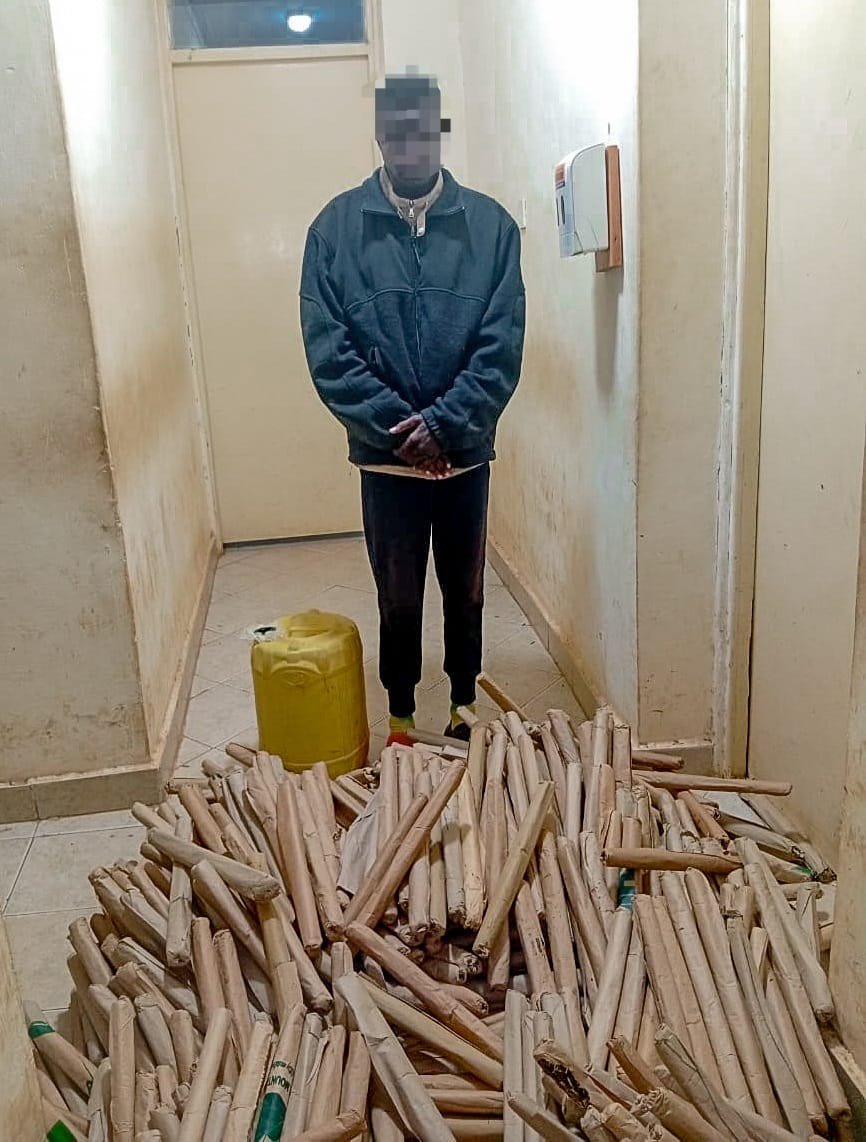
Police reported that the three suspects, aged between 23 and 25, were found in possession of more than 200 large rolls of what authorities believe to be cannabis sativa. The discovery was made during a targeted operation following intelligence gathered by officers investigating suspected drug trafficking activities in the town.

During a subsequent search at the suspectsโ€™ residence, investigators recovered several additional items believed to be connected to illegal operations. Among the items seized were eleven mobile phones, a Dell laptop, two HP laptops, a weighing machine, a laptop charger, a tablet device, and a blue Honda motorbike whose number plates had been removed. Officers also recovered a police smoke jacket believed to have been used to impersonate or mislead authorities.

Police say the recovered items will be preserved as exhibits as investigations continue. The suspects have since been placed in custody and are expected to be arraigned in court once the investigation process is completed.

Authorities emphasized that the arrests highlight the persistent challenge posed by illicit drugs, particularly among young people. Law enforcement agencies warn that drug trafficking continues to undermine the well-being, productivity, and future prospects of many youths in the country.

The National Police Service reiterated its commitment to intensifying operations aimed at curbing drug trafficking and protecting communities from the harmful effects of narcotics. Officials also encouraged members of the public to cooperate with security agencies by reporting suspicious activities that may be linked to drug distribution networks.

US Senate fails to pass bill aimed at limiting Donald Trumpโ€™s military authority over Iran

0

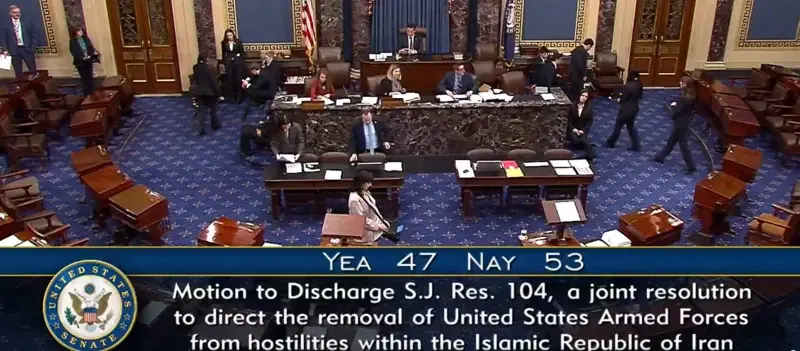
A bill intended to limit the authority of President Donald Trump to order additional military operations in Iran failed to secure enough support in the United States Senate after lawmakers voted against it.

During the vote, 47 senators supported the measure while 53 opposed it, preventing the proposal from advancing. The legislation sought to restrict the presidentโ€™s ability to initiate further military actions against Iran without explicit authorization from Congress.

The vote revealed divisions across party lines. Republican Senator Rand Paul broke ranks with many members of his party and joined Democrats in supporting the bill. Meanwhile, Democratic Senator John Fetterman diverged from most Democrats by siding with Republicans to oppose the legislation.

Although the bill did not pass, the issue remains unresolved. The U.S. Congress, which holds the constitutional authority to formally declare war, is expected to continue deliberations on the matter amid ongoing tensions surrounding potential military action against Iran.

The Senate is scheduled to hold another vote on the same proposal later on Thursday.

Some lawmakers have also indicated they may reconsider their position and support the measure in the future if the military confrontation involving Iran continues beyond the timeframe previously suggested by President Trump, who had indicated that the operation could last only a few weeks.

US Senate fails to pass bill aimed at limiting Donald Trumpโ€™s military authority over Iran

Rwanda embassy in Qatar moves services online as Iran attacks escalate across the Gulf

0

The Embassy of Rwanda in Qatar has announced that it has temporarily shifted its services online due to the current security situation in the country.

In a public notice, the embassy stated that the measure was taken โ€œbecause of the current security conditions,โ€ as tensions escalate across the Gulf following Iranian missile and drone attacks targeting several countries in the region.

Qatar is among the countries affected by the growing conflict, as Iran launches retaliatory strikes in response to ongoing military operations by Israel and the United States. The escalating hostilities have raised concerns among foreign nationals living in the region, including Rwandans.

Some Rwandan citizens residing in countries affected by the attacks have expressed anxiety about the deteriorating security situation and have appealed for various forms of assistance, including possible evacuation back to Rwanda.

Hours after the Rwandan embassy announced the shift to online services, Qatarโ€™s Ministry of Interior issued a nationwide advisory urging residents to remain inside their homes and buildings. Authorities said people should avoid going outside unless absolutely necessary.

Earlier on Thursday, Qatari authorities also confirmed that residents living near the U.S. Embassy in Doha were being temporarily relocated as a precautionary measure.

The Rwandan Embassy in Doha is located roughly 10 kilometers from the U.S. Embassy, though it remains unclear whether its staff have also been moved following the governmentโ€™s security advisory.

Iranโ€™s recent strikes have largely targeted U.S. military facilities and infrastructure linked to American operations across the Middle East, further heightening tensions in the region.

Meanwhile, Qatar Airways, the state-owned airline of Qatar and a major shareholder in Rwandaโ€™s national carrier RwandAir, announced that its flights have been temporarily suspended after Qatar closed its airspace due to the ongoing security threats.

Authorities have advised Rwandans and Burundians living in Middle Eastern countries to remain vigilant and strictly follow safety instructions issued by local governments.

A Rwandan resident in Dubai told BBC that on the fourth day of the conflict, explosions and missiles were frequently visible in the skies. โ€œOften we see missiles passing overhead,โ€ he said, explaining that they were usually heading toward U.S. military installations.

Despite the tensions, some activities continue in Dubai, although many businesses and public spaces have been closed as a precaution.

U.S. President Donald Trump recently suggested that the ongoing conflict with Iran could last between four and five weeks, signaling the possibility of prolonged instability in the region.

Ukraine proposes sending air defense experts to help Gulf states counter Iranian drones and missiles

0

President Volodymyr Zelensky has announced that Ukraine is preparing a plan to deploy military specialists to the Gulf region to assist partner countries in protecting themselves from Iranian drone and missile attacks.

According to Zelensky, the initiative is part of broader diplomatic and security discussions with several Middle Eastern leaders amid rising tensions in the region. He revealed that on Wednesday he held talks with leaders of the United Arab Emirates and Qatar, while on Thursday he spoke with officials from Jordan and Bahrain.

The Ukrainian president said the proposal emerged after consultations with senior government officials and military commanders regarding the ongoing conflict dynamics in the Middle East. During those discussions, he instructed authorities to explore ways Ukraine could support its international partners without undermining the countryโ€™s own defense capabilities as it continues to confront Russiaโ€™s invasion.

Zelensky emphasized that Ukraine has developed significant expertise in countering aerial threats, particularly drones and missile attacks, after more than two years of large-scale war. This experience, he said, could now help allied countries strengthen their defensive systems.

โ€œUkraine can help protect lives and restore security,โ€ Zelensky wrote in a message posted on the social media platform X.

He added that Ukrainian military specialists possess the necessary capabilities to assist and that teams are already coordinating the potential deployment. According to Zelensky, these experts would operate directly in partner countries to help enhance air defense strategies and protect civilian populations.

โ€œOur military has the required expertise. Ukrainian specialists will work on site, and teams have already begun coordinating these efforts,โ€ he said. โ€œWe are ready to help protect lives, safeguard civilians, and support real actions aimed at restoring stability in the region.โ€

The proposal signals Kyivโ€™s intention to expand its security cooperation beyond Europe while leveraging the operational experience it has gained defending its own territory from sustained drone and missile attacks.

Breaking: Iran Rejects U.S. Negotiations and Claims Full Control of Strait of Hormuz

0

Iran has declared it will not enter negotiations with the United States and is prepared to continue the ongoing war, according to a senior adviser to the late Supreme Leader Ali Khamenei. The statement comes as tensions in the Middle East intensify following recent military exchanges and political threats involving Iran, Israel, and their allies.

The adviserโ€™s remarks were delivered on Wednesday as the region remains on edge after the death of Ayatollah Ali Khamenei, an event that has dramatically reshaped the geopolitical landscape of the Middle East. Iranian officials have adopted an increasingly defiant tone, emphasizing that the country will not bow to international pressure or accept diplomatic talks while it believes it is under direct military threat.

Iranโ€™s Islamic Revolutionary Guard Corps (IRGC) also announced that it has taken what it called โ€œtotal controlโ€ of the Strait of Hormuz, one of the worldโ€™s most strategically important waterways for global oil shipments. The narrow passage connects the Persian Gulf to international waters and serves as a critical route through which a significant portion of the worldโ€™s energy supply flows.

The claim of control over the Strait of Hormuz has raised alarm across global markets and among international security analysts. Any disruption to shipping in the strait could have severe consequences for global energy prices and economic stability, as millions of barrels of oil pass through the corridor every day.

Iranian military officials suggested that their presence in the strait is part of a broader defensive strategy, warning that any attempt to challenge their control would be met with a strong military response. The announcement appears to signal Tehranโ€™s readiness to escalate maritime pressure as part of the wider confrontation currently unfolding in the region.

Meanwhile, Israel has issued a stark warning regarding the leadership succession in Iran following Khameneiโ€™s death. Israeli officials reportedly stated that any individual who succeeds the late supreme leader and continues Iranโ€™s hostile policies toward Israel could become a target for assassination.

The warning reflects the growing hostility between the two long-time adversaries, whose shadow conflict has increasingly shifted into open confrontation. Israeli leaders have repeatedly accused Iran of orchestrating attacks through regional proxy groups and of advancing military capabilities that pose a threat to Israelโ€™s security.

The current situation has further heightened fears of a broader regional conflict that could draw in additional global powers. The United States has been closely monitoring developments, particularly in the Strait of Hormuz, where American naval forces have historically maintained a presence to safeguard international shipping lanes.

Diplomatic observers warn that the breakdown of communication channels between Washington and Tehran significantly increases the risk of miscalculation. Without negotiations or back-channel diplomacy, military incidents in the Gulf or elsewhere in the region could rapidly escalate into a wider confrontation.

As the Middle East faces one of its most volatile moments in recent years, the combination of Iranโ€™s refusal to negotiate, the strategic importance of the Strait of Hormuz, and Israelโ€™s aggressive rhetoric toward Iranโ€™s future leadership underscores the fragile and dangerous state of regional security.

Fishermen in Mbita Pull Live Explosives from Lake Victoria Instead of Fish

0

Fishermen in Mbita, a fishing town along the shores of Lake Victoria in Mbita, experienced a terrifying surprise after hauling what they believed to be a huge catch, only to discover they had pulled live explosives from the lake.

The incident occurred during an early morning fishing expedition when the fishermen cast their nets into the waters of Lake Victoria. According to eyewitness accounts, the group initially thought their nets had trapped an unusually heavy load of fish. Excited by what seemed like a profitable catch, they struggled to drag the nets onto their boat.

However, the excitement quickly turned into fear when the fishermen realized the objects entangled in their nets were not fish but several suspicious metallic items resembling explosive devices.

Local residents who rushed to the shoreline reported that the fishermen immediately abandoned the nets and alerted local authorities. Security officers later confirmed that the objects were suspected live explosives, prompting a swift response from bomb disposal experts.

Authorities believe the explosives could be remnants from illegal fishing activities or possibly materials discarded in the lake. In many parts of Lake Victoria, some illegal fishermen have historically used explosives to stun fish, an extremely dangerous and banned practice that not only destroys aquatic ecosystems but also threatens human life.

Officials from local security agencies quickly secured the area and warned residents and fishermen not to approach the devices. Bomb disposal teams were deployed to safely remove the explosives and investigate their origin.

The discovery has sparked concern among communities around Mbita, a region where thousands depend on fishing for their livelihood. Local leaders have urged fishermen to remain vigilant and report any suspicious objects found in the lake.

Environmental and security experts also warned that explosive materials in fishing zones pose a serious risk to both fishermen and the fragile ecosystem of Lake Victoria, one of Africaโ€™s largest freshwater lakes.

Investigations are ongoing to determine how the explosives ended up in the lake and whether they are linked to criminal or illegal fishing networks operating in the region.

For the Mbita fishermen involved, what began as a hopeful morning of fishing quickly turned into a frightening encounter, one that could have easily ended in tragedy had the explosives detonated while still caught in their nets.

Kenya police arrest 22-year-old suspect following drug bust in Homa Bay County

0

A 22-year-old suspect has been arrested in ย ย Oyugis Town, Homa Bay Countyย  , following a successful drug bust conducted by officers from Oyugis Police Station, the National Police Service (NPS) announced on Tuesday.

According to police, the suspect had earlier attempted to evade arrest during an operation targeting illegal drugs and illicit alcohol in the area. In the process of fleeing, he reportedly abandoned a substantial quantity of narcotics and illicit brew, which officers later recovered.

Authorities confirmed that the operation led to the seizure of approximately ย ย 600 rolls of bhang (cannabis)ย  ย and ย ย 20 litres of changโ€™aaย  , a locally brewed illicit alcoholic drink commonly associated with illegal production and distribution networks.

Police officials described the recovery as a significant blow to the illegal narcotics and illicit alcohol trade operating in the region. Law enforcement agencies have intensified efforts in recent months to dismantle criminal networks involved in drug trafficking and the production of unregulated alcohol across several counties.

The suspect was taken into custody and is currently being held at the police station as he awaits ย ย arraignment in courtย  . The recovered drugs and alcohol have been secured as exhibits to support the ongoing legal process.

The National Police Service reiterated its commitment to combating illicit drugs and illegal alcohol production nationwide, noting that such operations are part of broader efforts to safeguard communities from the social and health risks associated with narcotics and unregulated brews. Authorities also encouraged members of the public to cooperate with law enforcement by reporting suspicious activities linked to drug trafficking or illegal brewing operations.

Kenya police arrest 22-year-old suspect following drug bust in Homa Bay County

DR Congo spokesman Patrick Muyaya says U.S. sanctions on Rwanda mark โ€œthe beginning of the endโ€

0

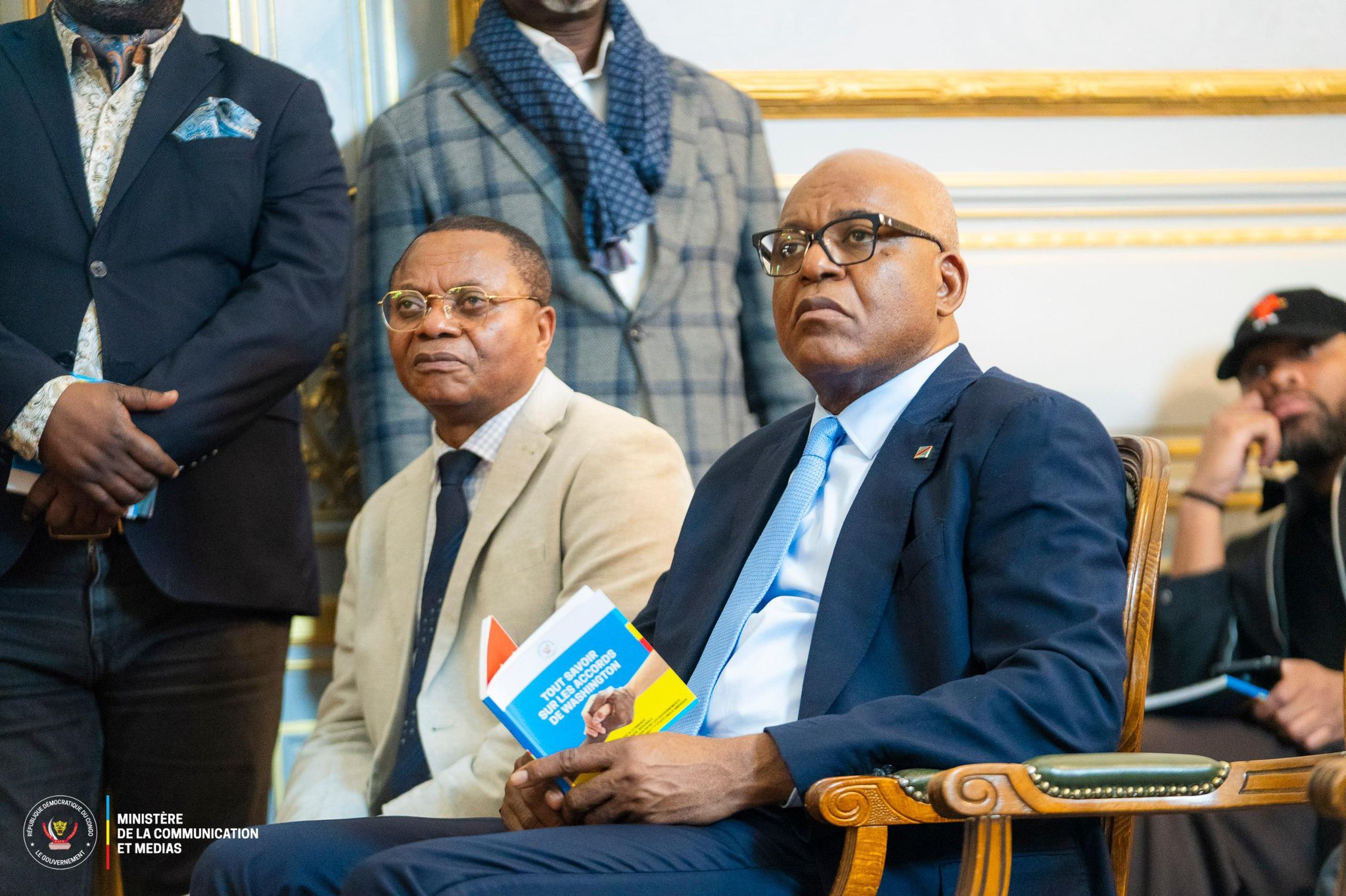
Patrick Muyaya, spokesperson of the government of the Democratic Republic of Congo and Minister of Communication and Media, has said that recent U.S. sanctions targeting individuals linked to Rwandaโ€™s military signal what he described as โ€œthe beginning of the endโ€ of Rwandaโ€™s economic model.

Muyaya, who was re-elected as a National Deputy for the 2023โ€“2028 legislature, made the remarks in a message posted on the social media platform X, where he commented on the growing international pressure surrounding the conflict in eastern Democratic Republic of Congo.

According to him, the American sanctions targeting figures connected to Rwandaโ€™s military establishment could significantly affect Kigaliโ€™s economic system, particularly by limiting access to the global financial system dominated by the U.S. dollar.

โ€œThe American sanctions against the army of the father, Rwanda and its high-ranking officials mark the beginning of the end of its economic model, especially with the restriction of access to the dollar-based financial system,โ€ Muyaya wrote.

He suggested that the measures imposed by Washington should serve as an example for other countries that maintain partnerships with Rwanda.

Muyaya also reiterated Kinshasaโ€™s long-standing accusations that Rwanda has links with the M23 movement operating in eastern Congo. He claimed that what he called the โ€œcriminal affiliationโ€ between Rwanda and M23 has been widely documented and proven, an allegation that Rwanda has repeatedly denied.

The Congolese government spokesman said that with the introduction of sanctions, โ€œthe countdown has now begun.โ€

Beyond the issue of sanctions, Muyaya also spoke about the Congolese governmentโ€™s broader strategy regarding the ongoing conflict in eastern Congo. He said authorities have outlined major strategic military axes and assessed the progress made so far on the battlefield.

He further highlighted the strategic partnership agreement between the Democratic Republic of Congo and the United States, describing it as a forward-looking agreement that Congolese citizens should embrace. According to him, the relevant documents are publicly available.

Muyaya also referenced the Democratic Republic of Congoโ€™s candidacy to lead the Organisation internationale de la Francophonie (OIF), saying the initiative reflects the countryโ€™s ambition to give new momentum to the international Francophone institution.

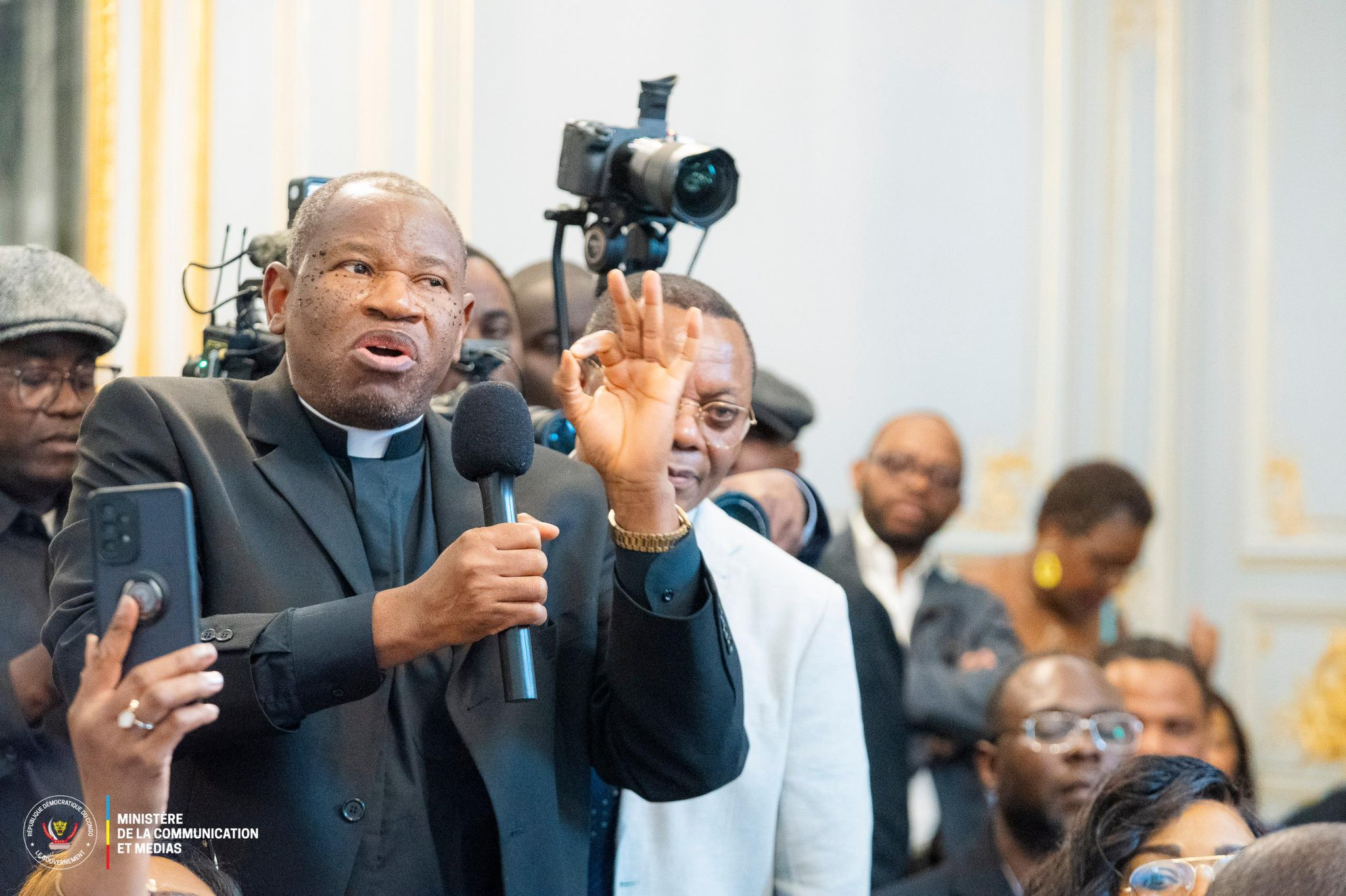
During a meeting at the Congolese embassy in Paris, he called on members of the Congolese diaspora to remain united and mobilized in defense of the countryโ€™s interests, regardless of political affiliations, including through responsible engagement on social media.

Muyaya concluded that under the leadership of President Fรฉlix Tshisekedi, the Democratic Republic of Congo is gradually reclaiming its position internationally and changing the narrative about the country.

His remarks come amid ongoing diplomatic tensions in the Great Lakes region and continued fighting in eastern Congo involving government forces, armed groups, and the M23 movement.