Home Blog Page 22

DJ Confy represents Rwanda at โ€œBring It Home Tuskerโ€ during HSBC Rugby Sevens in Nairobi

0

The Bring It Home Tusker event, held alongside the HSBC SVNS , transformed Nyayo Stadium into a vibrant hub of music, culture, and celebration, bringing together rugby fans and entertainment lovers from across the region.

Organized as part of the HSBC Rugby Sevens experience, the event featured Kenyaโ€™s biggest stars, top DJs, and hype masters, creating an electrifying atmosphere at the popular Tusker Village. The night blended world-class rugby with high-energy performances, reinforcing Nairobiโ€™s status as one of East Africaโ€™s leading entertainment capitals.

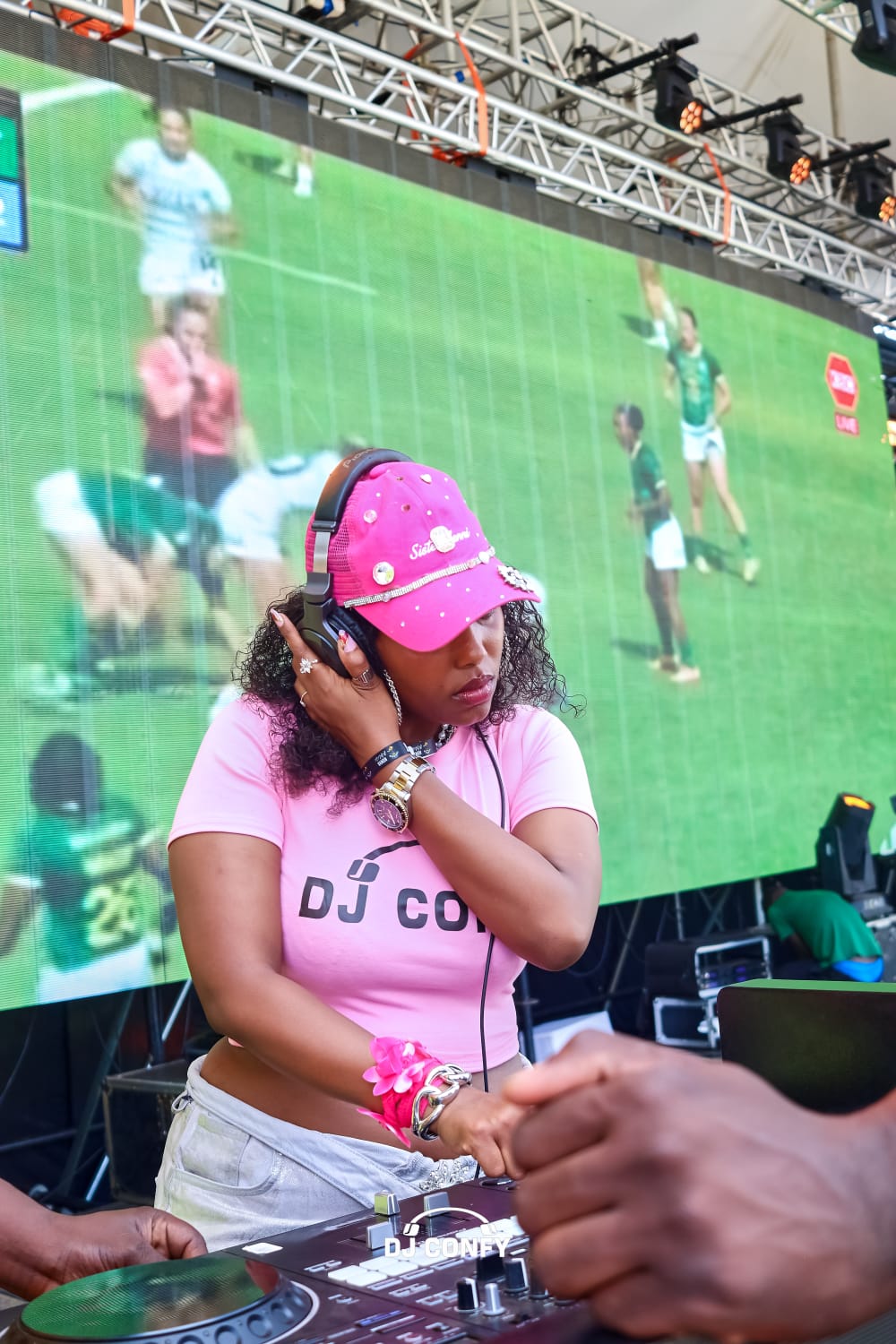
Among the standout acts was ย ย Kanziga Magnifique Confiance , popularly known as ย ย DJ Confy (Angel of Happiness)ย  , who made a powerful statement as the ย ย only DJ representing Rwandaย  ย at this major East African stage. Her presence marked a significant moment for Rwandaโ€™s entertainment industry, showcasing the countryโ€™s growing influence beyond its borders.

DJ Confy delivered a dynamic set that fused Afro vibes, Amapiano, and regional hits, instantly connecting with the crowd and keeping energy levels high throughout her performance. Backed by her P.A, KingDjJoshuu250 , and supported by her manager ย ย Mukamana Kauthar , she demonstrated both artistic confidence and professional organization on one of the regionโ€™s most competitive platforms.

The eventโ€™s lineup reflected the depth of Kenyaโ€™s entertainment scene, featuring celebrated artists and performers such as ย ย Khaligraph Jonesย  ย and ย ย Vijana Barubaru. Renowned DJs including DJ Sir M , DJ Grauchi , DJ Daffy, and DJ Tophaz further elevated the night with diverse sounds and seamless transitions.

Keeping the crowd fully engaged were popular hype masters Hype Ballo and MC Gogoย  , whose interaction with fans ensured nonstop excitement from start to finish.Together, the performers turned Nyayo Stadium into a powerful fusion of sport, music, and urban culture.

DJ Confy was also accompanied by close friends ย ย Iribagiza Clenia and Nina (aka Nina)ย  , highlighting the strong support system behind her journey. Beyond the music, her appearance symbolized representation, resilience, and the growing visibility of Rwandan female talent on major regional stages.

As the curtains closed on the ย ย Bring It Home Tuskerย  ย experience, the event left behind more than memories it reaffirmed the role of entertainment in uniting audiences across borders. For DJ Confy (Angel of Happiness),the Nairobi performance stands as a landmark achievement,signaling a rising trajectory and hinting at even bigger stages across East Africa and beyond.

One of DJ Confyโ€™s dancers brings high-energy movement to the stage during her performance at the Bring It Home Tusker event at Nyayo Stadium, adding visual excitement to the HSBC Rugby Sevens entertainment experience.
Official event poster announcing DJ Confy as part of the entertainment lineup for HSBC Rugby Sevens at Nyayo Stadium.
DJ Confy behind the decks, fully focused as she controls the atmosphere at Tusker Village.
DJ Confy preparing her set ahead of a packed crowd during the HSBC Sevens weekend in Nairobi.
DJ Confy alongside her support team, including P.A KingDjJoshuu250, moments before going live on stage.
DJ Confy interacting with fans and fellow creatives at the Tusker Village entertainment zone.
A close-up moment of DJ Confy mixing live as the crowd responds with excitement.
Supporters proudly displaying DJ Confy banners in a show of appreciation during the event.
DJ Confy and her team outside Nyayo Stadium, marking a successful appearance at one of East Africaโ€™s biggest sports and entertainment events.
Backstage celebrations after DJ Confyโ€™s performance at the Bring It Home Tusker experience.
DJ Confy posing with industry colleagues following her set during the HSBC Rugby Sevens festivities.
Fans capturing memories with DJ Confy after her performance at Tusker Village.
DJ Confy pictured with close supporters, closing a memorable night at the Bring It Home Tusker event.
DJ Confy moments after stepping off stage, reflecting on a landmark performance in Nairobi.

Photo: DJ Confy

US-brokered Russia-Ukraine peace talks end without breakthrough as Donbas dispute stalls progress

0

Peace talks between Russia and Ukraine, mediated by the United States, have ended without a breakthrough. The negotiations began on Tuesday in Geneva, Switzerland, and continued late into the night. However, Wednesdayโ€™s session lasted only two hours, highlighting the persistent difficulties facing both sides.

Although U.S. envoy Steve Witkoff had earlier expressed cautious optimism about the discussions, both the head of the Russian delegation and Ukrainian President Volodymyr Zelensky described the talks as โ€œdifficult.โ€

After the formal session concluded, Russiaโ€™s lead negotiator Vladimir Medinsky returned to the venue for a closed-door meeting with his Ukrainian counterpart that lasted approximately an hour and a half. The details of their private discussion have not been disclosed.

Late Wednesday, White House Press Secretary Karoline Leavitt stated that โ€œmeaningful progressโ€ had been made and that both sides had agreed to continue working together toward a peace agreement.

Despite these remarks, a major obstacle remains unresolved: the territorial dispute at the heart of the conflict. Russia continues to insist on full control of the Donbas region in eastern Ukraineย  comprising the Donetsk and Luhansk regions a demand Kyiv firmly rejects.

Shortly before the talks were officially declared over, President Zelensky accused Russia of โ€œdeliberately delaying negotiations that should have reached their final stage.โ€

U.S. President Donald Trump, who has taken a leading role in efforts to broker an end to the war, has increasingly signaled frustration over the lack of tangible progress between the two sides.

As the fourth anniversary of Russiaโ€™s invasion of Ukraine approaches next Tuesday, significant gaps remain between Moscowโ€™s demands and Kyivโ€™s vision of what would constitute a โ€œjust and lasting peace.โ€

Jesse Jackson, trailblazing civil rights leader, passes away at 84

0

The Rev. Jesse Jackson, one of the most influential civil rights leaders of the late 20th century and a political trailblazer who expanded the boundaries of American democracy, has died at the age of 84. His passing marks the end of an era shaped by moral courage, grassroots activism, and an unrelenting call for equality.

For more than five decades, Jackson stood at the intersection of faith, politics, and social justice. With his booming voice, rhythmic speeches, and signature call to โ€œKeep hope alive,โ€ he inspired millions across racial, economic, and national lines. To supporters, he was a champion of the poor and marginalized; to critics, a polarizing figure who nonetheless forced the nation to confront uncomfortable truths about race and power.

Born on October 8, 1941, in Greenville, South Carolina, Jackson came of age in the segregated American South. Raised by his mother, Helen Burns, he experienced both hardship and the rigid social boundaries imposed by Jim Crow laws. Yet even as a young man, he showed a fierce determination to rise above those limitations.

Jackson excelled academically and athletically, eventually attending college on a football scholarship. But it was the moral urgency of the civil rights movement that would shape his destiny. In the early 1960s, he became involved in student protests and organizing efforts that challenged segregation.

His life changed dramatically when he joined the Southern Christian Leadership Conference, the organization led by Martin Luther King Jr. Under Kingโ€™s mentorship, Jackson became a prominent young activist, participating in marches, boycotts, and voter-registration campaigns throughout the South.

He was in Memphis in April 1968 when King was assassinated during the Assassination of Martin Luther King Jr. The tragedy shook the movement, and Jackson personally, but it also strengthened his resolve to carry forward Kingโ€™s message of justice and nonviolence.

After Kingโ€™s death, Jackson emerged as a leading voice for economic equality. In 1971, he founded Operation PUSH (People United to Save Humanity), an organization focused on improving opportunities for African Americans through corporate accountability, job creation, and education initiatives.

Through boycotts, negotiations, and public campaigns, Operation PUSH pressured major companies to hire more Black employees, invest in minority communities, and expand access to economic opportunities. Jackson believed that civil rights could not be complete without economic empowerment.

In the 1980s, he expanded that vision into the Rainbow Coalition, a broad alliance that brought together African Americans, Latinos, Native Americans, labour unions, farmers, and low-income communities. The coalition represented Jacksonโ€™s belief that the struggle for justice must unite people across race, class, and geography.

Jacksonโ€™s influence reached a new level when he entered presidential politics. In 1984, he ran for the Democratic nomination, becoming one of the first African American candidates to mount a serious national campaign.

Though he did not win the nomination, his campaign energized millions of voters, especially young people and minorities who had long felt excluded from national politics. He registered new voters, expanded the partyโ€™s base, and forced key issues, such as poverty, voting rights, and economic fairness, onto the national agenda.

In 1988, Jackson ran again and achieved an even stronger showing. He won several state primaries and caucuses, finishing second in the race for the Democratic nomination. His campaign demonstrated that a multiracial, working-class coalition could be a powerful political force.

Many political observers credit Jacksonโ€™s campaigns with paving the way for future leaders, including the eventual election of Barack Obama as the first Black president of the United States in 2008.

Jacksonโ€™s influence extended far beyond American borders. He became known for international diplomatic and humanitarian missions, often acting as an unofficial envoy in tense situations.

Over the years, he negotiated the release of prisoners and hostages, met with world leaders, and spoke out against injustice across the globe, from apartheid-era South Africa to conflict zones in the Middle East and Latin America. His approach combined moral persuasion with political pragmatism.

To supporters, these missions showed the power of faith-based diplomacy. To others, they reflected Jacksonโ€™s unique ability to move between grassroots activism and global politics.

Despite his political achievements, Jackson always described himself first as a minister. His speeches blended biblical imagery, poetic cadence, and sharp political insight. He had a gift for turning complex issues into memorable slogans that resonated with ordinary people.

โ€œKeep hope aliveโ€ became more than a campaign phrase, it became a symbol of resilience for communities facing poverty, discrimination, and political exclusion.

Even as he faced controversies and setbacks, Jackson remained a central figure in American public life. In 2017, he announced that he had been diagnosed with Parkinsonโ€™s disease. Though his health declined, he continued to appear at major events and support causes tied to civil rights and social justice.

Jesse Jacksonโ€™s life cannot be measured solely by elections won or offices held. His true impact lies in the doors he opened and the voices he amplified. He helped transform the Democratic Party, expanded the electorate, and proved that a candidate from outside traditional power structures could compete on the national stage.

He encouraged millions to believe that their voices mattered, regardless of race, income, or background. He reshaped the language of American politics, pushing it toward greater inclusion and moral accountability.

As tributes arrive from across the United States and around the world, many are remembering Jackson as a โ€œpathfinderโ€, a leader who walked difficult roads first, so that others might follow more easily.

In the end, his lifeโ€™s message remained simple yet powerful: hope is not passive; it is something people must build, defend, and carry forward. And for generations inspired by his voice, that hope will remain part of his enduring legacy.

Manchester United target Mac Allister as City, Arsenal and Real Madrid plan major summer moves

0

The summer transfer window is already generating intense speculation across Europe, with several top clubs monitoring high-profile targets ahead of potential moves.

Manchester United are reportedly considering a move for Argentine midfielder Alexis Mac Allister, 27, from Liverpool. The midfielder is said to be edging closer to a possible departure from Anfield this summer, according to The Star.

Meanwhile, Manchester City are keen on signing 23-year-old goalkeeper James Trafford. However, City could face competition from Aston Villa and Newcastle United, both of whom are also interested in securing the young shot-stopperโ€™s services, as reported by Teamtalk.

In another development, Senegal international Nicolas Jackson, 24, is expected to return to Chelsea this summer after failing to meet expectations during his time at Bayern Munich, according to The Times.

Arsenal have reportedly been informed that Spanish forward Nico Williams, 23, could leave Athletic Bilbao during the upcoming summer transfer window. Teamtalk suggests the Gunners are closely monitoring the situation.

Brighton are also active in the market and are looking to sign 19-year-old winger Said El Mala from German side Cologne, according to Sky Germany.

In Spain, Real Madrid are expected to complete the signing of German defender Nico Schlotterbeck, 26, from Borussia Dortmund this summer, despite strong interest from Barcelona. The report comes from Spanish outlet Fichajes.

Finally, Manchester United continue to track Middlesbroughโ€™s 23-year-old English midfielder Hayden Hackney. However, the Red Devils face competition from Leeds United, Tottenham Hotspur, and Everton, all of whom are eager to secure the talented midfielder, according to Teamtalk.

With Europeโ€™s top clubs positioning themselves early, the upcoming transfer window promises to be one of the most competitive in recent years.

Manchester United target Mac Allister as City, Arsenal and Real Madrid plan major summer moves

After failed mediation Angola tries again in DR Congo will it work this time?

0

Nearly a year after his mediation effort stalled, Angolaโ€™s President Joรฃo Lourenรงo is once again stepping into the turbulent Congolese political arena. His renewed engagement in the Democratic Republic of Congo (DRC) raises a pressing question: can he now achieve what previously proved elusive, an inclusive political dialogue capable of easing tensions in one of Africaโ€™s most volatile states?

According to diplomatic sources in Luanda and Kinshasa, Lourenรงo may soon receive representatives of the Congolese opposition, signalling a shift in strategy. Unlike his earlier attempt, which focused heavily on inter-state security dynamics, this initiative appears more politically nuanced, potentially targeting internal fractures within the DRC itself.

In 2025, Angola positioned itself as a central broker in efforts to stabilize eastern Congo and defuse tensions linked to armed groups and regional rivalries. However, the initiative faltered amid mistrust between stakeholders, competing regional agendas, and Kinshasaโ€™s reluctance to broaden negotiations beyond security concerns.

President Fรฉlix Tshisekedi maintained a firm stance on sovereignty and electoral legitimacy, particularly after a contested political cycle that left opposition figures alleging irregularities and exclusion. Angolaโ€™s diplomatic outreach, while symbolically strong, lacked the leverage to bridge these internal divides. Now, Lourenรงo seems ready to recalibrate.

Angolaโ€™s renewed involvement is not purely altruistic. Luanda has significant strategic interests in Congoโ€™s stability:

Regional Security: Instability in eastern Congo reverberates across Southern Africa, affecting trade corridors and cross-border security.

Economic Stakes: Angola and the DRC share energy, infrastructure, and trade interests, particularly in oil and mining.

Diplomatic Prestige: As a regional heavyweight and influential voice within the African Union and SADC, Angolaโ€™s credibility as a mediator is on the line.

By potentially hosting opposition leaders, Lourenรงo is signalling that any durable solution must address internal political grievances, not just armed conflict.

The possibility of Angolan talks with Congolese opposition figures introduces a delicate dynamic. For Kinshasa, external engagement with opposition leaders can be perceived as interference. For the opposition, however, it represents an opportunity to internationalize their demands and gain regional backing.

This move could either:

  1. Create leverage for dialogue between the government and its critics, or
  2. Deepen suspicion, reinforcing narratives of foreign meddling.

The outcome will depend largely on transparency and coordination with Congolese authorities.

History suggests that dialogue in the DRC cannot simply be imposed from outside. Previous political crises have shown that negotiations succeed only when domestic actors see mutual benefit in compromise.

Angolaโ€™s challenge is therefore twofold:

  • Convince Kinshasa that dialogue strengthens rather than weakens state authority.
  • Assure opposition leaders that talks will not be symbolic, but substantive.

Moreover, regional geopolitics complicate the picture. The DRC crisis intersects with broader tensions involving neighbouring states, mineral competition, and shifting alliances. Angola must navigate these carefully to avoid appearing aligned with any single camp.

For Joรฃo Lourenรงo, this renewed mediation effort is a test of leadership beyond Angolaโ€™s borders. Success would elevate his stature as a statesman capable of shaping Central African stability. Failure could further entrench cynicism toward regional diplomacy.

As Luanda prepares for potential meetings with Congolese opposition representatives, the stakes are clear: the initiative must move beyond rhetoric and produce tangible pathways toward inclusive governance and reduced tensions.

Whether Angola can transform renewed engagement into meaningful political dialogue remains uncertain. But one thing is evident, the Congolese question is far from settled, and regional actors are unwilling to remain spectators.

Afrovera launches โ€œStar Next Doorโ€, a new platform to discover and grow hidden talents

0

Afrovera Media Agency has officially launched Star Next Door, a new talent discovery platform aimed at identifying, nurturing and promoting emerging talents in music, comedy and film/acting across East and Central Africa.

Branded under the slogan โ€œThe stage is yoursโ€, Star Next Door positions itself not merely as a competition, but as a long-term creative ecosystem designed to transform raw talent into professional careers.

A platform born from a real gap

Across the region, thousands of young people possess undeniable talent but lack access to professional production, management and media exposure. According to Afrovera Media Agency, Star Next Door was created to respond to this gap by offering a structured, credible and accessible platform where talent is not only showcased but also supported beyond the competition.

โ€œWe are not just crowning winners. We are building careers,โ€ Afrovera said in a statement announcing the launch.

Three creative categories

The Star Next Door โ€“ Season 1 competition is open to participants aged 16 to 35 and features three main categories:

  • ย Music (Singing): Open to solo artists across all genres, including Afrobeat, Gospel, R&B and traditional music
  • ย Comedy: Stand-up comedy and short skits
  • ย Film / Acting: Monologues or short acting scenes

Auditions are conducted online, allowing participants from Kenya, Rwanda, DR Congo and beyond to apply without geographical limitations.

Opportunities beyond trophies

Unlike traditional competitions that focus on cash prizes, Star Next Door emphasizes professional growth and sustainability.

The music winner will receive audio production, a professionally produced music video by Afrovera, and be signed under Afrovera Management.Top finalists in comedy will join the Afrovera Comedy Group, producing regular content with monetization opportunities.

Selected talents in film and acting will be integrated into Afroveraโ€™s creative cast, participating in short films and digital productions.

This approach ensures that talent development continues long after the competition ends.

Digital-first and audience-driven

The competition is designed as a digital-first experience, with auditions, highlights, interviews and performances published on afrovera.com and Afroveraโ€™s social media platforms. Public engagement through online voting will play a role alongside professional jury evaluation.

A long-term vision

Star Next Door is expected to run in seasonal editions, with future plans including physical finales, regional tours and expanded partnerships.

โ€œSeason One is our foundation. What matters most is impact, credibility and growth,โ€ Afrovera stated.

How to apply

Interested participants can apply through two simple options:

  • ย ๐ŸŒ Online: Submit audition details via http://www.afrovera.com
  • ย ๐Ÿ“ฒ WhatsApp: Send your audition video and details to +254 700 852479

Application guidelines and deadlines will be communicated on Afroveraโ€™s official platforms.

Afrovera launches โ€œStar Next Doorโ€, a new platform to discover and grow hidden talents

Amakuru akomeye kuri RDC: intambara yihishe inyuma yโ€™ubutunzi bukomeye

0

Repubulika Iharanira Demokarasi ya Kongo (RDC) ni kimwe mu bihugu bifite ubutunzi bukomeye muri Afurika, byโ€™umwihariko mu bijyanye nโ€™amabuye yโ€™agaciro nka coltan, cobalt, na diamant. Ariko nubwo iyi mitungo kamere ihari, igihugu gikomeje kugaragaramo ubukene bukabije, aho benshi mu baturage bacyo babaho mu buzima bwo mu bukene, nta mahirwe ahagije yo gutera imbere. Ibi byose biterwa ahanini nโ€™imicungire mibi yโ€™ubutunzi bwโ€™igihugu, intambara zidahagarara, nโ€™ukutumva ko abaturage bagomba gushyirwa imbere.

Hashize imyaka myinshi RDC ihanganye nโ€™intambara zikomeye zishingiye ku moko nโ€™uturere, izindi zituruka ku bikorwa byo kwamburwa ubutunzi bwโ€™igihugu. Izi ntambara zidindiza iterambere ry’igihugu, zikanatuma abaturageย  bakomeza kubaho nabiย  , mu gihe amabuye yโ€™agaciro akomeza gusahurwa nโ€™abanyamahanga nโ€™ibihugu bibyegereye.

Kudaha uburenganzira abenegihugu byโ€™umwihariko ku baturage bavuga Ikinyarwanda nabyo biracyari ingorabahizi. Abaturage bakomeje gukumirwa mu gihugu cyabo, bituma habaho kutumvikana no kutizerana hagati yโ€™abaturage nโ€™ubuyobozi. Abasesenguzi bibaza niba kwinangira kwemera aba baturage atari byo bidindiza iterambere rya RDC, kandi niba kuba igihugu kitita kuri aba baturage bitari bimwe mu byongera intambara nโ€™imvururu.

Byongeye, hakomeje kuvugwa impungenge ko inyuma yiyi intambara ,hihishe inyungu zโ€™amakoperative cyangwa ibihugu bihanganye ku butunzi bwโ€™igihugu. Ibihugu bituranye nโ€™u RDC biracyakomeza gusahura amabuye yโ€™agaciro mu gihe leta idashyizeho ingamba zo kurinda abaturage nโ€™umutungo kamere. Iki kibazo gishyira RDC mu mwanya mubi, aho igihugu gifite ubutunzi bwinshi ariko kidashobora kubukoresha mu iterambere ryโ€™abaturage bacyo.

Umwanzuro wโ€™ingenzi mu guca burundu ibi bibazo ni ugushyira abaturage imbere, gushyiraho politiki zikumira intambara, no kurengera ubutunzi bwโ€™igihugu. Ibyo bizasabaย  ubuyobozi kwemera no gushyigikira uburenganzira bwโ€™abaturage bose, harimo nโ€™abavuga ururimi rwโ€™Ikinyarwanda, kugira ngo igihugu kibone ubumwe nโ€™iterambere rirambye.

RDC iracyafite amahirwe yo kwiyubaka, ariko kuberako ititeguye gushyira ย iterambere ryโ€™igihugu imbere , ndetse ishyireho politiki ihamye yo guhagarika intambara, kurengera abaturage, no gucunga neza umutungo wโ€™igihugu , nitabikosora DRC izakomeza kudatera imbere.

Navalny murder mystery: toxic dart frog claimed his life

0

European officials recently claimed that Alexei Navalny died after exposure to a toxin associated with poison dart frogs, a potent natural neurotoxin. Analysts argue that the timing of the announcement was deliberately calculated to maximize its strategic impact. The exotic nature of the toxin immediately draws public attention, reinforcing the narrative that Navalnyโ€™s death was politically motivated while keeping the Kremlin on the defensive.

By releasing the claim at a moment of heightened tension with Moscow over the war in Ukraine, European governments strengthened moral grounds for sanctions, maintained EU unity on Russia policy, and positioned themselves as defenders of human rights and democracy. The announcement coincided with key EU and NATO meetings on sanctions, defense support for Ukraine, and intelligence coordination, ensuring that the Navalny narrative shaped policy discussions at a critical moment.

Exotic toxins such as those produced by poison dart frogs also generate widespread media attention far beyond ordinary toxicology reports. The โ€œpoison dart frogโ€ headline captures audience interest instantly and spreads quickly across social and traditional media, shaping public perception and creating pressure that supports government policy decisions. Analysts say the timing ensured maximum narrative impact, allowing Europe to control the story.

The exotic toxin claim also sends a clear psychological signal to Moscow, showing that European intelligence monitors unusual and sensitive activities. It implies that targeting political dissidents carries heightened international risk and increases Moscowโ€™s reputational and political pressures both domestically and abroad. Early public disclosure gives European governments leverage in pushing for access to forensic samples, setting agendas for independent investigations, and controlling the narrative if Russian authorities remain opaque.

Navalnyโ€™s death framed through this narrative affects multiple layers of geopolitics. For Europe, it justifies sanctions, strengthens NATO cohesion, and reinforces moral authority. For Moscow, it intensifies scrutiny and reputational risk. For a global audience, it highlights the extreme risks faced by political dissidents in authoritarian regimes. Even unverified claims can reshape diplomatic reality if timed strategically.

The poison dart frog announcement demonstrates how timing, narrative, and strategic messaging converge in geopolitics. Europe effectively turned Navalnyโ€™s death into a tool to shape public perception, apply diplomatic pressure, send psychological signals to Russia, and influence policy decisions at a critical moment. Navalnyโ€™s death, framed as exotic poisoning, has become a political instrument in Europeโ€™s ongoing confrontation with Russia, showing that timing can be as powerful as evidence in modern international strategy.

Zuchu on Diamondโ€™s $8,000 designer bag: I would have asked for the cash instead

0

Tanzanian music star Zuchu has set social media abuzz after revealing that while she appreciated an expensive designer handbag gifted to her by her partner, Diamond Platnumz, she would have preferred receiving the money instead

The singer made the candid remarks during the GaraBallantines event held at Milimani City on Saturday, February 14, 2026,an evening that brought together some of Tanzaniaโ€™s biggest entertainment figures for a night of music, glamour, and high-profile appearances.

According to Zuchu, the handbag reportedly cost 21 million Tanzanian shillings (approximately $8,000 USD, or over 11 million Rwandan francs). While acknowledging the gesture as romantic and thoughtful, she admitted that financially, the cash equivalent would have been more useful to her at the time.

โ€œHonestly, if I had known Diamond was going to spend that amount on a handbag for me, I would have asked him to give me the money instead. Thatโ€™s what I needed more at that moment,โ€ she said.

Her statement quickly ignited debate online, with fans divided over whether luxury gifts symbolize deeper affection, or whether financial empowerment carries greater long-term value.

Zuchu was careful not to dismiss the emotional significance of the gift. She emphasized that such gestures still hold sentimental value, especially when given as expressions of love and care. However, her comments subtly highlighted a broader conversation about financial priorities in modern relationships.

In an era where public displays of wealth often dominate celebrity culture, Zuchuโ€™s honesty introduced a more pragmatic perspective: that sometimes practical support outweighs symbolic extravagance.

Despite the viral remarks, the couple appeared united during the event. Diamond Platnumz invited Zuchu on stage, and the two shared a dance in front of cheering fans, an image that quickly circulated across social platforms.

The evening was attended by several high-profile personalities in Tanzaniaโ€™s entertainment industry, including singer Ben Pol, alongside other celebrities who turned heads with striking fashion statements.

Entertainment analysts suggest Zuchuโ€™s remarks may reflect a shifting mind set among younger audiences, where financial independence and strategic investment are increasingly valued alongside romance.

Whether viewed as bold honesty or playful commentary, one thing is clear: whenever Zuchu and Diamond Platnumz make headlines, the conversation extends far beyond the stage.

US suspends $1.6 billion health deal with Kenya amid court battle over data privacy and constitutional oversight

0

The United States has temporarily suspended a $1.6 billion (KSh207 billion) health cooperation framework with Kenya after the High Court halted its implementation, citing constitutional and data protection concerns.

The agreement, signed on December 4, 2025, by U.S. Secretary of State Marco Rubio and Kenyaโ€™s Prime Cabinet Secretary Musalia Mudavadi, was designed to deepen bilateral collaboration in public health, including disease prevention, research, and system strengthening.

However, what was framed as a strategic expansion of U.S. โ€“Kenya health cooperation has quickly evolved into a constitutional and legal contest with potentially far-reaching implications.

ย Legal challenge and judicial intervention

The deal was challenged by the Consumers Federation of Kenya (COFEK) alongside Busia Senator Okiya Omtatah, who argued that the framework permitted the transfer of sensitive health data to U.S. entities without adequate safeguards.

The petitioners further contended that the executive branch bypassed mandatory parliamentary oversight, thereby undermining constitutional provisions governing international agreements.

In December 2025, High Court Justices Bahati Mwamuye and Chacha Mwita issued conservatory orders suspending implementation of the agreement. In February 2026, the court declined to lift the suspension, maintaining the freeze pending full hearing and determination of the case.

The ruling effectively places the future of the multibillion-shilling partnership in the hands of the judiciary.

US response and continuity of existing programmes

The United States Embassy in Nairobi confirmed that the framework would be reviewed and potentially restructured once the court renders its final judgment.

Susan Burns, the Embassyโ€™s Chargรฉ dโ€™Affaires, assured stakeholders that existing health interventions would continue uninterrupted. Ongoing support for HIV/AIDS, malaria, and tuberculosis programmes remains in place through established channels, including the U.S. Centers for Disease Control and Prevention (CDC) and the embassyโ€™s foreign assistance office.

The reassurance aims to prevent panic within Kenyaโ€™s public health ecosystem, which relies heavily on external funding for disease control initiatives.

ย Risk of a funding shortfall

Researchers from the University of Nairobiโ€™s Centre for Epidemiological Modelling and Analysis (CEMA) have warned that a prolonged suspension could create a funding gap estimated at KSh71 billion.

Such a shortfall, according to their analysis, could disrupt the supply chain of essential medicines and weaken service delivery, particularly in disease prevention and treatment programmes serving vulnerable populations.

The concern is not merely financial โ€” it is systemic. Kenyaโ€™s health architecture is deeply intertwined with donor-funded programmes, making any prolonged uncertainty potentially destabilizing.

Beyond health: a test of governance and sovereignty

At its core, the dispute transcends healthcare financing. It raises fundamental questions about data sovereignty, executive authority in foreign agreements, and the constitutional requirement for parliamentary oversight.

The High Courtโ€™s final ruling will therefore shape more than a bilateral health partnership. It could establish a precedent for how Kenya navigates international agreements involving sensitive public data and strategic sectors.

For now, both governments are in a holding pattern โ€” awaiting judicial clarity. Meanwhile, Kenyaโ€™s health sector remains in a state of cautious anticipation, balancing the promise of expanded cooperation against the constitutional guardrails designed to protect national interests.

Afrovera analysis: The case underscores a growing tension across Africa between international development partnerships and domestic legal accountability โ€” a dynamic that will likely define the next phase of global health diplomacy on the continent.