

Home Blog Page 25

No forgiveness without accountability: U.S. Senator slams Uganda General, signals sanctions

0

U.S. Senator Jim Risch, the powerful chairman of the Senate Foreign Relations Committee, has dismissed a public apology issued by Ugandan General Muhoozi Kainerugaba, describing it as hollow and inadequate, and warning that Uganda could face tougher U.S. sanctions if current trends continue.

The rejection marks a significant escalation in Washingtonโ€™s response to Ugandaโ€™s political and human rights trajectory. Senator Risch made it clear that symbolic apologies cannot substitute for accountability, particularly when senior military figures are repeatedly linked to intimidation, inflammatory rhetoric, and actions that undermine democratic institutions.

Muhoozi Kainerugaba, the son of long-serving President Yoweri Museveni and a central figure in Ugandaโ€™s military establishment, issued the apology following international backlash over a series of controversial statements and incidents that alarmed foreign governments and human rights organizations. While Ugandan authorities attempted to portray the apology as a gesture of de-escalation, U.S. lawmakers appear unconvinced.

According to Senator Risch, the issue extends far beyond one individual or a single apology. He has pointed to what he describes as a pattern of behavior by Ugandaโ€™s security leadership, marked by repression of political opposition, restrictions on free expression, and the use of state power to silence dissent.

โ€œThis is not about words,โ€ Risch has argued in past statements on Uganda. โ€œIt is about actions and consequences.โ€ His latest stance suggests that patience within the U.S. Congress is wearing thin.

Human rights groups have documented repeated arrests of opposition figures, crackdowns on protests, and allegations of abuse by security forces. These reports have fueled calls in Washington for targeted sanctions, including travel bans and asset freezes, against individuals accused of orchestrating or enabling abuses.

Senator Risch has now openly supported such measures, signaling a shift from diplomatic caution to punitive action. If enacted, sanctions could also affect military cooperation and security assistance, areas where Uganda has long relied on U.S. support, particularly in regional counterterrorism efforts.

For decades, Uganda has been viewed as a strategic U.S. partner in East Africa. However, analysts say the relationship is increasingly strained as concerns grow over democratic backsliding and the apparent grooming of Muhoozi Kainarugaba for future national leadership, a development critics see as entrenching dynastic rule.

The senatorโ€™s response sends a clear message to Kampala: international tolerance for apologies without reform is fading. Whether Ugandaโ€™s leadership will respond with concrete changes, or brace for heightened diplomatic and economic pressure, remains an open question.

What is increasingly evident, however, is that Ugandaโ€™s standing with key international partners is at risk, and that Washington may be preparing to translate warnings into action.
Melania Trump returns to power: from First Lady to global influence and controversy

0

Melania Trump, the wife of former and newly re-elected U.S. President Donald Trump, has emerged once again as a prominent global figure, earning attention for her renewed public role and social initiatives. A mother and former First Lady, Melania is increasingly being viewed as a modern role model due to her work supporting children and young women.

Through her initiative โ€œBe Best,โ€ Melania Trump has focused on promoting childrenโ€™s well-being, combating drug abuse, and addressing online abuse and cyberbullying. The program aims to encourage healthy lifestyles and responsible digital behavior among young people. Her advocacy has drawn international recognition, with influential women around the world reportedly seeking her support and collaboration.

Long before entering the White House, Melania Trump had already built a career in fashion and design. From a young age, she worked in modeling and developed a strong interest in art and beauty. Even after marrying Donald Trump, she continued pursuing her creative passions, designing jewelry, clothing, hairstyles, and engaging in artistic work centered on womenโ€™s fashion and aesthetics.

Her influence grew significantly in 2016 when Donald Trump was elected President of the United States for the first time. As First Lady, Melania Trump assumed a leading role in the Be Best initiative, gaining a stronger public voice and international visibility. However, following Trumpโ€™s defeat in the 2020 presidential election, her public presence diminished, and her political influence noticeably declined.

Undeterred, Melania Trump resurfaced in 2024 with renewed determination. She released a memoir titled โ€œMelania,โ€ chronicling her life journey, personal struggles, and experiences in the White House. Later that year, Donald Trump regained the presidency after winning the election, restoring Melania Trump to the role of First Lady and returning her to the center of global attention.

With her renewed position, Melania has expanded her ambitions. She recently announced the release of a film titled โ€œMelania,โ€ which has generated widespread anticipation and debate. As the film prepares for its release, questions have emerged about whether the world is ready to embrace a cinematic project produced by a woman whose life and influence remain closely tied to global politics.

Critics argue that the film may serve as a strategic tool for Donald Trump to maintain political relevance and influence. While such claims remain speculative, reactions have varied across different countries. Notably, South Africa has taken a firm stance, officially banning the screening of the film in its cinemas. Authorities cited ongoing political tensions and broader concerns surrounding the Trump administrationโ€™s global impact as reasons for the decision.

As debate continues, Melania Trump remains a complex and influential figure, no longer seen solely as the presidentโ€™s wife, but as a woman determined to shape her own legacy through advocacy, creativity, and public engagement.

Kenya: massive fraud scandal rocks national health insurance system

0

Kenyaโ€™s health ministry has uncovered widespread fraud in the countryโ€™s new national health insurance system, the Social Health Authority (SHA), with authorities estimating losses of more than โ‚ฌ71 million.

The funds were allegedly stolen, misused or obtained through fraudulent reimbursement claims submitted by hospitals and clinics nationwide, the ministry said.

The SHA was launched to replace the former National Hospital Insurance Fund (NHIF) as part of reforms aimed at expanding healthcare coverage and improving access to services.

However, within months of its rollout, the scheme has been hit by a credibility crisis after investigations linked hundreds of healthcare facilities to false claims.

Officials said probes uncovered fictitious medical procedures, inflated billing and the registration of โ€œghost patientsโ€. Artificial intelligence systems flagged abnormal patterns, including one insured person listed with 381 dependants in Kwale County.

As a result, more than 1,100 health facilities have been suspended or shut down, while criminal investigations are ongoing. Health Minister Aden Duale said enhanced audits had blocked irregular claims worth billions of shillings and warned that perpetrators would face prosecution.

In parliament, Nairobi legislator Esther Passaris called for greater transparency, saying the lost funds could have been used to improve hospital infrastructure, supply medicines and support healthcare workers.

The government said the Taifa Care programme, a central pillar of its universal health coverage policy, would continue, with tighter controls introduced to restore public confidence.


Deaths of three young recruits expose growing concerns over KDF training practices

0

The Kenya Defence Forces (KDF) has been thrown into mourning following the death of three military recruits during a routine training exercise at the Defence Forces Recruits Training School (DFRTS) in Eldoret, Uasin Gishu County. The incident, which occurred on 29 January 2026, has sparked national concern over safety conditions within military training institutions.

According to an official statement released by the KDF, the recruits reportedly developed sudden medical complications while undertaking a scheduled endurance exercise. Military medical personnel stationed at the facility responded immediately, administering first aid before the affected recruits were rushed to Eldoret Regional Hospital for advanced medical care. Despite these efforts, all three were pronounced dead after arrival.

The military confirmed that the families of the deceased recruits have been formally notified and are receiving support from the Defence Forces. The KDF expressed deep condolences to the families, fellow recruits, and colleagues, describing the loss as tragic and deeply painful to the institution.

In response to the incident, the KDF has launched a comprehensive investigation in line with established military procedures. The inquiry aims to establish the exact circumstances surrounding the deaths and determine whether existing safety protocols were adequate and properly followed. The findings of the investigation are expected to guide future decisions on training standards, medical preparedness, and overall welfare of recruits.

The deaths have renewed public debate about the intensity of military training programs and the preparedness of training facilities to handle medical emergencies, especially during physically demanding exercises. While military training is widely understood to be rigorous by nature, questions are being raised about whether sufficient safeguards are in place to prevent avoidable loss of life.

The Kenya Defence Forces reiterated its commitment to maintaining the highest standards of professionalism, safety, and care for all its personnel, emphasizing that the welfare of recruits remains a priority even as they undergo demanding preparation for national service.

The incident has drawn mixed reactions from members of the public, with many expressing sorrow and solidarity with the affected families. Some Kenyans took to social media to mourn the young recruits, describing them as patriots who paid the ultimate price in service to the nation. Others called for transparency in the ongoing investigation, urging authorities to ensure accountability and to publicly share findings once the inquiry is concluded.

Several commentators questioned whether similar incidents in the past have led to meaningful reforms, while others appealed for improved medical screening and closer monitoring of recruits during extreme physical drills. At the same time, voices of support for the military urged patience, noting that investigations should be allowed to run their course without speculation.

As the country awaits the outcome of the inquiry, the deaths have left a somber mood across the nation, reopening conversations about military training practices, institutional responsibility, and the balance between discipline and human safety.

Lucy Natasha Reveals Dowry Clash in Cross-Cultural Marriage With Indian Husband

0

In a world where love increasingly transcends borders, the journey to the altar can still encounter local cultural hurdles. For Reverend Lucy Natasha, that reality came sharply into focus during preparations for her marriage to her husband, who is of Indian descent.

Speaking during a YouTube interview on the Daddy X Mo Podcast, Natasha revealed how a seemingly simple marital tradition dowry became a complex cross-cultural negotiation.

A Question of Who Pays Whom

While many modern couples spend their engagement period choosing venues and color palettes, Natasha and her partner first had to answer a more fundamental question: who pays the dowry?

In many Kenyan communities, dowry is traditionally paid by the groomโ€™s family to the brideโ€™s. However, Natasha explained that in her husbandโ€™s cultural background, the expectation is often the opposite.

โ€œIn Indian culture, it is the woman who pays dowry; in our culture, it is the man,โ€ she said, laughing as she recalled the moment.

When her husband formally expressed his intention to marry her, their conversation quickly turned to traditions. According to Natasha, he jokingly suggested that, with Godโ€™s help, she would be the one bringing dowry. Her response was equally firm and grounded in her heritage: where she comes from, the groom must also present something.

Love, Laughter, and Cultural Learning

Beyond the financial implications, the situation raised a bigger concern familiar to many intercultural couples: how would both families respond?

For Natasha, the challenge went beyond money. It required patience, respect, and a willingness to learn unfamiliar customs. She admitted that confronting two completely opposing traditions was not easy at first. What helped, she said, was humor and open communication.

She described their courtship as a season of learning and compromise, where understanding each otherโ€™s backgrounds became just as important as planning a future together. Rather than allowing tradition to divide them, the couple chose to focus on shared values and mutual respect.

Building a Strong Marital Foundation

Natashaโ€™s message to couples navigating similar cultural crossroads is straightforward: communicate openly and remain patient. She emphasized that cultural expectations are deeply rooted and cannot be resolved through pressure or conflict.

For her, addressing such traditions is not merely about satisfying wedding-day requirements, but about laying a strong foundation for married life. By prioritizing respect, dialogue, and love, she and her husband transformed a potential point of contention into a journey of unity.

In the end, Natasha believes that when love leads and both partners are willing to meet halfway, even the most entrenched traditions can find common ground.

From ballots to bullets: how Uganda turned Bobi Wine into a hunted man

0

What many Ugandans hoped would be a historic turning point for democracy has instead become one of the darkest chapters in the countryโ€™s political history. The 2026 general election, once seen as a long-awaited opportunity for transparency and reform, has been followed by a wave of repression that critics say has dismantled the remaining pillars of democratic space.

At the center of this unfolding crisis is opposition leader Robert Kyagulanyi, popularly known as Bobi Wine, who has moved from being a presidential challenger to what observers now describe as a fugitive hunted by the state.

Following the announcement of President Yoweri Kaguta Museveniโ€™s victory, Bobi Wine publicly rejected the credibility of the electoral process. Soon after, multiple sources report that he was arrested and detained by state security forces, in circumstances that were neither clearly explained nor subjected to judicial transparency.

What followed deepened national and international concern. Reports later emerged that Bobi Wine escaped from custody, a development that dramatically escalated the stateโ€™s response. From that moment, his case ceased to be treated as a political dispute and began to resemble a military pursuit.

Tensions intensified after public statements attributed to Ugandaโ€™s Chief of Defence Forces, Gen. Muhoozi Kainerugaba, suggested that Bobi Wine, referred to by a derogatory nickname, was being actively pursued by the army, with language commonly associated with armed conflict rather than civilian law enforcement.

For many Ugandans, this marked a dangerous shift: an opposition politician discussed in military terms, outside the framework of courts, warrants, or due process. Analysts warn that such rhetoric signals the collapse of civilian oversight and the militarization of political dissent.

The situation worsened when reports surfaced that Bobi Wineโ€™s wife was violently assaulted by state security personnel, sustaining injuries serious enough to require medical treatment. While authorities have denied wrongdoing, human rights advocates argue that the incident represents a collective punishment strategy, targeting family members to apply pressure on political opponents.

According to multiple accounts, she is now being used as leverage, directly or indirectly, to force Bobi Wine to surrender. If confirmed, such actions would constitute a grave violation of both domestic law and international human rights conventions protecting civilians and families of political actors.

The crackdown has not been limited to Bobi Wine and his immediate family. Across the country, citizens suspected of supporting him, online or in public, are reportedly being arrested and detained. Social media posts, public statements, or even possession of opposition material have allegedly become grounds for detention.

Journalists, activists, and ordinary citizens now describe a climate of fear, where political expression itself is treated as a criminal offense.

Observers argue that Uganda has entered a phase where elections exist in form but not in substance. While ballots were cast, the aftermath has been characterized by intimidation, mass arrests, and the dominance of security forces over civilian institutions.

โ€œWhat we are witnessing,โ€ says one regional political analyst, โ€œis not simply post-election tension, but the systematic dismantling of opposition politics through force.โ€

The events following the 2026 election may come to define Ugandaโ€™s political future. Bobi Wineโ€™s transformation from opposition leader to hunted figure symbolizes a broader reality: the shrinking space for dissent, dialogue, and democratic accountability.

For many Ugandans, the issue is no longer who won the election, but whether the country still recognizes the difference between political opposition and criminality.

Unless accountability, dialogue, and respect for the rule of law are restored, 2026 may be remembered not as a year of democratic choice, but as the moment Ugandaโ€™s democracy openly fractured.

Burkina Fasoโ€™s Captain Ibrahim Traorรฉ dissolves all political parties

0

The military-led government of Burkina Faso has announced the dissolution of all political parties and the repeal of the laws governing their activities, according to a decree adopted by the cabinet on Thursday.

The decision follows a series of measures taken since the army seized power in a 2022 coup, moves that human rights groups say have significantly curtailed political freedoms and restricted opposition activity.

Since the military takeover, political party activities had already been suspended. The new decree goes further by ordering that all assets belonging to the dissolved parties be transferred to state ownership, according to a statement released by the national communications authority.

Interior Minister Emile Zerbo said the decision was made after authorities concluded that political parties had failed to uphold the principles and objectives upon which they were founded.

โ€œThe government observed that the unchecked proliferation of political parties led to irresponsible behavior, fueled divisions among citizens, and undermined national unity,โ€ Zerbo said.

He added that new legislation defining the framework for the creation and operation of political parties in the future would be submitted to the legislative body as soon as possible.

Burkina Faso is among several countries in West and Central Africa that have experienced military coups in recent years, a trend often accompanied by prolonged delays in restoring civilian rule.

Since taking power in 2022, the military authorities have implemented strict measures, including postponing elections intended to return the country to civilian governance and dissolving the independent electoral commission.

Kenya โ€“ Death of Musirimu raises concern among the Banyamulenge community as Furaha Aime is mentioned in unverified reports

0

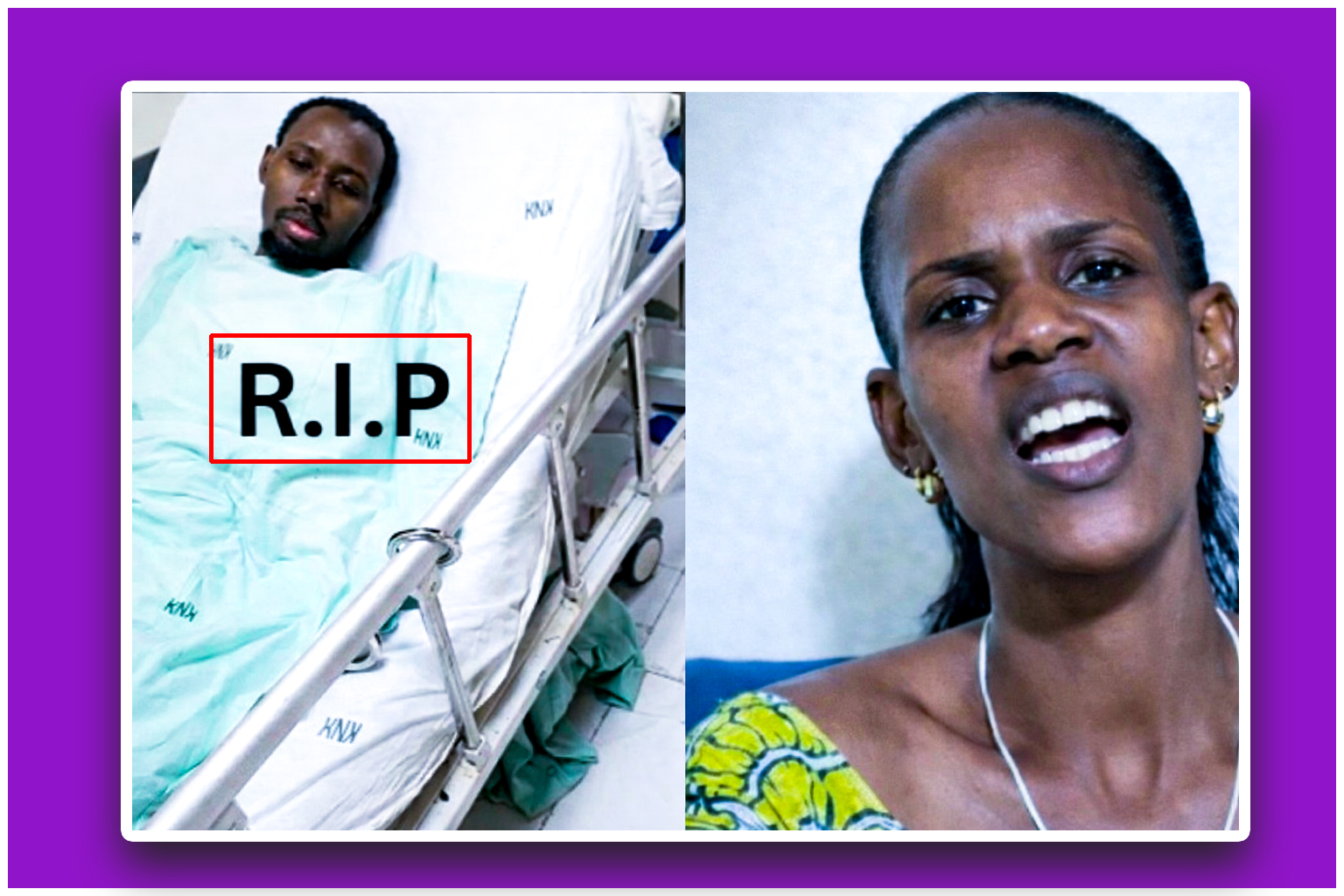
Nairobi, Kenya โ€” The death of a man identified as Musirimu, who was being held in custody in Kenya, has sparked concern and debate within the Banyamulenge refugee community living in the country, amid the circulation of unverified reports on social media and within community discussions.

According to information obtained by Afrovera.com from multiple sources, Musirimu died while still in detention, after being taken to Kenyatta National Hospital in Nairobi, where he was reportedly receiving medical treatment. Sources say he was handcuffed at the time of his death, but no official explanation has been provided regarding the circumstances surrounding his detention or the cause of death.

The reports, which have not been confirmed by Kenyan authorities, have been widely discussed among members of the Banyamulenge community in Kenya. In these discussions, the name of Furaha Aime, the deceasedโ€™s wife, has been repeatedly mentioned. However, no official statement, court ruling, or police report has indicated that she is accused of, or linked to, any criminal responsibility in connection with Musirimuโ€™s death.

Kenyan authorities, including the police, the judiciary, and hospital officials, have not issued any public statement on the case. As of publication, no official post-mortem report or judicial findings have been made public.

Community leaders and observers are calling for an independent and transparent investigation, noting that deaths occurring while a person is in state custody require heightened scrutiny. They have also urged the public and social media users to refrain from spreading unverified claims, warning that misinformation could inflame tensions and expose individuals to legal consequences.

Under Kenyan law, any death that occurs while a person is in state custody whether in detention or under the supervision of law enforcement must be subjected to a formal investigation.

This includes a post-mortem examination and, where necessary, an independent inquiry to determine the cause of death. The law also prohibits the public attribution of criminal responsibility in the absence of a court decision or official confirmation, as the dissemination of unverified allegations may constitute defamation. Only competent authorities are legally mandated to release findings related to investigations and judicial outcomes.

Kenya โ€“ Death of Musirimu raises concern among the Banyamulenge community as Furaha Aime is mentioned in unverified reports

Eastern DR Congo Conflict: Regional Security Ties and the AFC/M23 Debate

0

As insecurity continues to escalate in eastern Democratic Republic of Congo (DRC), relations between the armed coalition AFC/M23 and neighbouring countries, particularly Rwanda and Uganda are under renewed international scrutiny. Recent public statements by Rwandan and AFC/M23 officials have added new detail to an already contentious debate over cross-border security cooperation in the Great Lakes region.

Last week, Rwandaโ€™s ambassador to the United States, Mathilde Mukantabana, told US lawmakers in Washington that Kigali maintains security cooperation with AFC/M23, citing shared security concerns. She identified the Democratic Forces for the Liberation of Rwanda (FDLR) as a key threat, describing the group as responsible for destabilizing eastern Congo and posing risks to Rwandaโ€™s national security.

The FDLR includes individuals linked to the 1994 genocide against the Tutsi in Rwanda and has remained active in parts of North and South Kivu for years.

Ambassador Mukantabana said Rwandaโ€™s engagement aims to prevent cross-border attacks and protect vulnerable communities, including Congolese Tutsi populations. Congolese officials interpreted her remarks as confirmation of Rwandan support for AFC/M23 an allegation Kigali has consistently denied in the past.

AFC/M23 leader Corneille Nangaa Yobeluo has rejected claims that the group receives military assistance from Rwanda, arguing that cooperation should not be conflated with armed support. Speaking to journalists in Goma, Nangaa said the movement coordinates with both Rwanda and Uganda on shared security challenges and border management.

โ€œCooperation does not mean military backing,โ€ Nangaa said, adding that coordination focuses on threats posed by armed groups such as the FDLR and on managing civilian movement across borders.

AFC/M23 says it has detained suspected FDLR fighters in areas under its control and transferred them to relevant authorities, describing this as part of efforts to protect civilians.

The movement presents itself as defending marginalised communities in eastern Congo, particularly Congolese Tutsi populations who say they have faced long-standing persecution by armed groups. Critics, including the Congolese government, accuse AFC/M23 of undermining state authority and exacerbating regional instability.

In the past year, AFC/M23 seized control of key urban centres, including Goma and later Bukavu, following heavy fighting with Congolese forces, allied militias and contingents from the UN peacekeeping mission, MONUSCO.

Despite ongoing conflict, major border crossings between Rwanda and AFC/M23-controlled areas ย including Grande Barriรจre, Petite Barriรจre, Rusizi and Bugarama ย remain operational. AFC/M23 estimates that tens of thousands of civilians cross daily for trade, work and essential activities.

Nangaa said similar coordination exists with Uganda at the Bunagana and Ishasha border points, aimed at facilitating trade and movement between Uganda and eastern Congo. He maintained that such arrangements are administrative rather than military in nature.

AFC/M23 also stated that individuals accused of crimes in areas under its control who flee into Rwanda are not transferred to Congolese authorities in Kinshasa but referred to relevant jurisdictions based on their place of origin.

The differing interpretations of these cross-border arrangements highlight the complexity of the conflict in eastern DRC, where overlapping security interests, regional politics and civilian survival intersect. While regional cooperation is viewed with suspicion by Congolese authorities and some international observers, those involved argue it reflects practical responses to insecurity in a long-running and deeply entrenched conflict.

Harmonize and Fridah Kajala Reignite Romance, Say Their โ€œFresh Chapterโ€ Is Stronger Than Ever

0

โ€œKonde Boyโ€ is officially off the market again. Tanzanian Bongo Flava star Harmonize has confirmed that his relationship with long-time partner Fridah Kajala is not only back on, but stronger than ever.

On Thursday, January 22, 2026, Harmonize took to Instagram to offer fans a glimpse into what he described as a โ€œfresh chapter,โ€ sharing a video of the couple during an intense workout session. The post, captioned โ€œMy daily inspiration @kajalafrida,โ€ quickly drew attention, signaling a renewed sense of commitment following their highly publicized reconciliation.

The latest reunion traces back to the 2025 festive season, when the pair were spotted together at a Christmas Eve party in Zanzibar. Viral clips from the event showed an emotional Harmonize serenading Kajala before the two shared a public kiss, effectively confirming that the famously on-and-off couple had decided to give love another chance.

Their relationship has long been one of the most talked-about and turbulent in the East African entertainment scene. Yet this time, the tone feels noticeably different. Rather than flashy displays and lavish gifts, the couple appears focused on shared routines, fitness, and mutual motivation, hinting at a more grounded, lifestyle-driven partnership.

While skeptics remain cautious given their history, Harmonize has been clear about his intentions. He recently stated that his love for Kajala is unwavering and urged fans to stop interfering in their personal affairs. According to the singer, unsolicited advice especially when directed at Kajalaย  only creates confusion. He added that he is looking forward to doing life together with her, fully and intentionally.

Whether this renewed romance leads to marriage or becomes another chapter in their storied saga remains to be seen. For now, however, the Konde Gang leader appears genuinely smittenย  and unapologetically committed.