Home Blog Page 49

Nigeria Cry โ€œFraudโ€, DR Congo Fire Back: World Cup Dream Hangs on a FIFA Verdict That Could Shock Africa

0

Nigeria and the Democratic Republic of Congo are now locked in a fierce off-field battle that could change Africaโ€™s final road to the 2026 FIFA World Cup. What looked like a settled football result has turned into a legal and political storm, with emotions running high, accusations flying, and FIFA holding the final decision.

On November 16 in Morocco, Nigeria and DR Congo played out a tense 1โ€“1 draw in the African World Cup play-off final. After extra time, the match went to penalties, where DR Congo emerged victorious. That win earned them a place in the intercontinental play-off in March, where they will face a South American team for one of the last two tickets to the World Cup in Canada, Mexico, and the United States.

For many fans, the story should have ended there. But Nigeria is not ready to let go.

The Nigeria Football Federation (NFF) has officially submitted a complaint to FIFA, hoping to revive the Super Eaglesโ€™ chances of reaching the World Cup. At the center of the complaint is a serious allegation: Nigeria claims DR Congo fielded ineligible players in the decisive match.

Nigeriaโ€™s petition focuses on players who recently switched their international allegiance to DR Congo. Among the names mentioned are Aaron Wan-Bissaka and Axel Tuanzebe, both of whom featured in the match in Morocco.

According to the NFF, these players should not have been allowed to represent DR Congo because Congolese law does not recognize dual citizenship. Nigeria argues that holding European or French passports while playing for DR Congo violates national law, even if FIFA approved the switch.

Speaking strongly on the issue, NFF general secretary Mohammed Sanusi said: “Our contention is that Fifa was deceived into clearing them.”

He went further, adding: “The Congolese rule (law) says you cannot have dual nationality, but some of their players have European and French passports.”

Sanusi insisted that this was not a minor issue but a serious breach of regulations. In his words: “There is what we consider to be a breach of (Fifa’s) regulations. We are saying it was fraudulent.”

The NFF says it has already submitted documents and legal arguments to FIFA to support its case. Nigeria believes that if FIFA takes Congolese national law into account, the clearance of these players could be questioned.

So far, FIFA has not made a public statement. The BBC has contacted the world football governing body and is still waiting for an official response.

On the other side, DR Congo has reacted with anger and confidence.

The Congolese Football Federation, known as Fecofa, has completely rejected Nigeriaโ€™s challenge. They insist that all players were properly cleared and that FIFA followed its procedures before approving the nationality switches.

Fecofa has described Nigeriaโ€™s complaint as an attempt to overturn the result outside the pitch. In a strong message posted on the Leopardsโ€™ official social media accounts, the federation said: “The World Cup must be played with dignity and confidence. Not with lawyers’ tricks.”

The same message went even further, calling Nigeria “bad losers” and accusing them of poor sportsmanship.

At the heart of this dispute is a complex clash between FIFA rules and national laws.

Under FIFA statutes, a player is allowed to change the national team they represent only once. The process requires a written and justified request, which must be approved by FIFAโ€™s Players Status Committee.

FIFA rules also require a player to hold a valid passport for the country they want to represent. However, FIFA does allow players to hold more than one passport at the same time.

This is where Nigeriaโ€™s argument becomes sensitive. While FIFA allows dual passports, Congolese law does not recognize dual nationality. Nigeria claims this contradiction should make the players ineligible.

If FIFA officially reviews the protest, several outcomes are possible.

FIFA could dismiss the complaint entirely if it finds Nigeriaโ€™s evidence weak or irrelevant. In that case, DR Congoโ€™s qualification would remain unchanged.

Another option is an investigation that leads to administrative sanctions. FIFA could issue fines or warnings to the federation if it finds problems in the clearance process, while still keeping the match result intact.

The most dramatic outcome would be sporting sanctions. In very serious cases, FIFA or the Confederation of African Football (CAF) could order a forfeit, award the match to Nigeria, or impose other sporting penalties. This usually happens only when there is clear falsification or deliberate misrepresentation.

There are recent precedents that Nigeria may be relying on.

In the 2026 World Cup qualifiers, FIFA deducted six points from Equatorial Guinea after captain Emilio Nsue was ruled ineligible due to previous appearances for Spainโ€™s youth teams. Although the decision was later reversed, Equatorial Guinea never got their points back.

South Africa also suffered a painful ruling when their qualifying win against Lesotho was overturned. Lesotho were awarded a 3โ€“0 victory because South Africa fielded a suspended player.

These cases show that FIFA can act strongly when player eligibility rules are broken.

For now, African football waits. Nigeria hopes for a second chance at the World Cup. DR Congo insists their victory was fair and earned on the pitch.

As FIFA studies the documents, Africaโ€™s final World Cup ticket hangs in the balance. One decision could change history, redraw qualification paths, and leave either joy or heartbreak behind.

SECRET DAUGHTER?โ€ Prophet Kanyari Drops Bombshell, Says He Has Another Child.

0

Controversial preacher Prophet Victor Kanyari has set social media ablaze after making a shocking claim that he has another daughter,one the public has never seen or known about.

In a viral Instagram video, Kanyari boldly claimed that the girl is around the same age as his well-known daughter, Sky Victor, but has remained completely out of the spotlight because her mother has allegedly chosen a life away from public attention.

According to the outspoken televangelist, the childโ€™s existence has been kept under wraps for years, but that silence may soon be broken. Kanyari teased that he plans to introduce the mysterious daughter to the public โ€œvery soon,โ€ a statement that instantly sent netizens into a frenzy.

The revelation has ignited heated reactions online, with some followers expressing shock, others demanding proof, and critics questioning the timing of the disclosure, especially amid Kanyariโ€™s ongoing family dramas.

So far, no evidence has been presented, and neither the alleged childโ€™s mother nor any close family member has spoken out. Mainstream media has also yet to independently confirm the claims.

Whether this is a long-kept family secret finally coming to light or another headline-grabbing moment from one of Kenyaโ€™s most polarizing pastors, one thing is certain: all eyes are now on Prophet Kanyari.

Burundi: Alarming measures the government is set to take against Congolese refugees who recently fled to the country

0

The Government of Burundi has announced plans to relocate Congolese refugees who recently fled to the country, removing them from temporary camps and from host communities, and transferring them to refugee camps located far from the border with the Democratic Republic of Congo (DRC).

This decision comes at a time when security continues to deteriorate in the Rusizi Valley, on the South Kivu side, where intense fighting has for days pitted various warring parties against one another.

According to Burundian authorities, more than 20,000 Congolese have fled to Burundi in recent weeks, escaping violence that erupted in Uvira and other areas near the border.

Some of the refugees were immediately settled in temporary camps hastily set up near the border, while others chose to live among host communities, particularly in the city of Bujumbura and its outskirts.

On December 17, 2025, Burundiโ€™s Minister of Public Security, Ndaruzaniye Leonidas, announced that Congolese refugees who are not staying in camps must leave their current locations immediately.

He stated that โ€œthese refugees must move to camps prepared by government authorities, in order to safeguard public security and facilitate the delivery of humanitarian assistance.โ€

Minister Ndaruzaniye explained that in recent weeks, some refugees had been allowed to stay temporarily in camps located near the border, including Gatumba, Vugizo, Kansega, and Cishemere in Bujumbura Province, as well as Magara and Makombe in Burunga Province. However, he emphasized that these camps were not intended to host refugees on a long-term basis.

He said, โ€œThe Government of Burundi will subsequently remove them from there and transfer them to a refugee camp located far from where they came from, as required by international refugee law.โ€

He added that relocating refugees away from the border is intended to protect them from the effects of fighting that could spill across the border, and to prevent the security situation in the DRC from negatively affecting Burundi.

This decision follows growing concerns about border security, particularly after Burundi agreed to receive DRC government troops and other fighters who had fled into its territory.

These include soldiers from the FARDC, fighters from groups belonging to the Wazalendo coalition, as well as combatants from the FDLR, a group Burundi considers a terrorist organization. Altogether, these individuals are estimated to number around 2,000.

Security analysts say that hosting these troops and fighters has placed Burundi in a delicate diplomatic and security position, as it requires strict adherence to international laws governing weapons and refugees, and efforts to avoid being accused of involvement in a neighboring countryโ€™s conflict.

On the other hand, refugee and human rights organizations have expressed concern that the rapid relocation of refugees could leave them inadequately informed, lead to the separation of families, or expose them to harsh living conditions in new camps that may not be fully prepared.

Some Congolese refugees in Burundi have voiced fears that being moved far from the border could prevent them from following developments back home, or undermine their hope of returning once security is restored.

However, Burundian authorities maintain that the measure is intended to protect the refugees themselves and to make it easier for them to receive assistance from UNHCR and other partners in an organized and sustainable manner.

As fighting continues in parts of South Kivu, the refugee situation remains a major test for relations among countries in the region.

Analysts argue that lasting solutions must come from an end to hostilities, political dialogue, and regional cooperation, rather than focusing solely on managing the consequences of war.

For now, it remains unclear where exactly the refugees will be relocated and when the decision will be implemented, as citizens, international organizations, and human rights advocates closely watch Burundi to see whether the process will be carried out in accordance with international law and refugee rights.

President Tshisekedi Denied the Floor at an Extraordinary International Summit Over $48 Million Debt

0

The President of the Democratic Republic of Congo (DRC), Fรฉlix Antoine Tshisekedi Tshilombo, has once again found himself facing serious regional diplomatic challenges after being denied the opportunity to speak at an extraordinary summit of Heads of State of the Southern African Development Community (SADC), held on 17 December 2025 via video conference.

This unusual decision by SADC was prompted by the DRC governmentโ€™s failure to pay the financial contribution it had pledged to SADC forces deployed in North Kivu Province to fight the M23 movement, from late 2023 to early 2025.

The SADC troops, composed of soldiers from South Africa, Tanzania, and Malawi, had been deployed to North Kivu in support of the DRC governmentโ€™s campaign against M23.

At the time, Kinshasa had committed to contributing USD 200 million to ensure that these forces were adequately equipped, paid, and logistically supported.

However, as months passed, it became clear that the DRC had not honored this commitment. The troop-contributing countries began to complain that the lack of funding severely hampered the effectiveness of their forces, forcing them to cover many operational costs that were supposed to be borne by the Congolese government.

After M23 seized control of the city of Goma, SADC troops remained confined to their bases on the outskirts of the city for several months, facing serious operational constraints. Some analysts compared their situation to that of โ€œprisoners of war who had not been defeated in battle.โ€

In 2025, following an agreement reached between M23 and other involved parties, these forces eventually withdrew and returned to their home countries in the middle of the year, leaving behind a political embarrassment and the unresolved issue of unpaid debts.

In August 2025, SADC issued a strong warning to the DRC government, demanding the immediate payment of the remaining USD 48 million owed under the agreed contribution. The regional bloc stated that failure to settle this debt could result in sanctions under SADC regulations, including the suspension or limitation of the DRCโ€™s rights within the organization.

Since then, no concrete steps have been taken by Kinshasa to resolve the matter, further straining relations between the DRC and the countries that had deployed troops.

At the extraordinary SADC summit chaired by South African President Cyril Ramaphosa, Fรฉlix Tshisekedi was denied the opportunity to address the meetingโ€”a decision widely interpreted as a strong signal that SADC has lost confidence in the DRC government.

The summit was attended by seven heads of state, including Cyril Ramaphosa (South Africa), Fรฉlix Tshisekedi (DRC), Duma Boko (Botswana), Col. Michael Randrianirina (Madagascar), Daniel Chapo (Mozambique), Dr. Nentumbo Nandi-Ndaitwah (Namibia), and Hakainde Hichilema (Zambia).

This exclusion was not limited to the level of heads of state. In preparatory meetings involving ministers and technical experts, representatives of the DRC had already been barred from speaking, due to Kinshasaโ€™s continued failure to pay the outstanding debt.

Regional political analysts argue that this issue goes beyond money, reflecting a deeper crisis of governance and a breakdown of trust between the DRC and its regional partners.

Failure to honor international commitments and disregard for SADC warnings risk pushing Kinshasa further into diplomatic isolation.

There are also concerns that this situation could negatively affect regional cooperation aimed at resolving insecurity in eastern Congo, especially as international forces have signaled reluctance to deploy again without clear guarantees regarding funding and the responsibilities of the DRC government.

The decision to deny President Tshisekedi the floor at SADC offers a sobering lesson for the Congolese leadership: regional politics is not built on rhetoric alone, but on respect for agreements, responsibilities, and professionalism in governance.

Unless Kinshasa takes swift action to settle these debts and rebuild trust with partner countries, the DRC may continue to face serious diplomatic consequences, even as national and regional security remains fragile.

Breaking News: Rwanda and Burundi in talks to ease years-long tensions

0

Relations between Rwanda and Burundi have once again come under discussion through diplomatic and security talks, following many years of strained ties that have grown even more tense since early 2024.

Over the past weekend, security officials from Rwanda and Burundi held a special meeting aimed at finding ways to address the deepening mistrust and rising tensions between the two countries.

The information was confirmed by Rwandaโ€™s Minister of Foreign Affairs and International Cooperation, Olivier Nduhungirehe, who said the security-level talks were intended to rebuild trust and reduce long-standing disputes that have destabilized regional security.

Relations between the two countries have been poor for years, especially since 2015, when Burundi accused Rwanda of hosting and supporting individuals who attempted to overthrow the government of President Pierre Nkurunziza. Rwanda has repeatedly denied these allegations, saying they are baseless and founded on unreliable information.

Since then, Burundi has continued to accuse Rwanda of supporting the RED Tabara group, which opposes the government in Bujumbura. Kigali has consistently rejected these claims, calling them falsehoods meant to mislead the international community and conceal Burundiโ€™s internal problems.

At various times, President ร‰variste Ndayishimiye and other senior Burundian officials have appeared in international media claiming they had intelligence indicating that Rwanda intended to attack Burundi. These statements further worsened relations, and since early 2024 Burundi has closed all its land borders with Rwanda.

On Rwandaโ€™s side, these accusations have been described as unfounded. Kigali argues that Burundi chose to align itself with the Armed Forces of the Democratic Republic of Congo (FARDC), which are fighting alongside the FDLR, a terrorist group made up of individuals responsible for the 1994 Genocide against the Tutsi.

Rwanda says that by aligning with FARDC and the FDLR, Burundi effectively placed itself on the same side as a group Rwanda has long warned poses a serious threat to its security and to regional stability as a whole.

Relations deteriorated further after the capture of the city of Uvira by the AFC/M23 coalition, when Burundi accused Rwanda of firing on its territory and claimed its security had been compromised by events unfolding in South Kivu.

In an interview with France 24 aired on 18 December 2025, Minister Nduhungirehe said Burundiโ€™s accusations did not reflect the truth, adding that it was Burundi that had fired shells onto Congolese territory.

He said: โ€œThat is not true. Instead, it was Burundian shells that were fired into the town of Kamanyola, which caused Congolese civilians to flee into Rwanda, in Bugarama.โ€

These remarks underscored that the crisis goes beyond rhetoric, involving military actions that could spark open conflict in the region if not addressed through diplomacy.

When a France 24 journalist asked whether there were ongoing talks between Rwanda and Burundi, Minister Nduhungirehe replied that meetings between security institutions are not one-off events, but must continue in order to reach a lasting solution.

He said: โ€œOn the Burundian side, a meeting took place this weekend between the security organs of both states to discuss the increasingly tense situation. We believe that if these meetings continue, we will reach a solution, restore a positive atmosphere in the region, and return to compliance with various peace agreements.โ€

Meanwhile, the security situation between Rwanda and Burundi is also linked to talks taking place at the international level, particularly the Washington talks between Rwanda and the DRC.

Within this framework, a Joint Security Coordination Mechanism was established to monitor efforts to completely dismantle the FDLR and to lift the defensive measures Rwanda has put in place along its borders.

The peace agreement between Rwanda and the DRC was signed on 4 December 2025, but Kigali says it has not yet been implemented because the DRC continues military operations and fighting.

The FDLR is estimated to have between 7,000 and 10,000 fighters, and Rwanda says many of them are integrated into FARDC units, which are fighting alongside more than 20,000 Burundian troops deployed in eastern DRC against the AFC/M23.

Minister Nduhungirehe concluded by saying that meetings of the Joint Security Coordination Mechanism will resume, focusing on how to permanently eliminate the FDLR and lift Rwandaโ€™s defensive measures once all parties comply with what was agreed.

If these talks yield results, they would mark a significant step toward restoring trust between Rwanda and Burundi and easing the long-standing tensions that have fueled insecurity in the Great Lakes region.

AFC/M23 captures three more villages after heavy fighting as uncertainty continues over withdrawal from Uvira

0

While peace talks continue to be presented as a path that could reduce the conflict in eastern Democratic Republic of Congo, the situation on the ground tells a different story.

The AFC/M23 coalition has once again captured three villages in North Kivu Province following heavy fighting, as uncertainty persists over the implementation of its recently announced decision to withdraw from the city of Uvira.

Information from local residents and security sources indicates that the clashes took place in the Bashali Mokoto Grouping, Bashali Chiefdom, Masisi Territory, during the night of Tuesday, December 16, 2025. The fighting pitted AFC/M23 forces against Wazalendo fighters from the ACNDH group, who had previously been controlling the area.

According to sources in Masisi, the clashes lasted for several hours and involved both heavy and light weapons, forcing many civilians to flee into forests and neighboring villages. By morning, AFC/M23 had taken control of at least three villages, further expanding the areas it controls in a region known as a stronghold of multiple armed groups.

These attacks occurred just days after AFC/M23 announced its decision to withdraw from the city of Uvira in South Kivu Province, a move presented as a confidence-building step in support of the peace talks currently taking place in Doha.

However, more than 48 hours after the announcement, no clear signs of an AFC/M23 withdrawal have been observed in South Kivu. Reports from Kivu Morning Post indicate that daily life in Uvira continues as usual, with shops open and residents moving about.

Many residents say they have not seen AFC/M23 fighters leaving the city, contrary to previously circulated images showing soldiers marching out in formation. This has raised questions about whether the withdrawal decision is actually being implemented, or whether it is a slow and unclear process with no defined timetable.

AFC/M23 had stated that its withdrawal from Uvira was conditional on several requirements being met. Among them was the demand that the Congolese army (FARDC) and Wazalendo militias should not return to the city, which the coalition claims would once again create insecurity and lead to attacks against civilians suspected of supporting AFC/M23.

The coalition also called for the deployment of โ€œneutral forcesโ€ to ensure security in Uvira after its departure. However, what this would mean in practical terms remains unclear: which forces would they be, where would they come from, and under what mandate would they operate? No concrete talks have yet begun between Kinshasa and AFC/M23 on this issue.

As a result, analysts suggest that the decision to withdraw from Uvira may be driven by political and diplomatic calculations, with AFC/M23 seeking to project an image of commitment to peace in the eyes of international mediators, while continuing military operations in other parts of the country.

In North Kivu Province, Masisi Territory remains one of the main epicenters of fighting. The area, characterized by fertile farmland, has long been contested by various armed groups, including Wazalendo and other smaller militias.

AFC/M23โ€™s renewed capture of villages in Bashali Mokoto underscores its continued capacity to launch offensives and shift territorial control, even as it claims at the political level to be ready to pursue a path toward peace.

Makongeni SDA Church Not Spared as Demolitions Leave Worshippers in Tears

0

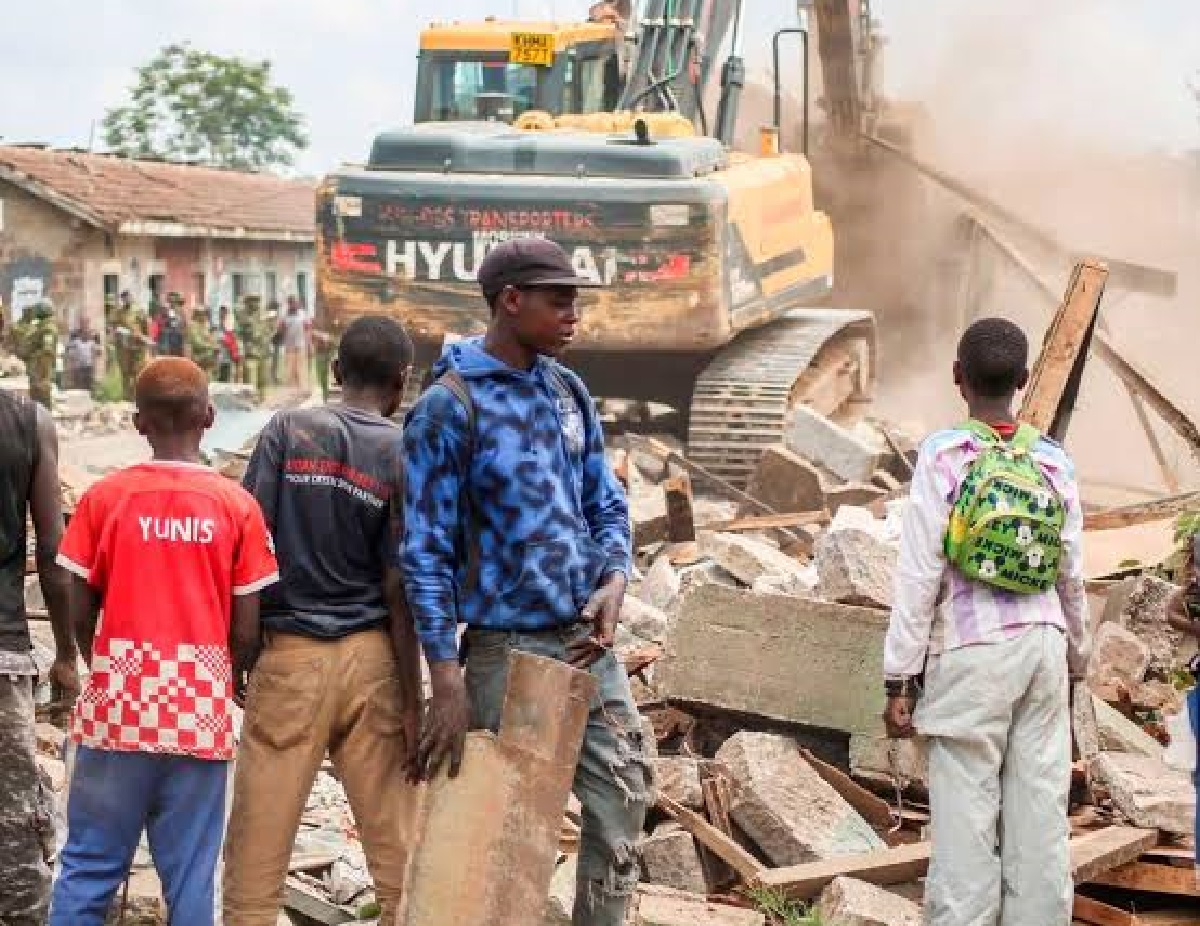
There was pain, disbelief and quiet prayer in Makongeni Estate after Makongeni Seventh-day Adventist (SDA) Church was caught up in the ongoing demolitions that have swept through the area, leaving congregants heartbroken and places of worship reduced to rubble.

The church, which has for years served as a spiritual refuge for hundreds of families, was demolished as part of the government-led Affordable Housing Project, a move that has also affected several other religious institutions within the estate. For many worshippers, the destruction was not just about a building, but the loss of a sacred space where lives were dedicated, marriages blessed, children baptised and the grieving comforted.

Eyewitnesses described emotional scenes as church members gathered nearby, some openly weeping, others kneeling in prayer as bulldozers moved in. โ€œThis was our second home,โ€ one congregant said. โ€œWe prayed here in good times and bad times. Watching it come down feels like losing a part of our lives.โ€

Makongeni SDA Church joins other churches and a mosque that have been affected by the demolitions, raising serious concerns among religious leaders about the future of worship spaces and community support systems in the area. Clergy members say churches play a critical role beyond prayer, offering counselling, food aid, youth mentorship and hope to struggling families.

While authorities maintain that the demolitions are necessary to pave way for affordable housing, church leaders and residents have questioned the short notice, lack of clear relocation plans, and uncertainty around compensation. Some religious institutions claim they were in the middle of seeking legal redress when demolition crews arrived.

As dust settles over Makongeni, what remains is a deep sense of loss. For the faithful, the demolished walls once echoed with hymns and sermons of hope. Today, the silence left behind tells a painful story, that even places of worship were not spared.

Church leaders have called for dialogue, urging the government to consider humane alternatives that protect both development goals and the spiritual wellbeing of communities.

For now, congregants are left asking a haunting question: Where will we worship tomorrow?

AFC/M23 Forces Begin Withdrawal from Uvira: A Step Toward Peace or a New Test for Security in Eastern Congo?

0

As South Kivu province had spent several days gripped by fear and growing insecurity, news announced on Wednesday, December 17, 2025, sparked debate and cautious hope among residents: the AFC/M23 coalition began withdrawing its forces from the city of Uvira.

The announcement was officially confirmed by the AFC/M23 military spokesperson, Lt. Willy Ngoma, through a message posted on his X account, where he stated that the decision was taken โ€œfor reasons of peace.โ€

He said: โ€œAs of this afternoon, our forces have begun withdrawing from the city of Uvira in order to support the peace process.โ€

Later in the evening, videos shared by journalist Steve Wembi showed a long convoy of AFC/M23 soldiers leaving the city, providing tangible evidence that the announcement was indeed being implemented.

This decision to withdraw from Uvira did not come as a surprise to those closely following developments in eastern Congo. On Monday, December 15, the Alliance Fleuve Congo (AFC) coalition, which includes AFC/M23, had already announced plans to pull its forces out of this strategic city on the shores of Lake Tanganyika.

Corneille Nangaa, the leader of the coalition, presented the move as a confidence-building measure and a concrete contribution to the peace talks that were ongoing in Doha, Qatar. He explained that the decision was based on the core principles of the peace framework signed in Doha on November 15, 2025, which aimed to lay a new foundation for finding a lasting solution to the long-running conflict in eastern DRC.

According to Nangaaโ€™s statement, the decision to vacate Uvira was taken at the request of international mediators, particularly the United States. The main objective, as outlined, was to reduce fighting and hostilities, establish reliable mechanisms to protect civilians, and restore confidence in the political dialogue process.

The United States has in recent days reiterated its strong interest in ensuring that peace agreements between the Congolese government and all concerned parties are respected, especially to prevent the eastern conflict from further destabilizing the wider region.

Despite presenting the withdrawal as a step toward peace, AFC/M23 was quick to express its concerns based on past experience. The coalition argues that in previous instances, its withdrawals from certain areas were exploited by the Congolese army (FARDC), Wazalendo groups, and their allies.

According to AFC/M23, areas it vacated were often swiftly reoccupied by FARDC and allied forces, followed by acts of retaliation, particularly against civilians suspected of supporting the movement. This history, the coalition says, explains why leaving Uvira is not a simple gesture but a serious test of the genuine commitment of all parties to peace.

Because of these concerns, AFC/M23 has called on mediators to put in place clear and effective security measures to manage Uvira after its withdrawal. These measures include the demilitarization of the city, the protection of civilians and key infrastructure such as the port, hospitals, and communication routes, as well as the monitoring of the ceasefire through the deployment of neutral forces.

The coalition emphasized that no lasting peace is possible if civilian security is not guaranteed, warning that failure to protect Uvira could undermine the Doha talks.

Uvira is one of the most important cities in eastern DRC, both economically and in terms of trade and security. On December 9, 2025, AFC/M23 had taken control of the city after pushing out a coalition of forces fighting on the side of the Congolese government. At the time, the capture of Uvira raised serious concerns across the region, particularly in neighboring countries such as Burundi and Rwanda.

The beginning of the AFC/M23 withdrawal from Uvira is seen by some analysts as a significant step that could open the door to peace, while others view it as a major test of the Congolese governmentโ€™s willingness, and that of its allies, to genuinely commit to the peace process.

BREAKING NEWS: Supreme Court Judge Mohammed Kadhar Ibrahim Dies

0

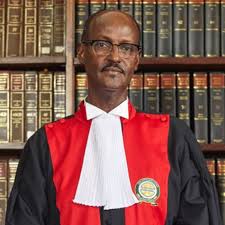
Kenya is mourning the death of Supreme Court Judge Mohammed Kadhar Ibrahim, who passed away on Wednesday, December 17, 2025, in Nairobi after a prolonged illness. He was 69 years old.

In a statement, the Judiciary of Kenya confirmed his death, describing it as a major loss to the countryโ€™s justice system. Justice Ibrahim had been unwell for some time and had previously sought specialised medical treatment abroad before returning to the country.

Justice Ibrahim was one of the most respected jurists in Kenyaโ€™s legal history. He joined the Judiciary in 2003, serving first as a High Court judge, where he handled major constitutional, commercial, and human rights cases. His diligence and integrity later saw him appointed to the Court of Appeal, where he further cemented his reputation as a firm and independent judge.

Following the promulgation of the 2010 Constitution, Justice Ibrahim was appointed to the Supreme Court of Kenya, becoming one of the judges who helped shape the countryโ€™s young apex court. During his tenure, he played a key role in landmark decisions touching on constitutional interpretation, electoral disputes, governance, and access to justice. He was also widely recognised as a trailblazer, being among the first Kenyan Somalis to rise to the highest levels of the Judiciary.

Throughout his career, Justice Ibrahim was admired for his commitment to constitutionalism, protection of minority rights, and defence of the rule of law. Colleagues often described him as humble, principled, and deeply thoughtful in his judgments.

Chief Justice Martha Koome, the Law Society of Kenya (LSK), and members of the legal fraternity have paid glowing tributes, terming his death a huge blow to the Supreme Court, the Judiciary, and the nation at large.

Details regarding funeral arrangements are expected to be communicated by the family and the Judiciary in due course.

The United States Draws a Red Line, Says It Is Ready to Take Action to Enforce the Agreement Between the DRC and Rwanda

0

The United States has publicly announced that it is ready to take concrete measures to ensure that the Washington Agreement signed between the Democratic Republic of the Congo (DRC) and Rwanda is respected and fully implemented.

This statement followed high-level talks held in Washington at a time when security in eastern DRC continues to deteriorate.

On Tuesday, U.S. Deputy Secretary of State Christopher Landau met with the DRCโ€™s Minister of Foreign Affairs, Thรฉrรจse Kayikwamba Wagner. Their discussions focused on bilateral relations, regional security, and the role the DRC is set to play on the United Nations Security Council.

These talks took place as the DRC prepares to take up its seat on the Security Council in Augustโ€”a position Kinshasa says it intends to use to highlight the worsening security situation in eastern Congo and the long-standing conflicts that have shaped its relations with neighboring countries.

In a statement released by the U.S. State Departmentโ€™s spokesperson, Christopher Landau said Washington expects the Washington Agreement to be respected and fully implemented. He emphasized that the United States will not simply observe from the sidelines but is prepared to take action should any party fail to honor its commitments.

The brief but weighty statement also noted that both sides agreed on the significant role private sector investment can play in consolidating peace and security in the region, through economic development and job creation, ensuring that peace is not based solely on military efforts but also on the tangible benefits delivered to local populations.

The conflict in eastern DRC was at the center of the Washington discussions, particularly as AFC/M23 has recently made significant advances, capturing various areas in North and South Kivu provinces. The Congolese government says these hostilities have triggered a serious humanitarian crisis, with more than 500,000 people displaced from their homes in recent weeks.

Minister Kayikwamba told U.S. officials that the Kinshasa government believes M23 is supported by Rwandan forces, accusing Kigali of playing a direct role in undermining the implementation of the Washington Agreement. She said Rwandaโ€™s actions amount to a violation of its commitments and undermine the peace initiative promoted by the U.S. President.

On Monday and Tuesday, December 15 and 16, 2025, Minister Kayikwamba held several high-level meetings with members of President Trumpโ€™s administration as well as with U.S. lawmakers. These discussions highlighted that the United States continues to closely monitor the situation in Congo, particularly given its potential impact on the security of the entire Great Lakes region.

Among the officials with whom Minister Kayikwamba held in-depth talks were Dan Dunham, Director for Africa at the National Security Council (NSC); Rudolph Atallah, Deputy Director for Counterterrorism at the NSC; Congressman Chris Smith, Chair of the House Subcommittee on Africa; and John Tomaszewski, Senior Adviser on the Senate Foreign Relations Committee.

In all these meetings, Kayikwamba reaffirmed that the Congolese government supports U.S. efforts aimed at restoring the territorial integrity of the DRC, while thanking Washington for its role in pushing for peace in the region. The Congolese Ministry of Foreign Affairs said the minister particularly welcomed Christopher Landauโ€™s remarks, which signaled that the United States would not tolerate violations of the agreement.

However, even as Kinshasa continues to accuse Rwanda of failing to respect the Washington Agreement, questions remain about whether the Congolese government itself is prepared to implement its own obligations. The agreement requires concrete actions from both sides, including the dismantling of armed groups that threaten the security of neighboring countries.

One of the most frequently cited issues is the FDLR, an armed group that has operated in eastern DRC for many years and which Rwanda says continues to threaten its security. Analysts question whether Kinshasa has both the political will and the capacity to dismantle the group entirely, given that in the past it has signed agreements without fully honoring its commitments.

As a result, the Washington Agreement continues to be viewed with skepticism, with each side accusing the other of failing to meet its responsibilities. Nevertheless, the U.S. statement suggests that Washington is seeking to move from words to action, a shift that could significantly alter the trajectory of the crisis in the coming weeks.