Home Blog Page 50

Government to Release Grade 10 School Placements by Friday, December 19, 2025

0

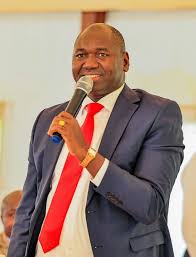
Basic Education Principal Secretary (PS) Professor Julius Bitok has announced that the Grade 10 placements for students who sat the 2025 Kenya Junior School Education Assessment (KJSEA) will be released by Friday, December 19, 2025.

Prof. Bitok made the announcement today at the Kenya National Union of Teachers (KNUT) 65th Annual Delegatesโ€™ Conference held at the Kasarani Gymnasium in Nairobi, where he was addressing delegates on key education issues and ongoing reforms in the sector.

According to the PS, learners transitioning to Grade 10 in 2026 will be able to access their school placement results by sending their KNEC assessment number via SMS to short code 22263 once the placements are released.

Prof. Bitok also acknowledged the role of teachers in the implementation of the Competency-Based Curriculum (CBC) and in the successful administration of the pioneer KJSEA examinations, urging sustained collaboration as the country prepares for the new senior school cycle.

The release of placements comes after the KJSEA results were unveiled earlier this month, marking a major step in the first cohortโ€™s transition from junior to senior secondary school.
The parents remain anxious as they wait to see how it will play out.

High Court orders Jailed Ex-Governor Ferdinand Waititu and Wife to Appear after Skipping Summons in sh.1.9 Billion Property Case

0

High Court Orders Jailed Ex-Governor Ferdinand Waititu and Wife to Appear After Skipping Summons in Sh1.9 Billion Property Casee

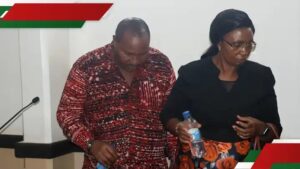
The High Courtโ€™s Anti-Corruption and Economic Crimes Division at Milimani Law Courts in Kenya has directed imprisoned former Kiambu Governor Ferdinand Waititu and his wife, Susan Wangari, to personally appear in court for the delivery of judgment in a Sh1.9 billion civil forfeiture case after they twice failed to heed previous summons.

The directive was issued by Justice Nixon Sifuna, who emphasised that the repeated absences of the respondents and their lawyer could no longer be tolerated. The judge set Friday, December 19, 2025, as the final date for the coupleโ€™s attendance, warning that the matter would proceed with or without them present.

The case, brought by the Ethics and Anti-Corruption Commission (EACC), seeks to recover properties and assets allegedly acquired through unexplained wealth accumulated during Waitituโ€™s tenure in public office, both as Kabete MP and later as Kiambu governor. EACC estimates the value of the disputed assets at about Sh1.9 billion.

Justice Sifunaโ€™s order comes amid continued efforts by the anti-graft agency to ensure accountability and bring finality to the long-running asset recovery case.

Kenyan Cheff Dorky Dorcas Sets New Guinness World Record for Fastest Chapati Preparation

0

Kenyan chef and digital content creator Dorky Dorcas has etched her name into the Guinness World Records after setting a new fastest time for preparing three chapatis.

Dorcas completed the culinary feat on Monday, 15 December 2025, finishing the full process of preparing the dough, rolling it out and cooking all three chapatis in a remarkable 2 minutes and 26 seconds, shaving nearly 44 seconds off the previous record time of 3 minutes 10.22 seconds.

The record attempt was conducted under strict Guinness World Records guidelines, with every step,from dough preparation to the final cooked chapatis closely monitored and verified for accuracy and compliance with international standards.

Dorcasโ€™s achievement not only highlights her culinary skill but also celebrates a staple of Kenyan and East African cuisine on the global stage. Chapati, a beloved flatbread enjoyed across the region, now has a new world-record moment thanks to her effort.

Although the Guinness World Records organisation does not award cash prizes, breaking one of its records remains a coveted milestone that brings international recognition. Dorcas now joins a growing list of East African creators showcasing local skills and traditions to the world.

The Reason Why the AFC/M23 Coalition Has Not Withdrawn from the City of Uvira After Announcing It

0

On the afternoon of December 16, 2025, the AFC/M23 coalition announced that it would withdraw from the city ofย Uvira, which it had controlled for several days. This unexpected decision caused confusion among residents and journalists, as the statement emphasized that the safety of civilians was a top priority.ย 

Deputy spokesperson of AFC/M23, Dr. Oscar Balinda, explained the reason for this move, saying, โ€œThis decision was made to prioritize peace. We want our talks with the government of the Democratic Republic of Congo (DRC) in Doha, Qatar, to yield the desired results.โ€ย 

Dr. Balinda added that key mediatorsโ€”including the United States, Qatar, and the African Union (AU)โ€”wouldย assistย in protecting residents while AFC/M23 troops withdraw from the city. He further explained that this requires the DRC forces, Burundi troops,ย Wazalendo, and FDLR not to return to the area.ย 

Yannick Tshisola, head of Corneilleย Nangaaโ€™sย office within AFC/M23, confirmed that this decision does not mean they are surrendering or engaging with FARDC forces, Burundi troops, orย Wazalendo. However, there is a plan to deploy independent security forces to protect residents, though the identities of these forces have not yet beenย disclosed.ย 

As of the morningย of December 17, reports fromย Uviraย indicate that daily life continued as normal. The exact timing of AFC/M23โ€™s withdrawalย remainsย unknown but will beย determinedย once the mediatorsย finalizeย security arrangements.ย 

The decision to delay the withdrawal is based on events inย Nturoย in 2022 and 2023, when East African Community (EAC) leaders decided to remove fighters from key areas they controlled to protect civilians.ย 

In January 2023, the fighters were placed under the authority of the EAC Regional Force (EACRF) peacekeeping troops.ย 

Following the EAC leadersโ€™ decisions in 2022, by January 2023, AFC/M23 had withdrawnย nearly 80%ย of its fighters from controlled areas, assuring that the remaining civilian population would be protected.ย 

The EACRF peacekeeping troopsย were responsible forย safeguarding all areas previously under AFC/M23 control and preventing any attempts by DRC forces,ย Wazalendo, or FDLR to enter these zones, using the organizationโ€™s military resources if necessary.ย 

However, Burundi troops within EACRF appeared to neglect this duty, allowing the DRC government toย operateย in the areas they occupied in Masisi territory, where civilians were subjected to abuses.ย 

In October 2023,ย Wazalendoย and FDLR forces attacked the village ofย Nturoย in Masisi,ย predominantly inhabitedย by Congolese Tutsi, burning over 300 homes, citing the residentsโ€™ origins as justification.ย 

Nturoย residents reported that Burundi troops offered them no protection during the attack, instead instructing them to flee to areas controlled by โ€œtheir eldersโ€ beforeย encounteringย AFC/M23 fighters.ย 

Tuyishimeย Aline said, โ€œWhen we reached the Burundians, they told us not to flee to them. They said if we meet our elders, we should ask, โ€˜Who are they?โ€™ They gave no other guidance and chased us. We hid in the bushes.โ€ย 

She continued: โ€œA Burundian soldier pushed me, and I pushed back. I fought him, telling him Iย wasnโ€™tย going to die. There were many explosions and houses burning. I said, โ€˜This is impossible.ย Iโ€™mย going where theyย hide, becauseย we have nowhere else to go.โ€™ I was about to enter a building, fleeing the bullets.โ€ย 

Historical evidence shows that Burundi troops oftenย failed toย honor commitments to AFC/M23. By late 2023, when the DRC expelled EACRF troops, Congolese Tutsi civilians were left extremely vulnerable with no protective forcesย remaining.ย 

AFC/M23 then decided to withdraw its fighters from theย Rumangaboย military base, redeploying them to areas affected byย previousย conflicts. The withdrawal was not easy, requiring limited armed confrontations toย maintainย control over key zones.ย 

The city ofย Walikaleย experienced similar situations. Afterย assistanceย from Qatar in Doha peace talks, AFC/M23 removed its fighters from the city,ย requestingย that DRC andย Wazalendoย forces not return. However, shortly after, the forces re-entered, showing that trust between the parties was still fragile.ย 

By late June 2025, AFC/M23 withdrew from the Doha talks, fearing the DRC would not honor agreements, but later returned after receiving assurances that their concerns would be addressed.ย 

On July 19 and November 15, 2025, AFC/M23 and the DRC government signed peace agreement, including the release of 700 detained AFC/M23 members, although the timing of their releaseย remainsย unknown.ย 

This withdrawal fromย Uviraย marks the beginning of a new process of rebuilding trust between the parties and protecting residents in a city long affected by conflict.ย 

While residents await the next steps, arrangements have been made to deploy dedicated security forces to ensureย Uviraโ€™sย safety is not compromised.ย 

Friends Build a House for Festus Amimo’s First Son in line with Luo Traditon

0

Friends and wellโ€‘wishers of the late Festus Amimo , a respected media personality and head of KBCโ€™s Mayienga FM, have rallied to build a traditional โ€œSimbaโ€ house for his firstborn son at the familyโ€™s rural homestead. This follows Luo cultural practice, where the firstborn son is traditionally provided with a house to secure his place in the family lineage.

Festus Amimo, popularly known as Wuod Awasi, was the head of the Kiswahiliโ€‘language station Mayienga FM, owned by the Kenya Broadcasting Corporation (KBC). He was known for his rich baritone voice, leadership in vernacular broadcasting, and his role as chairperson of the Luo Journalists Association.

Amimo died suddenly on Sunday, 7โ€ฏDecemberโ€ฏ2025 ;a loss that shocked the media industry and listeners alike. His death was announced by Mayienga FM and confirmed by several media outlets, with KBC leadership describing him as โ€œa warm soul and true friend whose kindness touched many.โ€

Tributes have poured in from leaders, colleagues, and listeners across the country, with many highlighting his mentorship of young journalists and his contribution to amplifying Luoโ€‘language radio.

According to news reports, friends and associates organized and completed the construction of the Simba house in a matter of days to honor both the cultural requirement and Amimoโ€™s memory. Among those involved was Hon. David Ochiengโ€™ (MP for Ugenya), who reportedly financed a permanent structure rather than the initially planned temporary one.

The initiative has been described as a powerful demonstration of friendship, respect, and cultural commitment during a time of loss.

DRC: FDLR Forces Collaborate with the Government Against AFC/M23, Forcing Residents to Flee Five Villages

0

Walikale Territory, in North Kivu Province, has once again found itself in a security crisis as residents of five villages fled from armed groups, including the FDLR, which has been collaborating with government-backed forces to fight the AFC/M23.

On Monday, residents from the villages of Bonde la Afia, Tuonane, Bunyamwimbwa, Kifuruka, and Kilambo left their homes and headed to the town of Busurungi in search of basic safety and protection.

Reliable sources from local authorities reported that the FDLR, led by a commander calling himself Gen Mudayongwa, carried out a major attack on the village of Tuonane on Sunday. They burned down all houses, killed two civilians, and forced many others to flee. The main objective of this attack was to turn the area into a stronghold against AFC/M23 forces.

Residents said they fear FDLR violence, particularly recalling the events of 2012 in Busurungi, Chambucha, Mianga, and Malembe, where many people were killed, houses were destroyed, and fear was widespread.

One displaced resident said:
“We fled our homes and came to Busurungi seeking safety. But our hearts are still full of fear because of what we witnessed in the past. The FDLR still terrifies us greatly.”

Following the FDLR attack, Mai Mai Kifuafua, a faction within the Wazalendo alliance supported by the government, quickly moved to assist residents and halt FDLRโ€™s terror activities. The fighting continued for many hours in the hills surrounding Tuonane and along the routes leading to Mishipo.

Authorities reported that ten people were killed during the clashes: two civilians by FDLR, two Mai Mai Kifuafua fighters, and six FDLR fighters. Mai Mai Kifuafua confirmed that FDLR was temporarily driven out but expressed concern that they might return unexpectedly.

Reports indicate that FDLR had been in the Mishipo area for two months after leaving Masisi, where they clashed with national army forces and other armed groups. This armed group aimed to establish the area as a new base for planning violent operations.

Residents said that even though FDLR has been temporarily expelled, fear remains high. All their homes were burned, crops destroyed, and there is no easy way to return to their villages. Many said they have little hope of rebuilding, especially those with young children and women suffering from the displacement.

One displaced resident said:
“We want to return to our villages, but we fear that these fighters may come back to harass us again. We need the government to show that it can protect us permanently.”

PSG Rocked as French Court slams Club with Ksh. 9 Billion Mbappe Pay order

0

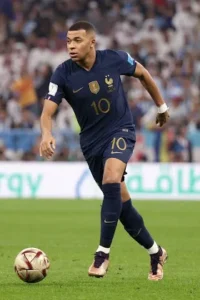
Paris Saint-Germain have suffered a humiliating legal blow after a French court ordered the club to pay former superstar Kylian Mbappรฉ nearly KSh 9 billion in unpaid salaries and bonuses, sending shockwaves through European football.

The explosive ruling follows Mbappรฉโ€™s claim that PSG deliberately withheld his wages and bonuses for April, May, and June 2024, during the final and most turbulent months of his stay at the Parc des Princes.

In a decision that exposes deep cracks in PSGโ€™s handling of their biggest star, the court found that the club breached contractual obligations, siding fully with Mbappรฉ and ordering the immediate settlement of the massive arrears.

The unpaid amount includes three monthsโ€™ salary, performance bonuses, and contractual payments that Mbappรฉ insists were unfairly frozen as tensions escalated over his refusal to extend his contract before his high-profile exit.

The legal showdown capped a bitter divorce between the club and its all-time leading scorer; a saga marked by power struggles, boardroom standoffs, and accusations of financial pressure tactics.

PSG have yet to confirm whether they will appeal the ruling, but the verdict has already been branded one of the most damaging off-field defeats in the clubโ€™s history.

For Mbappรฉ, now free from Paris and thriving elsewhere, the ruling is both a personal victory and a powerful message to footballโ€™s elite: contracts must be honored ,even when stars walk away.

As the dust settles, one thing is clear ;PSGโ€™s Mbappรฉ saga has ended not with a farewell goal, but with a courtroom hammer blow worth billions.

Love,Faith and Forever:Chosen Becky and Abdul Ssekajja say “I Do” in intimate Kampala Ceremony

0

In a celebration that has set social media and the Ugandan entertainment world buzzing, beloved songstress Chosen Becky โ€” born Rebecca Kukiriza , and her longtime partner Abdul Ssekajja have officially sealed their union in a private civil wedding ceremony held in the heart of Kampala.

Draped in an elegant allโ€‘white gown, Becky stood alongside Abdul before the Registrar General, where the two exchanged heartfelt vows in front of close family and friends, marking a deeply personal and joyous milestone in their love story.

The coupleโ€™s journey to this moment has been nothing short of cinematic. Earlier in December, they hosted a colourful Kukyala ;a traditional preโ€‘marriage celebration, in Masaka, where elders gave their blessings and friends danced long into the night. Shortly afterward, they announced their intentions to make it official.

Insiders say that Becky and Abdul chose a civil wedding rather than a grand church or mosque ceremony ; partly out of respect for their differing religious backgrounds (Becky is Christian while Abdul is Muslim), and partly to preserve the intimacy of the moment for those closest to them.

As the registrar pronounced them legally married, Becky could barely contain her joy, later taking to social media to proclaim her new title, โ€œOfficially Mrs. Ssekajjaโ€, and to thank God for what she called โ€œthe best chapter of my life.โ€

Fans and celebrities alike poured in congratulatory messages, hailing the union as a powerful testament to love triumphing over expectations and differences.

President Museveni revealswhy he is always seen wearing a hat and revealed who advised him to do so.

0

In recent times, one thing has come to symbolize Ugandaโ€™s President, Yoweri Kaguta Museveni: the hat. Many people see him wearing it almost everywhere, during the day, at night, in political meetings, on domestic trips, and in various official duties.

For many, it had become something ordinary, but behind that hat lies a story grounded in science, family, and public health.

President Museveni himself explained the reason he started wearing a hat all the time. As he stated, it was not about fashion or culture, but rather advice he received from his son, Gen. Muhoozi Kainerugaba. According to Museveni, this advice opened his eyes to the effects that sunlight can have on people who do not have hair on their heads.

Museveni said that previously, he did not clearly know that exposure to sunlight could cause skin cancer, especially among people who spend long periods in the sun.

He said: โ€œIt was Gen. Muhoozi who told me to wear a hat. I did not know this before. He told me that science shows that a person without hair, if they are frequently exposed to the sun, has a higher risk of developing skin cancer.โ€

These remarks showed that even senior leaders can continue to learn and accept advice, even when it comes from their own children.

Sunlight radiation, known as Ultraviolet (UV), is one of the main causes of skin cancers worldwide. Health experts explain that this radiation can damage skin cells, leading to changes that may result in cancer. This is especially evident among people who work or travel frequently under the sun, such as farmers, soldiers, leaders, and others who spend many hours outdoors.

On the African continent, the problem is even more serious because strong sunlight is present for much of the year. Although skin cancer is not widely discussed in many African countries as it is in Europe or America, experts indicate that it may be increasing but remains underreported due to lack of awareness, limited screening, or insufficient access to healthcare services.

Museveniโ€™s hat, on the other hand, has become more than just personal protection. It has turned into a message to the public, especially to older men and leaders, that prevention and caring for oneโ€™s health are not signs of weakness, but of wisdom and good leadership. According to doctors, wearing a hat is one of the simplest and most affordable ways to reduce the harmful effects of sunlight on the head and skin.

Other medical professionals also point out that wearing a hat helps reduce excessive heat on the head, supporting proper brain function, particularly among older people. This means that the advice Muhoozi gave his father was not only about preventing cancer, but also about overall health and the proper functioning of the body.

Burundi Faced War While Still at Home: The Capture of Uvira, Ndayishimiyeโ€™s Fear, AFC/M23โ€™s Message, and Pressure on Rwanda

0

There is a war one hears about in the news and assumes it is far away, something happening in other countries. But there are moments when that war turns into reality, leaving the media and arriving at the gates of your own home.

What happened in Uvira is exactly what happened to Burundi. The war in eastern Democratic Republic of the Congo, which had for years been followed in Bujumbura as someone elseโ€™s conflict, suddenly found itself just 25 kilometers from the countryโ€™s capital.

President Evariste Ndayishimiye, who had sent troops to eastern Congo believing it was a distant battlefield, never imagined that fighting that began thousands of kilometers away would end up so close to his own country, instilling fear in the hearts of leaders and citizens alike.

The capture of Uvira was more than a military story. It was an economic, security, and state prestige crisis. The city had become Burundiโ€™s last vital corridor for fuel products, sugar, cooking oil, and agricultural goods from Congo, especially after the closure of borders with Rwanda in January 2024. Uvira was a lifeline for the country.

Beyond economics, however, Ndayishimiyeโ€™s fear was rooted in the fate of his troops. They had established positions in the territories of Uvira, Fizi, and Mwenga. The fall of the city raised urgent questions: how would those soldiers return home? Which routes would they use? How would they survive when the forces they were fighting had already reached areas near Burundiโ€™s border?

There was another concern that troubled him even more: the RED-Tabara rebel group opposing his government. The Burundian president knew very well that if AFC/M23 allowed this group to pass through areas under its control, Burundi could quickly turn into a battlefield.

However, AFC/M23 chose to send a message different from what many expected. It informed Ndayishimiye that it was ready to allow Burundian troops to withdraw peacefully if they wished, assured him that it would never permit RED-Tabara to pass through areas it controls, and stated that it would not close the Gatumbaโ€“Kavimvira border so that trade between Bujumbura and Uvira could continue.

Those assurances failed to calm Burundi. Ndayishimiye instead ordered the immediate closure of the border on the Burundian side, citing โ€œsecurity reasons.โ€ That decision reflected a deep loss of trust.

The betrayal of the Banyamulenge community, including allowing attacks against them using drones reportedly launched from Bujumbura, had already plunged him into a crisis of confidence. He saw no guarantee that AFC/M23 would honor its promises. Emergency meetings among senior military officials continued, but the conclusion was the same: there was no other option but to withdraw defeated troops.

From the morning of December 9, vehicles and boats were dispatched to Uvira and Tanganyika Province. Burundian soldiers began returning home, although some remained hidden in the forests of Fizi and Mwenga, fearing routes that had been overtaken by war.

As Burundi sank into fear, the capture of Uvira sent shockwaves across the entire region. It is the third-largest city in eastern Congo after Goma and Bukavu. For those who do not closely follow regional politics and security, it appeared as if this was the biggest city AFC/M23 had ever seized. Diplomatic and media pressure on Rwanda increased, while Burundiโ€™s anxiety deepened.

Yet shortly afterward, AFC/M23 announced its withdrawal from the city. On the night of December 16, two minutes before midnight, Corneille Nangaa posted a statement on X declaring that fighters of the coalition had left Uvira, which they had entered on December 9, 2025.

For many, this announcement was confusing. But for political analysts, nothing extraordinary had happened. They recalled that on March 22, 2025, AFC/M23 had also withdrawn from Walikale after just three days, in an effort to give peace talks a chance.

The withdrawal from Uvira followed the same logic: a step meant to strengthen prospects for peace talks being held in Doha, Qatar. From AFC/M23โ€™s perspective, this was not a defeat. It was a message showing that the group does not prioritize war, and that it continues to support the path of peace it has advocated since 2017, before Gen. Sultani Makenga left exile in Uganda and returned to the forests of Congo.

Observers of peace negotiations know that controlling territory increases a partyโ€™s leverage at the negotiating table. In 2022, AFC/M23 controlled only Bunagana. Today, it controls Goma and Bukavu. The capture of Uvira was a reminder to President Tshisekedi that delaying the Doha talks comes at a cost, and that AFC/M23 is prepared to apply pressure if necessary.

Some journalists and social media commentators claimed that statements condemning Rwanda after the capture of Uvira were what forced AFC/M23 to withdraw. This is a misunderstanding rooted in confusion between different agreements.

The fighting that led to the capture of Uvira was not related to the Washington agreements between Rwanda and Congo, but rather to the Doha agreements between Congo and AFC/M23. The Washington agreements aim to build trust between the two states, eliminate the FDLR, and remove Rwandaโ€™s defensive security measures. The Doha process, on the other hand, focuses on halting the fighting between FARDC and AFC/M23.

It is normal in internal conflicts for diplomatic messages to be conveyed through third countries. Just as messages to Hamas pass through Qatar or Egypt, or communications with the TPLF once went through Kenya and South Africa, it is normal for messages intended for AFC/M23 to pass through Rwanda.

President Paul Kagame himself stated this in an interview with Jeune Afrique in January 2023, where he said it was possible to speak with M23 leaders in order to stop the fighting. On December 11, 2025, he again explained how AFC/M23 withdrew from Walikale at the request of partners seeking peace, only for FARDC to exploit that withdrawal and launch attacks.

As Nangaa stated, the withdrawal from Uvira was done at the request of the United States, to give the Doha talks a chance. Therefore, speaking of pressure on Rwanda ignores the facts: Rwanda was not in Uvira, nor is it part of the Doha negotiations. What likely happened is that Rwanda served as a channel for a request, which AFC/M23 could either accept or reject.

Uvira thus remains a powerful symbol: of Burundiโ€™s fear, of AFC/M23โ€™s message, and of the fragile hope for peace in eastern Congo. Because if FARDC and its allies resume killing civilians and launching attacks, war could once again return to Burundiโ€™s doorstep, and to the entire region.