Home Blog Page 64

Rwanda Shines in Nairobi as President Ruto Visits Its Booth at the 25th EAC Trade Fair

0

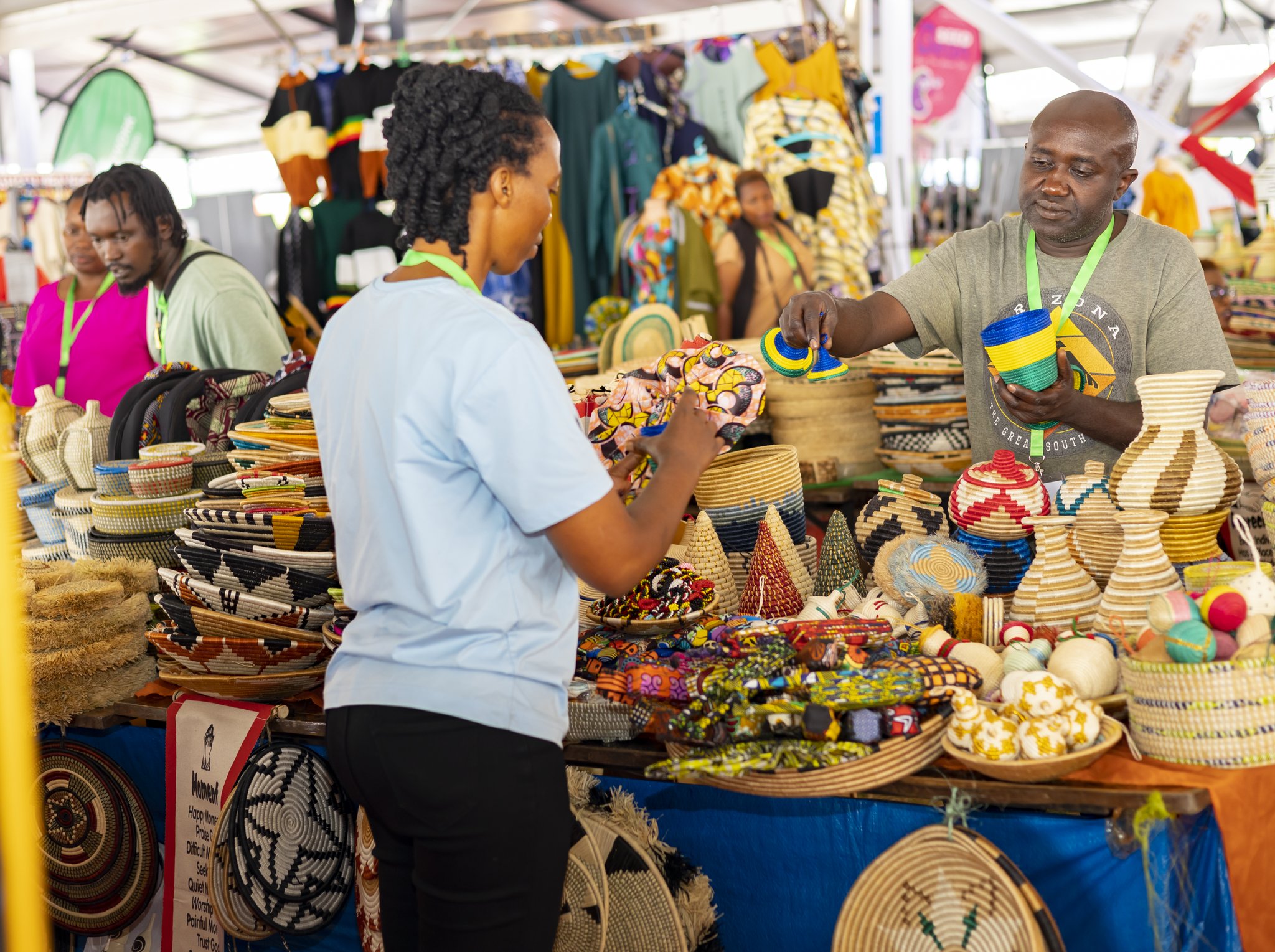
Kenyan President William Ruto on Tuesday paid a visit to Rwandaโ€™s exhibition booth during the official opening ceremony of the 25th East African Community (EAC) Micro, Small, and Medium Enterprises (MSMEs) Trade Fair, currently taking place at Uhuru Gardens in Nairobi.

The Head of State was warmly received by Rwandaโ€™s High Commissioner to Kenya, H.E. Ernest Rwamucyo, who briefed him on the wide range of innovative products being showcased by Rwandan entrepreneurs.

Rwandaโ€™s Strong Presence at the Fair

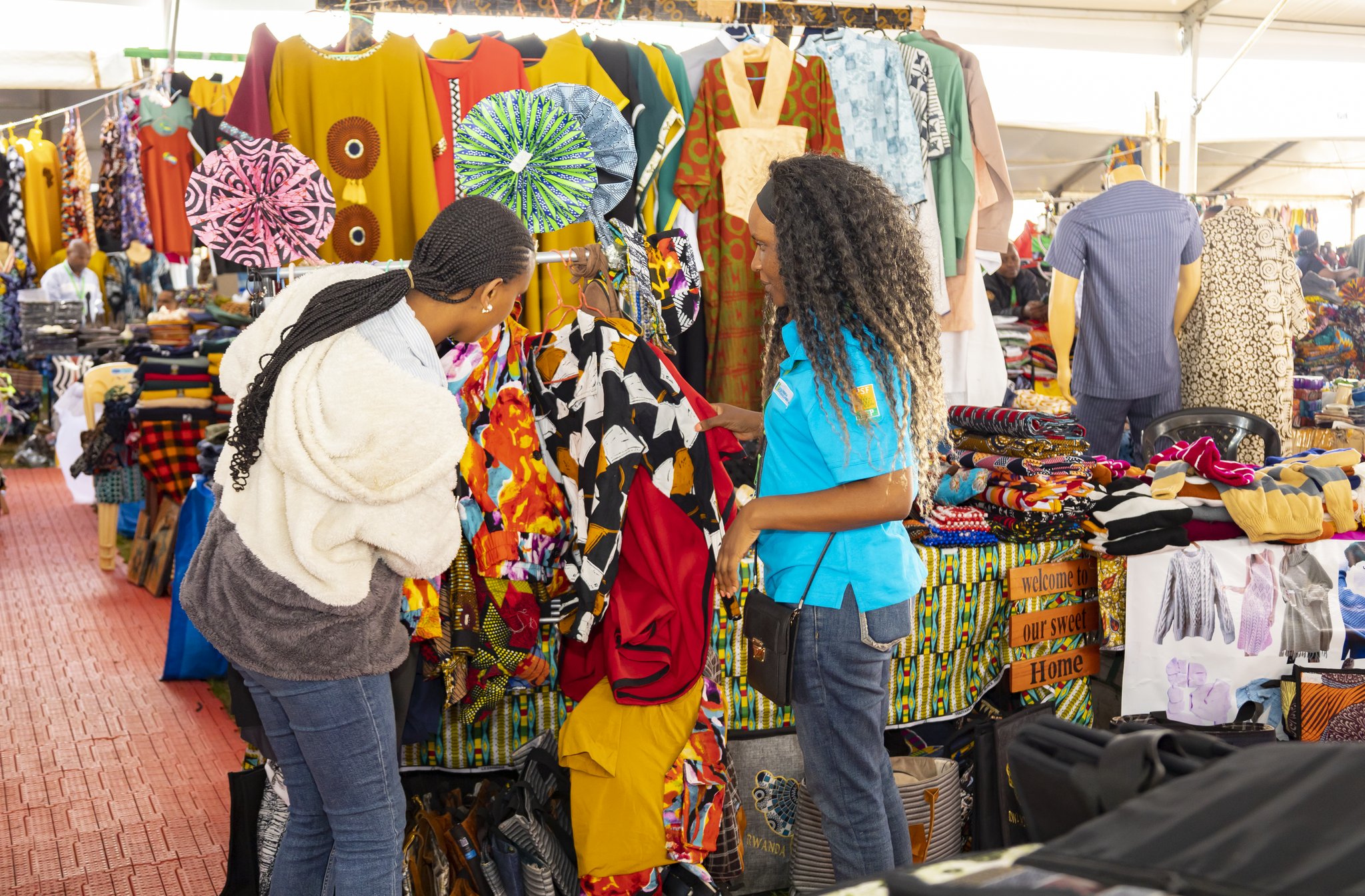
Rwanda is represented by around 100 exhibitors drawn from diverse sectors including agro-processing, handcrafts, leather, textiles, and herbal products. These enterprises are among the most dynamic contributors to Rwandaโ€™s growing export base and regional trade presence.

Speaking at the event, High Commissioner Rwamucyo highlighted Rwandaโ€™s commitment to supporting its MSMEs as engines of innovation, employment, and cross-border cooperation within the East African region.

โ€œRwandaโ€™s participation in this fair demonstrates our strong belief in regional integration and the capacity of small businesses to drive inclusive growth,โ€ he said.

A Platform for Regional Growth

The ten-day trade fair, which runs until Sunday, November 16, 2025, brings together over 3,000 MSMEs from across the EAC region ย ย including Kenya, Uganda, Tanzania, Rwanda, Burundi, South Sudan, the Democratic Republic of Congo, and Somalia ย ย under the theme โ€œConnecting EAC SMEs to Global Value Chains through Innovation, Technology, and Green Growth.โ€

Organized by the EAC Secretariat in collaboration with the Kenya Ministry of Cooperatives and Micro, Small and Medium Enterprises Development, the event provides a platform for entrepreneurs to:

  • Explore new market opportunities,
  • Exchange emerging technologies and business models, and
  • Strengthen regional economic integration.
  • Significance of Rwandaโ€™s Participation

Rwandaโ€™s vibrant participation at this yearโ€™s fair reflects the countryโ€™s sustained efforts to empower small-scale producers through capacity building, export facilitation, and market linkages.

The showcased products illustrate Rwandaโ€™s growing emphasis on quality craftsmanship, sustainable production, and creative industries that embody both cultural identity and economic value.

For many exhibitors, the fair is more than a showcase itโ€™s a gateway to partnerships, business-to-business networking, and visibility across the EAC and beyond.

Regional Collaboration in Focus

President Rutoโ€™s visit to the Rwandan booth underscored the importance of regional cooperation and mutual support among EAC partner states. The Kenyan leader has consistently emphasized the need to strengthen intra-African trade, promote homegrown industries, and reduce barriers that limit cross-border entrepreneurship.

As East Africa continues to move toward deeper economic integration and a unified market of over 300 million consumers, the MSME sector remains a cornerstone of that vision ย ย powering innovation, creating jobs, and fostering sustainable development.
Betty Bayoโ€™s Legacy: Gospel Starโ€™s Friend Vows to Fulfill Her Dream for Daughter Sky as Kenya Mourns a Life of Faith and Music

0

In the days following gospel singer Betty Bayoโ€™s untimely death, her friends and family have been sharing touching memories that reveal the depth of her love, faith, and dreams especially for her daughter, Sky Victor.

Although her life was tragically cut short by leukaemia, the โ€œEleventh Hourโ€ hitmaker had spent her final months making plans for her childrenโ€™s future and nurturing a strong vision of hope and education.

According to her close friend, travel agency owner Sarah Mtalii, Betty had been determined to expose Sky to global opportunities and world-class education.

โ€œShe wanted Sky to become a global citizen,โ€ Sarah said. โ€œThatโ€™s why she planned to send her to the Cambridge University summer camp and, next year, to the Harvard University summer camp. We had so many plans to make our kids better than we are.โ€

Sarah recalled that every conversation with Betty somehow returned to Sky her learning, her curiosity, and the bright future her mother dreamed for her. โ€œThereโ€™s even a museum she mentioned that she thought would inspire Sky. She was so passionate about learning, growth, and giving her child what she never had,โ€ she said.

The two friends had met recently to plan a family vacation for Betty and her son, Danivictor, unaware that it would be their last time together. Beyond their friendship, they shared ambitions to build businesses, travel the world, and raise children who would go further than they ever could.

โ€œShe stood by me last year when I was going through a hard time,โ€ Sarah said. โ€œWe had big dreams to travel the world and invest together. It was Godโ€™s will that she left, but I pray the dreams she had for Sky will come true.โ€

Now, determined to keep her late friendโ€™s vision alive, Sarah has vowed to support Skyโ€™s education and ensure that Bettyโ€™s hopes for her daughter are fulfilled. โ€œMy pledge to Sky is that I will help her achieve all the dreams her mum had,โ€ she said. โ€œPoleni sana to the family and to all of Bettyโ€™s friends.โ€

Betty Bayo: A Tribute to a Life of Faith and Music

Betty Bayo, whose real name was Beatrice Wairimu Mbugua, was one of Kenyaโ€™s most beloved gospel artists. Born in a humble family, she rose to national fame through her hit song โ€œEleventh Hour,โ€ which deeply resonated with listeners across the country. Her music combined themes of worship with everyday realities from heartbreak and financial pressure to parenting and faith all told through a conversational, story-like style that made her relatable to audiences beyond the church.

Her songs such as โ€œNgai Ti Mundu,โ€ โ€œAtasimama Nawe,โ€ and โ€œNikuhadwoโ€ carried messages of hope and perseverance that inspired thousands. Through her music, Betty became a beacon of strength and faith during hardship, touching countless lives with her authenticity and compassion.

Bettyโ€™s personal journey was marked by both triumph and struggle. She was once in a relationship with Pastor Victor Kanyari, with whom she had two children. Their relationship ended following a scandal, but Betty eventually found love again with Hiram Gitau, popularly known as Tosh, and the two held a traditional wedding in 2021. Her openness about her life her pain, faith, and resilience made her one of the most transparent and admired figures in Kenyaโ€™s gospel industry.

In August 2025, Betty revealed that she had been hospitalized due to health complications but did not disclose the seriousness of her illness at the time. It was later confirmed that she was battling advanced blood cancer (leukaemia). Despite her declining health, she continued to post uplifting messages on social media, crediting her strength to Godโ€™s grace and inspiring others through her faith.

Betty Bayo passed away on November 10, 2025, at Kenyatta National Hospital after a courageous battle with leukaemia. Her death sent shockwaves through Kenyaโ€™s gospel community. Tributes poured in from across the country, with Bishop Benson Gathungu Kamau describing her as a woman who โ€œleaves behind a legacy of great contribution to the growth of the gospel music industry, friendship, and a soul that maximised its full potential.โ€

Her story one of resilience, humility, and unwavering belief continues to inspire a generation of gospel artists and believers across Kenya and beyond.

Gospel Singer Betty Bayoโ€™s Body Moved to Kenyatta University Mortuary After Emotional Farewell

0

The body of celebrated gospel musician Beatrice Wairimu Mbugua, widely known as Betty Bayo, was on Tuesday, November 11, officially cleared from Kenyatta National Hospital and moved to the Kenyatta University Referral Hospital Mortuary.

Her husband, Hiram Gitau, oversaw the transfer, which was documented in a video shared by a local YouTuber. The body was transported in an ambulance provided by Jesus Compassion Ministries, the church led by Bishop Ben Kiengei.

The scene outside the mortuary was emotional and chaotic as hundreds of fans gathered to catch a glimpse of the late artistโ€™s arrival, causing a major traffic jam along the road. Among those present was her ex-husband, Pastor Victor Kanyari, who was seen dressed in white as he joined mourners at the facility.

According to a statement from fellow gospel musician Shiru wa GP, the body will remain at the Kenyatta University Referral Hospital Mortuary until all burial arrangements are complete. She said the family would announce the date and venue of the burial later, adding that condolence meetings were being held at Bettyโ€™s Eden Ville home and at Bluesprings Hotel along Thika Road.

Betty Bayo passed away on Monday, November 10, at 1:03 p.m. while receiving treatment at the private wing of Kenyatta National Hospital. A family representative confirmed that she died from acute leukaemia and excessive bleeding, conditions that had worsened rapidly over the weekend.

She was initially admitted to AAR Hospital on Kiambu Road before being transferred to KNH on Friday, November 7, when her health deteriorated. Despite doctorsโ€™ efforts to stabilize her, she did not survive.

Her family described her passing as the will of God and thanked supporters for their prayers and messages of comfort. Both her husband, Hiram Gitau, and her former husband, Pastor Victor Kanyari, were at the hospital when the tragic news was confirmed.

From mourning to miracle: Kisii mother names quadruplets after Raila Odinga in a touching political tribute

0

In a story that has captured hearts and stirred emotions across Kenya, Vane Nyanchoka, a mother from Kisii County, gave birth to quadruplets, three boys and one girl, on November 10, 2025, at Nyanchwa Hospital. The joyous arrival came just weeks after the death of opposition leader Raila Odinga, whose passing on October 15, 2025, plunged the nation into deep mourning.

In a gesture both symbolic and heartfelt, Nyanchoka named her sons Raila, Amollo, and Odinga, and the daughter Ida, honouring the late statesman and his wife. The naming, she said, was her way of paying tribute to a man she admired for decades for his courage, endurance, and unrelenting fight for democracy in Kenya.

โ€œRaila stood for hope and justice for the ordinary people,โ€ Nyanchoka told local reporters. โ€œNaming my children after him and his wife Ida is my small way of keeping that spirit alive.โ€

The quadruplets, born prematurely but in stable condition, have brought Nyanchoka total number of children to six, including her older twins. Doctors at Nyanchwa Hospital described the delivery as successful but challenging, requiring the assistance of multiple specialists due to the high-risk nature of the pregnancy.

Online, Kenyans have reacted with a mix of admiration and debate. Supporters of the Odinga family praised the motherโ€™s choice as โ€œa moving tribute to a national icon,โ€ while others questioned the trend of naming children after political figures.

Nonetheless, many see the births as symbolic, new life emerging from a period of grief. Political analysts noted the timing as poignant, coming less than a month after Raila Odingaโ€™s passing.

โ€œItโ€™s as if life itself is reminding us that legacies donโ€™t die, they are reborn in different forms,โ€ said political commentator George Ongeri.

Local leaders in Kisii have visited the family, offering financial and medical support. Nyanchoka, who comes from a modest background, appealed for continued assistance to help raise the quadruplets.

As Kenya continues to reflect on the life and impact of Raila Odinga, this story from Kisii serves as a reminder that even in mourning, hope and renewal persist, sometimes in the most unexpected ways.

AFC/M23 Spokesperson Lawrence Kanyuka Condemns Drone Attacks by Kinshasa-Backed Forces in Masisi

0

MASISI, DRC : The Alliance Fleuve Congo (AFC/M23) has strongly condemned what it calls โ€œrelentless drone attacksโ€ by coalition forces aligned with the Kinshasa regime, accusing them of deliberately targeting civilians in North Kivu.

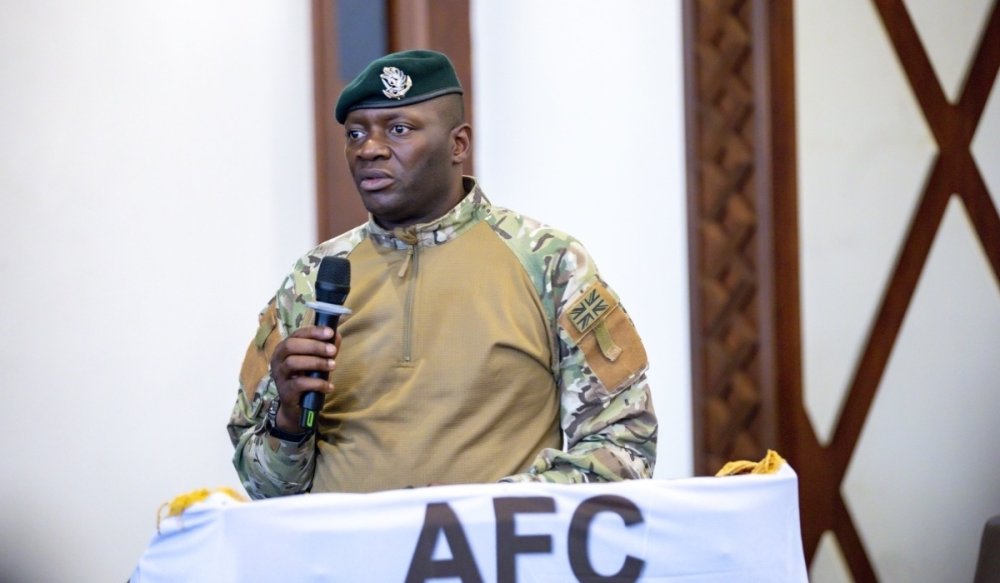
In a statement released on X (formerly Twitter), Lawrence Kanyuka ย the Head of the Department of Communication, Media, Posts, and Telecommunications and official spokesperson for the AFC/M23 ย said the latest strikes took place overnight from Monday, November 10 to Tuesday, November 11, 2025, in the locality of Luki, Masisi territory.

โ€œThese aggressions, which openly violate the commitments of the ceasefire, once again targeted civilian populations,โ€ Kanyuka wrote, adding that the attacks demonstrate a clear disregard for humanitarian norms.

โ€œIn the face of this escalation of violence and crimes against innocent civilians, the AFC/M23 does not merely denounce these repeated violations,โ€ he continued. โ€œOur organization reaffirms its unwavering commitment to protect and defend civilians, who are cowardly targeted by the forces of Kinshasa.โ€

The statement comes amid heightened tensions in eastern Democratic Republic of Congo, where clashes between M23 fighters and government-aligned forces ย including Burundian and Wazalendo militias ย have intensified.

Local observers warn that continued drone attacks and heavy shelling could worsen the humanitarian situation in Masisi and neighboring Rutshuru, where thousands of civilians have already been displaced by renewed fighting.

The spokesperson of AFC/M23, Lawrence Kanyuka, emphasized that the DRC is continuing to prepare attacks against them.

Tensions Escalate as Burundian Troops Reportedly Advance Toward Minembwe

0

Fresh reports reaching Afrovera.com confirm that hundreds of Burundian soldiers mobilized from Bibogobogo on Monday, November 10, 2025, heading toward Minembwe a development that has raised fears of an imminent attack targeting Banyamulenge civilians.

According to local sources, the troops departed from their bases in Gipimo, Ugeafi Ridge, and Gashenyi, all located in the Bibogobogo area. Witnesses say the soldiers passed through Mutambala before proceeding toward Mulima and Mukoko, heavily armed and appearing ready for combat.

One eyewitness told Afrovera.com:

โ€œThey were carrying a lot of equipment heavy weapons and ammunition. It was clear they were preparing for a major military operation.โ€

This movement follows an earlier assault launched last Friday by a coalition of FARDC (the Congolese army), Burundian forces, and armed groups including Wazalendo and FDLR in Nyaruhinga, near Minembweโ€™s central area. The attackers were repelled by the Twirwaneho self-defense group, which successfully defended the territory after the coalition had temporarily captured nearby localities such as Rwitsankuku, Bicumbi, and Marunde.

Sources further reported that on Tuesday morning, additional Burundian reinforcements arrived in Bibogobogo from Baraka.

โ€œAs we speak, they are stationed openly in Bibogobogo ย dozens of them, visibly armed and prepared for battle,โ€ said one resident.

These developments have deepened security concerns across South Kivu, where armed groups like Wazalendo and FDLR continue to target Banyamulenge civilians. Local leaders and human rights observers have repeatedly accused both Burundian and Congolese government forces of collaborating with these militias, worsening the humanitarian crisis in the region.

Ruto under fire: denies abductions, defends police shootings in explosive interview

0

Kenyaโ€™s President William Ruto is facing renewed political scrutiny following a recent interview with Al Jazeera on November 9, 2025, in which he denied the occurrence of any abductions under his administration since taking office in 2022. His statement sharply contradicts previous acknowledgments and reports from the Kenya National Commission on Human Rights (KNCHR), which documented at least 82 abduction cases since June 2024.

During the interview, Ruto defended his July 2025 directive that instructed police to shoot protesters in the leg during nationwide demonstrations over a controversial tax hike. While defending the order, he later claimed that the police operate independently, raising questions about accountability and command responsibility. Analysts have noted that such statements expose a growing tension between executive authority and security operations, a key issue in Kenyaโ€™s ongoing debate over governance and civil liberties.

The President also weighed in on Tanzaniaโ€™s October 2025 elections, expressing scepticism over the official results that awarded a landslide victory to the incumbent. โ€œSuch a result could never happen in Kenyaโ€™s democracy,โ€ Ruto remarked, fuelling debate among political observers and igniting criticism on social media. Many critics pointed to perceived inconsistencies and contradictions in Rutoโ€™s statements, highlighting concerns about credibility and transparency both domestically and in regional diplomatic engagement.

Political commentators argue that these statements reflect a larger pattern of controversial communication by Kenyan leadership, which risks undermining public trust. Opposition figures and human rights advocates have seized on the interview to reaffirm calls for independent oversight of law enforcement, while civil society groups continue to document alleged abuses.

The interview comes at a time when Kenya faces heightened public scrutiny over governance, accountability, and human rights practices. With reports of abductions and police actions during protests still under review, Rutoโ€™s comments have intensified calls for parliamentary and judicial oversight, as well as independent investigation into law enforcement operations.

Analysts suggest that the political fallout from these statements could have implications for upcoming electoral cycles, diplomatic relations with neighbouring countries, and the broader perception of Kenyaโ€™s democratic integrity. As debate continues, the administration faces pressure to clarify its positions on human rights, police conduct, and regional political commentary to maintain both domestic legitimacy and international credibility.

Shakahola massacre trial: the horrifying truth behind Kenyaโ€™s deadly cult

0

Kenya continues to grapple with one of the darkest chapters in its recent history as the trial of controversial preacher Paul Nthenge Mackenzie and his 93 co-accused resumes. This case, linked to the infamous Shakahola Massacre in Kilifi County, has gripped the nation, exposing a chilling intersection of blind faith, manipulation, and unimaginable human suffering. Hundreds of followers of the Good News International Church (GNI) were starved to death under the preacherโ€™s instructions, with children, mothers, and fathers lying in shallow graves in the remote forest, victims of promises that salvation lay in self-inflicted starvation. The sheer scale of the horror, the disregard for human life, and the systematic abuse have left the country in shock and mourning.

The prosecution is now set to present additional witnesses, a process that will unveil yet more stories of cruelty and betrayal. Survivors recount the coercion that led families to sell their land, leave their homes in Nairobi, and relocate to Shakahola Forest, abandoning livelihoods and trusting Mackenzieโ€™s promises of spiritual deliverance. Phone records, forensic evidence, and testimonies from child protection officers depict an environment of rigid control, where education was forbidden, medical care denied, and dissent punished. The nation watches as these pieces come together, revealing a deliberate orchestration of suffering.

The courtroom has become a stage for both grief and the hope of justice. Witnesses describe harrowing scenes of emaciated children and adults, their bodies weakened by forced fasting, as authorities painstakingly worked to rescue the living while counting the dead. Families of the victims, already traumatized, sit through the proceedings with heavy hearts, hoping that the long-awaited truth will finally emerge. With over 400 witnesses expected to testify, the prosecution is determined to hold Mackenzie and his followers accountable for their role in one of Kenyaโ€™s most appalling crimes.

Yet, even amid the horror, the trial casts a stark light on political and societal responsibility. The Shakahola Massacre has raised urgent questions about oversight, law enforcement, and the accountability of religious institutions. How could such a large-scale violation of human rights occur without detection? How can the state ensure that vulnerable citizens, especially children, are protected from manipulation and cruelty? These questions resonate beyond Kilifi, challenging leaders at every level to act decisively in safeguarding citizens from extremism disguised as faith.

As the trial continues, emotions run high. Survivorsโ€™ testimonies evoke both sorrow and courage, while familiesโ€™ pleas for justice remind the nation of the human cost behind the statistics. The story of Shakahola is not just about a cult or a preacher; it is about the fragility of trust, the limits of institutional oversight, and the moral imperative to protect the innocent. Kenyaโ€™s eyes remain on the courts, demanding that justice be swift, transparent, and unwavering.

This trial is more than a legal proceeding; it is a test of the nationโ€™s conscience. The eyes of the world are on Kilifi, and the hearts of Kenyans beat in unison with those who lost loved ones to a preventable tragedy. As prosecutors call witness after witness and evidence continues to unfold, the hope persists that accountability will prevail, that lives taken so cruelly will not be forgotten, and that lessons will be learned to prevent such a nightmare from ever happening again.

The Shakahola Massacre reminds Kenya, painfully and vividly, that faith, when manipulated, can be deadly, and that the fight for justice, truth, and human dignity must never be silenced.

KDF welcomes a new generation of heroes: DFRTS receives cohort 01/25 in Eldoret

0

The Defence Forces Recruit Training School (DFRTS) in Eldoret, Uasin Gishu County, today marked a major milestone with the official reception of Cohort 01/25, a new group of recruits joining the Kenya Defence Forces (KDF) for basic military training.

The event, held at the DFRTS parade grounds, was presided over by Brigadier Alphonce Ndar, who commended the recruits for their discipline, resilience, and determination throughout the recruitment process. He noted that joining the military is not merely a career choice but a lifelong commitment to service, loyalty, and patriotism.

In his address, Brigadier Ndar emphasized the importance of upholding the values of the Kenya Defence Forces, discipline, integrity, and devotion to duty, as the foundation of a successful military career. He encouraged the new recruits to approach their training with focus and dedication, reminding them that the journey ahead would test both their physical endurance and mental strength.

โ€œThe Kenya Defence Forces stand as a symbol of national unity and sacrifice. You are now part of a proud institution whose mission is to protect our sovereignty and uphold peace,โ€ Brigadier Ndar said.

The Brigadier further acknowledged the instructors and training staff at DFRTS for their continued professionalism in shaping the next generation of Kenyaโ€™s military personnel. He assured that the recruits would undergo rigorous training aimed at instilling discipline, teamwork, and operational readiness.

According to KDF officials, the new cohort represents a diverse cross-section of Kenyan youth drawn from all regions of the country, reflecting the Defence Forcesโ€™ commitment to inclusivity and equal opportunity. The recruits will undergo months of structured training in physical fitness, combat skills, leadership, and national values before being deployed to various KDF formations and units.

The event concluded with a ceremonial parade and a symbolic handover of the recruits to the training command, marking the official beginning of their transformation from civilians to soldiers.

The reception of Cohort 01/25 underscores the Kenya Defence Forcesโ€™ ongoing efforts to strengthen its ranks, enhance national security, and uphold its mission of defending the Republic of Kenya against all threats.

Kasarani tragedy: Sonko steps in where the system failed

0

Kenya continues to grapple with grief and unanswered questions following the tragedy that struck during the public viewing of the late Raila Odingaโ€™s body at the Moi International Sports Centre, Kasarani. What was meant to be a solemn national farewell turned into a scene of chaos, tears, and anger, leaving several Kenyans dead and many injured.

According to verified reports, the tragedy occurred when the crowd, overwhelmed with emotion and size, tried to push into restricted areas of the stadium. Witnesses recall moments of confusion as security personnel attempted to restore order. Tear gas was fired to disperse the surging crowd, but the situation quickly escalated, and within minutes, gunshots rang out.

When the dust settled, several lives had been lost, mourners who had simply come to pay their last respects to one of Kenyaโ€™s most iconic political figures.

Among those who lost their lives were Vincent Otieno Ogutu, 36, from Umoja 3; Evans Onyango Kiche, 40, from Njiru; Josfae Jida Burka, 42; and Josephine Anjao Akengโ€™o. Autopsy reports later confirmed that the victims died from gunshot wounds, some to the head and chest. Bullet fragments were recovered from the bodies and handed to the Independent Policing Oversight Authority (IPOA) for forensic analysis.

Human rights organizations have raised concern over what they described as โ€œa disproportionate use of force.โ€ The Kenya Human Rights Commission and other civil society groups have demanded transparency from the police and an independent investigation to determine who ordered the use of live ammunition on unarmed mourners.

Police have yet to issue a comprehensive report, but preliminary accounts suggest the fatalities occurred during a stampede triggered by the crowdโ€™s attempt to breach the VIP area. However, the autopsy findings, which confirm gunshot wounds, have fuelled calls for accountability.

The families of the victims have been left devastated. Speaking to the press, relatives expressed frustration at the slow pace of investigations and the lack of clear answers. They described their loved ones as ordinary Kenyans, fathers, sons, and daughters, who went to Kasarani not for protest or politics but to honour a national leader.

The ODM leadership, under Raila Odingaโ€™s party, met with the bereaved families to offer condolences and support. Party officials pledged to pursue justice and ensure those responsible are held to account.

โ€œThis was a moment of national unity and reflection. Instead, it became a moment of national pain,โ€ one ODM leader said. โ€œWe cannot move forward without truth and justice for the victims.โ€

In the midst of mourning and political tension, former Nairobi Governor Mike Sonko quietly stepped in to offer support. Without publicity or political grandstanding, Sonko paid all mortuary fees at Chiromo and purchased quality caskets for each of the victims.

He ensured that no grieving family had to borrow or beg to bury their loved ones, an act that brought dignity and relief in a time of deep sorrow.

Sonkoโ€™s gesture drew widespread praise across Kenya. Many saw it as a demonstration of empathy rarely seen in the countryโ€™s polarized political environment. His swift and personal intervention served as a reminder that leadership is not only about office or power, but also about compassion, action, and presence in moments of crisis.

โ€œLeadership with heart,โ€ as many described it online, became the phrase that captured his actions.

Even as Kenyans applauded Sonkoโ€™s humanitarian gesture, the broader debate about police conduct, public safety, and political responsibility continued to dominate public discourse. Rights groups argue that the tragedy underscores deep-rooted problems in Kenyaโ€™s approach to crowd management, particularly during highly emotional or political events.

The Independent Policing Oversight Authority (IPOA) has promised a thorough investigation. Bullet casings and fragments recovered from the victimsโ€™ bodies have been sent for ballistic testing to determine whether the shots came from police-issued firearms. The families, supported by civil rights lawyers, have vowed not to rest until justice is served.

Analysts say the Kasarani tragedy has exposed the fragile balance between security control and civil rights in Kenyaโ€™s democratic space. The deaths of unarmed mourners during what should have been a peaceful farewell have reignited questions about accountability and the protection of human life in public events.

As Kenya mourns, one message rings clear: the loss of innocent lives should never be normalized. The Kasarani tragedy stands as a stark reminder that every national gathering demands careful preparation, responsible policing, and above all, respect for human life.

For now, families of the fallen, including that of Vincent Otieno Ogutu, await justice and closure. Their grief has become a symbol of the ordinary Kenyanโ€™s vulnerability in the face of institutional failure.

Yet amid the sorrow, there remains a glimpse of hope. When leadership failed in one corner, humanity rose in another, through the compassion of a man who chose to act rather than watch.