

Home Blog Page 69

Uhuru Kenyatta opens up on his health struggles as he mourns Raila Odinga: a glimpse into the human side of power

0

Former Kenyan President Uhuru Kenyatta has revealed that he has been quietly battling health challenges, a confession that came as he mourned the passing of his long-time political ally and friend, Raila Odinga, who succumbed to cancer.

Speaking during a private memorial gathering, Kenyatta appeared visibly emotional, his voice heavy with grief and reflection. He described Odinga as โ€œa man who defined resilience and courage in public lifeโ€, adding that the news of his death struck him not just as a political loss, but as a personal wound.

โ€œRaila was more than a comrade in politics; he was a brother. We disagreed, we reconciled, and through it all, we both carried scars, some seen, some unseen. I too have been unwell for some time, but his passing reminded me that life is more fragile than power makes it seem,โ€ Kenyatta said.

His revelation has stirred a wave of emotion and introspection across Kenyaโ€™s political landscape, coming at a time when the country continues to grapple with the health, age, and legacy of its veteran leaders. Many Kenyans have interpreted Uhuruโ€™s words as a rare moment of vulnerability from a man known for his calm composure even amid political storms.

Political analysts argue that Kenyattaโ€™s statement reflects a deeper truth about leadership , that behind the strength and symbolism of high office lies a human being susceptible to pain, fatigue, and loss. His candid acknowledgment of illness has also reignited public conversations about the pressures of power, the emotional toll of governance, and the need for leaders to prioritize their health and mental well-being.

The friendship between Uhuru Kenyatta and Raila Odinga was one of Kenyaโ€™s most complex and consequential political relationships, marked by fierce rivalry, historic reconciliation, and shared national vision. Their 2018 handshake reshaped Kenyaโ€™s political destiny, fostering relative calm after years of polarization.

Now, as Kenyatta mourns his ally, his words carry both nostalgia and an unspoken plea for unity. โ€œLet us not allow Railaโ€™s dream of a united Kenya to die with him,โ€ he urged.

Beyond the grief, Uhuruโ€™s moment of openness has humanized him in the eyes of many โ€” a reminder that even those who have wielded immense power are not immune to the vulnerabilities that define all humanity.
Tanzania at a crossroads: democracy under strain after Samia Suluhuโ€™s 98% victory

0

The streets of Dar es Salaam were alive with two emotions, triumph and defiance. As the National Electoral Commission announced that President Samia Suluhu Hassan had won 98% of the vote, supporters of the ruling party erupted in celebration, waving green and yellow flags under the glare of streetlights. But just blocks away, angry protesters filled the roads, chanting against what they called a โ€œstolen election.โ€ The sound of sirens mixed with the roar of voices demanding justice.

For many, it felt less like a celebration of democracy and more like the closing act of a tense political drama. President Suluhu, dressed in her signature headscarf and calm smile, addressed the nation shortly after her victory was declared. She thanked citizens for their confidence and called for unity, describing the results as โ€œa reflection of Tanzaniaโ€™s peace, stability, and shared vision.โ€ Her words, however, were met with disbelief among opposition ranks.

Opposition leaders accused the government of manipulating the vote, citing widespread reports of intimidation, ballot stuffing, and arrests of observers. โ€œThis is not democracy; its control dressed up as an election,โ€ one opposition figure said in a brief statement before going into hiding.

In several regions, especially Arusha and Mwanza, demonstrations turned violent as police fired tear gas to disperse crowds. Dozens were arrested, and internet access was intermittently disrupted, cutting off live coverage of the unfolding chaos.

International observers from the African Union and East African Community voiced concern over the credibility of the vote, noting that some of their missions were denied access to polling stations. Human rights organizations urged the government to avoid excessive force and protect freedom of assembly.

Despite the unrest, President Suluhuโ€™s supporters see her overwhelming win as a mandate for continuity and progress. They praise her calm leadership style and her efforts to stabilize Tanzaniaโ€™s economy after years of turbulence. โ€œSheโ€™s the mother of the nation,โ€ said one jubilant supporter in Dodoma. โ€œWe trust her completely.โ€

But for others, the 98% victory is a sign of something more troubling, a warning that Tanzaniaโ€™s democracy may be slipping further into authoritarian control. โ€œWhen one candidate wins almost every vote in a country this divided,โ€ said a political analyst in Dar es Salaam, โ€œit raises more questions than answers.โ€

As dawn breaks over Tanzania, the smell of smoke still lingers in the air. Some celebrate what they believe is a new chapter of progress, while others mourn the death of electoral integrity. Between these two realities stands President Samia Suluhu, a leader whose power has never been stronger, yet whose legitimacy has never been more contested. Tanzania watches, anxious and uncertain, as its future balances between unity and unrest.

The cry of a nation: Tanzaniaโ€™s long walk from peace to pain

0

The sound of gunfire has replaced the rhythm of daily life in Tanzaniaโ€™s biggest cities. Once known for its peace, the nation is now trembling under the weight of its own silence. From the heart of Dar es Salaam to the highlands of Arusha, thousands of citizens are pouring into the streets, demanding not riches, not revenge, but recognition.

For months, frustration has been building. Rising living costs, unemployment, and political repression have hardened the voices of a restless generation. The final spark came during the October 2025 elections, which many citizens believe were neither free nor fair. What began as peaceful gatherings quickly turned into a national outcry? The governmentโ€™s response was immediate and forceful. Security forces filled the streets, tear gas clouded the air, and the internet went dark.

Witnesses describe the chaos as unbearable. People running, shouting, praying, and then silence. In that silence, hundreds fell. Opposition figures claim that more than 700 citizens have been killed since the protests began, while thousands more have disappeared into undisclosed detention centers. Amnesty International has called for an independent investigation, but the government has dismissed reports of excessive force as โ€œexaggerated foreign propaganda.โ€

Yet behind every statistic lies a story. A mother in Morogoro kneels beside a framed photo of her 19-year-old son, who was shot while holding a handmade sign that read โ€˜โ€™Justice is our birth right.โ€ She does not shout or curse; she simply whispers, โ€œHe wanted a better Tanzania.โ€ Her grief echoes through every neighbourhood, every family, and every tired heart that once believed their country would never come to this.

The government insists it is restoring order. But many ask: what kind of order grows from the blood of citizens? President Samia Suluhu Hassan, once hailed as a reformist leader and a symbol of calm leadership after the Magufuli era, now finds herself accused of betraying the very ideals she promised to protect. Her administration argues that the protests have been hijacked by โ€œforeign-funded elements,โ€ a claim rejected by opposition leader Tundu Lissu, who says the government is โ€œhijacking democracy itself.โ€

Across the border in Kenya, trucks stand idle at Namanga. Trade has slowed, travellers have been stranded, and business owners fear the unrest may spill over. Kenyaโ€™s foreign ministry has urged restraint and dialogue, but for Tanzanians, those words sound distant, like a sermon preached to the deaf.

In the absence of communication, the country feels suffocated. The internet blackout has silenced journalists, cut off families, and erased digital traces of a movement that refuses to die. Yet even without technology, stories find their way, whispered through doorways, sung in churches, scribbled on walls. One message scrawled in red paint on a bridge in Dar es Salaam reads: โ€œYou can shut down the internet, but not the truth.โ€

The world watches quietly. Global powers have issued cautious statements calling for calm, while human rights organizations continue to document abuses. But on the ground, the sense of abandonment grows. โ€œMaybe African blood is too cheap to matter,โ€ said one protester before vanishing into the crowd. His words sting, not because they are angry, but because they are true to the despair of a people who feel unseen.

As night falls, the city grows darker, not just from power cuts, but from fear. Curfews have emptied the streets, but not the hearts of those who dare to dream. Beneath the heavy silence, something powerful is shifting. A movement once described as chaos has become a mirror, reflecting a nationโ€™s longing for dignity.

Tanzania today is not just fighting for votes or reforms. It is fighting for its soul. Whether the government listens or chooses repression, history has already turned a page. The people have spoken, not through speeches or ballots, but through courage and pain. And when a nation begins to cry with one voice, even those in power must eventually listen.

For now, the world waits. The candles of mourning still burn, the streets still whisper, and hope, fragile but alive, flickers somewhere in the smoke. Tanzania is not collapsing; it is awakening. And no government, however strong, can stop the morning once the night has lost its fear.

Tanzania on the brink: UN confirms deaths as nation faces its deepest political crisis in decades.

0

The United Nations has confirmed receiving credible reports indicating that at least 10 people have been killed in parts of Tanzania, including Dar es Salaam, Shinyanga, and Morogoro, amid a growing wave of post-election unrest that has shaken the nation.

In a statement released from Geneva, the UN Human Rights Office said the deaths were linked to excessive force used by security agencies during demonstrations contesting the disputed election results. Witnesses and local rights groups reported that live ammunition and tear gas were deployed to disperse peaceful protesters, triggering panic and chaos across multiple towns.

โ€œWe continue to receive alarming reports of the use of excessive force by security personnel. We call for an immediate, independent investigation and for those responsible to be held accountable,โ€

In Dar es Salaam the countryโ€™s economic hub, witnesses described scenes of terror as security forces fired into crowds chanting pro-democracy slogans and calling for the election to be annulled. In Shinyanga, viral videos showed residents fleeing as shots rang out. Local rights monitors said at least three people were confirmed dead in Morogoro after police opened fire to disperse demonstrators.

While the UN cites a conservative figure of at least 10 deaths, opposition leaders insist the toll is dramatically higher, claiming that more than 700 people may have been killed nationwide since protests erupted earlier this week.

โ€œWhat we are witnessing is one of the darkest moments in our nationโ€™s history. Citizens are being executed for demanding their rights, โ€œan opposition leader, speaking anonymously for security reasons.

The Tanzanian government, however, has rejected the claims as โ€œgrossly exaggerated,โ€ insisting that the situation is โ€œunder controlโ€ and that security forces are only targeting โ€œcriminal elements.โ€ But independent reports suggest otherwise, with videos and eyewitness accounts revealing scenes of brutality that have sparked widespread outrage.

The unfolding crisis has drawn the attention of regional powers and international organizations. Neighbouring countries, including Kenya, Uganda, and Zambia, have urged calm and called for inclusive dialogue between the government and opposition leaders.

The East African Community (EAC) expressed deep concern, reminding Tanzania of its long-standing reputation as a beacon of peace and stability in the region. Analysts warn that the unrest could destabilize not only Tanzania but the broader East African region, especially if heavy-handed security crackdowns continue.

โ€œWhatโ€™s happening in Tanzania is not just a national issue, itโ€™s a regional warning. When democratic institutions are undermined, the entire neighbourhood feels the shockwaves, โ€political analyst from African Democracy Watch, Nairobi.

Both the UN and human rights organizations have urged Tanzanian authorities to respect freedom of assembly and expression, warning that silencing dissent could deepen the countryโ€™s crisis.

โ€œDemocracy cannot survive under the weight of bullets,โ€ one human rights advocate said. โ€œTanzania must choose dialogue over repression.โ€

As information remains tightly controlled and internet restrictions persist, it has become increasingly difficult to verify casualty numbers. However, the consensus among observers is clear, Tanzania is facing its most serious political crisis in decades.

If urgent steps are not taken to restore trust and accountability, experts warn that the countryโ€™s image as a peaceful democracy could be irreparably damaged, with lasting repercussions on its economy, governance, and international relations.

Tanzaniaโ€™s breaking point: protesters torch Police Station in cry for justice

0

Unrest in Tanzania has intensified after protesters set fire to a police station in one of the country’s regional towns, signalling a dangerous escalation in the ongoing wave of anti-government demonstrations.

According to local authorities, security forces were deployed to contain the blaze and disperse crowds after the incident, which occurred late Wednesday. Officials have confirmed that no casualties were immediately reported, though the full extent of the damage remains unclear.

The protests, which began earlier this week, have spread across several regions, fuelled by growing public frustration over economic hardship, political restrictions, and what demonstrators describe as the governmentโ€™s tightening grip on freedom of expression. Eyewitnesses reported scenes of chaos as police fired tear gas and made several arrests in an attempt to restore order.

In a statement released Thursday morning, the Ministry of Home Affairs urged citizens to remain calm, warning that law enforcement would not hesitate to act against โ€œany individuals involved in acts of violence or destruction of public property.โ€

Human rights observers, however, have called for restraint, expressing concern that the governmentโ€™s heavy-handed response could further inflame tensions. โ€œTanzania is walking a delicate line between maintaining order and respecting civil liberties,โ€ one regional analyst noted.

As the country grapples with the growing unrest, communication blackouts and internet disruptions have also been reported in some areas, making it difficult to verify reports or share information on the ground.

For now, the charred remains of the police station stand as a stark symbol of a nation in turmoil, one struggling to balance authority, dissent, and the demand for democratic space.

Chaos at the border: Kenya calls for calm after violent Namanga Protests

0

Tension gripped the Namanga border on Thursday as violent protests erupted, turning one of East Africaโ€™s busiest crossings into a battlefield of smoke, anger, and uncertainty.

What began as a peaceful demonstration by traders soon spiralled into chaos, with police clashing with protesters amid chants demanding justice and fair treatment at the border. Tear gas filled the air as vehicles screeched to a halt, travellers stranded between two nations suddenly caught in a storm of frustration.

By afternoon, both sides of the border, the Kenyan and Tanzanian posts, had fallen eerily silent except for the heavy presence of security officers.

Kenyaโ€™s government swiftly responded, calling for calm and strict adherence to the law. In a strongly worded statement, the Ministry of Interior urged citizens to remain peaceful and allow authorities to investigate the cause of the violence.

โ€œWe call upon all Kenyans to respect the law and maintain peace. Cross-border issues must be handled through proper diplomatic and legal channels,โ€ the statement read.

โ€œWe just wanted our voices heard,โ€ said one trader from Namanga. โ€œBut now our businesses are closed, and people are scared to even cross the border.โ€

The Namanga border is not just a checkpoint, itโ€™s a lifeline connecting families, traders, and travellers between Kenya and Tanzania. Every day, hundreds of trucks ferry goods vital to both economies. Disruptions here ripple far beyond the dusty border town.

Regional analysts have warned that the unrest, if not contained, could strain relations between the two East African neighbours.

โ€œThis is more than just a protest; itโ€™s a reflection of deeper frustrations over trade, fairness, and governance,โ€ said a Nairobi-based political commentator.

By evening, calm had largely been restored, but the unease lingered โ€” a reminder that beneath the surface of trade and diplomacy lies a fragile peace that demands constant care.

As both governments pledge dialogue and cooperation, the people of Namanga hope for one thing above all: stability, and the freedom to live and trade without fear.

Inside MRDP/Twirwaneho: How the Banyamulenge Resistance Movement Became a Voice for Survival, Dignity, and Peace in Eastern Congo

1

MRDP/Twirwaneho, widely known simply as ยซTwirwaneho, ยป is a political and social movement born out of decades of persecution and displacement in the highlands of Minembwe, Itombwe, and Fizi in South Kivu, Democratic Republic of Congo. Its name, meaning, ยซLetโ€™s defend ourselvesยป in Kinyamulenge, embodies a spirit of resilience, unity, and moral defiance against oppression. For thousands of Banyamulenge, Twirwaneho represents not just a movement but also a lifeline an assertion of existence in a country that has often treated them as outsiders.

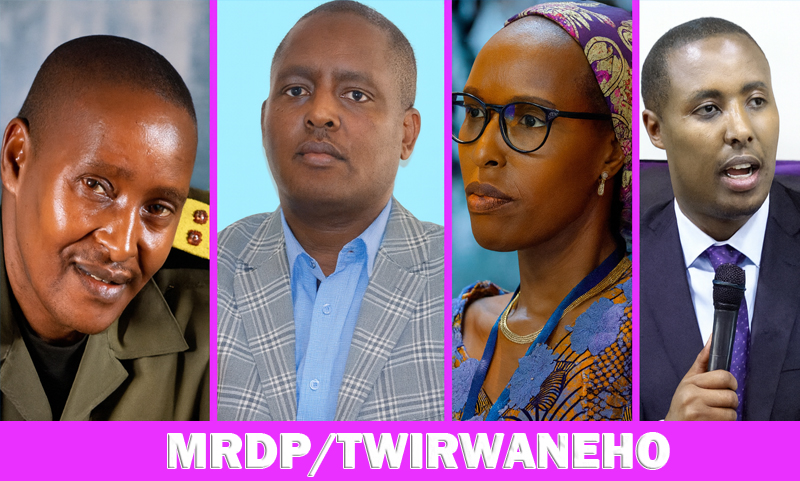
At the helm of this movement stands Freddy Kaniki Rukema, the current President, supported by Charles Sematama, widely known as โ€œSebanyana,โ€ who oversees defense and security operations. Reverend Alexis N. Mugisha serves as the Second Vice President in charge of politics and foreign affairs, while Adรจle Kibasumba former President of Mahoro Peace Association acts as the Secretary General. Kamasa Ndakize Welcome, the movementโ€™s spokesperson, has been instrumental in communicating its mission to the public and the media. Together, this leadership has tried to transform Twirwaneho from a local self-defense structure into a coordinated platform for advocacy, humanitarian support, and political voice for the Banyamulenge people.

MRDP/Twirwanehoโ€™s notoriety stems from its unwavering campaign against violence targeting Banyamulenge civilians in South and North Kivu. Through statements, reports, and international collaborations, it has consistently condemned the actions of both rebel militias and elements of the Congolese army accused of human rights abuses.

Its reports have informed regional and international observers, including human rights organizations and peace advocacy groups, about the systematic attacks that have uprooted communities for over two decades. Yet, the movement has not escaped controversy some United Nations sources have noted that parts of Twirwaneho operate as self-defense units, occasionally engaging in armed confrontations. This dual identity, both as a resistance front and as a humanitarian-political voice, continues to fuel debate about its true nature and long-term intentions.

Beyond the battlefield, MRDP/Twirwaneho has emerged as a humanitarian force. It has coordinated food and relief supplies to displaced families, organized peace dialogues across the Great Lakes region from Nairobi to Addis Ababa and Goma and facilitated international advocacy through the Banyamulenge diaspora. For many, the movement has been the only organization capable of speaking for the stateless, the displaced, and the forgotten. Through its diaspora networks in Kenya, Australia, Canada, and the United States, MRDP/Twirwaneho has built bridges that keep alive a shared sense of belonging and cultural pride.

Still, challenges remain. Critics within the diaspora argue that the movementโ€™s communication remains outdated, overly centralized, and inaccessible to younger generations who lack historical context. Financial transparency and accountability are also recurring concerns. To sustain legitimacy, MRDP/Twirwaneho must strengthen its governance, invest in digital communication, and embrace collaboration with civil society and peace-oriented organizations.

For the thousands of Banyamulenge scattered across the globe, the message of Twirwaneho is clear: unity is survival. Participation, whether through financial support, advocacy, or education, is not optional it is existential. The future of the Banyamulenge people depends not only on resisting oppression but also on building institutions rooted in justice, truth, and peace.

As a journalist for Afrovera Media, my analysis finds MRDP/Twirwaneho standing at a historic crossroads. It is no longer enough for the movement to exist as a defensive force; it must evolve into a transformative institution one that educates, empowers, and reconciles. ยซTwirwanehoยป should mean more than self-defense. It should symbolize rebirth, resilience, and the enduring dignity of a people who refuse to be erased from history.

Inside MRDP/Twirwaneho: How the Banyamulenge Resistance Movement Became a Voice for Survival, Dignity, and Peace in Eastern Congo

Dr. Fred Matiangโ€™i makes political comeback as jubileeโ€™s 2027 Presidential hopeful

0

In a bold political move that could reshape Kenyaโ€™s opposition landscape, the Jubilee Party has officially appointed former Interior Cabinet Secretary Dr. Fred Matiangโ€™i as its Deputy Party Leader and endorsed him as the partyโ€™s presidential candidate for the 2027 General Election.

The announcement, made during a closed-door National Executive Council (NEC) meeting in Nairobi, marks the partyโ€™s strongest signal yet of its determination to revive its influence and reassert itself in national politics. Jubilee, once a dominant political powerhouse, has in recent years faced internal divisions and dwindling visibility following the 2022 elections.

Party Secretary-General Jeremiah Kioni confirmed the appointment, praising Dr. Matiangโ€™iโ€™s integrity, discipline, and unwavering public service record. โ€œDr. Matiangโ€™i represents the resilience, courage, and commitment that Jubilee stands for. His leadership credentials are unmatched, and we believe he embodies the change that Kenyans are yearning for,โ€ Kioni said.

Matiangโ€™i, who maintained a low political profile since leaving government, is now set to make a comeback on the national stage. Sources within the party say his nomination also positions him as Jubileeโ€™s representative in the newly formed United Opposition Movement (UOM), a coalition of parties aiming to create a unified front against the ruling Kenya Kwanza administration.

While accepting the nomination, Matiangโ€™i expressed gratitude to the party leadership and called for unity within the opposition. โ€œOur country needs a serious, organized, and value-driven alternative. I am ready to serve and to work with like-minded leaders to rebuild trust in governance and restore hope to our people,โ€ he said.

Political analysts see this as a strategic attempt by Jubilee to reinvent itself under a credible and disciplined leader capable of appealing to the middle class, civil servants, and reform-minded citizens. Others, however, believe the challenge will lie in consolidating the fragmented opposition and reconnecting with grassroots supporters.

The formation of the United Opposition Movement, in which Matiangโ€™i will play a central role, signals growing momentum toward a broader alliance intended to counterbalance the governmentโ€™s influence ahead of 2027.

As the political temperature rises, Dr. Matiangโ€™iโ€™s re-emergence may redefine Kenyaโ€™s opposition politics, and perhaps set the stage for one of the most competitive presidential races in recent memory.

Over 300 People Sentenced to Death in the DRC Since 2024, ACAT Reports

0

According to the Action of Christians for the Abolition of Torture (ACAT), more than 300 people have been sentenced to death by courts in the Democratic Republic of Congo (DRC) since 2024.

In March 2024, the Congolese government officially reinstated the death penalty, ending a moratorium that had been in place for over two decades. Authorities justified the decision as a response to the growing wave of violent crimes, particularly treason and armed robbery in urban areas.

Most of those sentenced are combatants involved in the ongoing conflicts in eastern DRC, including state soldiers convicted of โ€œdesertion,โ€ civilians, and members of the armed group AFC/M23 accused of treason.

Among the high-profile figures reportedly condemned are Corneille Nangaa, leader of the AFC/M23; Bertrand Bisimwa, his deputy; Major General Sultani Makenga, head of the groupโ€™s military wing; and even Joseph Kabila Kabange, who served as President of the DRC from 2001 to 2019.

In addition, many young people from vulnerable backgrounds often linked to Kinshasaโ€™s urban crime gangs known as Kuluna have been sentenced to death after being found guilty of armed robbery in the capital.

ACAT also notes that some convictions relate to individuals accused of attempting to overthrow President Fรฉlix Tshisekedi in May 2024 under the leadership of Christian Malanga. Among those detained was Jean-Jacques Wondo, a Congolese-born analyst holding both Belgian and American citizenship. Following international pressure, Wondo and other foreign nationals were released and repatriated to their respective countries. However, others implicated in the coup attempt remain in detention in Kinshasa.

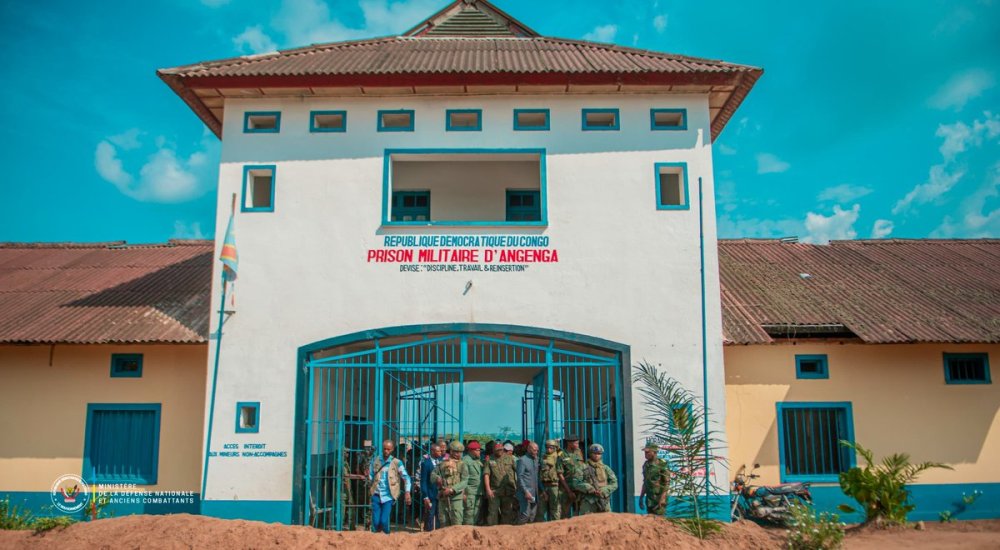
The condemned Kuluna members have reportedly been transferred to Angenga maximum-security prison in Sud-Ubangi Province, where they await execution.

As of now, there has been no official confirmation of any executions being carried out. ACAT, however, urges vigilance and calls on the Congolese authorities to uphold human rights standards throughout the legal process.

Tanzania in turmoil: screams, smoke, and struggle near the Dar es Salaam airport

0

DAR ES SALAAM, The air was thick with smoke, sirens, and fear. As the sun rose over Tanzaniaโ€™s largest city, thousands of demonstrators flooded Dar es Salaamโ€™s streets, chanting for justice and democracy. Within hours, the tension reached the gates of Julius Nyerere International Airport, a symbol of connection to the outside world, now surrounded by anger and uncertainty.

What began as scattered protests over disputed election results quickly transformed into one of the most dramatic uprisings the nation has seen in years? Roads leading to the airport were barricaded, vehicles abandoned, and travellers stranded as the cityโ€™s heartbeat slowed under the weight of unrest.

Government officials insist the airport remains under control, but eyewitnesses describe chaos at its perimeter. โ€œPeople were running, crying, hiding from tear gas,โ€ said one taxi driver caught in the standoff. โ€œNo one could get in or out. It felt like the whole city was collapsing.โ€

Authorities have since declared a dusk-to-dawn curfew, deploying anti-riot police and soldiers across key installations. Internet restrictions have made real-time updates scarce, fueling confusion and fear. Despite official denials of an airport takeover, videos circulating online show protesters chanting near the runway fences, waving flags and demanding that the election results be annulled.

The October 2025 election has divided Tanzania, with critics accusing the ruling party of silencing the opposition and manipulating the vote. President Samia Suluhu Hassan, in a national address, urged citizens to โ€œchoose peace over chaos,โ€ while opposition figures called for international intervention.

Beyond the smoke and slogans, ordinary Tanzanians are the ones caught in the middle, parents keeping children indoors, business owners shuttering shops, and travellers sleeping in their cars. โ€œWe just want to live in peace,โ€ said a woman clutching her luggage near Temeke. โ€œWe are tired of crying for our country.โ€

As the curfew deepens and communication lines falter, Tanzania stands at a crossroads. Whether calm will return or chaos will harden into crisis may depend on what happens next, not just at the ballot box, but in the hearts of those demanding change.