Home Blog Page 70

Tanzania on the brink: protests erupt as government orders workers to stay home

0

The Government of Tanzania has directed all public servants to work from home on Thursday, October 30, 2025, amid fears that anti-election protests could intensify across major cities.

Government spokesperson Gerson Msigwa announced the directive on Instagram, citing a security order issued by the police for residents of Dar es Salaam, where demonstrations have continued since Election Day.

โ€œThese extraordinary times call for extraordinary measures,โ€ Msigwa wrote, adding that all government employees are to work remotely, except for those whose duties require physical presence , as determined by their supervisors. The statement further urged private-sector employers to follow suit to ensure public safety.

The U.S. Embassy in Tanzania has also advised its staff and citizens to stay indoors and limit movement to essential activities only. In a notice released Wednesday evening, the embassy said operations on Thursday would be restricted to emergency and core services.

Wednesday, October 29, was Election Day in Tanzania, when citizens voted for the president, members of parliament, and regional representatives. However, for the first time in the countryโ€™s modern history, the day was marred by violent protests in several towns, primarily led by young people demanding free and fair elections.

In Dar es Salaam, major roads were blocked, shops vandalized, and fires lit across key intersections, including one near a police station. Reports indicate that two people, a civilian and a police officer, were killed, while several others were injured.

Medical sources at Muhimbili National Hospital confirmed they had received multiple casualties from the unrest.

The human rights watchdog Amnesty International has called on Tanzanian authorities to launch an independent and transparent investigation into allegations of excessive use of force by police officers.

Meanwhile, local businesses say they have suffered massive losses due to the unrest and the governmentโ€™s decision to restrict internet access.

Entrepreneur Paul Boniface expressed frustration on social media, writing, โ€œShutting down the internet is like shutting down our economy. Online business is our lifeline.โ€

The protests have left destruction across several neighbourhoods , including Kimara, Magomeni, Ubungo, Kinondoni, Shekilango,and Tandale, where government offices, shops, and even part of the TAKUKURU (Prevention and Combating of Corruption Bureau) building were reportedly damaged.

On the island of Zanzibar, vote counting continues peacefully, although uncertainty and tension remain high across the mainland.

As of Thursday morning, internet connectivity across Tanzania remains largely shut down, further fueling speculation and frustration among citizens calling for transparency in the release of election results.

What is unfolding in Tanzania reflects a deeper struggle for democratic accountability across Africa. When citizens lose faith in the electoral process, the governmentโ€™s first duty should be to listen, not to silence. Internet blackouts and emergency decrees may suppress voices temporarily, but they do not restore legitimacy.

Tanzania now stands at a crossroads: either embrace the courage to uphold transparency and dialogue, or risk sliding into a cycle of mistrust and repression. The peopleโ€™s voices, not bullets, should define the nationโ€™s political future.

Tears of Africa: Ghanaโ€™s President Akufo-Addo flies to Kenya to honour Raila Odinga, the true son of the continent

0

Ghanaโ€™s President Nana Addo Dankwa Akufo-Addo has paid an emotional tribute to Kenyaโ€™s Raila Odinga, calling him a visionary leader who shaped Africaโ€™s democratic journey. The Ghanaian head of state travelled to Nairobi to honour Raila, praising his courage, sacrifice, and lifelong commitment to justice and freedom across the continent.

In a powerful gesture that moved many across the continent, Ghanaโ€™s President Nana Addo Dankwa Akufo-Addo travelled to Kenya to pay his final respects to Raila Odinga, describing him as โ€œa continental leader whose courage and vision defined an entire generation.โ€

Standing before mourners, President Akufo-Addo said his journey from Accra was more than a diplomatic courtesy, it was a personal tribute to a man he called โ€œa true son of Africa.โ€

โ€œI travelled from Ghana to honour Raila Odinga because his vision, courage, and commitment shaped the story of modern Africa,โ€ Akufo-Addo said. โ€œHe was not only a Kenyan leader, he was an African leader, one whose struggle inspired millions beyond his borders.โ€

The Ghanaian leader praised Raila for his decades of service, his resilience in the face of political persecution, and his enduring call for democracy and justice. โ€œRaila taught us that leadership is not about power, but about sacrifice,โ€ Akufo-Addo added.

His visit drew emotional reactions from both Kenyan and Ghanaian citizens online, with many calling it a moment of African unity, a reminder that the ideals Raila stood for reached far beyond Kenyaโ€™s frontiers.

Political analysts have since noted that Akufo-Addoโ€™s words reflected the deep admiration many African leaders held for Raila, a man whose influence helped define Africaโ€™s democratic transition.

As Africa remembers one of its most vocal reformers, President Akufo-Addoโ€™s message captured the mood of an entire continent:

โ€œRaila Odingaโ€™s legacy will live on, not just in Kenyaโ€™s history books, but in Africaโ€™s soul.โ€

Babies before the exams: Meruโ€™s teen mothers defy the odds to stay in school.

0

In the quiet classrooms of Meru County, the sound of pencils scratching on exam papers tells a story far deeper than academics. Among the thousands of students sitting for Kenyaโ€™s national examinations this year are nearly 40 teenage mothers, young girls who are refusing to let motherhood end their dreams.

Nearly 40 teen mothers in Meru defy stigma to sit national exams, proving that education can still thrive after motherhood.

For these girls, every page turned in the exam booklet is an act of defiance, against stigma, poverty, and the silence that too often surrounds teenage pregnancy.

At one local health facility, records show over 1,000 deliveries by teenage mothers in a single year, a heart breaking statistic that paints the reality behind the numbers. Each figure represents a child raising another child, and a future almost stolen too soon.

But amid the struggle, hope has found a way. Teachers, community health workers, and womenโ€™s groups across Meru have stepped in to support the girls, offering mentorship, childcare, and a second chance at education. Some schools have set aside safe spaces for young mothers to study, breastfeed, and prepare for exams without shame.

โ€œI want my baby to see that her mother didnโ€™t give up,โ€ said one 17-year-old candidate, balancing her infant on her lap before walking into the exam room. โ€œIf I can finish school, she will too.โ€

Education officials in Meru have lauded the girlsโ€™ courage and urged society to replace judgment with support. They say that with proper policies, including access to reproductive health education and stronger protection against child exploitation, fewer girls would face such choices so young.

As the exams continue, these young mothers are not just sitting for tests, they are writing a new story for themselves and their children. One of perseverance, dignity, and the unbreakable belief that itโ€™s never too late to begin again.

Kenyaโ€™s daughters of destiny: how harambee starlets rose from struggle to WAFCON glory

0

Eight years of waiting. Eight years of struggle. But tonight the dream is alive again. Kenyaโ€™s Harambee Starlets are back on the continental stage after sealing their place at the Womenโ€™s Africa Cup of Nations.

The team secured qualification for the 2024 Womenโ€™s Africa Cup of Nations (WAFCON) after an impressive aggregate win over The Gambia, marking a triumphant return since their last appearance in 2016.

The Starletsโ€™ qualification journey was more than just a series of matches, it was a story of resilience, patience, and renewed purpose. Since their last WAFCON participation in Cameroon, the team has faced administrative setbacks, funding challenges, and lost opportunities. Yet, through it all, the playersโ€™ spirit remained unbroken.

Under the guidance of Coach Beldine Odemba, the team has undergone a steady transformation, blending experienced players with a new generation of young talent determined to restore Kenyaโ€™s pride on the continental stage.

The hero of the tie was undoubtedly Jentrix Shikangwa โ€œDogoโ€, who scored in both legs against Gambia. Her clinical finishing and leadership on the pitch reflected not just her growth as a player but also the Starletsโ€™ renewed attacking confidence.

In the first leg, Kenya dominated proceedings, with Dogoโ€™s early goal setting the tone for a disciplined performance. The return leg saw her once again find the back of the net, sealing the aggregate win and sending the team into celebration mode.

With qualification secured, the Starlets will now shift focus to preparing for WAFCON 2024 in Morocco, where they aim to go beyond the group stage, something they narrowly missed in 2016. The tournament will also serve as a platform to showcase Kenyaโ€™s progress in womenโ€™s football and inspire future generations.

Coach Odemba praised her squadโ€™s dedication, saying the qualification was โ€œa reward for belief, patience, and teamwork.โ€ She added that the focus now is on fine-tuning tactics and ensuring the team is mentally and physically ready for Africaโ€™s biggest womenโ€™s football showpiece.

The Starletsโ€™ success is also a reminder of the untapped potential in Kenyan womenโ€™s football. With improved structures, consistent support from the federation, and continued investment in local leagues, Kenya could soon become a formidable force in Africa.

For now, the Harambee Starlets have shown the continent that patience and purpose can indeed lead to glory, and that their long wait was worth every moment.

Africa honours its democracy heroes: Tundu Lissu and Kizza Besigye crowned as champions of freedom and justice

0

In a moment that underscores Africaโ€™s ongoing struggle and progress toward democratic governance, Tanzaniaโ€™s Tundu Lissu and Ugandaโ€™s Dr. Kizza Besigye have been recognized as Champions of Democracy in Africa.

The two veteran politicians received the prestigious honours during the Democracy Union of Africa Conference, an annual event that celebrates outstanding leaders, activists, and reformers who have shown unwavering commitment to the principles of democracy, human rights, and political accountability across the continent.

For Tanzaniaโ€™s opposition leader Tundu Lissu, the award arrives at a politically charged moment. The nation is gearing up for crucial elections, with political tension and public debate intensifying over issues of transparency, freedom of expression, and fair political participation.

Lissu, known for his fearless advocacy for democratic reform and the rule of law, has long been a symbol of resistance against political repression in Tanzania. His recognition by the Democracy Union of Africa is being viewed by many observers as both an international endorsement of his resilience and a call for strengthened democratic practices in his home country.

Ugandan opposition figure Dr. Kizza Besigye, a four-time presidential contender and founding member of the Forum for Democratic Change (FDC), was equally celebrated for his decades-long commitment to the pursuit of democracy and political rights.

Besigye has faced years of detention, intimidation, and political restrictions, yet remains one of the continentโ€™s most vocal advocates for good governance and the empowerment of citizens. His recognition highlights his continued influence in shaping conversations around democracy and political reform in Africa.

The Democracy Union of Africa emphasized that the awards are not merely symbolic, but serve as a call to action for governments, civil society, and citizens to defend democratic values amid growing authoritarian trends across the region.

โ€œTrue democracy is not built in silence or fear,โ€ one conference statement read. โ€œIt thrives when citizens and leaders alike commit to justice, accountability, and freedom.โ€

As Tanzania heads to the polls, observers say Lissuโ€™s award could energize pro-democracy movements within and beyond the country. Likewise, Besigyeโ€™s continued recognition affirms the enduring importance of regional solidarity among African reformers working toward peaceful and participatory governance.

Both figures now stand as reminders that the fight for democracy in Africa is far from over, but it continues to find champions who refuse to give up.

Tanzaniaโ€™s Tundu Lissu and Ugandaโ€™s Kizza Besigye honoured as Africaโ€™s Champions of Democracy for their courage, leadership, and fight for freedom.

Tanzania elections turn chaotic: Police confront youth protesters in Dar es Salaam amid internet shutdown

0

Security forces in Dar es Salaam have dispersed groups of young protesters attempting to stage an unauthorized demonstration in Kimara Kibo, an area situated between Ubungo and Kimara, as Tanzanians headed to the polls on Wednesday.

Witnesses said the crowd began assembling near Resurrection and Life Church, which was recently shut down. The church is associated with Bishop Josephat Gwajima, a former legislator under the ruling Chama Cha Mapinduzi (CCM) party, known for his outspoken criticism of government excesses and human rights violations.

According to reports, officers were deployed in large numbers after the gathering was deemed illegal. The situation prompted a brief confrontation before the area was cleared.

At the same time, Net Blocks, a global internet watchdog, reported significant internet disruptions nationwide, a move that many Tanzanians viewed as an attempt to restrict information flow during voting.

Authorities later announced a curfew beginning at 6:00 p.m., urging residents to remain indoors to maintain โ€œpeace and public order.โ€ Security vehicles were seen patrolling Morogoro Road, a key highway linking Dar es Salaam to the countryโ€™s central regions.

Political analysts say the attempted protest underscores growing frustration among sections of Tanzaniaโ€™s youth and civil rights activists who have been demanding greater political openness and reform. Such public defiance remains rare in Tanzania, where protests are often met with tight security control.

Meanwhile, voting proceeded across the country. President Samia Suluhu Hassan, representing the CCM, is seeking a second term in office. She cast her ballot in Chamwino, in the capital city Dodoma, while her running mate Emmanuel John Nchimbi voted in Kilimani.

Opposition candidate Saum Rashid of the United Democratic Party (UDP) voted in Dar es Salaam, expressing satisfaction with the election process.

โ€œIf I win, Iโ€™ll be grateful; if I donโ€™t, I will respect the will of the people,โ€ Rashid told journalists after voting.

She added that she believed the National Electoral Commission would โ€œhandle the process transparently and deliver credible results.โ€

Seventeen candidates are vying for the presidency, and the electoral body has indicated that official results are expected within 72 hours.

A Miracle Return Frenda Chelangatโ€™s Heartbreaking Journey from Pain to Faith

0

After months of tears, prayers, and uncertainty, Frenda Chelangat, a young Kenyan woman who left home with dreams of a better life in Saudi Arabia, has finally returned home alive.

Frendaโ€™s journey, once filled with hope, turned into a nightmare. While working in Saudi Arabia, she reportedly developed a mental health condition and endured severe physical and emotional abuse. Alone and far from home, her cries for help seemed to fade into silence, until compassionate Kenyans stepped in.

Kesses MP Julius Rutto, moved by her story, wrote to the Ministry of Foreign Affairs describing the โ€œimmeasurable painโ€ Frenda had endured. He revealed that her recruitment agency, NACLA Travel Agency, had allegedly refused to process her travel visa despite her desperate condition.

When her story reached home, the outcry from ordinary Kenyans, leaders, and human rights advocates could not be ignored. The Ministry of Foreign Affairs, through PS Diaspora Affairs Roseline Njogu, worked hand in hand with MP Rutto and Uasin Gishu Woman Representative hopeful Kate Kirui to bring her back safely.

On October 24, Frenda finally landed back in Kenya, weak, shaken, but alive. Her arrival was met with tears of relief and gratitude.

โ€œWe thank God for bringing our daughter, Frenda Chelangat, safely back home after such a painful journey. Her return is a story of faith, resilience, and answered prayers,โ€ said MP Rutto with emotion.

He expressed deep appreciation to PS Roseline Njogu for her swift action and constant compassion throughout the ordeal.

Frendaโ€™s story is one of courage in the face of cruelty, a reminder that behind every statistic is a beating heart, a family waiting, and a nation that must do better to protect its daughters abroad.

She warns Kenya: the silent killer in our Homes, Joyce Kithureโ€™s powerful message

0

Kenyaโ€™s Deputy Presidentโ€™s spouse, Joyce Kithure, has urged the government and industry leaders to take decisive action against the widespread use of lead in consumer products, warning that the toxic metal continues to endanger the health of millions of Kenyans, especially children.

Speaking during the 13th International Lead Poisoning Prevention Week of Action held at the University of Nairobiโ€™s Chiromo Campus on Friday, Kithure emphasized that lead exposure remains one of the most silent yet devastating public health threats.

โ€œLead poisoning is not loud or visible, it creeps quietly into the bloodstream, damaging young minds, impairing organs, and limiting futures before they begin,โ€ she said.

Kithure, who is also a scientist and senior lecturer at the University of Nairobi, said there is no safe level of lead exposure adding that the country must eliminate all sources of contamination. She noted that the toxic element continues to infiltrate Kenyan homes through paints, road markings, old infrastructure, and even childrenโ€™s toys.

โ€œLead is not just a chemical on the Periodic Table, it is an invisible predator that finds its way into homes, classrooms, and streets. We cannot continue to ignore it,โ€ she warned.

According to the World Health Organization (WHO), nearly one in three children globally has blood lead levels that exceed safe limits. Studies conducted in Kenya, particularly in informal settlements and industrial areas, have revealed alarming rates of exposure among children and workers.

Kithure called for a total ban on all products containing lead, urging enforcement of strict manufacturing standards and consistent monitoring of environmental contamination in water, soil, and consumer goods.

โ€œLetโ€™s ensure that โ€˜lead-freeโ€™ is not just a catchy phrase but a real national standard, applied in every classroom, factory, and home,โ€ she said. โ€œEvery Kenyan deserves a clean and safe environment.โ€

She highlighted that the government, in collaboration with stakeholders, has already taken significant steps such as banning leaded paint and fuel, enhancing regulatory compliance, and promoting public awareness campaigns about safe waste disposal and recycling practices.

However, Kithure stressed that the fight against lead poisoning cannot be won by government agencies alone.

โ€œWe need a united front, scientists, policymakers, industries, and communities working hand in hand. That is how we will secure a truly lead-free Kenya,โ€ she concluded.

Kinshasa and M23/AFC Trade Blame Over Ceasefire Violations Amid Renewed Fighting in Eastern DRC

0

The government of Kinshasa and the M23/AFC movement have once again accused each other of violating the ceasefire agreement, following heavy clashes reported this week in North and South Kivu provinces.

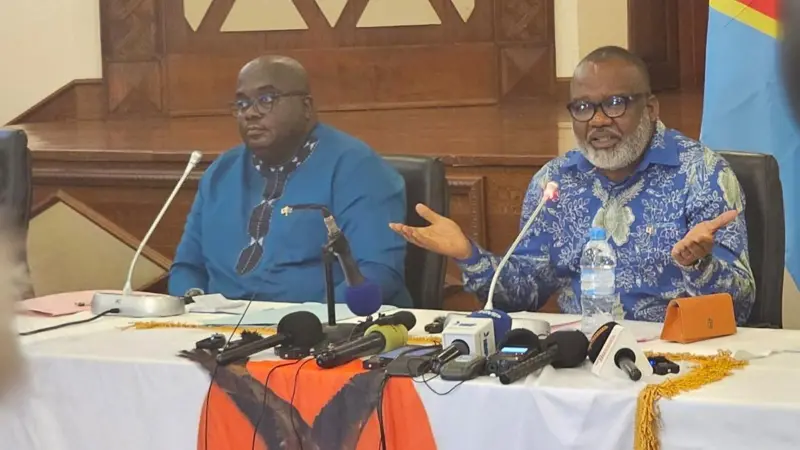
Speaking to the press on Thursday in Goma, M23 leaders claimed that โ€œKinshasa does not want peaceโ€ and warned that from now on, โ€œevery attack from their side will be met with a counterattack.โ€

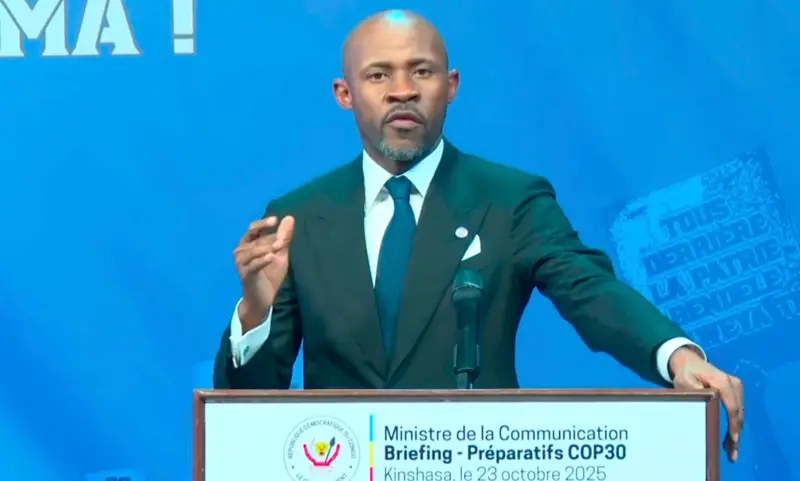
On the same day, Patrick Muyaya, the spokesperson for the Kinshasa government, accused M23 of breaching the truce, telling journalists, โ€œWe know who is violating the ceasefire and who is killing people in Goma and Bukavu.โ€

According to reports from local media in the DRC, fighting between Wazalendo militias and M23 forces in Masisi and Walikale territories earlier this week forced thousands of residents to flee their homes.

The renewed clashes come only weeks after representatives from M23 and Kinshasa held talks in Doha, Qatar, where both sides had agreed to establish a mechanism to monitor the July ceasefire ย a deal that has since seen limited implementation.

In Goma, Corneille Nangaa, head of the political wing of the AFC/M23, accused the Congolese government and its allies of โ€œblockading all routesโ€ in the Minembwe area, causing โ€œwidespread hunger and civilian suffering.โ€ He further alleged that Kinshasa had violated several agreements reached in Doha, saying, โ€œThis proves that the Congolese government remains committed to a purely military solution to this conflict.โ€

Nangaa also accused government forces of conducting airstrikes on populated areas and breaching ceasefire terms โ€œunder the cover of diplomatic language.โ€

Meanwhile, in Kinshasa, government spokesperson Patrick Muyaya insisted that progress was being made under both the Washington and Doha frameworks. He expressed surprise at the continued accusations from M23/AFC, despite mutual commitments to prisoner exchanges, ceasefire compliance, and the establishment of a monitoring mechanism.

Responding to M23โ€™s claims, Muyaya said, โ€œTheir statements are meant to mislead the public. We know who is violating the ceasefire, who is killing people in Goma, Bukavu, and Rutshuru, and who is intimidating the press. We remain focused on fulfilling our obligations to ensure that the Washington and Doha processes move forward.โ€

In Washington this week, envoys from Kigali and Kinshasa met for the third time to discuss steps toward dismantling the FDLR militia and addressing Rwandaโ€™s security concerns.

Kinshasa continues to accuse Kigali of backing the M23/AFC movement, while Rwanda maintains that the Congolese government supports the FDLR ย a rebel group opposed to Kigaliโ€™s leadership.

Muyaya concluded by noting that the ongoing Doha talks aim to address the root causes of the conflict. โ€œWe are waiting for concrete outcomes from Doha,โ€ he said. โ€œFor now, it is not the time to be distracted by side narratives ย more developments will follow.โ€

Speaking during a press briefing on Thursday in Kinshasa, government spokesperson Patrick Muyaya said that the AFC/M23 movement is the one violating the ceasefire agreement.
Bertrand Bisimwa and Corneille Nangaa, speaking at a press conference on Thursday in Goma, eastern Democratic Republic of Congo.

Ruto strengthens his legacy with bold women empowerment initiative

0

President William Ruto has announced the creation of a new government fund aimed at empowering women across Kenya through large-scale training and capacity-building initiatives. The program, he said, will benefit over 600,000 women, including single mothers, to help them acquire practical skills and strengthen their economic independence.

Speaking at a womenโ€™s empowerment forum on Thursday, President Ruto said the initiative reflects his administrationโ€™s broader commitment to gender equality and inclusive growth.

ย โ€œWe have set up a fund to train 600,000 women, including single mothers, so they can access better livelihoods, start businesses, and participate fully in our economy,โ€ Ruto said.

The training will prioritize vocational education, digital skills, and entrepreneurship, targeting women in rural and informal sectors where unemployment and limited financial access remain widespread.

Ruto emphasized that empowering women is both a social priority and an economic necessity, arguing that Kenyaโ€™s development cannot advance if half its population remains economically excluded. He added that the government will collaborate with county governments, private sector partners, and international organizations to ensure transparency and accountability in managing the fund.

Womenโ€™s groups across the country have welcomed the initiative as a timely response to long-standing challenges. However, advocacy organizations have called for safeguards to ensure equitable access across all regions and that training programs address real market needs rather than serve political interests.

Mary Wanjiku, Chairperson of the Kenya Women Entrepreneurs Forum (KWEF), praised the move as โ€œa long-overdue step toward bridging gender inequality in business.โ€

ย โ€œIf implemented transparently, this fund could transform families led by women who have struggled for years without access to skills or capital,โ€ she said. โ€œThe focus on single mothers is particularly commendable.โ€

Yet some experts remain cautious. Dr. Faith Mutua, an economist and gender policy researcher, noted that previous empowerment programs have faltered due to bureaucracy and poor oversight.

โ€œThe problem has never been the number of funds but how they are managed,โ€ she said. โ€œKenya needs a clear tracking system to ensure resources and training reach the grassroots, especially rural areas where most single mothers live.โ€

For many women, however, the announcement brings hope. Grace Atieno, a single mother from Kisumu, expressed optimism.

โ€œThis could change everything for us. Many of us are hardworking but lack the skills and capital to move forward. If the training is real, we are ready.โ€

If effectively implemented, the womenโ€™s training fund could become a major milestone in narrowing economic disparities and advancing Kenyaโ€™s vision of inclusive, gender-balanced growth.