Home Blog Page 142

Father of Shot Protest Victim Scammed Ksh200K by Fake Health Officials

0

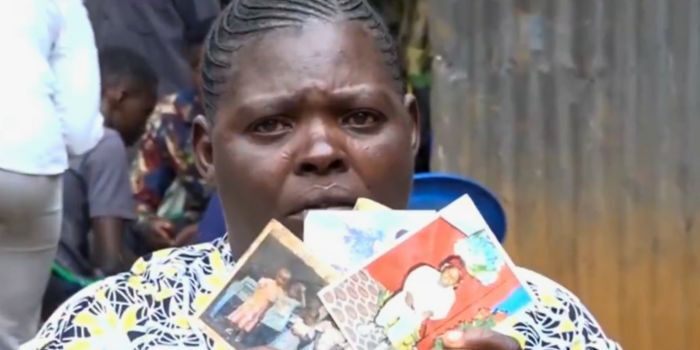
In the wake of nationwide protests that have left families grieving and communities in distress, one father’s tragedy has been compounded by a cruel scam. Jonah Kariuki, whose 22-year-old son Boniface was shot in the head during the June 17 demonstrations, is now grappling with a fresh blow, being conned out of Ksh200,000 by individuals posing as government health officials. 

According to the family’s spokesperson, Emily Wanjiru, Kariuki was contacted by individuals claiming to work with the Social Health Authority (SHA). The scammers told him they would help clear Boniface’s hospital bills if the family agreed to enroll in the SHA program. 

Believing he was receiving genuine support, Kariuki followed their instructions. He was told that a small fee was required to process the registration. The fraudsters convinced him to share his personal details, including his M-Pesa PIN. 

“I was asked to send Ksh20,500,” Kariuki told Kenyans.co.ke. “But during the transaction, I accidentally sent Ksh200,500. By the time I realized it, it was too late.” 

The scammers quickly switched off their phones and erased all evidence, including the M-Pesa transaction message. Kariuki’s attempts to recover the stolen funds have so far been unsuccessful, but he says he is now working with authorities to track down the perpetrators. 

This heartbreaking incident comes as Boniface, a mask vendor, fights for his life at Kenyatta National Hospital. He has already undergone two surgeries to remove bullet fragments lodged in his head. According to medical reports, Boniface was brought to KNH’s Accident and Emergency unit at 3:16 PM on the day of the protests in a critical condition. 

The family has announced plans to hold a press briefing outside the hospital to update the public on Boniface’s health and to raise awareness about the increasing cases of fraud targeting vulnerable families. 

Kenyans are reminded that registration with the Social Health Authority is completely free. No money or PIN codes should be shared with anyone claiming to offer registration services. Official registration can be done via USSD, online platforms, or through employers. 

As the nation continues to process the emotional and political weight of the protests, Kariuki’s story serves as a painful reminder of how far bad actors will go to exploit those in crisis. 
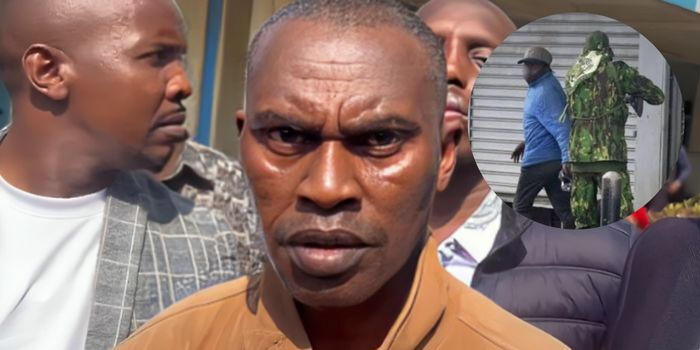
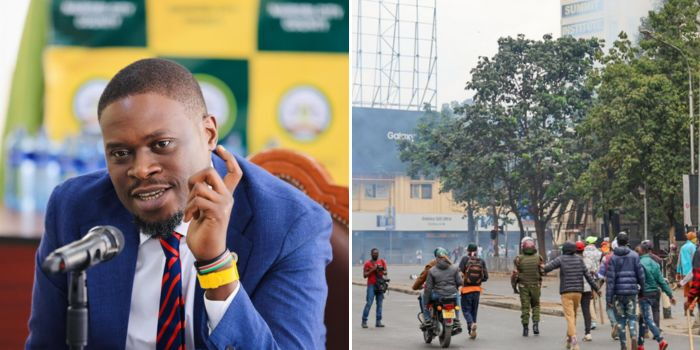
Jonah Kariuki, father to Boniface Kariuki, June 19, 2025. Photo: Screengrab
Boniface Kariuki, a 22-year-old hawker shot by police in Nairobi CBD, addresses the press on Wednesday, June 18, 2025. Photo: Okiya Omtatah
A screengrab of Susan Njeri, mother to Boniface Kariuki, the mask vendor who was shot by a police officer during protests in Nairobi on Tuesday, June 17, 2025. Photo: NTV

Ruto Admits His Administration Is Struggling, But Says Help Is On the Way

0

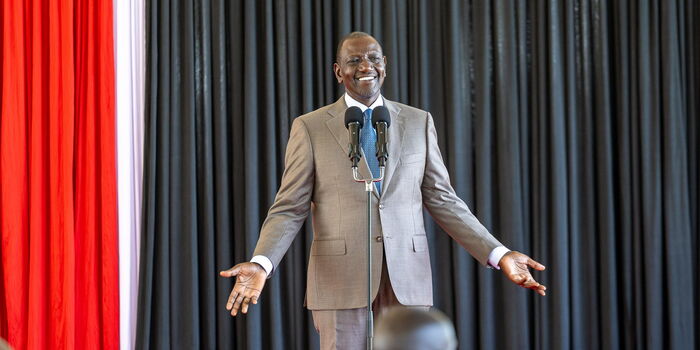
In a candid shift from political bravado to administrative realism, President William Ruto has openly acknowledged that his government is facing significant structural and operational challenges that are hindering its ability to serve Kenyans effectively.  

The admission, which came through an official communiqué from State House, revealed that budgetary gaps, inefficient project execution, and weak coordination across government agencies are among the major issues undermining service delivery. 

The statement noted that several critical systems are either underperforming or entirely broken, including mechanisms for monitoring and evaluating government programmes. A lack of inter-agency collaboration, poor alignment between national and county governments, and slow bureaucratic processes have created a landscape where delivery lags behind ambition. 

Perhaps more telling, the President highlighted global challenges as contributors to Kenya’s internal struggles. Geopolitical tensions, climate shocks, technological disruptions, and the rise of misinformation have not only destabilised global systems but also infiltrated the domestic policy environment. According to the President, these external factors have weaponised public frustrations, leading to growing agitation and reduced trust in state institutions. 

But even as the diagnosis revealed a grim reality, President Ruto struck an optimistic tone about the future. His administration has outlined a comprehensive recovery plan, with 20 targeted interventions intended to restore efficiency, build public confidence, and jump-start stalled reforms. The overarching aim is to refocus the government’s delivery model and improve its ability to respond to citizens’ needs. 

A key part of the recovery effort involves reinforcing collaboration across government departments, counties, and public agencies. This includes digitising all services under the e-Citizen platform to curb corruption and reduce administrative delays. The government is also intensifying efforts to strengthen Kenya’s global competitiveness, partly by training youth in foreign languages to increase employment opportunities abroad. 

President Ruto emphasized that Kenya’s economic growth will be driven by a renewed push in agricultural production, manufacturing, and value addition. He also pledged to increase support for small businesses through financial inclusion programmes, expand housing initiatives to stimulate the construction sector, and ensure farmers earn more by facilitating faster access to markets. 

In education, the President committed to addressing the longstanding teacher shortage, particularly as the Competency-Based Curriculum continues its rollout. Infrastructure improvements, such as modern science labs and enhanced school facilities, were also highlighted as top priorities. At the tertiary level, the government intends to fine-tune the university funding model to ensure fairness and transparency in student support. 

Healthcare reforms featured prominently in the recovery blueprint, with the government reiterating its commitment to universal coverage. Every Kenyan and their dependents will be registered under the Social Health Insurance scheme, with accompanying investments in modern equipment and pharmaceutical systems. Long-overdue reforms at KEMSA will be finalised, promising a more reliable medical supply chain across the country. 

President Ruto concluded his message with a strong appeal for patience and unity. He acknowledged the urgency of the challenges but insisted that the government’s new plan was actionable and grounded in real data. If implemented effectively, it could mark a turning point not only for his administration but also for millions of Kenyans who are eager to see promises turned into progress. 

President William Ruto reacts during a meeting with leaders from the African Independent Pentecostal Church of Africa (AIPCA) at State House, Nairobi on June 10, 2025. PCS
A section of the Cabinet during the national retreat at Karen in Nairobi on June 19, 2025. PCS
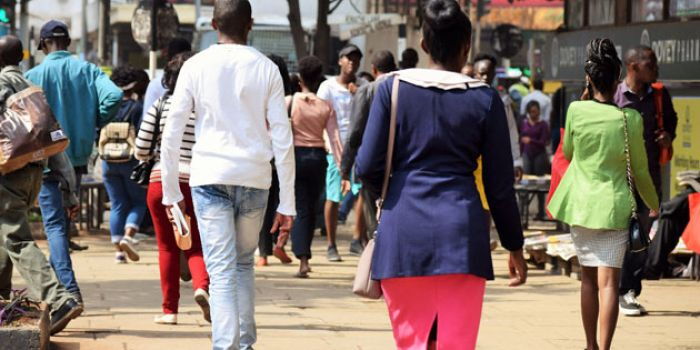
Residents walking in Nairobi Central Business District on Wednesday, 18 May 2022. Photo: Bizna Kenya

Chaos in Nairobi: Cop Caught Firing at Protesters, Flees Scene on Motorcycle

0

A chilling video from Friday’s protests in Mwiki, Kasarani has sent shockwaves across the country, capturing the moment a uniformed police officer aimed and fired at unarmed protesters before speeding off on a boda boda. 

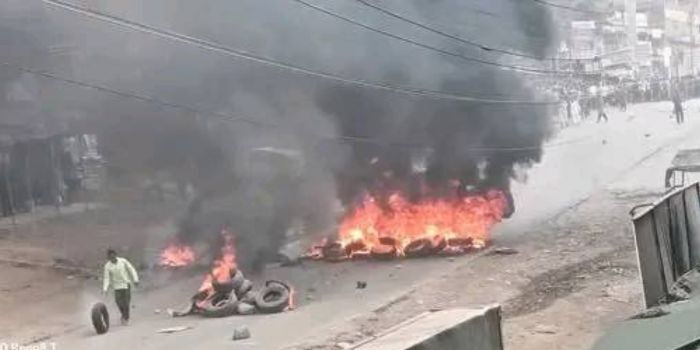
The protests, sparked by the gruesome murder of an 18-year-old woman by unknown assailants, had seen Kasarani residents pour into the streets, demanding justice and security. In a tense standoff along the Sunton–Kasarani Road, demonstrators lit bonfires, blocking traffic and shutting down nearby businesses. Police were deployed to restore order, but what unfolded only deepened the chaos. 

In footage verified by multiple outlets, the officer is seen firing live rounds directly into the crowd before mounting a waiting motorcycle and vanishing into the urban maze. The video has ignited public fury and reopened the conversation on unchecked police brutality in Kenya. 

This incident is not isolated. It follows a grim trend of law enforcement’s violent crackdown on citizens exercising their constitutional right to protest. Earlier this week, two officers, Klinzy Barasa and Duncan Kiprono, were arrested for allegedly shooting and killing Boniface Mwangi Kariuki, a young vendor in the Nairobi CBD during anti-Finance Bill demonstrations. 

As the nation braces for the upcoming June 25 protest, a memorial action to honour Gen Zs killed while opposing the 2024 Finance Bill, many are asking the same haunting question: Who will protect us from those sworn to protect? 

Human rights groups and citizens across Kenya have demanded urgent reforms within the police service. The Independent Policing and Oversight Authority (IPOA) has launched investigations, and the Anglican Church of Kenya (ACK) bishops from Nyanza have gone a step further, urging President William Ruto to dissolve key security units, including the Directorate of Criminal Investigations (DCI), for a complete system reset. 

Kenyans on social media are using hashtags like #JusticeForKasarani, #PoliceReformsNow, and #StopKillingUs to demand accountability, not only for the young lives lost but also for the democratic future they believe in. 

As outrage builds and pressure mounts, one thing is clear: Kenya’s security system is at a critical crossroads. 

Police caught on camera shooting a protester in Mwiki, Kasarani, June 20, 2025. Photo: Screengrab
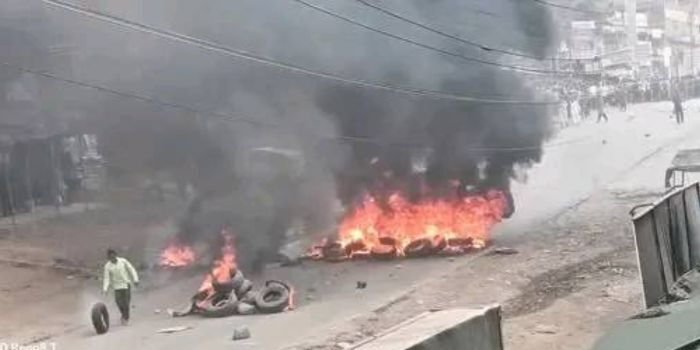
Billows of dark smoke emanating from a bonfire lit by Kasarani residents to protest the death of a 19-year-old girl. Photo: Dantez
The entrance of the Kasarani Police Station in Nairobi. Photo: NPS

“They Promised Us Ksh2,000, Gave Us Ksh50”: Nairobi Goons Reveal Dirty Political Game Behind Protest Chaos

0

A dark underbelly of Kenya’s political manipulation has surfaced following recent protests in Nairobi, with self-confessed goons now speaking out on their exploitation and betrayal by those who hired them. 

The hired disruptors, many from informal settlements like Kibera and Korogocho, have lifted the lid on a disturbing scheme that saw them used as pawns to break up peaceful protests held in memory of slain protester Albert Ojwang on Tuesday, June 17. 

In a revealing report aired by Citizen TV, the men confessed to being mobilised by shadowy figures and promised Ksh2,000 for the day’s chaos. But for most, the pay never came. Some were handed a paltry Ksh50, while others walked away with nothing but injuries and regret. 

“They said we would get the money after the work was done, but we were left with nothing,” one of the young men lamented, his face still bruised from clashes with vigilante groups who turned against them during the unrest. 

The goons reportedly numbering over 80 in just one group, were armed with sticks and unleashed terror in the CBD. Shops were looted, peaceful protesters were attacked, and Nairobi descended into mayhem. Eyewitness videos captured law enforcement standing idly by as the violence unfolded, sparking speculation of police complicity or deliberate negligence. 

The recruits claim they were assembled at known spots such as Greenpark and Dennis Pritt Road, then ferried into the city on boda bodas in coordinated waves of infiltration. But instead of being protected or rewarded, they were ambushed by angry residents and business owners whose lives and livelihoods were upended. 

Several of the goons now bear physical scars, broken limbs, head trauma, and psychological wounds, as evidence of how quickly they were discarded once their purpose was served. 

As the dust settles, public outrage has turned toward political leaders allegedly involved in orchestrating the violence. 

One name repeatedly mentioned is that of Swaleh, a familiar figure with alleged ties to political mobilisations in Nairobi. Swaleh is said to have gone into hiding upcountry, with unverified footage circulating online showing him on his knees, apologizing to unknown parties. 

Nairobi Governor Johnson Sakaja has found himself in the crosshairs of the controversy. Online rumours suggested he had secretly funded the operation, meeting with Swaleh, vocal activist Gaucho, and several unnamed politicians to greenlight the mission. 

“I was not even in the city that day,” Sakaja stated, producing travel records and receipts showing he was in Lugari on official duty. “These claims are false and malicious.” 

He also denied any meeting with Swaleh or Gaucho in the lead-up to the protest and described the allegations as part of a smear campaign aimed at tarnishing his administration. 

This incident adds to a growing concern about the use of vulnerable youth as disposable political tools. With Kenya’s youth unemployment hovering at crisis levels, informal settlement dwellers are often recruited en masse, promised quick cash, and sent into dangerous, often illegal, operations. 

“We are dealing with a generation that’s both angry and desperate,” said political analyst Njeri Mwangi. “As long as the system continues to use them instead of empowering them, we’ll keep seeing scenes like this.” 

This revelation arrives at a tense time in Kenya’s political calendar. With protests, policy debates, and civic movements becoming more frequent and more disruptive, there’s an urgent call for transparency and accountability. 

As public trust in institutions wanes, stories like these only deepen the divide between citizens and the political class. 

For now, those exploited in this most recent scheme are left wounded, unpaid, and perhaps worst of all, forgotten. 

But their testimony may spark a necessary reckoning: one that forces the nation to confront who’s really pulling the strings behind the chaos and at what cost. 

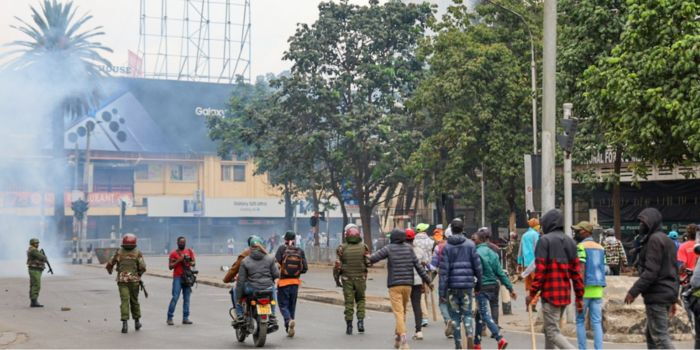
An image of goons who had infiltrated protests in the Nairobi Central Business District (CBD) in the company of police officers on Tuesday, June 17, 2025. Photo: Akbas
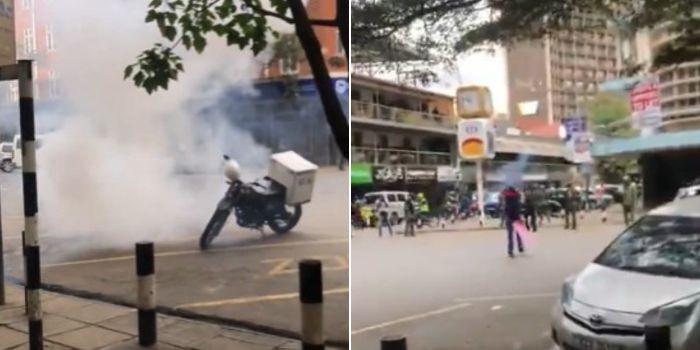
A photo collage of the scenes witnessed following a standoff between police and demonstrators on Kimathi Street, Nairobi on June 17, 2025. Photo: Screengrab/Bishar
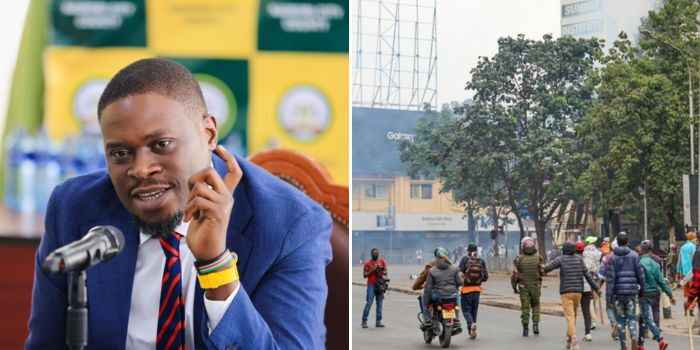
A collage of Nairobi Governor Johnson Sakaja and goons who had infiltrated protests in Nairobi’s Central Business District on Tuesday, June 17, 2025. Photo: Johnson Sakaja Akbas

Boda Boda Riders Speak Out Ahead of June 25 Nairobi Protests

0

As tensions rise ahead of the planned nationwide protests on June 25, the Boda Boda Safety Association of Kenya has come out strongly to disassociate its members from any acts of violence or political manipulation linked to the demonstrations. 

In a bold and emotional statement issued on Friday, June 20, the association clarified that while they support every Kenyan’s constitutional right to protest, they will not be used as pawns in any political games that put their safety, and livelihood, at risk. 

“We are not part of that destruction. We are not tools for political games. We are hustlers, and we ride for peace, dignity, and survival,” the statement read. 

The association acknowledged that the right to protest, as enshrined in Article 37 of the Kenyan Constitution, must be exercised peacefully and lawfully. 

“We respect the Constitution. We believe in Article 37, the right to assemble and protest. But only if it is peaceable and unarmed. No stone, no fire, no looting. Because once violence starts, the Constitution walks away. And so do we.” 

This message comes at a crucial time, especially after violent incidents marred the June 17 protests. Two motorcycles were set ablaze, and a rider was left nursing serious injuries after angry demonstrators turned on them, accusing them of disrupting the rally. 

The association decried the recurring violence that often leaves boda boda riders caught in the crossfire. They emphasized that the riders’ livelihoods depend on a stable environment, and any chaos or blocked roads directly impacts their ability to earn a living. 

“We urge the Government: protect our roads, protect our bikes, protect our lives. We are not looking for favours, we’re asking for fairness,” they said. 

Reasserting their role in society, the statement highlighted the contributions of boda boda riders to the Kenyan economy, from providing emergency transport to serving millions of commuters daily. 

“Boda boda riders have built a name in this country. We help in emergencies, support families, and move the economy. We will not be reduced to pawns in someone else’s war.” 

In a stern warning, the association condemned anyone planning to disrupt boda boda operations during the upcoming demonstrations. 

“To those planning to disrupt our routes and risk our safety: you don’t speak for us. You don’t care about our pain. Don’t hide your chaos behind our helmets.” 

As the country braces for another round of demonstrations, the message from the boda boda community is clear: they ride for peace, not politics, and any threats to their security or livelihood will not be tolerated. 

Motorcycles impounded following the operation in Nairobi on September 28, 2019. Photo: NPS
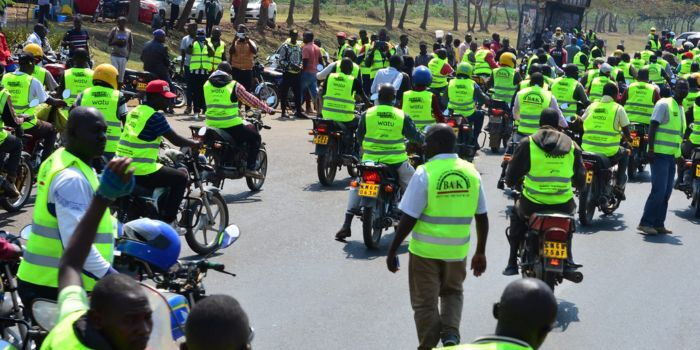
Boda Boda riders from the Boda Boda Safety Association of Kenya(BSAK) on the roads, September 17, 2024. Photo: Boda Boda Safety Association of Kenya

Former Nairobi Governor Mike Sonko (center) with boda boda and TukTuk association leaders after being elected the national patron of the Sacco. Photo: Mike Sonko

Inside the Nairobi Chaos: Sakaja Accused of Bankrolling Goons >> What Really Happened?

0

In the wake of escalating protests in Nairobi, Nairobi County Governor Johnson Sakaja has come forward to vehemently deny claims that he secretly conspired with political figures Gaucho and Swaleh to orchestrate violence during the demonstrations. 

Recent reports had circulated allegations that Governor Sakaja met privately with a group of leaders, including sitting Nairobi MP Gaucho, an MCA, and the contentious figure Swaleh, in a bid to mobilize goons.  

According to these claims, funds amounting to Ksh2 million were allegedly funneled to Gaucho, intended to finance hired troublemakers equipped with machetes and other dangerous weapons to suppress protestors, transforming planned demonstrations into scenes of chaos. 

Governor Sakaja has categorically refuted these allegations. In a swift public statement, he explained that he was not in Nairobi on the day in question. Instead, he provided documented travel evidence proving his presence in Lugari for a church service on Sunday, and his subsequent return to Nairobi on Monday afternoon via Kitale. Sakaja asserted, “Such blatant lies. On Sunday, I was in Lugari for Church and came back to Nairobi on Monday afternoon through Kitale. I have not seen Gaucho since he attended the Mukuru Housing Launch or Swaleh in many months.” The governor’s travel ticket from Kitale corroborates his timeline, directly contradicting the claims that place him in the capital at the time of the supposed meeting. 

Amid the controversy, Gaucho has also commented on the situation, dismissing the rumors and stating that he was not in the country at the time. His remarks further call into question the validity of the allegations surrounding the secret meeting and the orchestration of violence. 

The backdrop to these claims is Nairobi’s turbulent atmosphere. On Tuesday, protests erupted following the tragic death of Albert Ojwang, who died while in police custody, sparking demands for justice among angry youths. What began as peaceful calls for accountability quickly descended into disorder.  

Scenes of looting, vandalism, and violent clashes between protestors and law enforcement gripped the city, with reports indicating that hired goons, allegedly brought in from outside Nairobi, played a role in the mayhem. 

Governor Sakaja has repeatedly emphasized that his office bears no connection to these hired gangs. He strongly condemned the violence and called on the National Police Service to take swift action by arresting those found culpable for the destruction of both public and private property. 

As Nairobi continues to grapple with the unrest, the governor’s clear-cut denial and presentation of evidence serve as a crucial reminder of the importance of transparency in times of crisis. With tensions still high and the quest for justice ongoing, all eyes remain on local authorities to restore order and ensure that accountability prevails over misinformation. 

This unfolding situation not only highlights the challenges facing Nairobi but also underscores the need for accurate reporting and responsible leadership amid politically charged events. The coming days will likely see increased scrutiny over claims made during these sensitive times, with citizens eagerly awaiting further clarifications from both the government and those implicated in the unrest. 

Stay tuned for further updates on this developing story as the situation in Nairobi continues to evolve. 

A collage of Nairobi Governor Johnson Sakaja and goons who had infiltrated protests in Nairobi’s Central Business District on Tuesday, June 17, 2025. Photo: Johnson Sakaja Akbas
Nairobi Governor Johnson Sakaja and a copy of his flight receipts, June 20, 2025. Photo: Johnson Sakaja
Bunge La Mwananchi President Calvince Gaucho (Left), Langata MP Felix Oduor (Centre) and ODM Party Leader Raila Odinga (Right) during a past event in Nairobi. Kenyans.co.ke

“We Paid Rent, But They Still Threw Us Out!” >> Nairobi Tenants Cry Foul Over Brutal Evictions

0

Families left homeless as Nairobi County accused of secret house sales, intimidation, and illegal evictions. 

Tensions are boiling over in Nairobi estates as outraged tenants accuse the county government of orchestrating illegal evictions, despite tenants claiming they had paid their rent in full. 

This week, dozens of families were forcefully removed from county-owned homes across Nairobi. Eyewitnesses say unidentified individuals, allegedly hired by county officials, stormed into houses, damaged property, looted valuables, and paraded around wearing the evictees’ clothes in broad daylight. 

“I had just left City Hall when I got the call,” lamented one shaken tenant. “By the time I returned, my house had been broken into, my bags were gone, and strangers were walking around in my clothes. I had cleared my rent. Why is this happening?” 

Residents say the evictions are not about rent arrears, but a hidden agenda to reclaim the houses for private resale. Many reported receiving no eviction notice and were shocked to learn they had been removed from the official rent payment system. 

“Who was receiving our money if we’re no longer in the system?” one tenant asked angrily. 

Attempts to get clarity from housing authorities have proven fruitless. Tenants say estate officers and housing officials have refused to take responsibility. 

“When we asked what was happening, the estate officer claimed to know nothing. Even the housing director denied any involvement,” said another displaced resident. 

Multiple sources allege that the evictions are part of a covert scheme to sell off the prime estate houses. Some residents claim to have evidence that the homes have already been allocated to new owners at prices of up to Ksh2.5 million. 

“These homes have been in our families for decades,” said a resident of over 30 years. “Now they’re being snatched from us in the most inhumane way possible.” 

The evictions are reportedly part of a broader county-wide operation targeting tenants in county-owned estates. Affected areas include Woodley, Kariobangi South, Kariakor, Ngara, Uhuru Estate, New Pumwani, Lumbumba, Maringo, and Ofafa Jericho. 

While county officials claim the crackdown targets unpaid rent, residents and civil society groups insist due process is being ignored. 

Human rights activists are now calling for urgent investigations into the evictions, demanding justice for affected families and accountability from county leadership. 

“This is not governance, it’s a hostile takeover of public housing,” said one activist. “People deserve dignity, not eviction squads.” 

An image of a house in Buruburu Estate in Nairobi. Photo: Property254
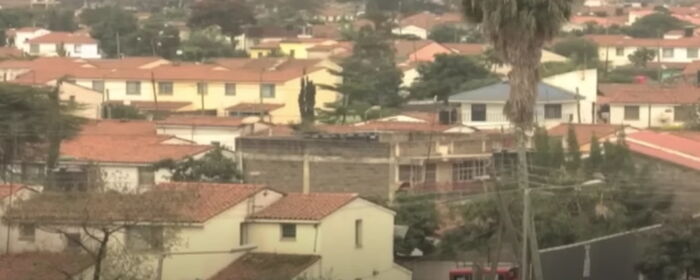
A screengrab of Buruburu Estate, Eastlands, Nairobi County, June 20, 2025. Photo: Screengrab

Nairobi County Governor Johnson Sakaja during a meeting with members of Kenya Property Developers (KPDA) at City Hall, Nairobi, March 19, 2025. Photo: Johnson Sakaja

Outrage in Kasarani as Residents Protest Brutal Murder of 19-Year-Old Girl

0

Tension gripped Nairobi’s Kasarani Estate on Friday as hundreds of residents took to the streets in protest following the brutal murder of a 19-year-old girl under unclear circumstances. 

The lifeless body of the young woman, believed to have recently completed her high school education, was discovered in her mother’s house, bearing signs of a violent attack. Witnesses say blood was visible around her neck and mouth, raising suspicions that she was assaulted before being killed. 

The discovery sparked immediate public outrage, with locals accusing unknown assailants of targeting the innocent teen and calling on law enforcement to bring the perpetrators to justice. 

By mid-morning, angry youth had poured onto the Sunton-Kasarani road, lighting bonfires and paralyzing traffic along the busy stretch. Businesses were forced to close their doors as thick plumes of smoke filled the air, and demonstrators, many waving branches and placards, marched with a unified call for justice. 

Videos from the scene circulated rapidly across social media, showing some residents shouting slogans while others observed the chaos from balconies of surrounding apartment blocks. 

“It’s not the first time such a thing has happened here,” lamented one protester. “We’re tired of burying our daughters and sisters while the police give us promises and no results.” 

Later in the day, a contingent of armed police officers arrived to contain the situation. The area OCS was seen speaking briefly with demonstrators but did not publicly comment on the case. Despite the police presence, protests continued into the afternoon, with residents vowing not to relent until those responsible are held accountable. 

Authorities confirmed that investigations had begun, but many residents expressed little confidence in the system, citing past cases that remain unresolved. 

The Kasarani incident is the latest in a string of violent events that have rocked Nairobi in recent days. Just 24 hours earlier, residents of nearby Thome Estate staged similar protests after a young man was reportedly murdered under mysterious circumstances. In that case, demonstrators accused police officers of attempting a cover-up. 

These back-to-back protests have reignited national conversations about public safety, rising youth-targeted violence, and the apparent delays in justice for victims of violent crimes. 

As dusk fell on Kasarani, the flames of the protest may have dimmed, but the anger and grief in the community remained. The family of the murdered girl is now preparing for burial while pleading with the government and security agencies to act swiftly. 

For now, the Kasarani community stands united in grief, and defiance. 

“We will not sit quietly while our children are killed in their own homes,” one local elder said. “If justice is not served, we will be back on these streets.” 

Billows of dark smoke emanating from a bonfire lit by Kasarani residents to protest the death of a 19-year-old girl. Photo: Dantez
The entrance of the Kasarani Police Station in Nairobi. Photo: NPS

Congolese Refugee Eric Kamanzi Shares Powerful Testimony at Dallas County Court Ahead of World Refugee Day

0

Dallas, Texas » As the world prepares to commemorate World Refugee Day, Congolese refugee and author Eric Kamanzi delivered a moving personal testimony before the Dallas County Commissioners Court on Tuesday, June 17, 2025. His appearance came during a special resolution session ahead of the Dallas International World Refugee Day celebrations, scheduled for June 21.

Kamanzi, who fled the Democratic Republic of Congo amid ongoing violence targeting Kinyarwanda-speaking communities in the eastern regions, used the platform to shed light on both the harsh realities faced by refugees and their invaluable contributions to society.

«I highlighted the vital contributions of refugees and immigrants to the United States’ development, emphasizing their role in enriching the nation’s culture and values, » Kamanzi told Afrovera.com in an exclusive interview following his address.

Kamanzi’s speech resonated deeply with those in attendance. He pointed to refugees who have founded successful businesses, received Nobel Prizes, and become internationally recognized artists and athletes all while contributing significantly to their host communities, particularly in Texas.

“We don’t need pity we need opportunity”

At the core of Kamanzi’s message was a call for structural empowerment over symbolic charity.

«During my address, I stressed the need for genuine opportunities for refugees rather than mere charity or pity. Empowering them with skills and resources will enable self-sufficiency and positive contributions to society, » he said.

He urged global leaders to address the root causes of displacement including conflict and economic instability so that people are not forced to flee their homes in search of safety and opportunity.

«I urged global leaders to focus on sustainable peace and stable economies, allowing individuals to thrive in their home countries rather than seeking refuge elsewhere, » he added.

 A gesture of gratitude and hope

During the session, Kamanzi presented a signed copy of his memoir «Breaking Boundaries» to Judge Clay Jenkins, symbolizing appreciation for the support refugees have received from local government and the community at large. His gesture highlighted the warm welcome many immigrants find in Dallas a city he says has helped him feel «at home away from home. »

Kamanzi also invited the public to attend the World Refugee Day celebration on June 21 in Dallas, where he will be providing signed copies of his book and engaging with attendees on the importance of inclusion, dignity, and long-term solutions to the global refugee crisis.

About Eric Kamanzi:

Eric Kamanzi is a Congolese-born refugee, author, and advocate for sustainable peace and refugee empowerment. His book, Breaking Boundaries, chronicles his journey from conflict zones in eastern Congo to rebuilding his life in the United States.

BREAKING BOUNDARIES: A Resilient Refugee’s Journey from Refugee Camps to Engineer of Change

World Refugee Day, marked annually on June 20, honors the strength, resilience, and contributions of refugees worldwide.

For more information on the Dallas event, visit: www.dallaswrd.com

AfroVera.com will continue to provide in-depth coverage on issues impacting displaced Kinyarwanda-speaking communities and other marginalized groups in the Great Lakes region of Africa.

More about Eric Kamanzi Click here

Congolese Refugee Eric Kamanzi Shares Powerful Testimony at Dallas County Court Ahead of World Refugee Day

Just In: Kenya’s Parliament Passes Finance Bill 2025, Drops Personal Data Access Clause Amid Public Pressure

0

Kenya’s National Assembly has officially passed the Finance Bill 2025, moving it one step closer to becoming law after intense scrutiny, revisions, and public debate. The bill now awaits President William Ruto’s assent. 

The legislative approval came after a comprehensive review by the Finance and Planning Committee, chaired by Molo MP Kuria Kimani. Lawmakers voted in favor of the bill, which forms the financial foundation for the Ksh4.29 trillion national budget for the 2025/2026 fiscal year. 

A significant development during Thursday’s session was the removal of Clause 52, a controversial proposal that sought to grant the Kenya Revenue Authority (KRA) access to citizens’ personal and financial data. The clause would have repealed a section of the Tax Procedures Act that protects customer data from forced disclosure by businesses. 

The clause had sparked fierce opposition from data privacy advocates, business owners, and members of the public. Critics warned that such access would infringe on individual privacy rights and create potential abuse of power. Treasury Cabinet Secretary John Mbadi had defended the move as a means to curb widespread income underreporting, but Parliament ultimately decided to drop the clause. 

This decision marks a shift from the events of 2024, when President Ruto withheld assent to the Finance Bill 2024 after its passage triggered deadly nationwide protests. The demonstrations, led largely by the youth, resulted in a brutal police crackdown that left several protesters dead and multiple court cases pending to this day. 

Learning from the backlash, the 2025 Bill has undergone a more consultative process, with Parliament acting cautiously to avoid similar unrest. 

Beyond the contentious data clause, the Finance Bill 2025 includes sweeping amendments to the Value Added Tax Act, the Excise Duty Act, and the Income Tax Act. It also revises provisions within the Miscellaneous Fees and Levies Act, particularly regarding import declaration fees and railway development levies. 

Treasury CS Mbadi, during his budget presentation, emphasized that the reforms aim to eliminate loopholes in tax laws and ensure a more equitable tax system. He assured the public that the measures would increase revenue collection while minimizing the burden on workers and businesses. 

As the country braces for the economic impact of the new tax measures, all eyes are now on President Ruto, whose decision on whether to assent to the Bill will determine how Kenya moves forward with funding its ambitious 2025/2026 development agenda. 

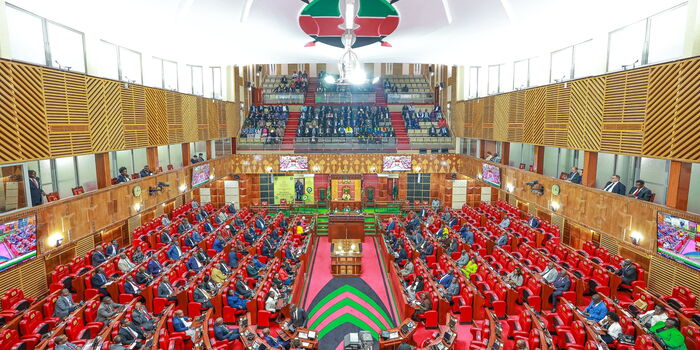
An aerial view of the National Assembly chambers during budget reading on June 12, 2025. Photo: National Assembly
National Assembly Speaker Moses Wetangula speaking on the floor of the house on Thursday, May 29.
Photo: Parliament of Kenya
Treasury CS John Mbadi reading the 2025/2026 Budget before the National Assembly on June 12, 2025.
Photo: National Assembly