Home Blog Page 52

He Filled the Streets on Day One: Why Bobi Wine’s First Kampala Rally Is Shaking Uganda’s 2026 Race

0

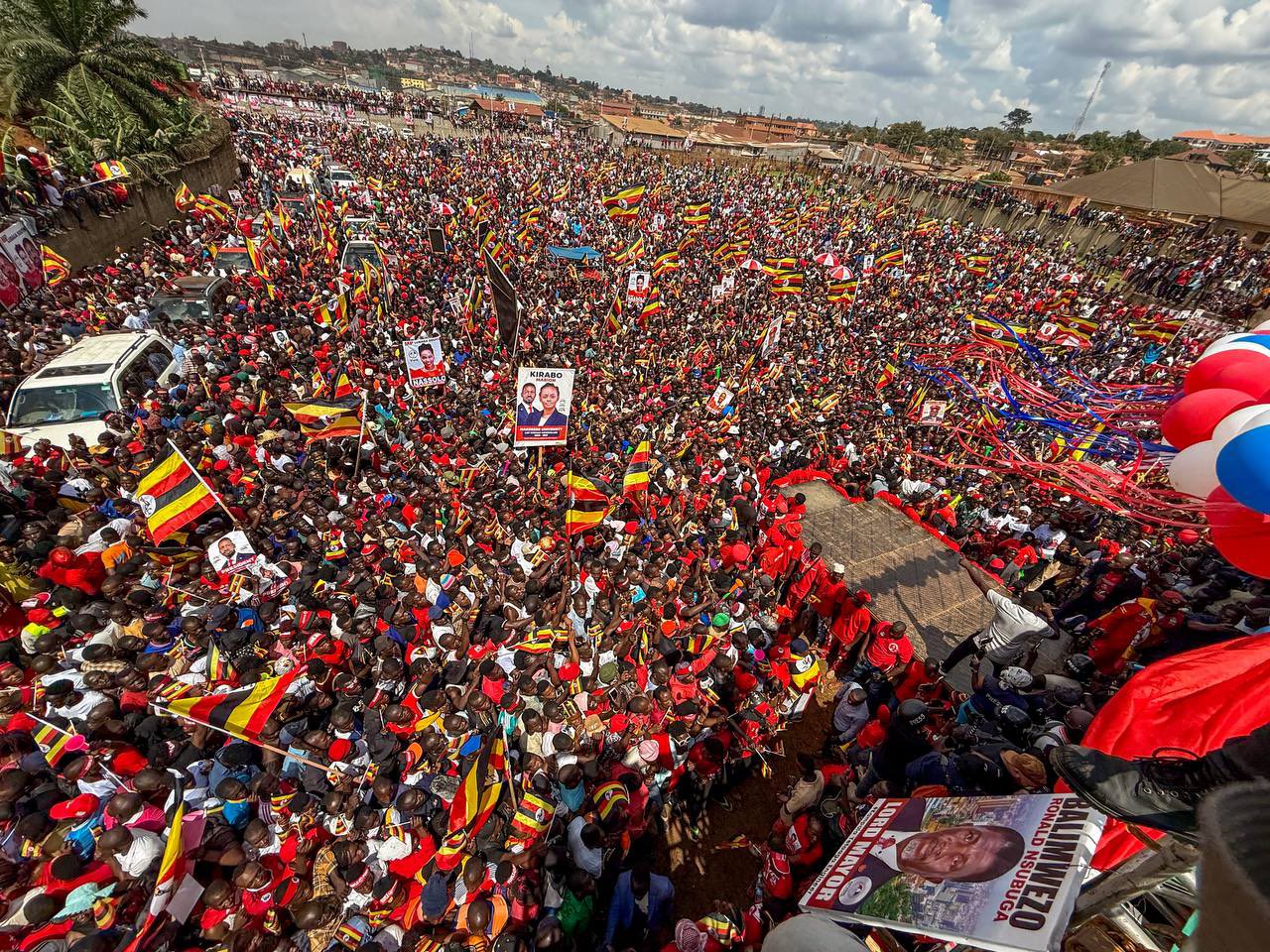
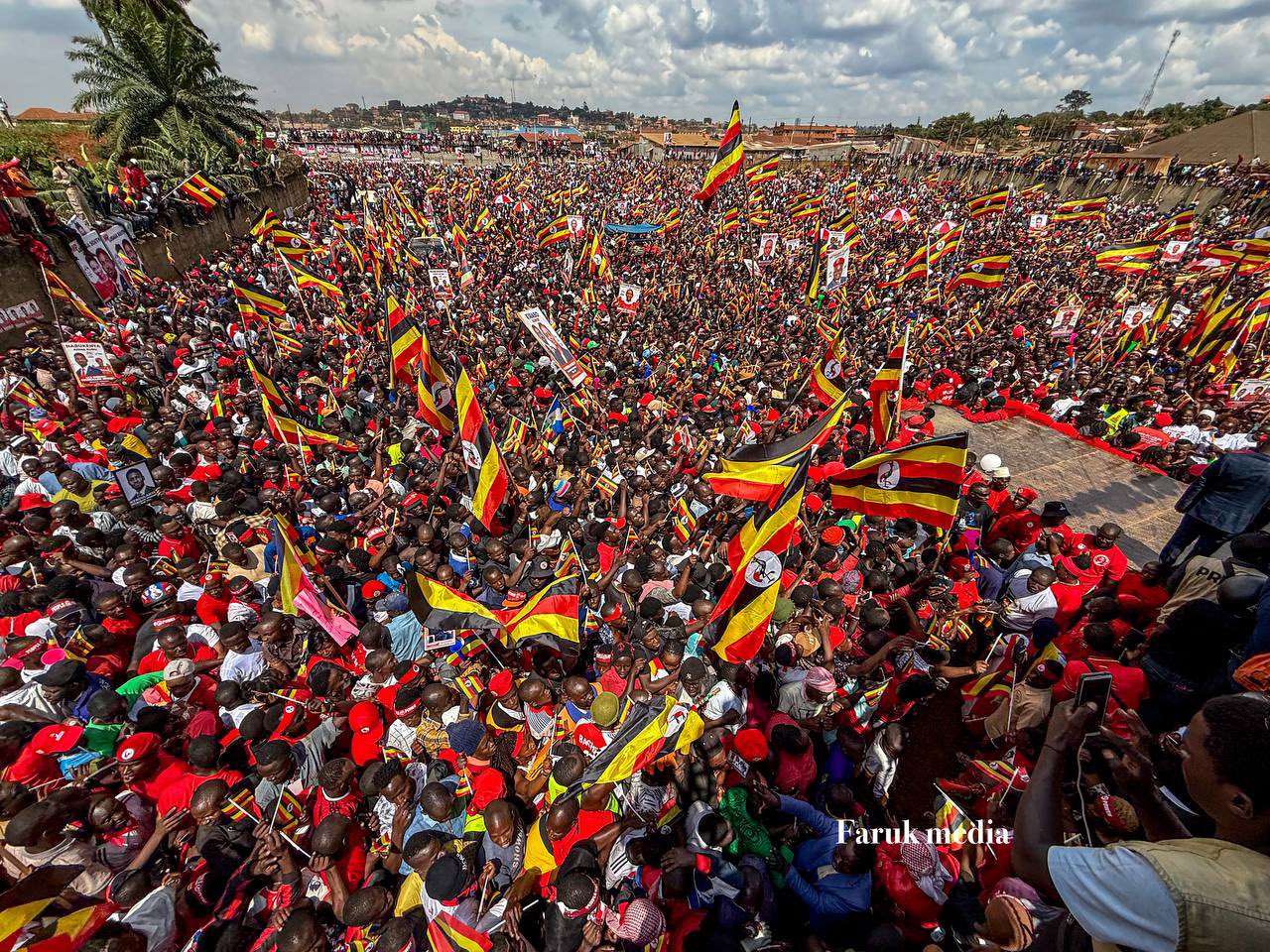
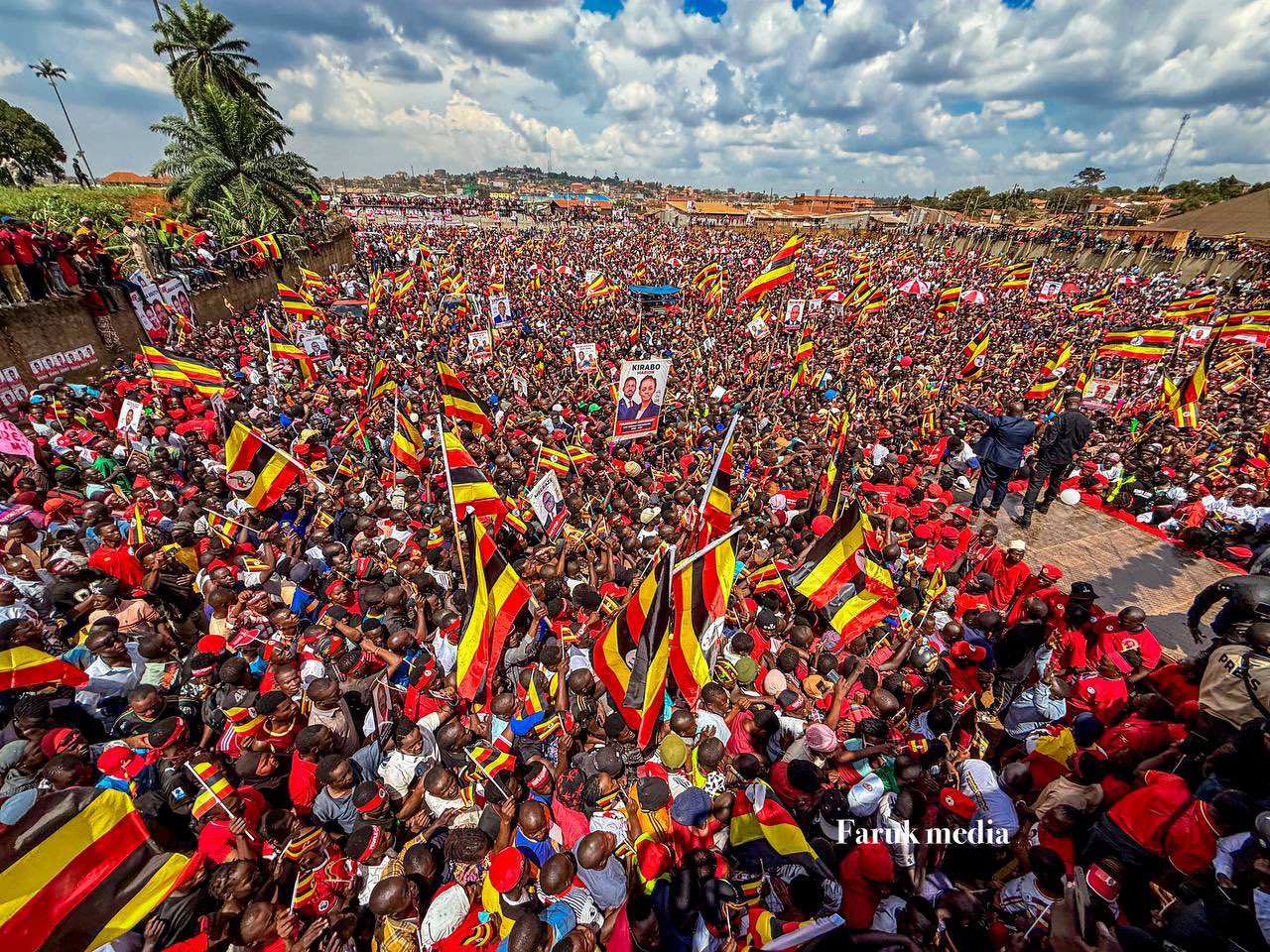
Robert Kyagulanyi, widely known as Bobi Wine, has once again shown his power to mobilize people. On Monday, the National Unity Platform leader launched his 2026 campaign in Lubaga South, Kampala. What was expected to be a normal rally quickly turned into a massive gathering that overflowed the venue and spilled into nearby streets. 

From early morning, supporters arrived wearing red, waving flags, and chanting loudly. The slogans #ProtestVote2026 and #ANewUgandaNow echoed through the area, sending a clear message that many Ugandans are hungry for change. The crowd size alone became a statement, even before Bobi Wine spoke. 

The rally was peaceful but heavily guarded. Security forces surrounded the venue, with police and military visibly present. Despite the strong security deployment, supporters remained calm, focused, and energetic throughout the event. 

Bobi Wine addressed the crowd with a message centered on courage, unity, and resistance through the ballot. He told supporters that Uganda’s problems cannot be solved by fear or silence, but by citizens using their votes to demand accountability and justice. 

Several senior figures from the National Unity Platform attended the rally. Among them was NUP spokesperson Joel Ssenyonyi, whose presence added political weight to the event. Other party leaders stood alongside Bobi Wine, reinforcing the image of a united opposition front. 

Images and videos shared online showed large numbers of people filling the rally grounds and surrounding areas. These visuals directly challenged claims from critics who tried to downplay the turnout. In Kampala, where political energy is often high, the message was clear: Bobi Wine still commands strong support. 

This rally marked the first major signal of how the 2026 election season may unfold. Uganda is heading toward polls scheduled for 15 January, and the political mood is already tense. Economic anxiety, rising living costs, unemployment, and frustration with stalled reforms dominate everyday conversations. 

President Yoweri Museveni, in power for nearly four decades, continues to present himself as the only leader capable of guaranteeing stability and progress. His message is built on continuity, security, and experience. Supporters of the ruling government argue that change could bring uncertainty. 

Bobi Wine offers a sharply different vision. His message is one of rupture rather than continuity. He speaks of breaking from the past, ending corruption, restoring term limits, and giving young people a real voice in national leadership. 

The contrast between the two men could not be clearer. Museveni represents a disciplined reform narrative within an established system. Bobi Wine represents outright defiance of that system, driven by popular protest and civic action. 

For many young Ugandans, Bobi Wine’s story mirrors their own struggles. Rising from music to politics, he presents himself as proof that ordinary citizens can challenge power. This personal story continues to fuel his appeal, especially in urban areas like Kampala. 

The Lubaga South rally also showed how Kampala remains a key battleground. Control of the capital is not just symbolic; it reflects wider public opinion, media attention, and political momentum. A strong start in Kampala strengthens Bobi Wine’s national campaign image. 

At the same time, the heavy security presence reminded supporters of the risks involved in opposition politics in Uganda. Past campaigns have been marked by arrests, violence, and restrictions. Many at the rally said their attendance itself was an act of bravery. 

Despite these risks, the mood at the rally was hopeful. Supporters sang, waved flags, and raised their phones to record the moment. For them, the gathering was not just about politics, but about reclaiming dignity and voice. 

As Uganda moves closer to the 2026 elections, the battle lines are becoming clearer. One side argues for stability through continuity. The other argues that stability without freedom and opportunity is not enough. 

Bobi Wine’s first Kampala rally did more than launch a campaign. It tested the ground, measured public mood, and sent a signal to both supporters and opponents. The message was simple but powerful: the opposition is energized and ready. 

Whether this momentum can be sustained across the country remains an open question. Rural areas, state institutions, and security forces will play major roles in shaping the final outcome. 

For now, however, Kampala has spoken loudly. The overflowing crowd in Lubaga South has set the tone for a campaign that promises to be intense, emotional, and deeply contested. 

As Uganda heads toward January 2026, one thing is certain. The race to State House will not be quiet, and the voices calling for change are growing harder to ignore. 
Police Shoot Two Suspects: What Really Happened During the Night Patrol That Ended in Gunshots?

0

Police in Likoni sub-county have shot two suspected robbers during a security operation that also led to the recovery of stolen motorbikes and crude weapons. The incident happened on Monday, December 15, during a routine police patrol aimed at flushing out criminal hideouts in the area. 

Likoni has for a long time been troubled by rising violent crime. Many of these crimes are linked to youthful gangs who operate mostly at night and use crude weapons to attack residents, businesses, and pedestrians. 

According to police, the operation was part of intensified patrols targeting known crime hotspots. Officers moved through several areas where criminal gangs are believed to hide and plan attacks. 

Likoni Sub-County Police Commander Joseph Mutungu praised the officers involved, saying their actions showed commitment and courage in protecting the public. He said security agencies remain focused on restoring peace in the area. 

“I appreciate my officers for the good work they are doing through regular patrols and maintaining peace on the ground,” Mutungu stated. 

During the operation, police recovered several motorbikes believed to have been stolen during previous robberies. The bikes are suspected to have been used by criminals to escape quickly after attacking victims. 

Officers also recovered several mobile phones believed to have been stolen from residents. In addition, they seized machetes and slashers, which police say are commonly used by criminals during robberies and home invasions. 

Residents in Likoni say such weapons are often used to threaten victims and force them to hand over valuables. Many victims report being assaulted before attackers flee with phones, cash, and other personal items. 

For years, Likoni has struggled with insecurity driven mainly by armed youth gangs. These groups often target homes, small businesses, and people walking at night. 

Some residents say attackers frequently demand mobile money PINs, making the crimes more personal and traumatic. Victims are often left injured and fearful even after losing their belongings. 

In the past, authorities identified several gangs operating in the area, including the notorious “Panga Boys.” These gangs were believed to move across Likoni and neighboring parts of Mombasa County. 

The continued attacks have created fear and anxiety among residents. Some community members have previously accused police of slow response times and weak patrols, especially at night. 

However, security agencies say the situation is changing. Renewed operations, increased patrols, and better intelligence have led to arrests and disrupted criminal networks. 

Commander Mutungu urged members of the public to cooperate with police by sharing information that can help stop crime. He said police already have intelligence on several suspects who are still at large. 

“We have information about those involved in criminal activities, and we shall pursue and prosecute them,” he noted. 

The police boss also called on parents and guardians to closely monitor their children, especially during the festive season when schools are closed. He warned that idle youth are often drawn into crime. 

Authorities say poverty, high youth unemployment, and drug abuse are major drivers of crime in Likoni. These problems are more common in informal settlements with limited job opportunities. 

To address these issues, the National Police Service, working with local leaders, has strengthened community policing programs. The goal is to build trust and improve information sharing between residents and law enforcement. 

Other measures include youth empowerment programs, increased patrols, and plans to establish new police posts. These steps aim to reduce response times and deter criminal activity. 

At the national level, the Ministry of Interior has also taken action. Cabinet Secretary Kipchumba Murkomen led the first-ever Jukwaa la Usalama forum in Mombasa in April 2025. 

The forum focused on government efforts to fight insecurity and drug abuse, which have increasingly affected young people across the coast region. 

As operations continue, residents have been urged to remain alert and actively participate in community policing forums. Authorities say lasting peace will only be achieved through cooperation between police, leaders, parents, and the wider community. 

An undated photo of a Kenyan police vehicle at a crime scene. Photo: Hilary Kimuyu
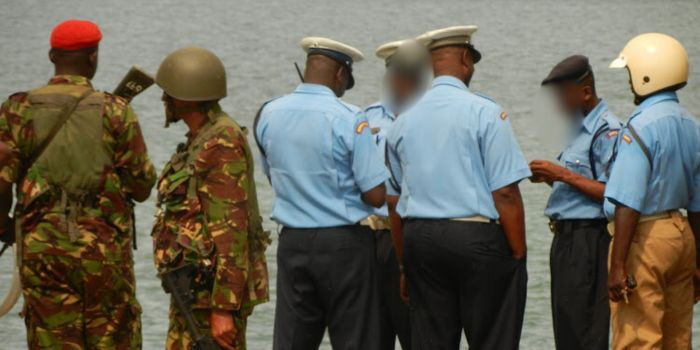
KDF officers and Kenya Police officers in Mombasa. Photo: Twitter
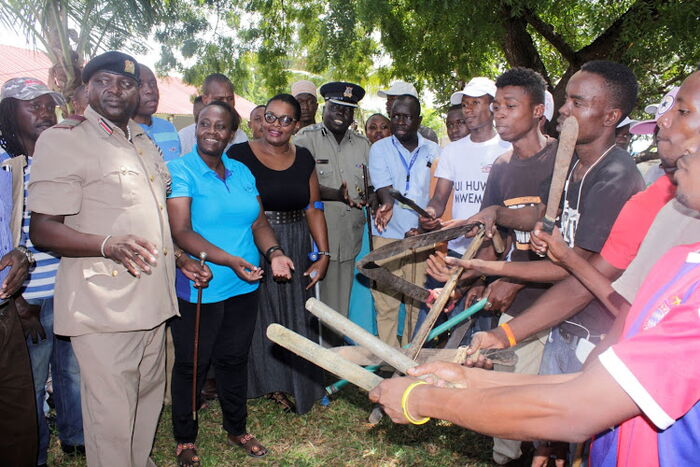
Reforming Likoni juvenile gangsters hand over weapons to security officers led by Likoni deputy county commissioner Eric Wamulevu. File

Kenya’s Public Safety Alert: PS Omollo Vows Tough Action Against Rising Violence at Events

0

Kenya is facing a worrying rise in violence and disorder during public events. The Ministry of Interior has issued a strong warning to citizens, emphasizing that anyone who ignores security regulations will face firm government action. 

On Monday, December 15, during a stakeholder forum held between the Ministry of Interior and National Administration and the Kenya Private Sector Alliance (KEPSA), Interior Principal Secretary Raymond Omollo addressed the growing issue of public safety. 

Omollo noted that many Kenyans have developed a habit of disregarding basic safety precautions when attending public events. This dangerous trend, he said, often leads to the destruction of property and even loss of lives, incidents that could be prevented with simple safety measures. 

“The lack of basic safety culture is alarming. People are ignoring security protocols at events and even disrupting protests. Such behaviors put lives and livelihoods at risk,” Omollo said. 

He emphasized the urgent need to foster a culture of public order and personal responsibility among citizens. “There’s urgent work to be done to build a culture of public order and personal responsibility,” Omollo added. 

The PS highlighted that security agencies are planning to improve collaboration with the public. Initiatives will focus on public participation, cooperation, intelligence sharing, and timely dissemination of information to prevent violent incidents at events. 

He said that joint efforts with the private sector are crucial. Specifically, the government plans to work closely with the Private Security Regulatory Authority (PSRA) to implement reforms in national security. 

“We recognize the importance of working together with the Private Sector to ensure the safety and well-being of all citizens,” Omollo stated. “The PSRA is finalizing key regulations to strengthen the private security industry. A professional and well-regulated sector is essential to national security.” 

KEPSA’s Security Sector Board Chairperson, Annette Kimitei, also addressed the forum, noting that Kenya must adopt advanced security strategies. These strategies are especially important as the country prepares for major international events, including the Africa Cup of Nations (AFCON) 2027. 

Kimitei expressed concern over what she described as a growing “occupy culture” among youth who attend stadiums and other public events without following ticketing rules or safety protocols. 

“We’re seeing a trend where youth occupy stadiums and events without regard for protocols or ticketing. This growing ‘occupy culture’ poses a real risk to public safety and the growth of sports and entertainment as key pillars of the creative economy,” she said. 

She also highlighted the urgent need for modern technological security systems to handle the increasing number of cyber threats facing the country. 

“Cybersecurity is becoming a major concern. In October 2025 alone, over 842 million cyber threat attempts were recorded. Modern security infrastructure is no longer optional; it is essential,” Kimitei said. 

She further emphasized that KEPSA’s involvement will play a critical role in strengthening real-time threat intelligence, disaster preparedness, and community-based initiatives. 

According to Kimitei, public safety is no longer only about physical security. Cyber threats, climate-related risks, and disaster management require a coordinated approach between the government and the private sector. 

Both Omollo and Kimitei agreed that reforming the private security industry is a key step toward national safety. This includes better regulation, professional training, and stricter compliance with safety standards. 

The Ministry of Interior plans to implement public awareness campaigns to educate citizens about their responsibilities during events. These campaigns aim to reduce risks and prevent unnecessary chaos. 

Security agencies are also expected to increase visibility during public gatherings, while relying on intelligence-sharing networks to identify and address potential threats early. 

Omollo warned that ignoring security rules at public events will no longer be tolerated. Those caught violating regulations could face legal action, including fines or arrest. 

The forum highlighted that improving public safety is a shared responsibility. Citizens, security agencies, and private sector stakeholders must all play a role in ensuring safe and orderly public gatherings. 

Experts at the forum stressed that failure to address these issues could have long-term economic consequences. Unchecked violence and disorder at events could deter tourism, limit international investment, and harm Kenya’s creative and sports industries. 

The forum concluded with a call to action: Kenyans must adopt a proactive safety mindset. Cooperation, accountability, and respect for regulations are essential to protect lives and promote the country’s growth. 

PS Omollo and KEPSA’s Kimitei both expressed optimism that with stronger collaboration and modern security measures, Kenya can reduce violence, prevent property damage, and ensure that future events are safe for all citizens. 

The forum’s outcomes signal a new era in public safety management, where both government and private sector initiatives will work hand in hand to create a culture of security and responsibility. 

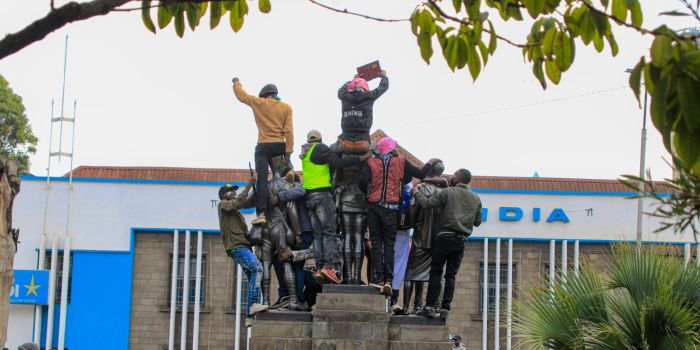
A section of protestors climb a statue along Kenyatta Avenue in Nairobi on Wednesday, June 25, 2025. Kenyans.co.ke
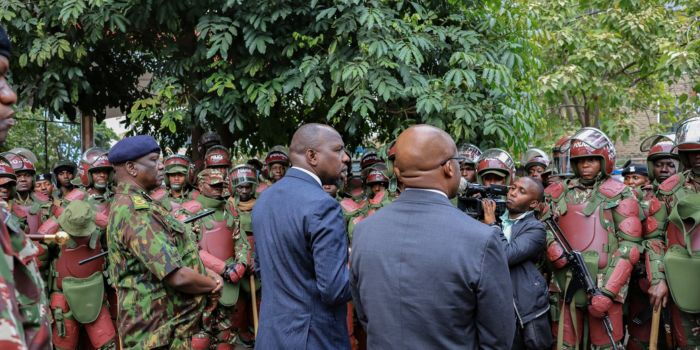
Interior Cabinet Secretary Kipchumba Murkomen speaking to police officers before Saba Saba protests on Monday, July 7, 2025. Photo: Kipchumba Murkomen
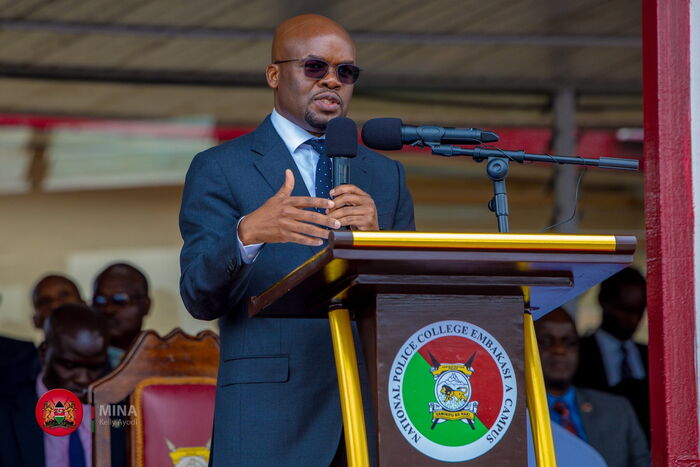
Image of Public Secretary of Interior speaking during CRNB Launch in Embakasi on November 27, 2025

Residents Live in Fear After Burundi’s Recent Military Moves Near the Rwandan Border

0

In recent days, tensions between Burundi and Rwanda have escalated sharply, following Burundi’s deployment of a large number of troops and heavy weapons near the border between the two countries. This mobilization has unsettled many residents living near the border and raised concerns among international observers monitoring regional security.

Reliable sources from Burundi’s security forces report that a significant number of soldiers have been stationed in Busoni Commune, in Butanyerera Province, near the Gasenyi-Nemba border area.

A senior officer in the Burundian military told SOS Medias, “Heavy weapons have been positioned to prevent anything coming from Rwanda.”

In Busoni, military and police trucks have been transporting troops and weapons to facilities including Camp 411 in Mutwenzi. Patrols in border areas have increased, and members of the youth wing of the ruling CNDD-FDD party, Imbonerakure, have become more visible on the streets, especially at night.

A resident of Munzenze said, “They order us to return home early, before 2 a.m. Nothing is written down, but we all know what it means.” This resident explained that fear pervades border communities, as many believe war could break out at any moment.

These measures are based on Burundi’s belief that Rwanda supports the AFC/M23 coalition, which has made significant advances in South Kivu in recent days. Forces from the DRC, along with Wazalendo and FDLR fighters, lost large portions of the Rusizi Basin, prompting Burundi to feel it must prepare to confront Rwanda.

In Kamanyola, near the Bugarama border with Rwanda, heavy weapons fired by Burundian forces caused confusion among AFC/M23 fighters, prompting them to launch an offensive to capture parts of the Rusizi Basin, extending to the city of Uvira on Lake Tanganyika.

Sources at Mukoni military base in Buhumuza Province report that in the past two weeks, 30 trucks delivering heavy weapons were offloaded over a three-day period. Burundi has also purchased large quantities of heavy arms and combat drones, signaling preparations for a major conflict.

This show of force near the border has not only prompted residents to return home early but also disrupted normal activities in the area. Locals say they now remain ready to flee at any sign of fighting, often wearing basic clothing that allows them to evacuate quickly.

Security analysts in the region warn that this move could have serious implications for the security of both countries. Deploying troops and heavy weapons near the Rwandan border could spark a regional crisis, particularly as tensions among the DRC, Burundi, and Rwanda continue to rise.

As both countries demonstrate military strength near the border, residents on both sides live in fear, uncertain when tensions could erupt into conflict. “We sleep in our clothes, ready to flee if shooting starts,” one resident said.

Regional analysts say Burundi’s actions are intended to demonstrate strength and counter the advances of the AFC/M23 coalition, but they could also escalate into a direct conflict between the two nations. The United Nations and international partners continue to closely monitor developments, urging both sides to pursue dialogue rather than military action.

The deployment of Burundian troops and heavy weapons near the Rwandan border has caused fear and anxiety among border communities. Tensions between the two countries remain high, and analysts emphasize the urgent need for dialogue to prevent a conflict that could spread across the region.

Tragic News: Trinity Bus from Kampala to Kigali Crashes, Many Lives Lost 

0

There is still deep sorrow and grief among the families of Rwandans and other passengers following a serious accident involving a Trinity passenger bus traveling from Uganda’s capital, Kampala, to Kigali in Rwanda. 

The accident, confirmed by Ugandan security authorities, occurred on Monday night on the main highway connecting the cities of Mbarara and Kabare in Rukiga District, at a place known as Bukinda. The bus, bearing the license plate RAT 597K, was carrying numerous passengers, including Rwandans and Ugandans. 

According to ASP Elly Maate, spokesperson for the Uganda Police in the Kigezi region, the accident happened around 8:30 PM, when the bus veered off the road and fell into a large ditch. The crash was severe, claiming the lives of three people, while many others sustained injuries. 

The confirmed deceased include Lubwama John Herbert, a 26-year-old Ugandan, and two Rwandans who were drivers: Habineza Alfred, the 30-year-old main driver of the bus, and another Rwandan known as Gaddafi, who was also a driver. 

The accident caused panic and distress among the passengers; some were seriously injured, while others were mentally traumatized by the severity of the incident. 

Local residents near the accident site, together with security personnel, quickly rushed to rescue passengers trapped in the bus and help evacuate them safely. 

ASP Elly Maate stated that the injured were immediately taken to various hospitals in Rukiga District for urgent medical attention, while those with minor injuries continued to be monitored by doctors. 

So far, the exact cause of the accident remains unknown. The Uganda Police have announced that they have launched a thorough investigation to determine the main reasons behind the bus veering off the road, including whether it was due to excessive speed, a technical issue with the vehicle, driver fatigue, or road conditions. 

The accident has once again raised concerns about the safety of long-distance night travel, especially for buses carrying passengers across different countries to Rwanda. 

Road safety analysts continue to call on transport companies to strengthen vehicle inspections, reduce drivers’ working hours, and avoid long night journeys whenever possible. 

For the bereaved families, there remains profound grief and sadness as they await updates from the authorities on the repatriation of the deceased and the care of the injured. 

The Uganda Police have stated that they will continue to release updates as the investigation progresses, while urging drivers and passengers alike to remain vigilant and strictly observe road safety regulations. 

A Massive Loss Exposed: How Burundi’s Losses After the Fall of Uvira Pushed Ndayishimiye to Openly Threaten War with Rwanda

0

The capture of the city of Uvira by the AFC/M23 coalition struck Burundi like a bolt of lightning to the core. It was not only security that was shaken, nor merely military prestige that collapsed; the entire national economy was suddenly plunged into a severe crisis. As a result, President Évariste Ndayishimiye’s administration found itself confronted with alarming figures, prompting war rhetoric to begin replacing the language of dialogue.

In the weeks leading up to these events, President Ndayishimiye and his military advisers were highly confident that they could defeat AFC/M23 and push it back in South Kivu province. That confidence was based on the heavy military equipment deployed by the Burundian army, including long-range heavy weapons, combat drones, and other modern arms.

The objective was not simply to support the Congolese armed forces, but to restore Burundi’s prestige, which had been tarnished for months by an unclear and controversial military engagement in eastern Congo.

The leadership in Bujumbura sought to demonstrate that it had a decisive role in regional security, thereby strengthening President Ndayishimiye’s standing both domestically and on the international stage.

However, events did not unfold as expected. AFC/M23 fighters, who were also well prepared, pushed back Burundian forces, FARDC troops, Wazalendo groups, and FDLR elements at an unexpectedly rapid pace. Within just a few days, fighting reached the outskirts of Uvira, a city of immense economic and security importance to Burundi.

As the fighting intensified, the Burundian government began showing signs of fear grounded in hard realities.

On December 10, 2025, Burundi’s Minister of Foreign Affairs, Dr. Edouard Bizimana, told Radio France Internationale (RFI) that the capture of Uvira would endanger the security of Bujumbura, given the very short distance between the two cities, so short that travel between them takes only minutes.

He stated: “Our economic capital would be threatened. Trade, the movement of people and goods would come to a halt, compounded by the refugee issue. All of this would place enormous pressure on the country.”

That statement appeared to foreshadow what followed. On that very day, AFC/M23 announced that it had taken control of the city of Uvira. Shortly thereafter, the Burundian government closed the Kavimvira and Vugizo border crossings linking Burundi to the DRC, suspending all trade dependent on those routes.

That decision quickly translated into a major loss for Burundi. Uvira is not an ordinary city. It covers more than 200 square kilometers, is home to approximately 700,000 people, and lies along Lake Tanganyika. It serves as the primary economic gateway between Burundi and South Kivu.

The Kavimvira border was a vital artery for daily trade. Congolese and Burundians exchanged foodstuffs, fish, agricultural products, and other essential goods. The closure of this border cut the economic lifeline of both countries, most severely affecting Burundi, whose economy was already fragile.

Faustin Ndikumana, director of PARCEM, stated that more than 60 percent of Burundi’s exports are destined for the DRC, mainly passing through the Kavimvira border. These exports generated critically needed foreign currency for a country already struggling with a foreign exchange crisis.

Data from Burundi’s Central Bank shows that in 2024, Burundi exported 135,300 tons of goods, of which 69,400 tons were sent to the DRC. The closure of the Kavimvira border immediately disrupted this entire economic activity.

The fuel shortage crisis worsened further. Many Burundians had been purchasing gasoline and diesel in South Kivu at lower prices. After the border closure, this option disappeared.

RFI journalist Esdras Ndikumana confirmed that the price of a 20-liter jerrycan of fuel rose from 150,000 Burundian francs to 400,000, while the U.S. dollar climbed to 6,500 Burundian francs.

Amid this turmoil, the Burundian government hardened its tone. What began as a pledge to protect Bujumbura at all costs evolved into open declarations that military options were possible. These statements eventually turned into explicit threats against Rwanda.

At the United Nations, Ambassador Zéphyrin Maniratanga accused Rwanda of violating UN resolutions, calling for the withdrawal of Rwandan forces from the DRC and urging the imposition of strong sanctions. He warned that if cross-border attacks continued, Burundi was prepared to enter an open war with Rwanda.

These remarks came as Burundian forces had already suffered defeats in Kamanyola, Lubarika, and Luvungi, and faced accusations of committing atrocities against civilians, particularly the Banyamulenge community in the Minembwe area.

On the other hand, AFC/M23 stated that it does not seek hostile relations with Burundi, expressing a desire for peaceful coexistence and signaling that borders could be reopened and trade resumed if there is political will.

In reality, the capture of Uvira revealed that Burundi’s losses go far beyond the military sphere. They represent economic loss, loss of prestige, and a collapse in political strategy. The figures President Ndayishimiye relied upon turned into alarming deficits, making war rhetoric a way of deflecting attention from mounting domestic pressures.

The remaining danger is that such rhetoric could push the region toward open war, at a time when dialogue, de-escalation, and economic stabilization are far more urgently needed.

Burundi has since taken a further step in its diplomatic language, publicly declaring that it may enter an open war with Rwanda due to the ongoing fighting in South Kivu.

This position was announced by its representative at the United Nations in New York, who stated that Burundi continues to feel under attack and will no longer tolerate what it describes as cross-border assaults.

Burundi’s ambassador to the UN, Zéphyrin Maniratanga, accused Rwanda of failing to comply with UN Security Council Resolution 2773, which calls on Rwanda to withdraw its forces from the Democratic Republic of Congo.

He also recalled that the same resolution requires the Congolese government to dismantle armed groups operating in eastern DRC, including the FDLR, which has long been accused of fighting alongside FARDC against AFC/M23.

The diplomat said Burundi has serious concerns over alleged Rwandan actions, including cross-border attacks involving heavy weapons, drones, and other lethal arms.

He emphasized that some of these attacks had reached Burundian territory, describing them as violations of national sovereignty that endanger civilians and undermine all efforts aimed at achieving lasting peace in the region.

Ambassador Maniratanga called on the UN Security Council to convene an emergency meeting to consider strong measures, including arms and economic sanctions against Rwanda. He added that while Burundi seeks peace, it will not accept continued inaction if attacks persist, affirming that his country is ready to enter war if necessary.

He stated: “Ceasefires have limits. If these attacks continue, it will be extremely difficult to avoid an open war between our two countries.”

These statements come as Burundi continues to accuse Rwanda, while its forces have suffered defeats in Kamanyola, Lubarika, and Luvungi. The same forces are also accused of involvement in violence against civilians, particularly the Banyamulenge community in the Minembwe region.

For its part, Rwanda has denied all these accusations, stating that it supports diplomatic solutions rather than dragging the region into an open war that could have devastating consequences for security and economic stability.

The Truth Behind President Tshisekedi’s Unusual Visit to Luanda. Why It Matters More Than It Seems

0

On Sunday, December 14, 2025, the President of the Democratic Republic of Congo, Félix Antoine Tshisekedi Tshilombo, paid a working visit to Luanda, Angola. The visit came at a time when the country he leads is facing intense security and diplomatic pressure in eastern Congo.

Although the trip was officially presented as a routine working visit, regional analysts say it carried exceptional significance, particularly in light of the ongoing challenges surrounding the Luanda talks, the continuing war in North and South Kivu, and the implications of the recent peace agreement signed in Washington, DC.

Sources from various circles indicate that one of the main reasons for Tshisekedi’s trip to Luanda was to revive and reinvigorate the Luanda talks, a diplomatic initiative aimed at finding a peaceful solution to the insecurity in eastern Congo.

These talks, led by Angolan President João Lourenço as the African Union’s appointed mediator, had shown signs of weakness as fighting intensified between the DRC government and the AFC/M23 coalition, leading many to question whether the diplomatic path still held value for Kinshasa.

The newspaper Le Potentiel reported that Tshisekedi sought a meeting with Lourenço to assess how the mediation process could be given new momentum, following claims that the Luanda talks were losing credibility and influence.

Angola is one of the countries that has played a significant role in Congolese affairs at various moments in history. Its role in restoring peace in the region is considered crucial, particularly given its political and security standing in Central Africa.

During the discussions between Tshisekedi and João Lourenço, strong emphasis was placed on strengthening relations between Kinshasa and Luanda, including cooperation in security, economic matters, and shared strategic interests.

Reports indicate that Angola continues to support resolving the crisis in eastern Congo through dialogue and regional cooperation, rather than through a military approach that could further undermine trust and stability.

Another factor that added weight to this visit is that it came just days after the peace agreement between the DRC and Rwanda was finalized during a ceremony held in Washington, DC on December 4, 2025.

The agreement, signed amid high expectations, aimed to ease long-standing tensions between the two countries and lay the groundwork for addressing the security crisis in eastern Congo.

President João Lourenço was among the heads of state who attended the Washington ceremony, highlighting Angola’s continued visible role in diplomatic efforts aimed at peace in the region.

Analysts suggest that Tshisekedi may have traveled to Luanda to clearly explain Kinshasa’s position on the agreement and to discuss how it could be aligned with the Luanda process, ensuring that diplomatic initiatives complement rather than compete with one another.

Domestically, Tshisekedi is facing mounting pressure on political, security, and public opinion fronts.

The ongoing conflict in the east, the capture of cities and other areas, along with displacement and killings, have led many to question the government’s ability to restore peace.

His visit to Luanda can therefore be seen as an attempt to demonstrate to the international community that Congo remains committed to pursuing peace through diplomatic means, even as the situation on the ground remains challenging.

Although Angola is viewed as a mediator, some observers question whether it also has its own interests in regional stability, particularly concerning its borders and economic ties with Congo.

Discussions between Tshisekedi and Lourenço may also have focused on how Angola can continue to play a neutral role that helps rebuild trust among all parties involved in the eastern Congo conflict.

The key question many are asking is whether this visit will lead to tangible changes in eastern Congo, or whether it will remain another diplomatic trip without concrete impact on the ground.

While the answers remain uncertain, it is clear that Tshisekedi is eager to show that he has not abandoned dialogue and that he is ready to work with regional mediators, including João Lourenço.

As fighting continues, the Washington agreement begins to be implemented, and efforts are made to revive the Luanda talks, regional attention remains focused on Luanda and Kinshasa, awaiting whether diplomacy will ultimately prevail over the gun, or whether Congo will remain trapped in the shadow of an endless war.

It Has Raised Serious Concerns Within the DRC Government: Major Benefits Set to Be Gained by AFC/M23 After the Capture of the City of Uvira

0

Since December 9, 2025, the city of Uvira, one of the most important cities in South Kivu Province, has fallen under the control of the AFC/M23 coalition, following a brief period of fighting against a joint force of the Armed Forces of the Democratic Republic of Congo (FARDC) and the Burundian army. The capture of this city is seen as a major turning point in the conflict in eastern Congo, particularly in terms of security and economic dynamics.

Information from various reliable sources indicates that the takeover of Uvira did not involve intense fighting like that seen in other cities. After AFC/M23 had captured the surrounding areas, FARDC and Burundian troops stationed in the city chose to withdraw and flee, allowing AFC/M23 fighters to enter Uvira without facing significant resistance.

Analysts say this operation signals a shift in AFC/M23’s military strategy, as the movement is no longer focused solely on self-defense but is now prioritizing the capture of areas with high economic and regional strategic value. Uvira, located very close to Burundi and situated on the shores of Lake Tanganyika, is regarded as the heart of South Kivu’s commercial activity.

AFC/M23’s decision to capture Uvira after a year of reported developments is also interpreted as a response to persistent attacks against civilians in South Kivu, particularly the Banyamulenge community, including airstrikes and drone attacks, which the group says were carried out by the Kinshasa government’s coalition forces. AFC/M23 has consistently stated that its entry into Uvira aimed to stop these abuses and protect civilians.

Uvira covers an area of 207 square kilometers and is home to more than 726,000 residents, according to 2024 figures.

Its economy is largely based on trade, fishing in Lake Tanganyika, agriculture, and livestock farming, both small and large. This makes the city a vital hub for the livelihoods of many people in South Kivu.

The city is located just 25 kilometers from Bujumbura, the capital of Burundi. In the past, Uvira served as a key transit route for goods from eastern Congo to Bujumbura, especially agricultural products. It was also a passageway for petroleum products, cooking oil, and sugar that entered Burundi through smuggling networks, as these goods remained scarce in that country.

Because it lies along Lake Tanganyika, Uvira plays a major role in cross-border trade conducted via water routes. The lake is one of the most heavily used waterways for trade linking the DRC with countries in southern and eastern Africa.

From an economic standpoint, the capture of Uvira opens new doors for AFC/M23. Through Lake Tanganyika, the group can easily access the ports of Kigoma in Tanzania and Mpulungu in Zambia. This could enable expanded trade, investment, and international commercial activities in the areas under its control.

The benefits of capturing Uvira are not limited to security, which AFC/M23 says is its primary objective, but also extend to economic self-reliance. Analysts note that controlling cities with ports and trade routes gives the movement greater financial autonomy and strengthens its long-term operational capacity.

Uvira is considered a key transit corridor for goods between the DRC and neighboring countries to the south and east. Essential imports enter the country through the port of Kigoma in Tanzania, while agricultural products from South Kivu are exported abroad through the same route.

Economic experts argue that Uvira’s geographic position and the presence of the Kalundu port make it one of the cities with the greatest development potential in South Kivu Province. This is also cited as a major source of concern for the DRC government, which has lost an important commercial hub.

The DRC has two major ports on Lake Tanganyika: Kalemie and Kalundu. The port of Kalundu is located in the northwestern part of the lake, just 4.5 kilometers from central Uvira. It is very close to the port of Bujumbura, which is only 25 kilometers away by water.

Kalundu port was built in the 1950s, with a width of 60 meters and a length of 300 meters, and has the capacity to handle more than 120,000 tons of cargo per year. The main goods transported through this port include cement, wheat flour, rice, and sugar.

Despite its importance, the roads linking the port to other cities such as Uvira and Bukavu are severely degraded and have long posed security challenges due to the presence of armed groups. Previously, travel from Kalundu to Bukavu, a distance of over 130 kilometers, could take between eight and ten hours.

Analysts note that as AFC/M23 has organized and stabilized cities it has controlled for some time, such as Goma and Bukavu, and as regional trade has resumed, Uvira could also emerge as a new center of economic growth and improved regional relations.

Alain Destexhe, a former Belgian senator and former Secretary General of Médecins Sans Frontières (MSF), stated that the capture of Uvira represents a significant loss for President Félix Tshisekedi’s government. However, he emphasized that the DRC’s main economic stronghold remains in Katanga, particularly in the city of Lubumbashi.

Destexhe said: “As long as Katanga remains under the influence of Moïse Katumbi, it is difficult for the Kinshasa government to collapse quickly. Lubumbashi is still more than 1,000 kilometers away from Uvira via Kalemie.”

He added that the conflict in eastern Congo is largely driven by security concerns, arguing that AFC/M23 claims to be focused on protecting civilians who have been subjected to airstrikes, killings, and harassment by a government that should have been protecting them.

He concluded by criticizing countries that issued statements condemning the fighting, saying they should first have condemned and stopped the violence that civilians had endured for many months before denouncing the response taken by those who claimed to be defending them.

The capture of Uvira places AFC/M23 in a new position, where it is no longer seen merely as an armed coalition, but as a key actor with significant influence over security, economic activity, and the broader stability of Central and Eastern Africa.

A Major Secret Pledge by the DRC Government to the FDLR Revealed, Despite Its Commitment to Dismantle the Group in Peace Agreements

0

While the Government of the Democratic Republic of the Congo (DRC) had publicly announced its intention to dismantle the FDLR, emerging information shows that cooperation between the two sides never stopped. Instead, it continued behind the scenes, in clear contradiction to the signed peace agreements and international resolutions.

Since October 10, 2025, a statement issued by the DRC armed forces called on FDLR fighters to lay down their weapons and end all cooperation with state forces and civilians.

That statement was expected to be a major step toward implementing the peace agreement signed between Rwanda and the DRC on June 27, 2025, with the facilitation of the United States.

The FDLR is an armed group that has existed for more than two decades and is widely accused of being a key source of insecurity in the Great Lakes region. It was formed in 2000, mainly composed of former Rwandan government forces (Ex-FAR), Interahamwe militia members, and other individuals involved in the 1994 Genocide against the Tutsi, who fled to the DRC after their defeat.

Since 2022, the group has intensified its cooperation with the DRC armed forces in the fight against M23. This collaboration has been evident in joint military operations involving FARDC and armed groups grouped under the alliance known as Wazalendo.

The Government of Rwanda has repeatedly expressed concerns that the FDLR receives direct support from the DRC government, including weapons, military training, food supplies, and operational protection. Kigali has consistently warned that the failure to address this issue poses a serious threat to Rwanda’s security and to regional stability, given the group’s history and ideology.

Although the peace agreement signed in Washington, D.C. clearly outlined obligations to dismantle the FDLR, a UN experts’ report released on December 8, 2025 revealed that the FARDC statement of October 10 created tensions within the DRC armed forces themselves, as well as among the allied armed groups.

According to the experts, FDLR fighters reacted with anger and fear of abandonment, a situation that also upset Wazalendo groups that had been fighting alongside them. This led some senior FARDC officers and government representatives to send reassuring messages to the FDLR, promising that cooperation would continue.

The report states that both sides agreed that FARDC lacked the capacity to dismantle the FDLR quickly, and that their cooperation was still considered necessary in the fight against groups opposing the government, particularly in eastern DRC.

These findings are reinforced by evidence showing that on November 29, 2025, DRC forces supplied the FDLR and other allied armed groups, including NDC-R and Nyatura, with ammunition and food. These supplies were delivered to areas including Bibwe and Hembe, following orders issued by the commander of the 3402nd Regiment of the DRC armed forces, Colonel Salomon Tokolonga.

Colonel Tokolonga is already on the United States sanctions list for his long-standing role in providing support to the FDLR and other armed groups implicated in killings and serious abuses against civilians in eastern DRC.

These new revelations raise serious questions about the sincerity of the DRC government in implementing the peace agreement and respecting international obligations. Analysts warn that continued cooperation with a group like the FDLR risks undermining progress made in peace talks and jeopardizing security across the entire region.

As Rwanda continues to demand concrete action to dismantle the FDLR, the international community is now under pressure to assess whether the DRC is truly honoring its commitments or whether its peace rhetoric continues to contradict realities on the ground.

The situation remains unclear, but information from multiple sources continues to indicate that the FDLR is still receiving support, a development that carries serious implications for trust in the prospects of lasting peace in the region.

Twirwaneho and AFC/M23 enter another city, as many are deeply surprised by the actions of FARDC and the Burundian army

0

Information from various reliable sources indicates that on Saturday, December 13, fighters from Twirwaneho, allied with the AFC/M23 coalition, entered the town of Kipupu, considered the administrative capital of the Itombwe Sector, located in the mountainous area of Mwenga in South Kivu Province, without any fighting taking place.

Kipupu is situated in Bashimukindje 1 Grouping, an area with a long and complex history of security challenges and intercommunal relations, particularly in the Itombwe highlands, which for many years have experienced instability linked to armed conflict and political and security disputes.

According to ACTUALITE.CD, columns of fighters were seen entering the town during the daytime from the Mikenge area, where Twirwaneho has for some time demonstrated significant influence in controlling local security.

Residents and health sector workers say the arrival of AFC/M23 and Twirwaneho forces was sudden, especially since no clashes occurred.

A staff member at the Itombwe General Hospital told ACTUALITE.CD:
“We were surprised to see these heavily armed forces arrive here in Kipupu around midday. Many residents immediately fled into the nearby bushes out of fear, but what shocked us most was that not a single shot was fired and nothing was damaged. For now, they are the ones controlling the town.”

The entry into Kipupu comes just days after the Armed Forces of the Democratic Republic of Congo (FARDC) and their allies, including the Burundian army, began withdrawing from various parts of these mountainous areas, including the city of Uvira, which was taken by AFC/M23.

Since Friday, December 12, reports from local residents indicate that many villages in the Mwenga highlands have been emptied of their populations following the withdrawal of government forces, with civilians choosing to flee out of fear of violence, reprisals, or the possible outbreak of fighting.

So far, the local leader of Kipupu has not been reachable to comment on these developments, adding to the uncertainty surrounding local administration in the Itombwe area.

However, many residents say that although they fled during the initial hours, there is hope that security and calm could return to the town, given that the entry of these forces occurred peacefully, unlike what has happened in other towns captured in the past.

The entry of Twirwaneho, allied with AFC/M23, into Kipupu is seen as another major step in expanding control over southern parts of Kivu, particularly the strategically important Itombwe highlands, which are vital from a military standpoint and for securing routes linking Mwenga, Fizi, and Uvira.

Observers of the situation in the region say the current developments point to significant shifts in the dynamics of the conflict in eastern Congo, where some towns are being taken without fighting, highlighting serious weaknesses within state security structures.